


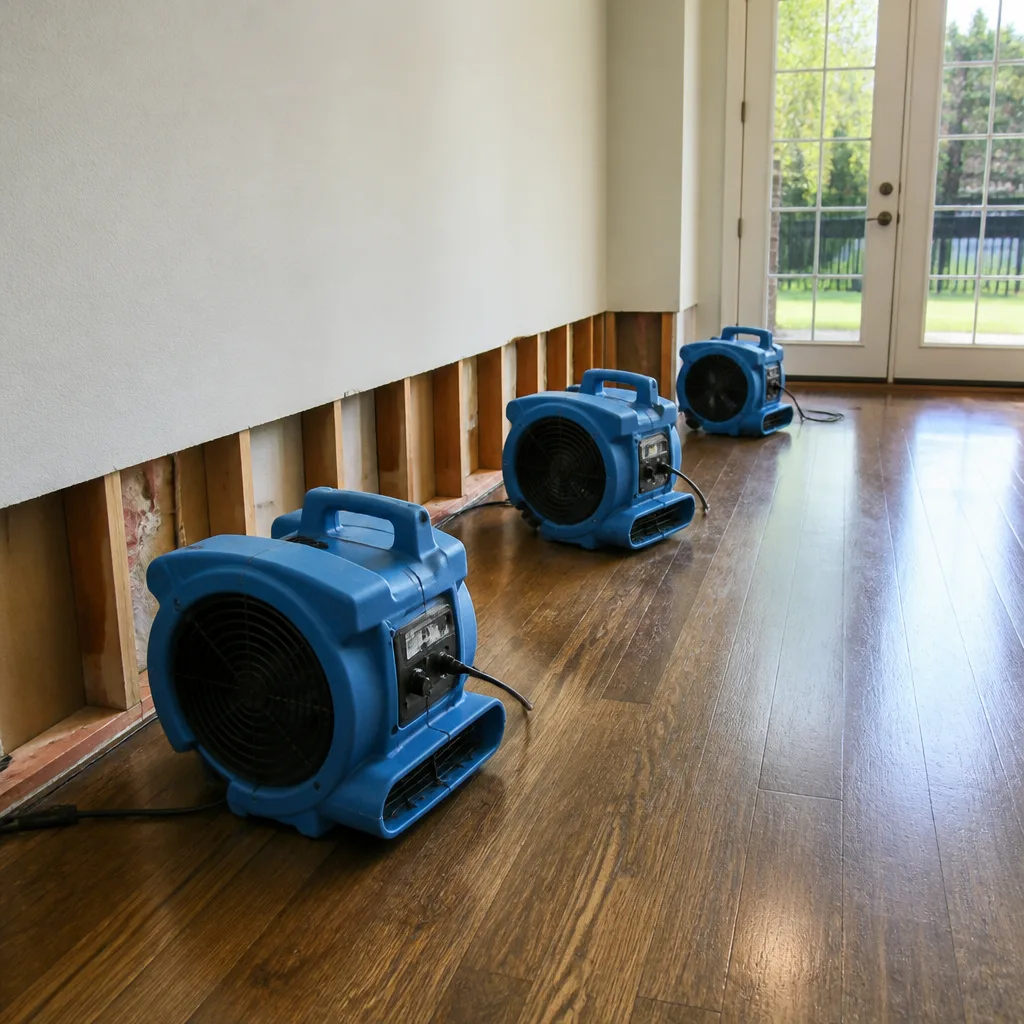
 Water damage drying
 Fire & smoke cleanup
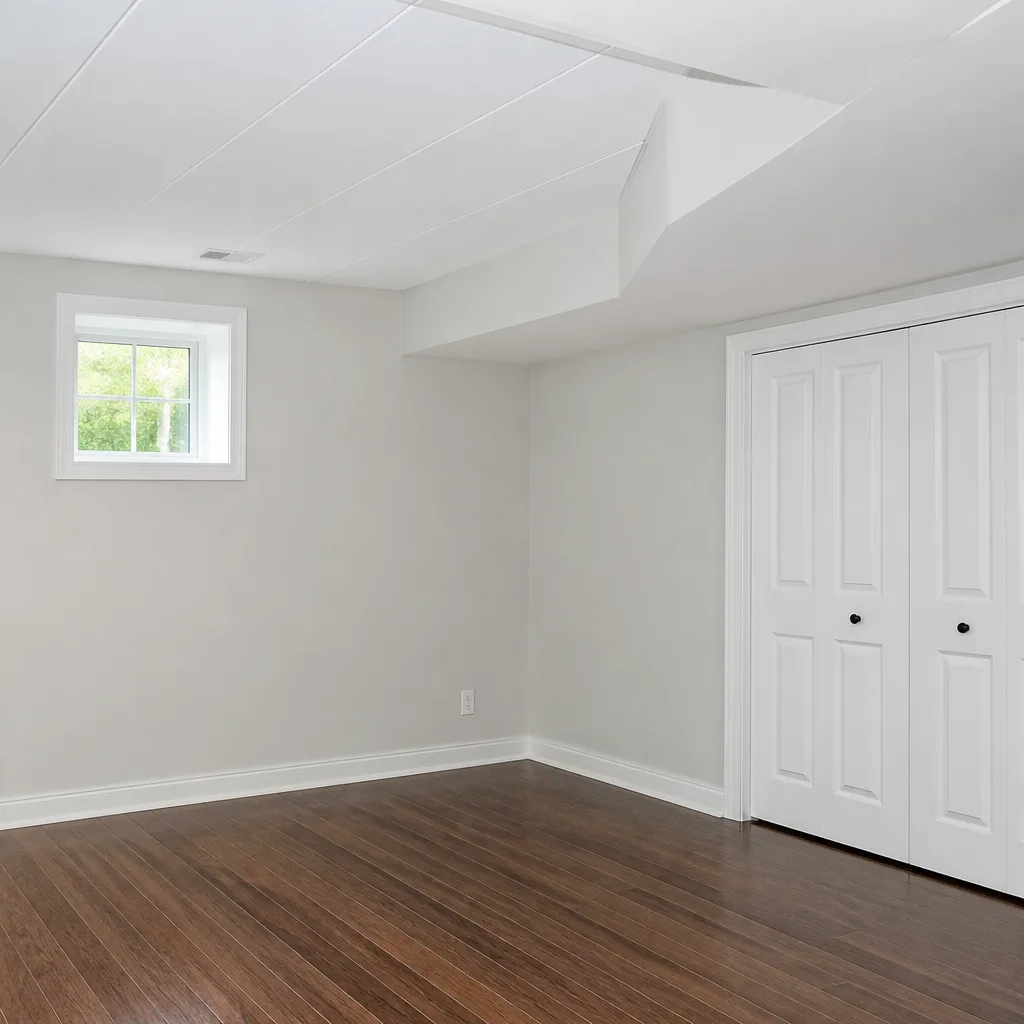 Mold remediation
 Storm response
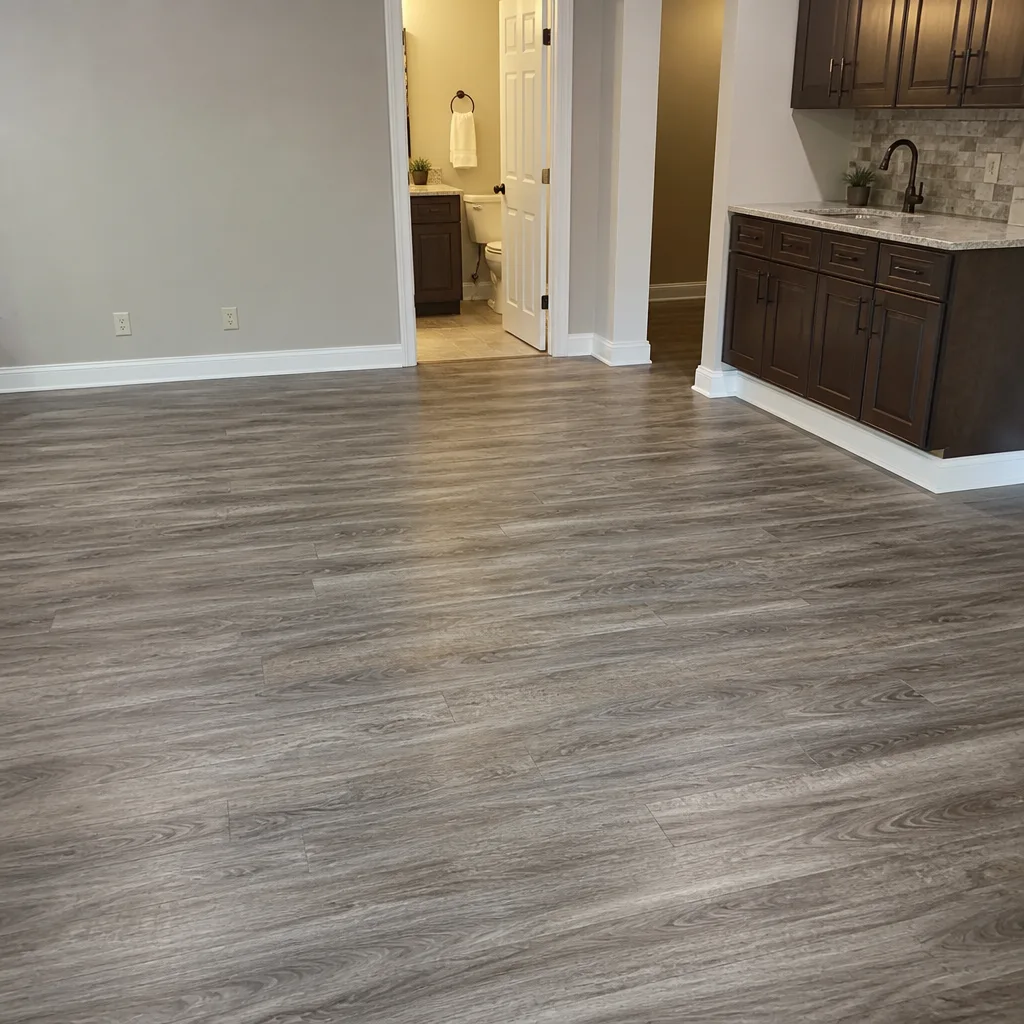 Sewage cleanup
 Reconstruction
Free visual inspection and a written scope of work before any mitigation begins - photos, moisture readings, and drying logs go in your claim file
The scope we write is the scope we bill. Anything new gets shown to you, in writing, before we touch it.
Get your free estimateFast, Reliable Mold Remediation Across Highland
Mold remediation in Highland typically costs $1,800 to $6,500 for a full containment and removal job, and we can usually have a certified crew at your door the same day you call. If you’re smelling something musty in a hallway closet or seeing dark spots spreading along a baseboard, don’t wait. Highland’s dry heat has a way of hiding moisture problems until mold is already established behind walls and under flooring. Call (855) 382-0478 and we’ll walk you through exactly what we’re seeing, what it’ll take to fix, and what it should cost before anyone steps foot in your home.
Whitfield Water Damage knows Highland’s housing stock. We’ve worked on 1950s tract homes with original galvanized plumbing, 1980s stucco subdivisions, and rural foothill properties with wells and septic systems. Each one fails differently when water gets where it shouldn’t. That local experience means we don’t show up guessing. We show up with a moisture mapping plan and the right equipment for your specific house.
Why Whitfield Water Damage Is Highland’s Preferred Mold Remediation Company
Highland homeowners call us because we treat mold problems like the structural and health issues they are, not like a quick spray-and-paint job. Our Mold Remediation team follows IICRC-certified protocols on every job, which means containment, HEPA filtration, source removal, and drying verification happen in a specific order. No shortcuts. No “it looks fine now” conclusions without moisture readings to back them up.
We’re members of the Restoration Industry Association and IFA, which matters more than people realize. It means we’re accountable to professional bodies that audit how restoration work gets done, not just a contractor license on file somewhere. When a Highland homeowner is dealing with mold, they want a crew that answers to a standard. We do.
Being based in Victorville means we reach Highland fast, usually the same day. But more important than speed is what we bring when we arrive: Dri-Eaz and Phoenix drying equipment, thermal imaging for moisture mapping, and Injectidry systems that dry wall cavities from the inside without tearing out drywall you’d otherwise have to replace. For a 1960s home near the base of the San Bernardino foothills, that difference can save thousands in reconstruction costs.
Nolan Pruett leads our restoration team, and he’s built the company around one principle: document everything to insurance standards, explain everything in plain English, and never sell a homeowner work they don’t actually need. That approach has earned us a strong reputation across Highland and the surrounding Inland Empire.
Restoration work we handle
Mold Inspection in Highland
Mold Inspection in Highland starts with a question most contractors skip: where is the moisture coming from? In a slab-on-grade home with cast-iron or galvanized plumbing, that answer isn’t always obvious. A wall can feel bone-dry to the touch while the cavity behind it holds enough moisture to feed a growing colony. We use thermal imaging and moisture meters to find what the surface is hiding.
A typical mold inspection in Highland runs $350 to $700 depending on the size of the home and whether we’re testing air quality as part of it. If you’re buying or selling a house in the 92346 ZIP, or you’ve just noticed an odor you can’t place, an inspection is the right first step. We’ll map the moisture, identify the mold type if visible, and give you a written scope of what remediation would involve. No obligation to hire us after.
Thermal Imaging and Moisture Mapping
Highland’s semi-arid climate works against you here. Surfaces dry quickly, which makes homeowners think the problem resolved itself. It didn’t. The moisture just moved deeper. Our thermal imaging picks up temperature differentials inside walls and under slabs that indicate trapped moisture before it shows up as a stain or smell.
Air Quality Testing
If someone in the house has respiratory issues, allergies, or unexplained symptoms, air sampling tells us what’s actually floating in the air. We collect samples inside and outside the home and compare spore counts. That data tells us whether you have an active problem or just a lingering odor from old, dead mold that needs different treatment.
Mold Removal Specialist in Highland
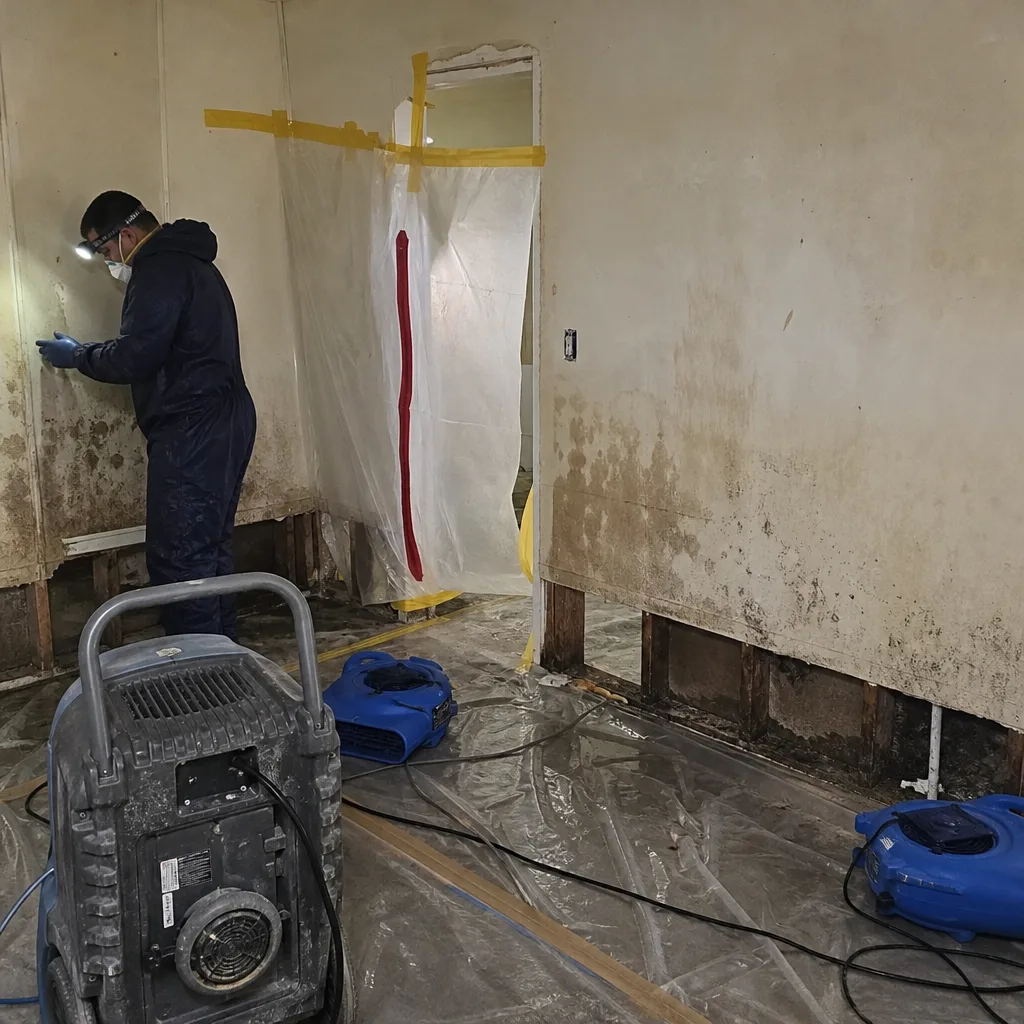
Mold Removal Specialist work in Highland means more than cutting out drywall and spraying bleach. It means building containment so spores don’t spread to unaffected rooms, running HEPA air scrubbers to pull airborne mold out of the space, removing affected materials, treating the framing, and then verifying the moisture source is gone. Skip any of those steps and the mold comes back.
For a contained mold removal in a typical Highland home, you’re looking at $1,800 to $6,500. Smaller jobs like a single bathroom wall can run as low as $1,200. Larger jobs where mold has spread through multiple rooms or into a crawl space can push past $10,000. We give you a written scope with specific line items before work starts, so there are no surprises mid-job.

Containment and HEPA Filtration
Air movers without containment in a home with original cast-iron drains spread contamination to rooms that were never affected. We build negative air pressure zones around the work area before we open any walls. HEPA air scrubbers run continuously, capturing spores down to 0.3 microns. This is the difference between fixing a mold problem and chasing one through the entire house.
Non-Invasive Structural Drying
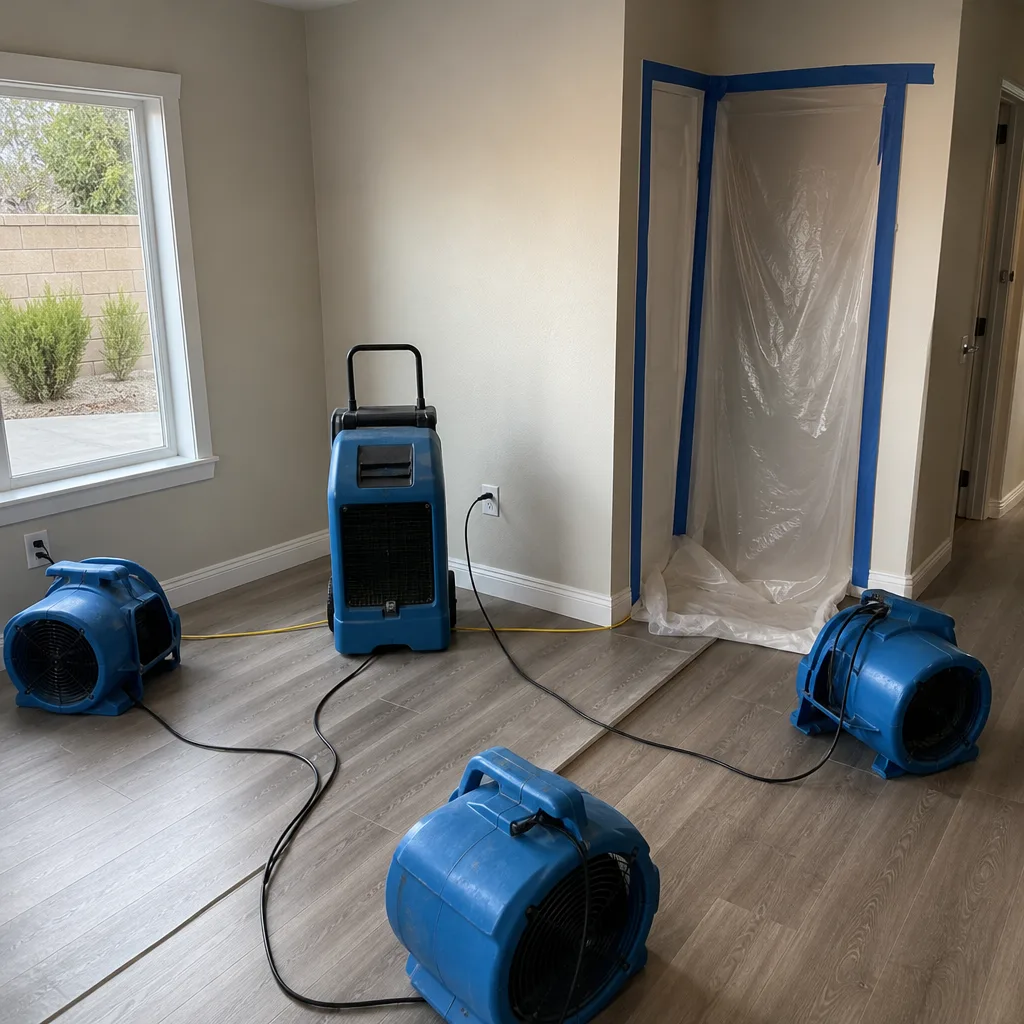
Our Injectidry systems dry wall cavities and under-slab spaces without demolishing everything first. In older Highland homes where matching texture and trim is nearly impossible, that preservation matters. We dry first, remove only what’s truly unsalvageable, and save you money on reconstruction. The goal is to fix the problem without turning your house into a construction site.
Trusted Brands We Service in Highland
We don’t buy whatever equipment is cheapest at a big-box supplier. Our fleet runs Dri-Eaz and Phoenix dehumidifiers, XPOWER air movers, and Injectidry cavity-drying systems because those are the brands insurance-preferred restoration contractors use. They’re reliable, measurable, and calibrated. When we set up drying equipment in your Highland home, we’re not just plugging in fans. We’re running a documented drying protocol with target moisture readings and daily monitoring. That’s what makes the difference between “it feels dry” and “it is dry.”
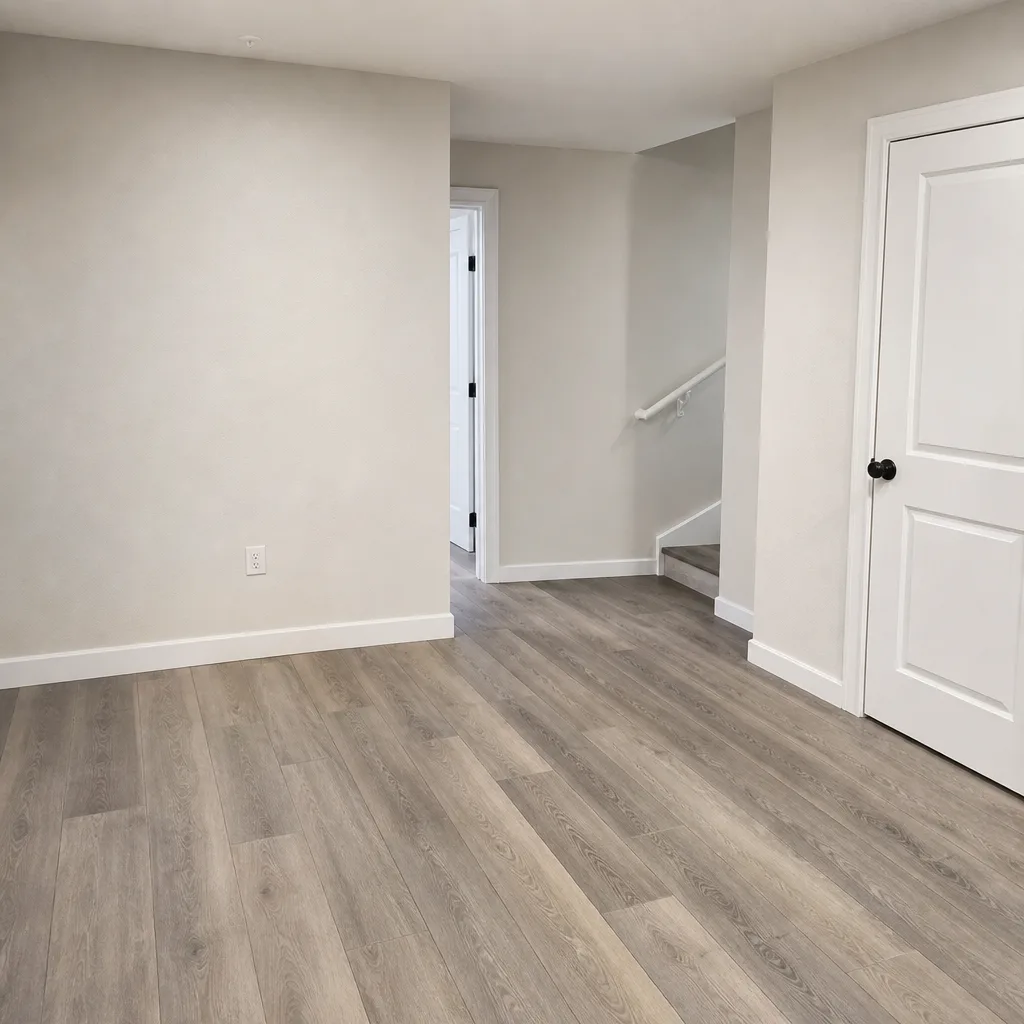
See the difference
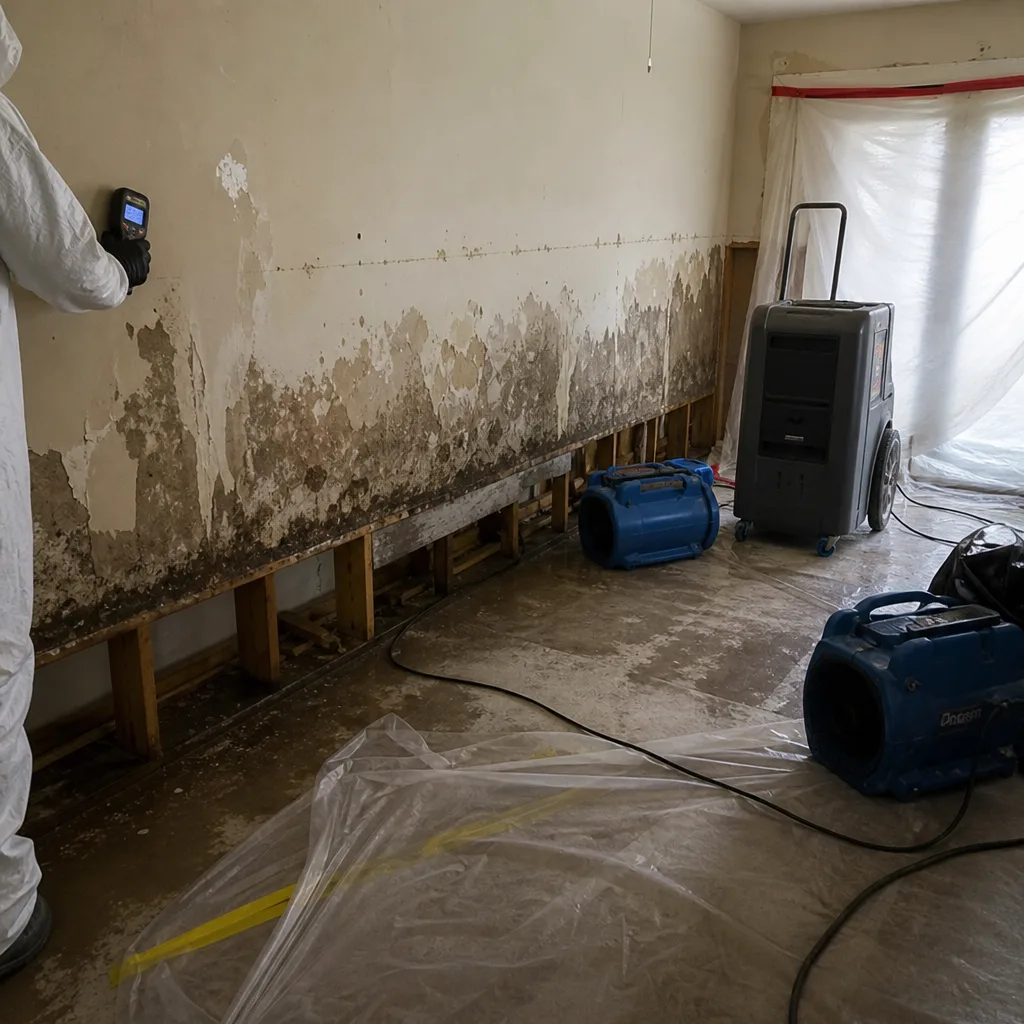 Before
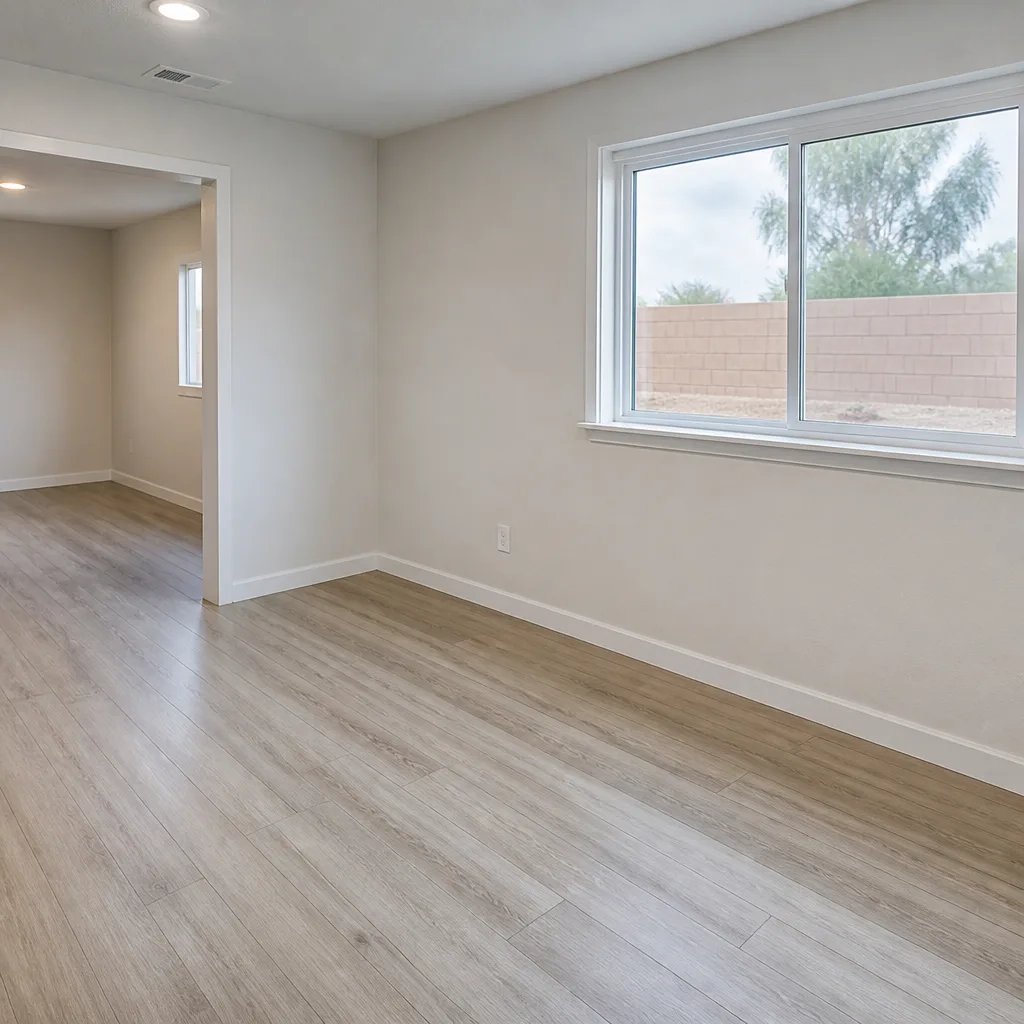 After
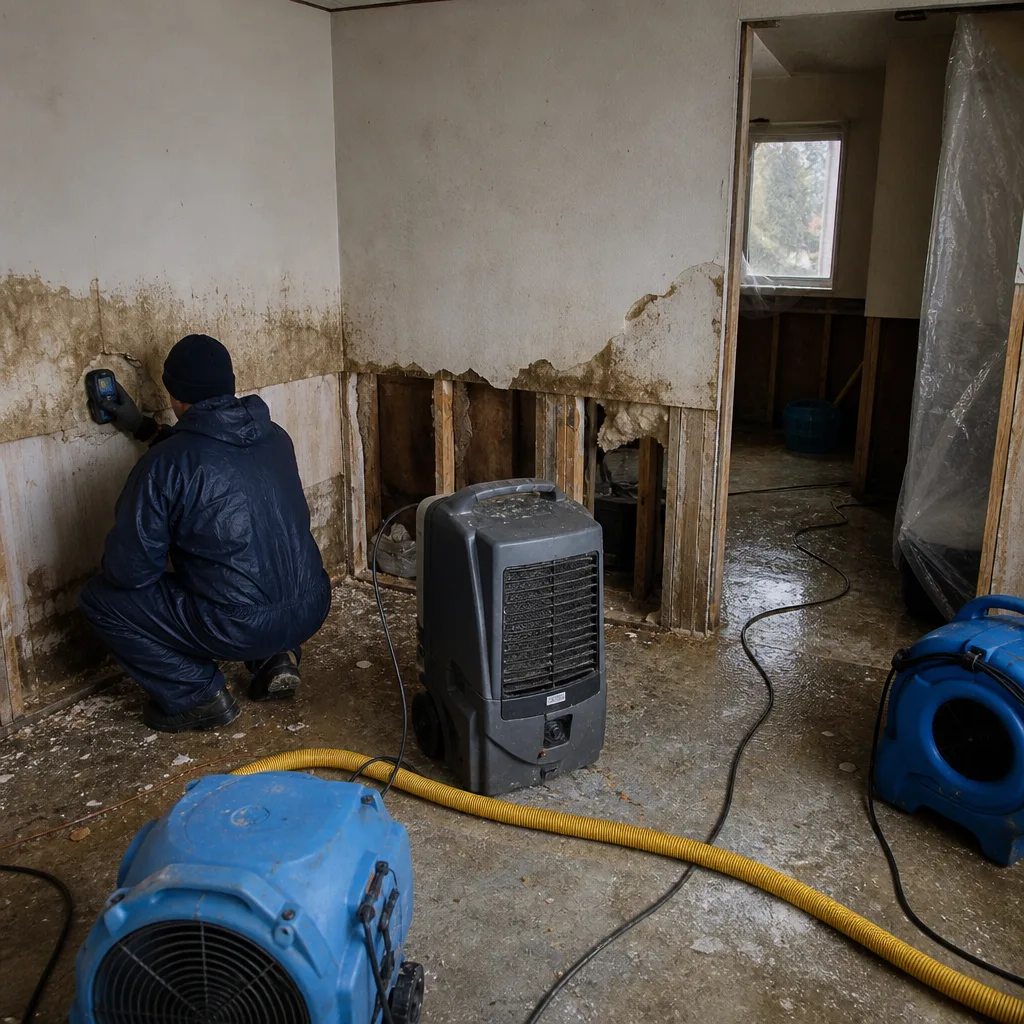 Before
 After
 Before
 After
Common Mold Remediation Problems We See in Highland Homes
- Hidden slab leaks in cast-iron and galvanized plumbing: A pinhole leak can weep into the slab for months before anyone notices. By the time you smell it, mold has usually spread through wall cavities and under flooring in the 92346 ZIP’s older tract homes.
- Moisture masked by dry desert air: Highland’s heat dries surfaces quickly, which convinces homeowners the leak stopped or the water got cleaned up. The moisture is often still trapped under carpet, behind baseboards, or inside drywall, feeding mold that hasn’t surfaced yet.
- Santa Ana wind events pushing dust through roof vents: After a windstorm, homeowners focus on visible soot and ash. What they miss is the attic condensation or small roof leak that developed during the same event, creating ideal mold conditions in the attic insulation.
- Rural foothill properties with wells and septic systems: Highland’s rural homes often have different plumbing systems than the city subdivisions. Well water with high mineral content accelerates corrosion in older pipes, and septic backups introduce Category 3 water into the house that requires different remediation than a clean water leak.
Pricing for Mold Remediation in Highland, CA
Here’s what you can expect to pay in Highland for common mold work. A mold inspection with moisture mapping runs $350 to $700. Air quality testing adds $300 to $500. A contained removal of mold from a single room runs $1,800 to $3,500. Multi-room remediation with structural drying typically lands between $4,000 and $8,500. Crawl space mold treatment runs $2,500 to $6,000 depending on square footage and whether we’re encapsulating the space after treatment.
What pushes costs up? Hidden moisture sources that require opening walls to find, mold that’s spread into HVAC ductwork, and older homes where matching materials after removal is more expensive. We give you a written estimate before work starts, and we coordinate directly with your insurance company if the mold resulted from a covered water loss. Call (855) 382-0478 for a free estimate on your specific situation.
We Also Serve Cities Near Highland
Whitfield Water Damage provides mold remediation throughout the Inland Empire. In addition to Highland, our team regularly works in San Bernardino, Muscoy, Redlands, and Loma Linda. If you own a rental property or manage multiple buildings in the area, we can schedule inspections across all of them in a single visit.
Serving Highland, CA — Our Local Coverage Area
We’re based in the Highland area and know this community well. Use the map below to see our service coverage — if you’re nearby, we can almost certainly help.
FAQs About Mold Remediation in Highland
Mold can establish itself within 24 to 48 hours of moisture intrusion, but in Highland’s dry climate, the surface may look and feel dry long before that. The real timeline is often weeks or months: a pinhole leak in galvanized pipe weeps slowly into the slab, dry air evaporates the surface moisture, and mold grows inside the wall cavity or under carpet where you can’t see it. By the time you notice an odor, the colony is usually well established. That’s why we recommend an inspection the moment you suspect a leak, even if everything feels dry. Call (855) 382-0478 and we’ll map the moisture before it becomes a full remediation project.
Santa Ana winds drive dust, ash, and debris through roof vents, attic bypasses, and window seals. The dust itself doesn’t cause mold, but the wind events often accompany small roof leaks, lifted flashing, or broken vent seals that let moisture into the attic. That moisture condenses in the insulation and creates mold conditions that go unnoticed because homeowners are focused on the visible soot. After a major wind event in Highland, we recommend checking attic insulation for moisture, not just surfaces for dust. If you find damp insulation or a musty smell, call (855) 382-0478 for an inspection.
Yes, in most cases. The mold typically grows in the wall cavity or under the slab where the pipe leaked, not on the pipe itself. We remove the affected drywall or flooring, treat the exposed framing with antimicrobial products, dry the cavity, and treat the pipe exterior if needed. The pipe itself may be fine for years to come, or it may need a section replaced. We don’t recommend a full repipe unless the corrosion is widespread and multiple leaks are imminent. Our recommendation comes from what we see during the job, not from a sales target. For an honest assessment of your Highland home’s plumbing and mold, call (855) 382-0478.
Rural Highland properties with wells and septic require extra care because the water sources are different. Well water’s mineral content accelerates corrosion in older pipes, and septic backups bring Category 3 water into the house, which means the remediation protocol changes. We contain the affected area differently, use different antimicrobial treatments, and often recommend testing the well water chemistry if corrosion is a recurring problem. Septic-related mold typically requires treating the floors, subfloor, and any affected wall cavities simultaneously. We work with your plumber or septic contractor to coordinate the full fix so mold doesn’t return after the plumbing is repaired. Call (855) 382-0478 to discuss your specific setup.
We use Dri-Eaz and Phoenix dehumidifiers, XPOWER air movers, Injectidry cavity-drying systems, thermal imaging cameras, and HEPA air scrubbers. The Injectidry systems are particularly important in Highland’s older homes with slab foundations because they dry inside wall cavities and under flooring without requiring full demolition. Thermal imaging shows us where moisture is trapped behind surfaces that feel dry. HEPA filtration captures airborne mold spores during the entire job. This is the same equipment insurance-preferred contractors use, and it’s why our drying results hold up when adjusters review the documentation. For a free assessment of your Highland home, call (855) 382-0478.
Written by Nolan Pruett, Owner at Whitfield Water Damage, serving Highland since the company’s founding.