

 Water damage drying
 Fire & smoke cleanup
 Mold remediation
 Storm response
 Sewage cleanup
 Reconstruction
Free visual inspection and a written scope of work before any mitigation begins - photos, moisture readings, and drying logs go in your claim file
The scope we write is the scope we bill. Anything new gets shown to you, in writing, before we touch it.
Get your free estimateFast, Reliable Mold Remediation Across Villa Park
Mold inside a Villa Park home rarely announces itself politely. By the time you smell it, the colony has usually been feeding inside a wall cavity or under a slab for weeks. Our Mold Remediation team responds to Villa Park properties with a specific understanding of what makes this city different: custom estates built between the 1960s and 1990s, aging cast iron drain lines, and the kind of hidden moisture problems that generic restoration crews miss. Call (855) 382-0478 for a free estimate, and we’ll send an IICRC-certified technician who knows exactly where to look in a villa park home.
Why Whitfield Water Damage Is Villa Park’s Preferred Mold Remediation Company
Villa Park homeowners don’t call just anyone after discovering mold. Half-acre lots, high-value custom builds, and insurance adjusters who expect thorough documentation all raise the stakes. We’ve worked enough Villa Park mold jobs to know that the source is rarely where the visible growth is. A dark spot on the hallway baseboard near Serrano Avenue might trace back to a root-intruded sewer lateral fifty feet from the crawl space. We run moisture mapping before we touch a wall. We document elevations in wall cavities, under tile, and behind stucco, because Villa Park’s insurance carriers won’t approve remediation claims without that level of evidence. The result is a remediation that removes the mold and the reason it grew, not a surface wipe that lasts six weeks.
Restoration work we handle
Professional Mold Removal in Villa Park
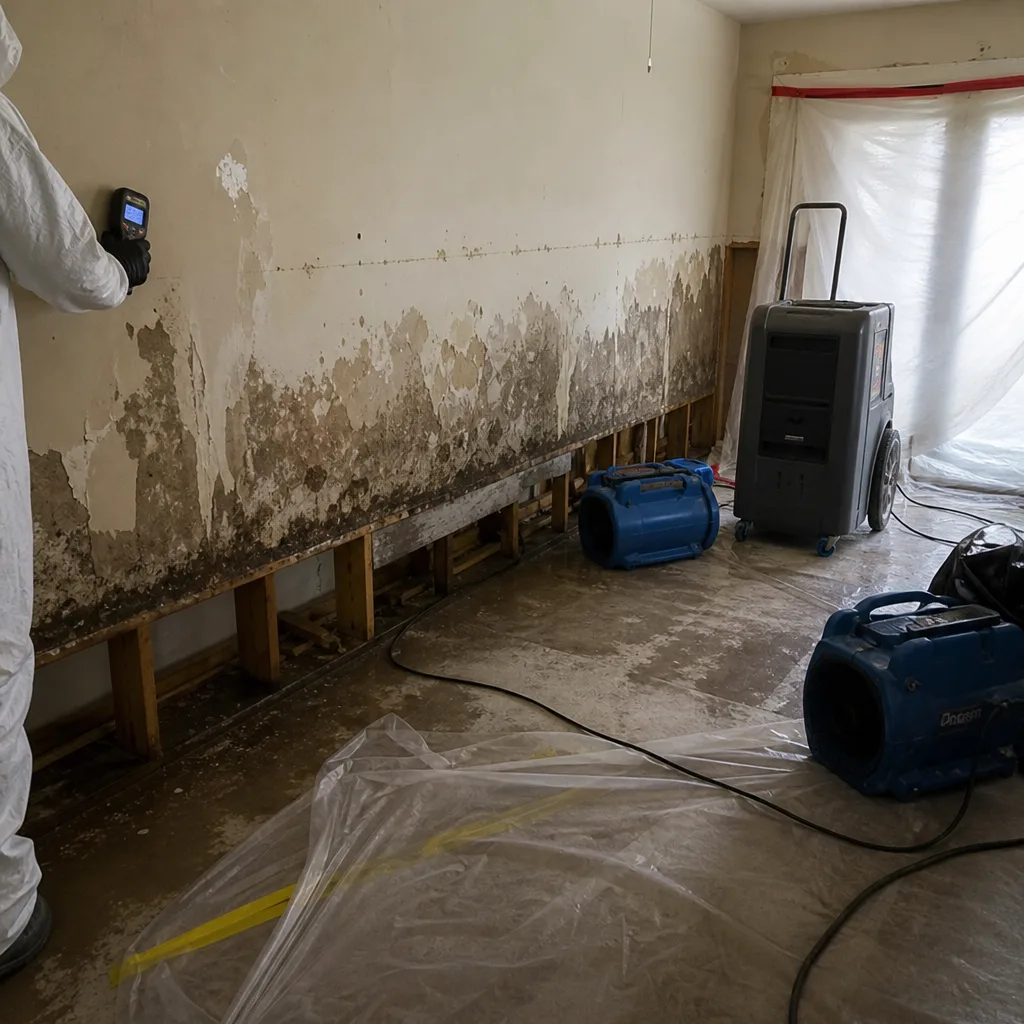
Professional Mold Removal in a Villa Park home means containing the affected area before disturbing it, not simply spraying bleach and repainting. We set up negative air pressure with HEPA-filtered equipment, remove contaminated porous materials like drywall and insulation, and dry the remaining structure to IICRC moisture-content standards before any rebuilding begins. In Villa Park, where custom trim, wainscoting, and owner-specific finishes are the norm, we mark and photograph every material before and after removal so your insurance claim and your restoration both match what you actually had.
Containment Before Removal
Most of the mold we encounter in Villa Park homes sits behind walls or under floors where a slow leak has been feeding it for months. Opening that cavity without containment spreads spores into adjacent rooms and HVAC returns. Our crews isolate the work area, establish negative pressure, and keep the rest of the house clean.
Structural Drying After Removal
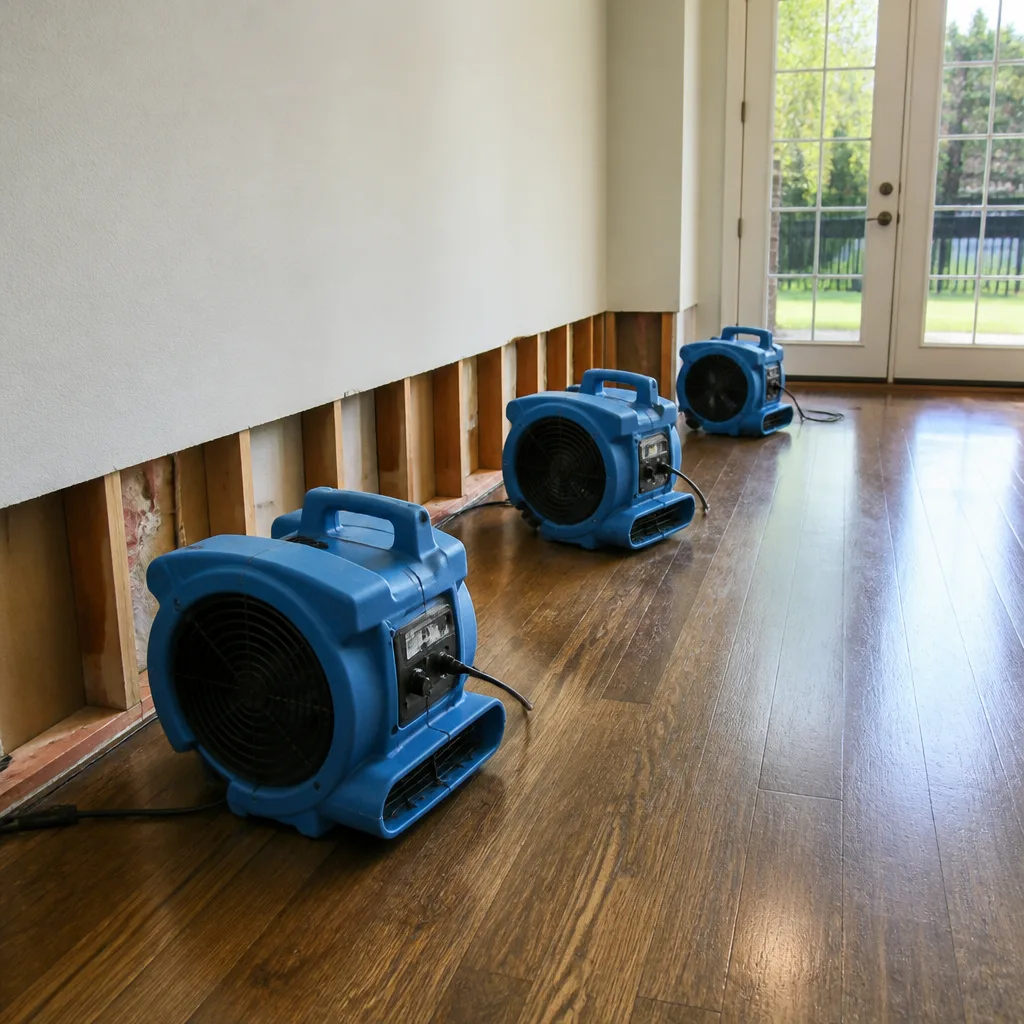
Removing moldy drywall solves half the problem. If the wood framing or subfloor beneath it stays wet, the mold returns. We use Dri-Eaz dehumidifiers and moisture meters to confirm every affected structural member reaches the dry standard before closing the wall.
Mold Inspection in Villa Park
A Mold Inspection in Villa Park is what you should be asking for when you notice a smell, see staining, or just bought a property that hasn’t been comprehensively evaluated. Our inspection process includes visual assessment of all accessible spaces, moisture mapping of walls, ceilings, and slabs, relative humidity checks in both conditioned and unconditioned areas, and air sampling where the material or complaint suggests airborne spore activity. We don’t guess. We plot readings, correlate them to the home’s plumbing and roofline, and give you a written scope before any remediation begins.
Pre-Purchase Mold Assessments
Villa Park buyers face a specific challenge: many listings involve original 1960s builds brought to market by heirs or long-time residents. The cast iron drains and slab foundations in these properties hide conditions a standard home inspection won’t flag. We provide moisture mapping and mold evaluation that can identify telltale signs of past water intrusion, and we’ll tell you honestly whether what we found is cosmetic or structural.
Post-Remediation Verification
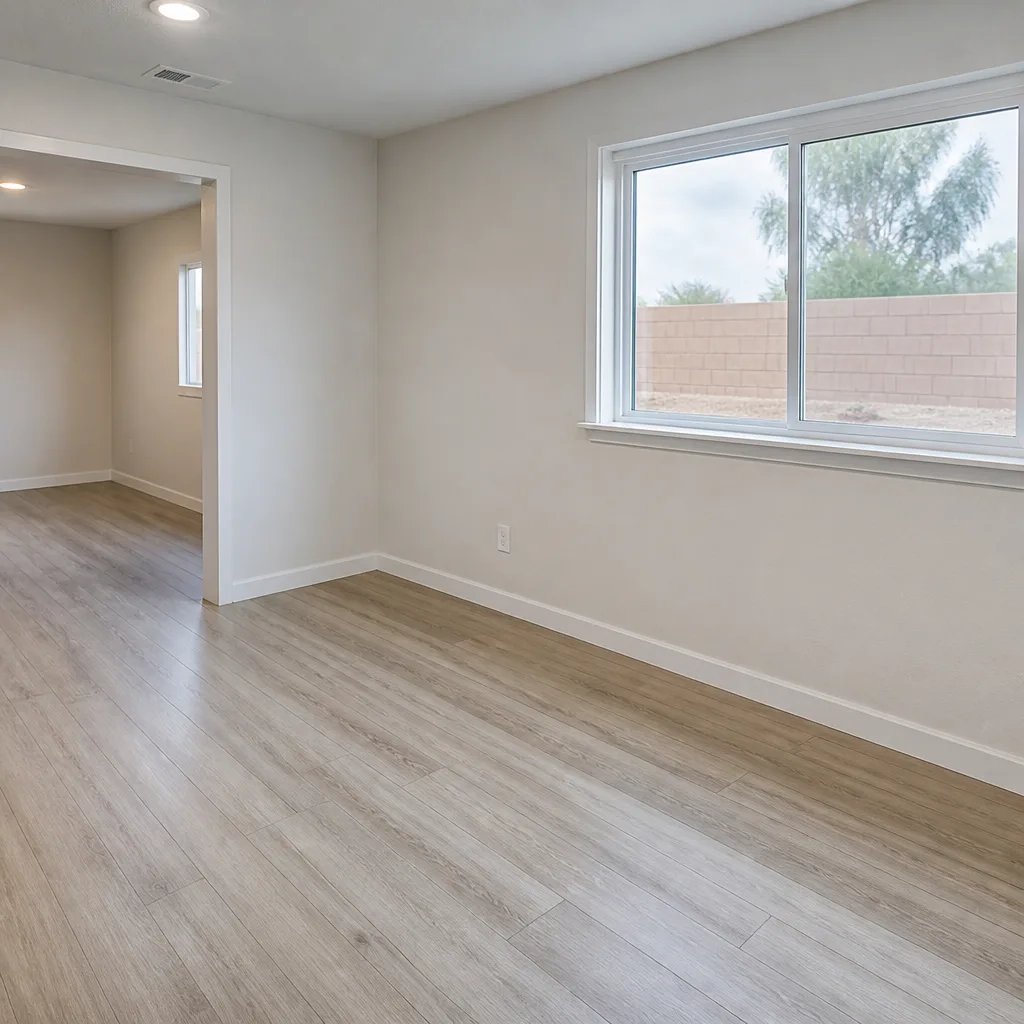
After removing mold, we don’t simply close the wall and call it done. We test the cleaned areas to confirm they’ve returned to background conditions. That verification matters in Villa Park, where insurance carriers and future buyers expect a clear paper trail.
Trusted Brands We Service in Villa Park
If your Villa Park home has been treated by a previous company using generic rental equipment, you may have already learned why that isn’t enough. Our crews run Dri-Eaz dehumidifiers for structural drying, XPOWER and B-Air air movers for airflow, and Injectidry cavity-drying systems for drying inside walls without demolition. These are the brands insurance-preferred restoration contractors specify for a reason. We maintain our fleet and stock commonly needed parts so a Villa Park job doesn’t stall waiting on a supplier. When we haul equipment to your Villa Park property, it’s the same gear we’d run on any high-value custom job. We don’t use rental-shop dehumidifiers that struggle to pull moisture from a slab.
See the difference
 Before
 After
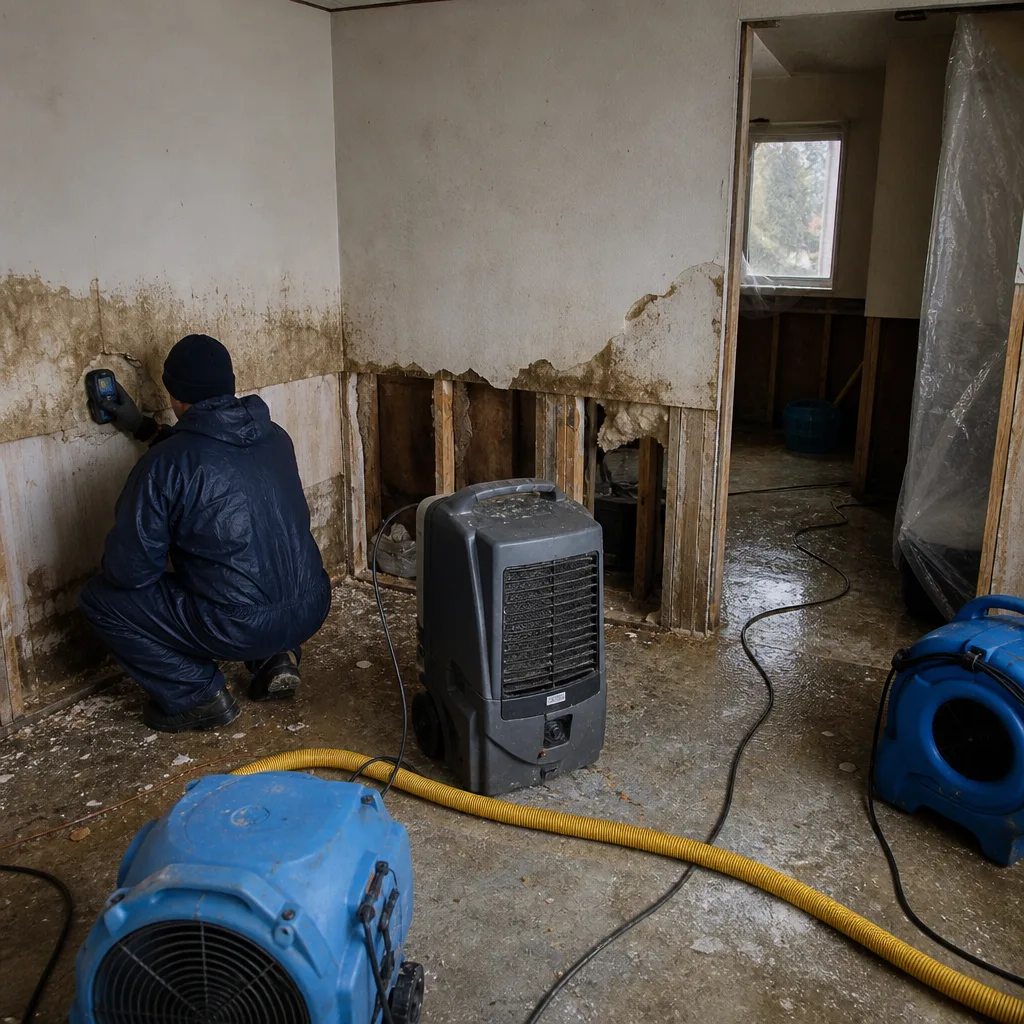 Before
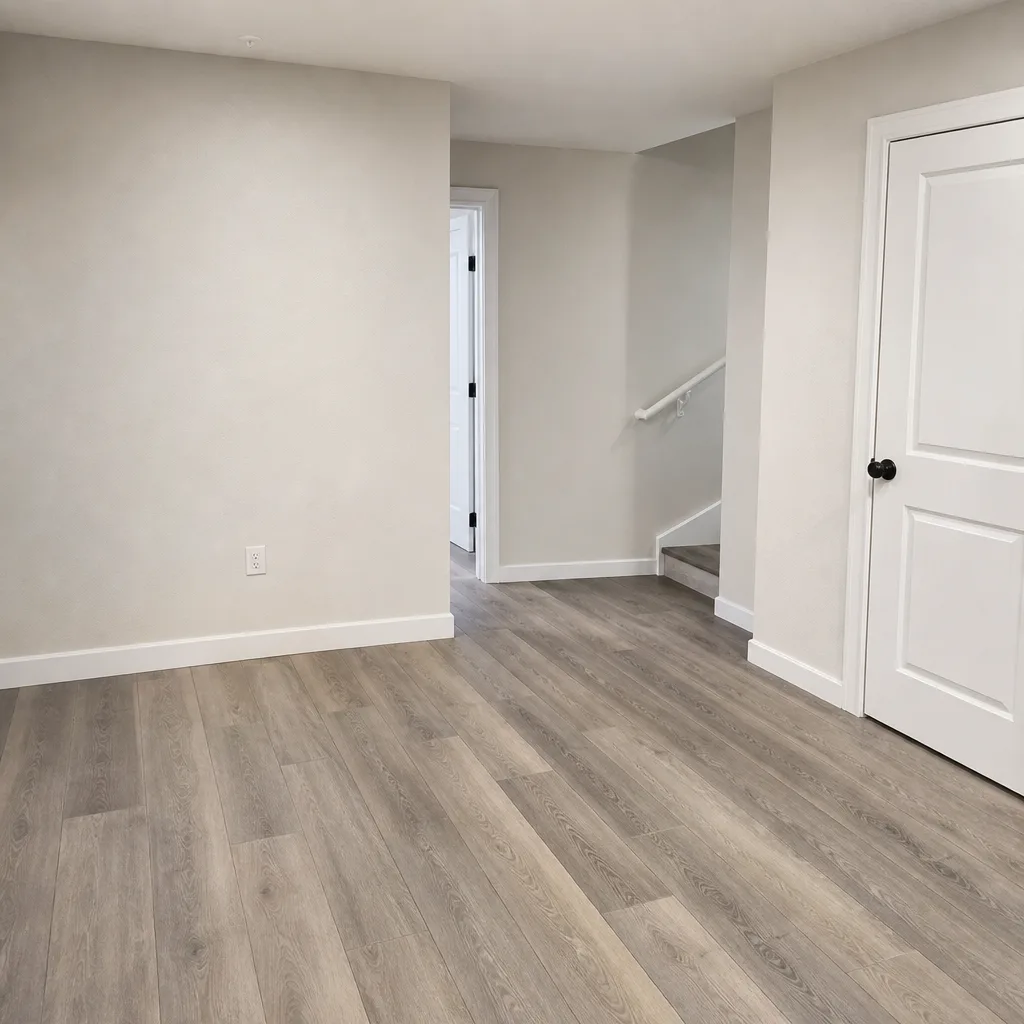 After
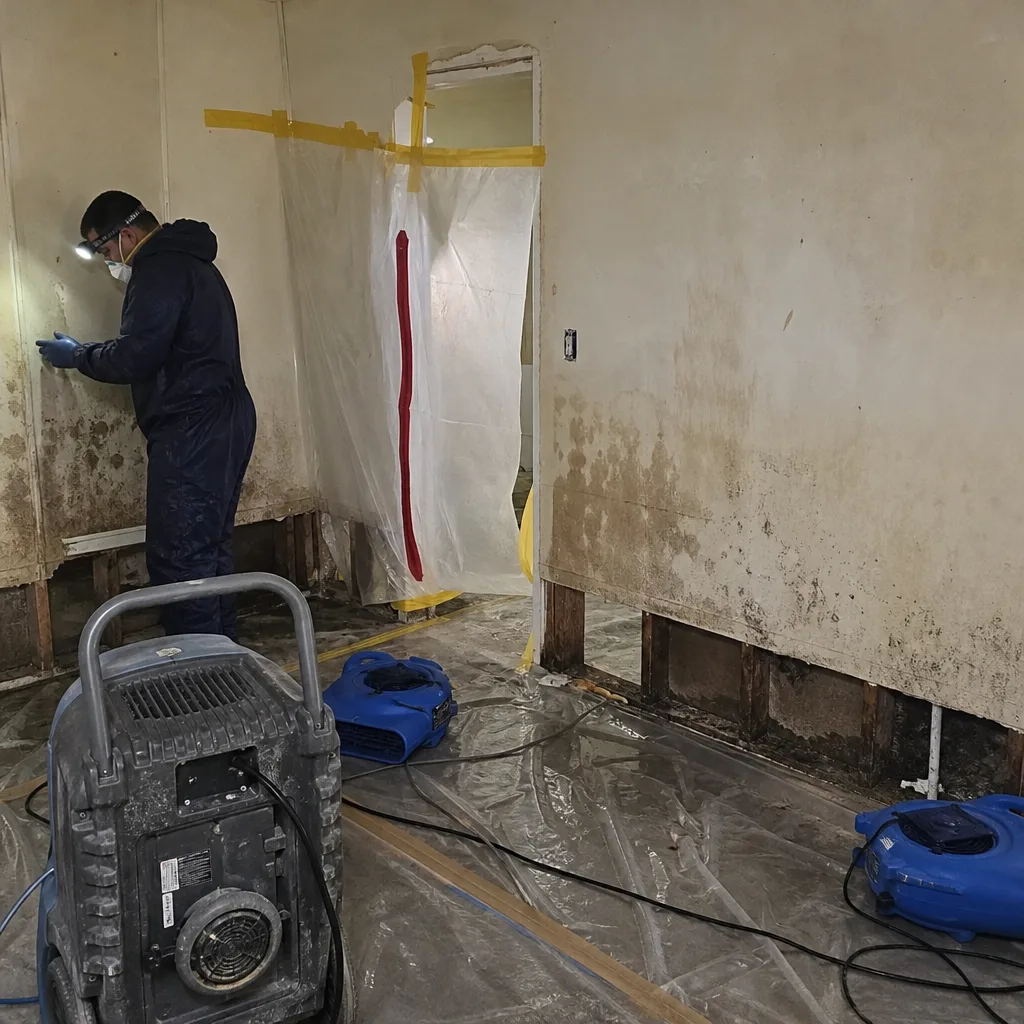 Before
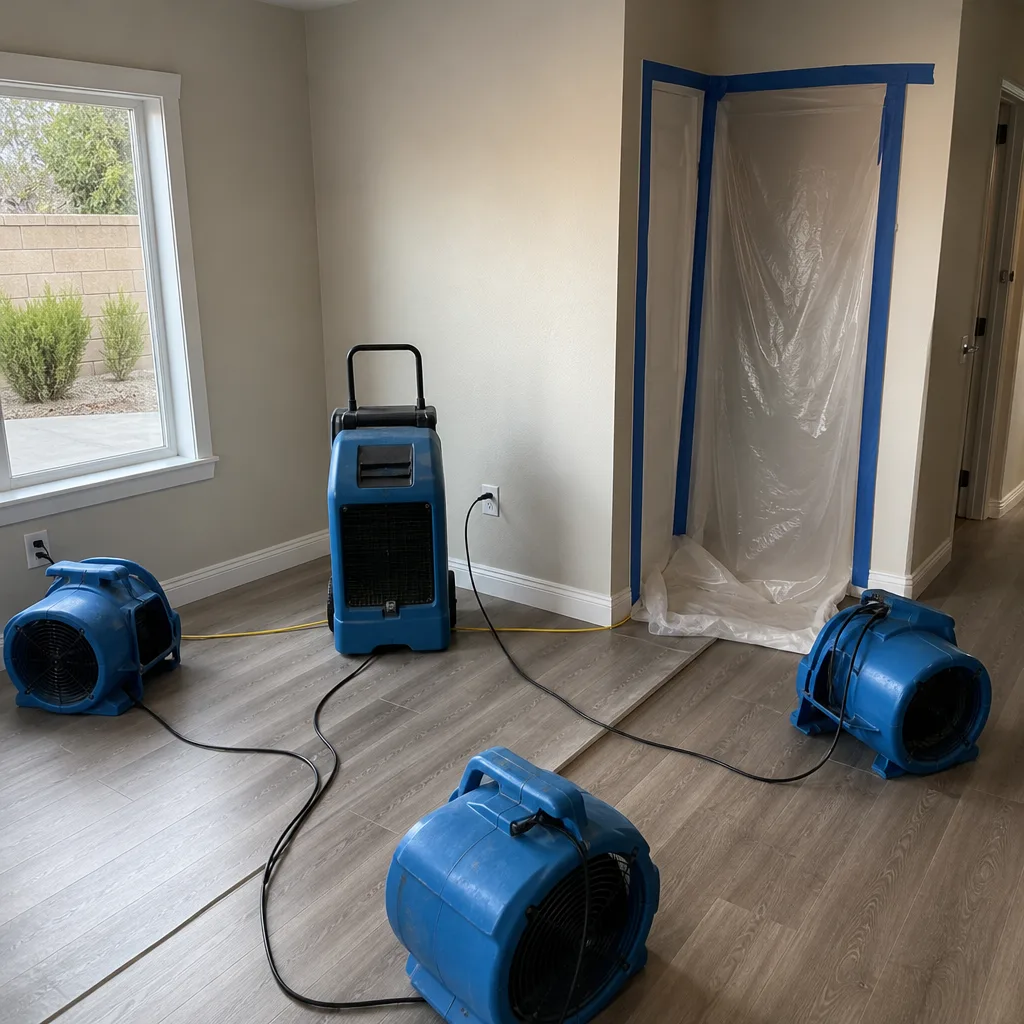 After
Common Mold Remediation Problems We See in Villa Park Homes
- Cast iron drain failure under slabs. Many Villa Park homes built in the 1960s and 1970s still run original cast iron waste lines. When those crack or scale through, sewage and gray water seep into the slab and wick into baseboards, drywall, and flooring. Mold follows within days of the first seep, and it keeps returning until the line is repaired or rerouted.
- Root intrusion from citrus-grove-era trees. Villa Park’s mature trees, including remnants of the old orange groves, send roots into sewer laterals and storm drain connections. The roots catch debris, and the resulting backup saturates soil and framing. We’ve found hidden mold growth behind stucco where a root-blocked line had been pushing moisture behind the wall for months.
- Winter rain leaks in stucco and tile roofs. Heavy winter downpours work into hairline stucco cracks and around old tile roof flashings on Villa Park’s original builds. The leak may dry on the surface while the wall cavity stays damp for weeks. That’s the perfect environment for hidden mold colonies behind baseboards and in insulation.
- Additions that trap moisture. Villa Park homes are rarely original. At some point, someone added a wing or enclosed a patio. Where old rooflines meet new construction, flashing often fails. Where additions tie into original drain lines, mixed plumbing materials create slow drips. We trace every addition’s roof and plumbing connection when we look for the moisture source.
Pricing for Mold Remediation in Villa Park, CA
We Also Serve Cities Near Villa Park
Our Mold Remediation in Villa Park coverage extends to the surrounding communities. When you call from a Villa Park address, you get the same IICRC-certified team and equipment whether the job is in Orange, North Tustin, Placentia, or Anaheim. We schedule locally, respond quickly, and carry full documentation to every site.
Serving Villa Park, CA — Our Local Coverage Area
We’re based in the Villa Park area and know this community well. Use the map below to see our service coverage — if you’re nearby, we can almost certainly help.

FAQs About Mold Remediation in Villa Park
Why does mold keep coming back in my Villa Park home even after I clean it?
Because in Villa Park’s housing stock, the mold is usually a symptom, not the root problem. If you scrub visible mold but don’t find and stop the moisture source, the colony returns. In Villa Park, the recurring source is often a cracked cast iron drain line under the slab, a root-intruded sewer lateral, or a slow stucco leak from winter rain. Until that source is fixed, any cleaning is temporary. Call (855) 382-0478 and we’ll trace the moisture, not just treat the stain.
How quickly can mold grow after a winter rain leak in my Villa Park stucco walls?
Mold can begin colonizing within 24 to 48 hours of a wall cavity becoming damp, and Villa Park’s stucco exteriors hide the early signs. Heavy winter rain enters through hairline cracks and around old roof flashings, wetting insulation and framing inside a closed cavity. By the time you see a stain or smell something musty, the colony has typically been active for a week or more.
Does my Villa Park home’s original cast iron plumbing increase mold risk?
Yes, substantially. Original cast iron drain lines from the 1960s and 1970s are at end of life in many Villa Park homes, and when they crack or scale, they leak water and waste under the slab where no one sees it. That moisture wicks into baseboards, drywall, and framing, creating the warm, damp, dark environment mold needs. The mold won’t stop returning until the line is replaced, lined, or rerouted.
What type of documentation does my insurance carrier require for mold remediation in Villa Park?
Most carriers expect moisture mapping readings, photo evidence of the affected materials before removal, a containment plan, and dry-standard verification after remediation. On high-value Villa Park custom homes, adjusters also want proof that removed materials match what is being replaced. We provide a full written scope with before-and-after photos, moisture logs, and a line-item report your adjuster can act on without follow-up calls.
Can you handle mold remediation in a Villa Park home with multiple additions and mixed plumbing?
Yes. We’ve worked on Villa Park estates where original copper meets galvanized meets PEX, and where two or three additions tie into the original drain lines. We trace the systems separately, identify the failure point, and scope the remediation to the affected area without tearing out more than needed. That’s exactly the kind of job where a generic crew either tears out too much or misses the source entirely.