

 Water damage drying
 Fire & smoke cleanup
 Mold remediation
 Storm response
 Sewage cleanup
 Reconstruction
Free visual inspection and a written scope of work before any mitigation begins - photos, moisture readings, and drying logs go in your claim file
The scope we write is the scope we bill. Anything new gets shown to you, in writing, before we touch it.
Get your free estimateFast, Reliable Water Damage Restoration Across Apple Valley
A burst supply line, a monsoon flash flood, a swamp cooler failure that’s been quietly soaking your ceiling for days. Water damage in Apple Valley rarely announces itself politely. Our Water Damage Restoration team responds to homes across Apple Valley with IICRC-certified drying protocols and professional-grade equipment, usually arriving within hours of your call, not days. When water is moving through wall cavities and under slab foundations, the difference between a three-day drying job and a full tear-out rebuild often comes down to how quickly extraction and structural drying begin. That’s the work we do, and we do it for Apple Valley homeowners every week. Call (855) 382-0478 and we’ll get a crew headed your way.
Why Whitfield Water Damage Is Apple Valley’s Preferred Water Damage Restoration Company
Apple Valley presents a specific set of water damage patterns that a generalist restoration company from down the hill simply doesn’t see often enough to anticipate. The High Desert’s extreme dry heat followed by concentrated monsoon downpours creates failures in evaporative cooler lines, sun-brittled supply plumbing, and roof penetrations that behave differently here than in coastal or valley markets. Our technicians work these failures constantly across 92307 and 92308, from the neighborhoods around Jess Ranch to the semi-rural lots east of Apple Valley Road. We know what to check when a homeowner says the ceiling “looks dry” but the swamp cooler was running all week.
That local knowledge is matched by credentials. Whitfield Water Damage operates under IICRC-certified drying methodology, which means every job follows a documented, science-based protocol rather than guesswork. We also maintain membership in the Restoration Industry Association and IFA, holding ourselves accountable to professional standards that go beyond a basic contractor license. Nolan Pruett built this company around a simple principle: the homeowner in a crisis deserves the same level of technical rigor an insurance adjuster expects from a preferred contractor. That’s the standard we bring to every Apple Valley job, whether it’s a flooded laundry room in a 1990s tract home or water intrusion in a manufactured home on a rural parcel with its own well.
Restoration work we handle
Flooded Basement in Apple Valley
Flooded Basement in Apple Valley usually means one of two things: a monsoon-driven sheet flow intrusion through a below-grade entry or window well, or an interior failure like a water heater burst or washing machine supply line break. Most Apple Valley basements, where they exist at all, are partial or walk-out basements on sloped lots, and the combination of hard-packed High Desert soil and sudden heavy rain can push water against foundation walls faster than perimeter drainage handles.
What the Job Involves
Extraction comes first. We remove standing water with truck-mounted and portable extraction units, then map moisture through the concrete slab and wall cavities. Apple Valley’s dry air can fool you here. Surface concrete feels dry within a day, but moisture trapped beneath flooring or wicking up drywall continues causing damage long after the visible water is gone.
Drying and Verification
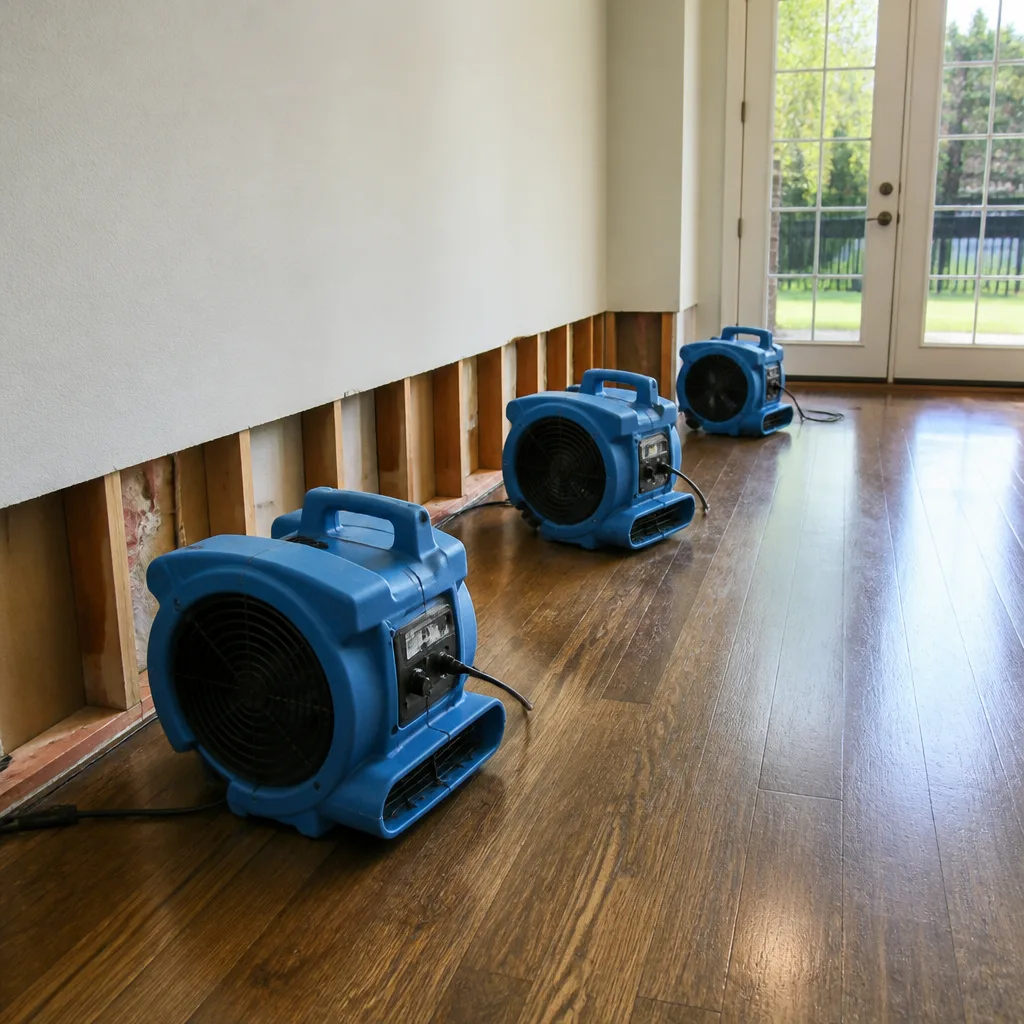
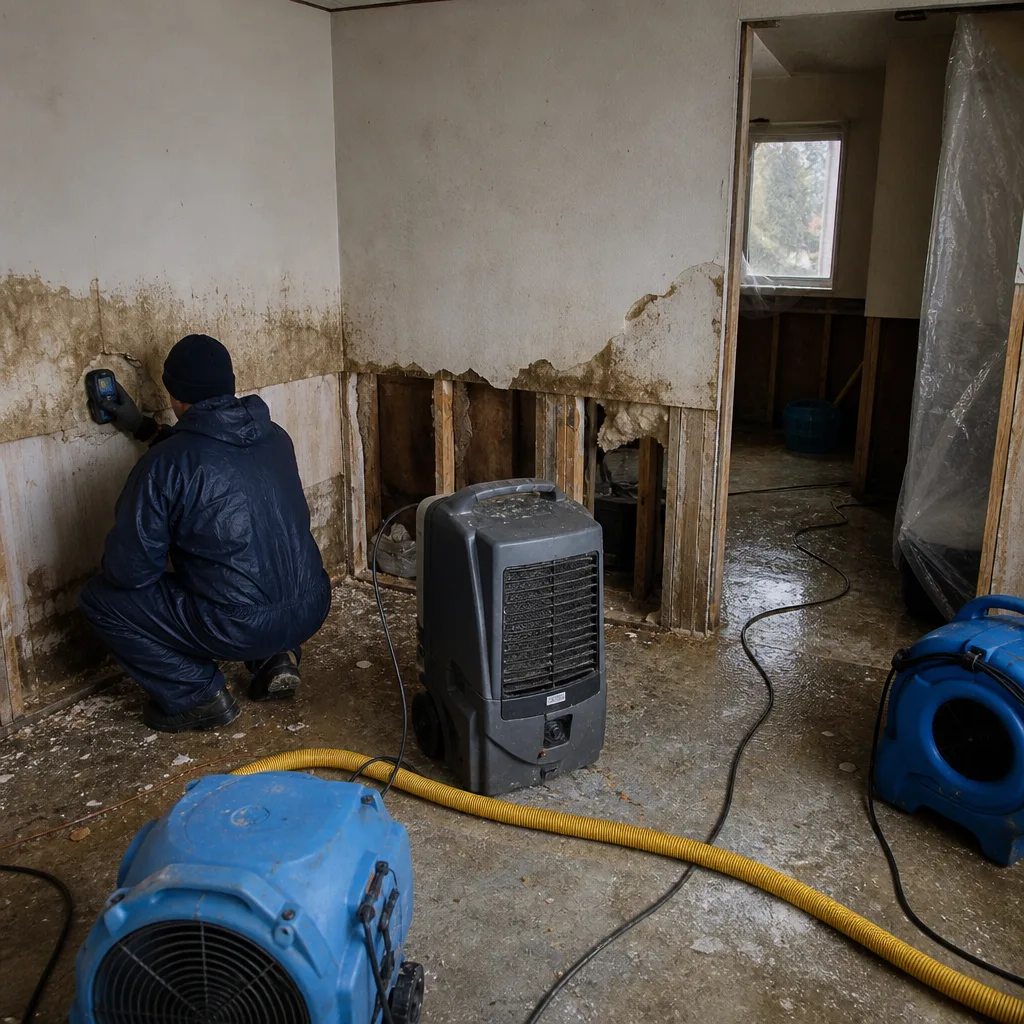
We set professional-grade air movers and dehumidifiers sized to the affected cubic footage, not the visible puddle. Every drying job ends with moisture readings that confirm the structure is back to pre-loss condition. The goal is to get you from flooded to dry and documented for insurance without tearing out flooring that didn’t need to go.
Water Extraction in Apple Valley
Water Extraction in Apple Valley, whether from a flash flood, a burst pipe, or an evaporative cooler line, is about removing water from places you can’t see. Standing water is the obvious part. The hidden water inside wall cavities, under baseboards, and beneath vinyl plank flooring is what turns a manageable loss into a mold remediation and rebuild.
Non-Invasive Structural Drying
We use Injectidry systems to dry wall cavities and subfloor spaces without cutting out drywall or pulling up flooring. That matters in Apple Valley because so many homes are slab-on-grade construction. Water that gets under flooring on a slab has nowhere to drain. It sits there, wicking into base plates and feeding microbial growth. Injectidry allows us to pull moisture out of those enclosed spaces and dry the structure in place, reducing demolition costs and getting you back to normal faster.
Hidden Water Detection
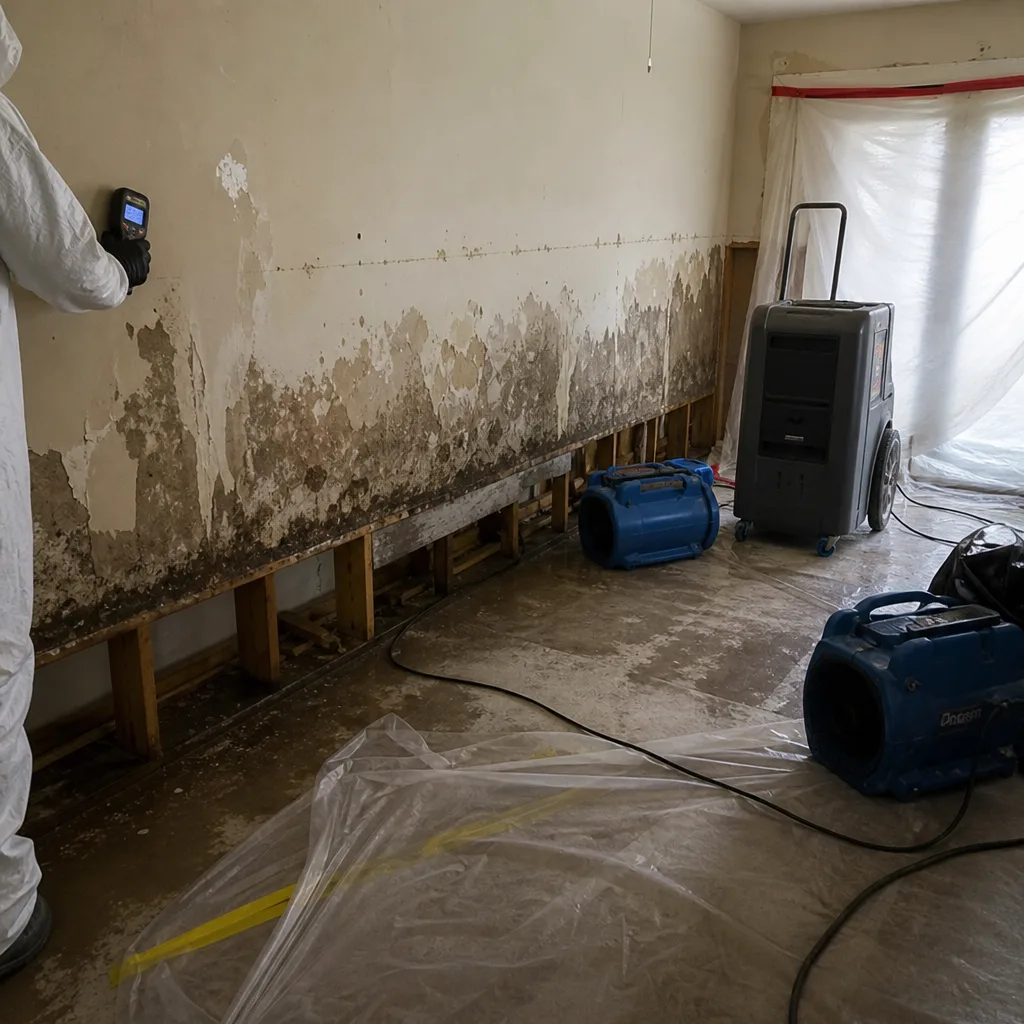
Infrared imaging and penetrating moisture meters show us where the water went, not just where it pooled. After a swamp cooler line failure above a hallway ceiling, for example, water often travels along drywall seams and settles in places far from the original leak. We trace the migration path and dry every affected cavity. Skipping that step leaves a lingering mustiness that tells you the job wasn’t finished.
Trusted Brands We Service in Apple Valley
The homes we restore in Apple Valley contain equipment from every major brand and plenty of legacy systems. We regularly extract and dry properties where Dri-Eaz, Phoenix, and XPOWER drying equipment works alongside whatever fixtures and plumbing the home has. Our technicians are trained on the full range of professional restoration equipment, so regardless of what your home’s systems are, the drying protocol stays consistent and IICRC-compliant. We stock replacement parts for failed supply lines, compression fittings, and common valve configurations, which means when we find a brittle evaporative cooler line or cracked well pressure-tank fitting during mitigation, we can often address it the same day rather than leaving you waiting on a plumber’s schedule.
See the difference
 Before
 After
 Before
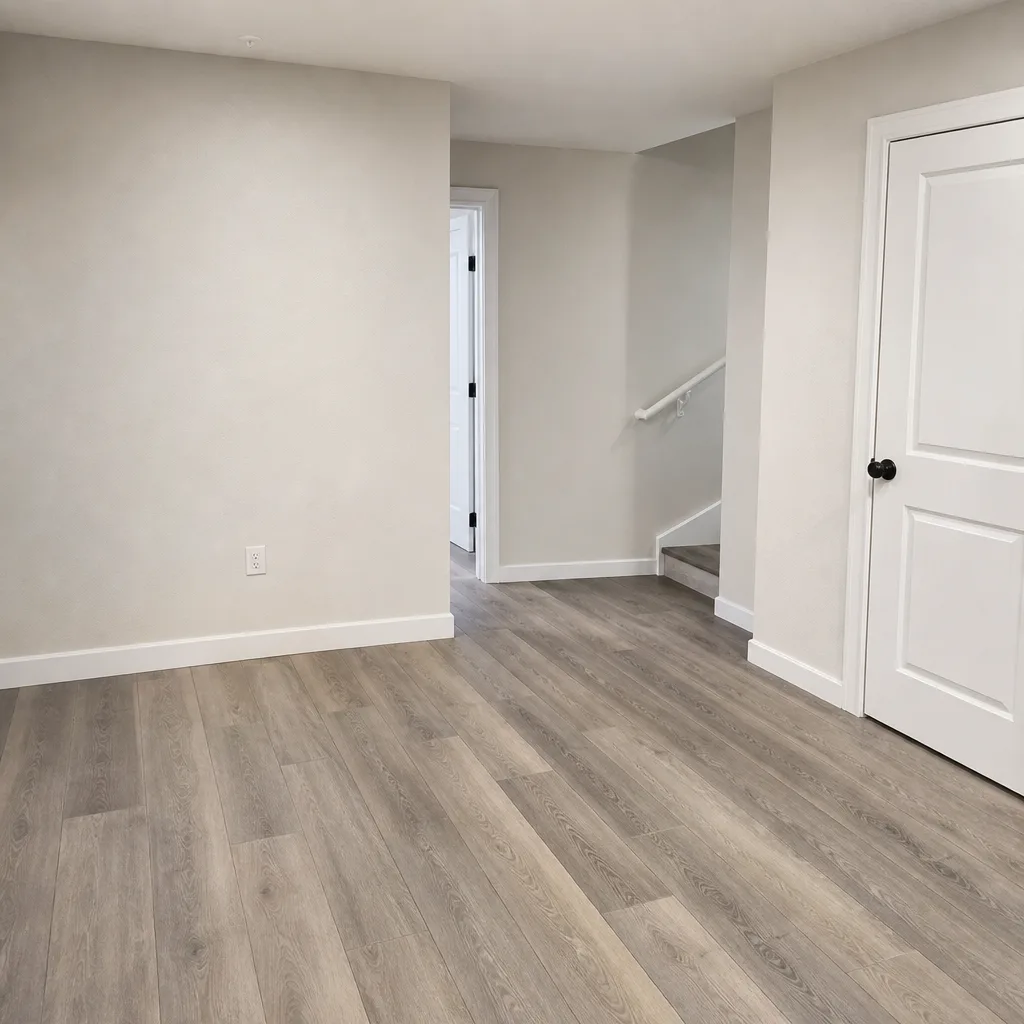 After
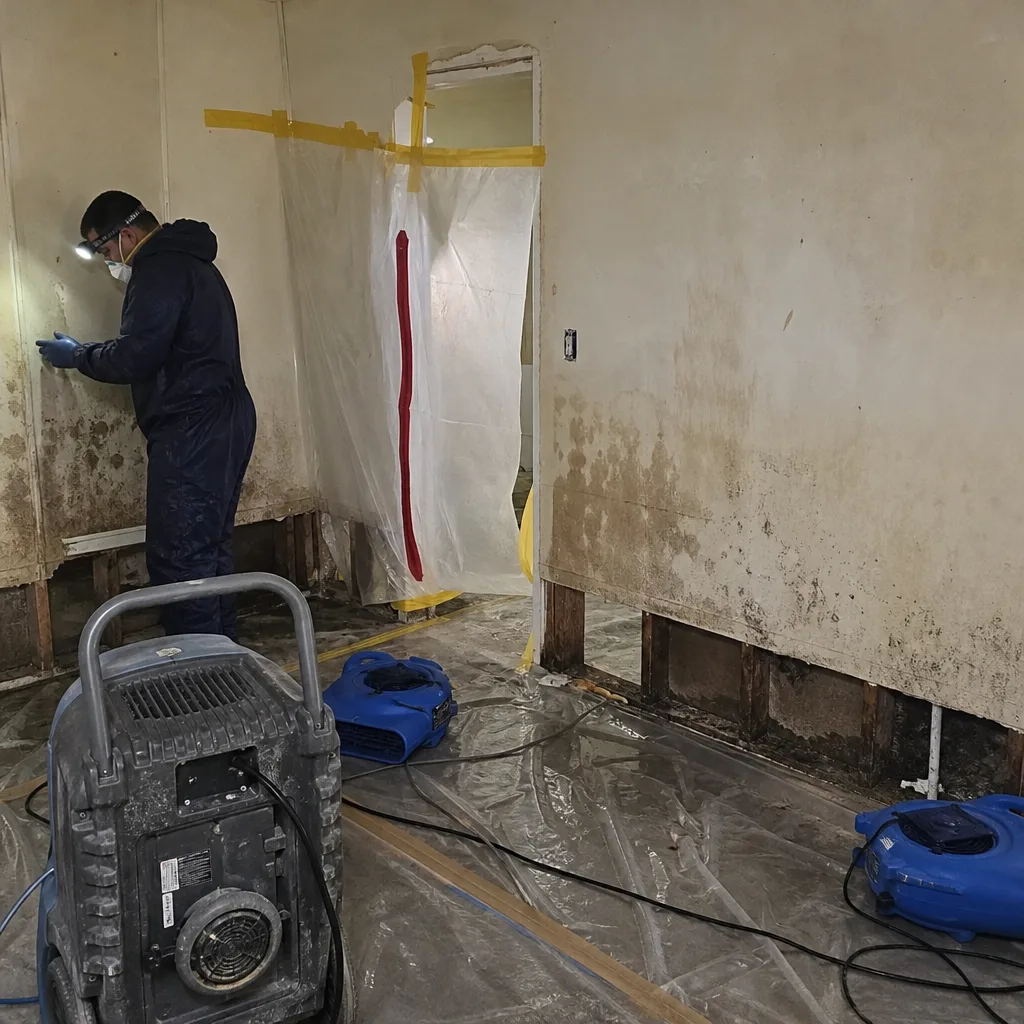 Before
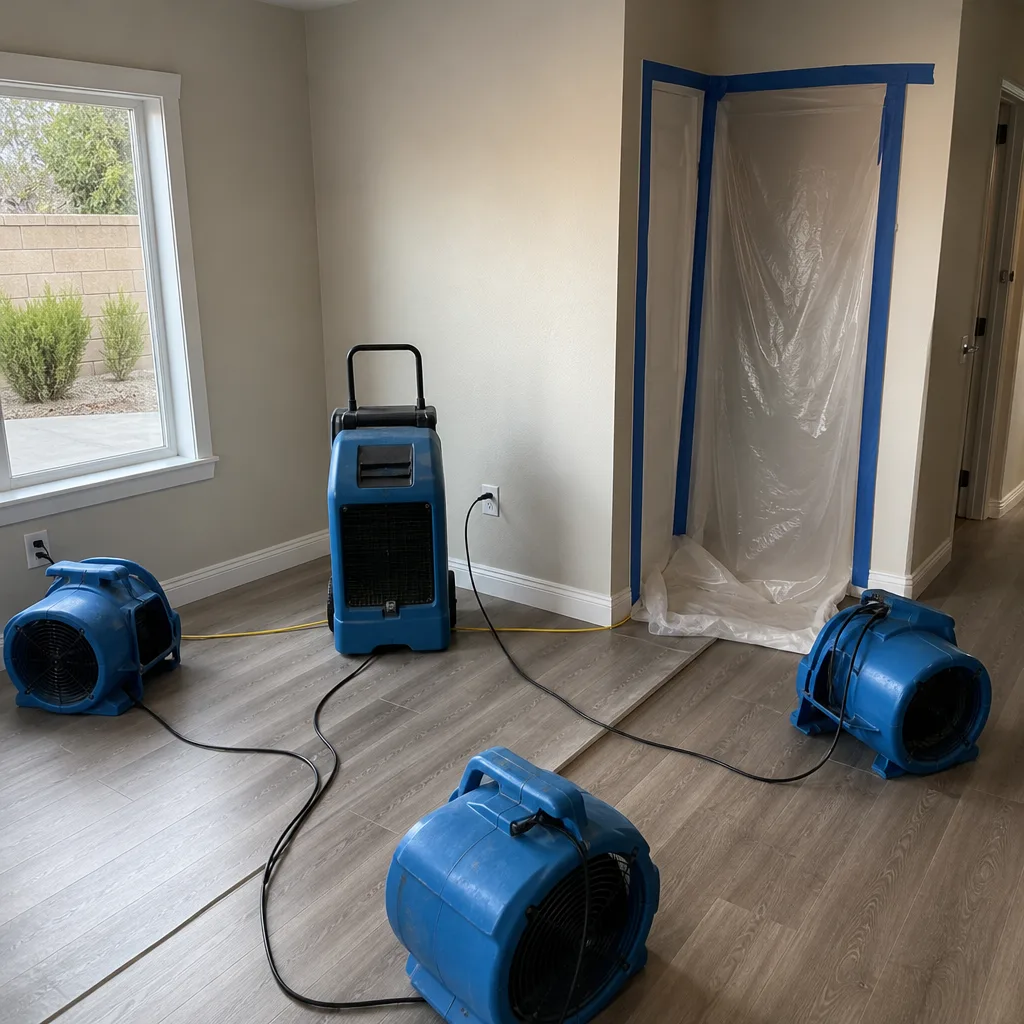 After
Common Water Damage Restoration Problems We See in Apple Valley Homes
- Evaporative cooler line failures that hide for days. The High Desert’s low humidity masks the dampness that would be obvious in a coastal home. By the time a homeowner notices a stain, water has already saturated ceiling insulation and wall cavities.
- Monsoon flash flood intrusion on slab homes. Hard-packed desert soil doesn’t absorb sudden heavy rain. Sheet flow finds the low points around doors, garage slabs, and window wells, and crews that only extract visible water miss moisture wicked into stucco and framing.
- Brittle supply lines on aging 1980s and 1990s homes. A decade of 100-plus-degree summers degrades the plastic and rubber in supply lines, washing machine hoses, and well pressure-tank fittings. When they fail, they fail catastrophically and often while the house is empty.
- Water damage in outbuildings and detached garages on rural lots. Spread-out Apple Valley properties with outbuildings and private wells mean water losses happen in structures an insurance adjuster might not immediately think to inspect. We document everything on the property, not just the main house.
Pricing for Water Damage Restoration in Apple Valley, CA
We Also Serve Cities Near Apple Valley
Beyond Apple Valley, Whitfield Water Damage serves the surrounding High Desert communities. Our Apple Valley coverage extends to Mountain View Acres and Spring Valley Lake, and we regularly respond to water losses in Victorville and Hesperia. If you’re in a neighboring community and dealing with standing water or hidden moisture, call us. We’ll tell you straight what you’re dealing with.
Serving Apple Valley, CA — Our Local Coverage Area
We’re based in the Apple Valley area and know this community well. Use the map below to see our service coverage — if you’re nearby, we can almost certainly help.
FAQs About Water Damage Restoration in Apple Valley
Because the failures in Apple Valley are rarely storm-driven most of the year. The desert’s extreme dry heat and intense sun break down supply lines, connections, and seals quietly over time. Swamp cooler supply lines, in particular, run for hours each day during the summer and fail without warning. When a plastic or rubber line cracks, water seeps into ceiling and wall cavities for days while the desert air evaporates visible evidence. If you’re seeing a stain, the damage is already bigger than the stain. Call (855) 382-0478 and we’ll map the moisture and tell you the real extent.
Within the first 24 to 48 hours, and faster if water wicked into wall cavities or under flooring. Category 3 conditions from floodwater mean faster, more aggressive treatment. In Apple Valley’s monsoon season, flash flood water that moves across desert surfaces carries fine sediment, petroleum residue from roadways, and animal waste. That water infiltrating porous materials turns into a health hazard quickly. The sooner you call, the more material we can save. Every hour of delay after the first 24 means more drywall cut out, more flooring pulled up. Call us the moment you see intrusion.

Yes, almost certainly. Swamp cooler leaks in Apple Valley are slow, steady, and hidden. The water runs along the underside of the roof sheathing or down a wall cavity, soaking insulation and drywall from the back side. By the time a stain appears on the ceiling surface, the cavity has been wet for days. The visible circle is the minority of the affected area. We use infrared imaging and penetrating moisture meters to find the full migration path, then dry the cavities without tearing out ceilings that don’t need to go. If you suspect a cooler leak, call (855) 382-0478 before the stain spreads.
We test the water source and the material it touched, not just the way the water looks. Water from a broken supply line inside the house is Category 1, clean, and often salvageable with proper drying. Water from outside, from a well or septic cross-connection, or that has passed through building materials is Category 2 or 3 and requires material removal and antimicrobial treatment. In Apple Valley, flash flood water is nearly always Category 3 because it picks up contaminants as it flows across the desert surface. We document the category in writing for your insurance file.
Replace it, especially if the line that failed was original to the house. Homes built in the 1980s and 1990s in Apple Valley often have supply lines that have been through 30-plus High Desert summers. The plastic is brittle throughout, not just at the failure point. We recommend replacing the entire line run with braided stainless supply lines rather than patching a cracked section. If the cooler itself is near the end of its service life, we’ll tell you that too. The repair decisions we make during mitigation are aimed at preventing the exact same loss from happening again next summer. Call (855) 382-0478 and we’ll walk you through what we found and what it costs to fix it right.
Written by Nolan Pruett, Owner at Whitfield Water Damage, serving Apple Valley and the High Desert.