


 Water damage drying
 Fire & smoke cleanup
 Mold remediation
 Storm response
 Sewage cleanup
 Reconstruction
Free visual inspection and a written scope of work before any mitigation begins - photos, moisture readings, and drying logs go in your claim file
The scope we write is the scope we bill. Anything new gets shown to you, in writing, before we touch it.
Get your free estimateFast, Reliable Water Damage Restoration Across Colton
A burst supply line or a failed water heater doesn’t wait for business hours, and neither do we. Whitfield Water Damage runs IICRC-certified drying protocol on every job we take in Colton, from emergency extraction in a flooded basement near downtown to structural drying in a tract home off Hunts Lane. We know the housing stock here, we know how the Santa Ana winds push dust and moisture into places it shouldn’t be, and we dispatch crews to Colton the same day you call. If water is spreading through your home right now, call (855) 382-0478 and get a certified technician on the way.
This page covers what water damage restoration in Colton actually costs, how our process works on the housing types we see here, and the one factor most contractors miss: Colton’s rail-and-dust problem that changes how a drying job has to be scoped.
How Much Does Water Damage Restoration Cost in Colton?
Water damage restoration in Colton typically runs $1,200 – $4,800 for a standard residential job, depending on the size of the affected area and the category of water involved. A flooded basement from a burst supply line usually lands between $1,800 – $3,400, while a full structural drying job after storm runoff intrusion can reach $4,000 – $6,500 when wall cavities and subflooring are involved. Here’s how the line items break down across the Inland Empire market:
- Emergency water extraction: $400 – $900 for a single room, $800 – $1,800 for a full basement
- Structural drying and dehumidification: $600 – $1,400 per affected room, 3 – 6 days of equipment runtime
- Category 3 water (storm runoff, sewage): $2,500 – $7,000, which includes removal of contaminated materials you should never dry in place
- Antimicrobial treatment and containment: $300 – $900, and in Colton this step is not optional – the dust from the West Colton yard gets into wet wall cavities
- Moisture mapping and thermal imaging: $200 – $500, documented to insurance standards
Colton’s older housing stock shifts these numbers. A citrus-era bungalow with pier-and-beam foundation and original wood siding costs more to dry properly than a 1990s slab-on-grade tract home, because you’re dealing with crawlspace humidity and rotted sill plates, not just damp drywall. Call (855) 382-0478 for a free estimate with a written scope before any work starts.
Restoration work we handle
Why Whitfield Water Damage Is Colton’s Preferred Water Damage Restoration Company
We’re not a franchise crew that shows up with a mop and a box fan. Whitfield Water Damage runs the same IICRC-certified drying protocol that insurance-preferred contractors use, and our equipment fleet includes Dri-Eaz air movers, Phoenix dehumidification, and Injectidry cavity-drying systems. That matters in Colton because the housing stock is older and the dust problem is real. A technician who doesn’t understand how fine diesel particulate from the I-10 corridor coats evaporator coils and clogs filters will under-dry a structure and hand you a mold problem 60 days later. We won’t.
Nolan Pruett runs our restoration team, and the standard on every Colton job is the same: document the pre-loss condition, dry to a measurable standard, and leave you with drying logs your adjuster can actually read. Homeowners throughout Colton have called us after other companies either over-scoped a small leak into a five-figure rebuild, or under-scoped it and left water in the walls. The written scope before work starts stops both problems before they begin.
We’re members of the Restoration Industry Association and IFA, which means our process gets held to peer standards, not just a license that looks good on a website footer. One certified team handles water, mold, and fire damage in-house, so a Colton homeowner never gets handed to a second vendor mid-claim.
Flooded Basement in Colton
A flooded basement in Colton is a different job than a flooded basement in, say, Rancho Cucamonga or Redlands. Most Colton basements sit in homes built before 1960, and the water intrusion path is rarely just one pipe. We regularly find water coming through rotted sill plates where the original wood framing meets the foundation, plus surface water running down from a yard that slopes toward the house after a hard rain. The extraction itself is straightforward – truck-mounted units pull standing water out fast. The part where Colton differs is what’s in the water: fine silt and diesel particulate from the pass and the rail corridor, which means the water is more contaminated than it looks and the drying plan has to account for residue on every surface the water touched.
Cost for a flooded basement in Colton runs $1,800 – $3,400 for a standard extraction and dry-out. If the water came from storm runoff, which is Category 3, the range moves to $2,500 – $5,500 because contaminated materials get removed and replaced, not dried in place.
Pier-and-Beam Foundations and Hidden Water
Colton’s pre-war bungalows often sit on pier-and-beam foundations, which means water that pools in a basement or crawlspace travels horizontally along joists and sill plates before anyone sees it. Extraction alone doesn’t touch that. We use moisture mapping and thermal imaging to trace the actual intrusion path, then set injectidry-style cavity drying inside the wall and floor assemblies where the water actually is. Skipping this step is how you get a “dried” basement that smells like mildew six weeks later.
Stucco Walls and Trapped Moisture
The wood-frame stucco construction common to Colton’s outer neighborhoods traps water behind the exterior cladding after a flood. Stucco breathes slowly, and in Colton’s dry heat the surface can look bone-dry while the framing behind it still reads 25% moisture content. Our drying protocol includes penetrating moisture probes behind stucco, not just a surface reading, because a surface reading here will lie to you.
Water Extraction in Colton
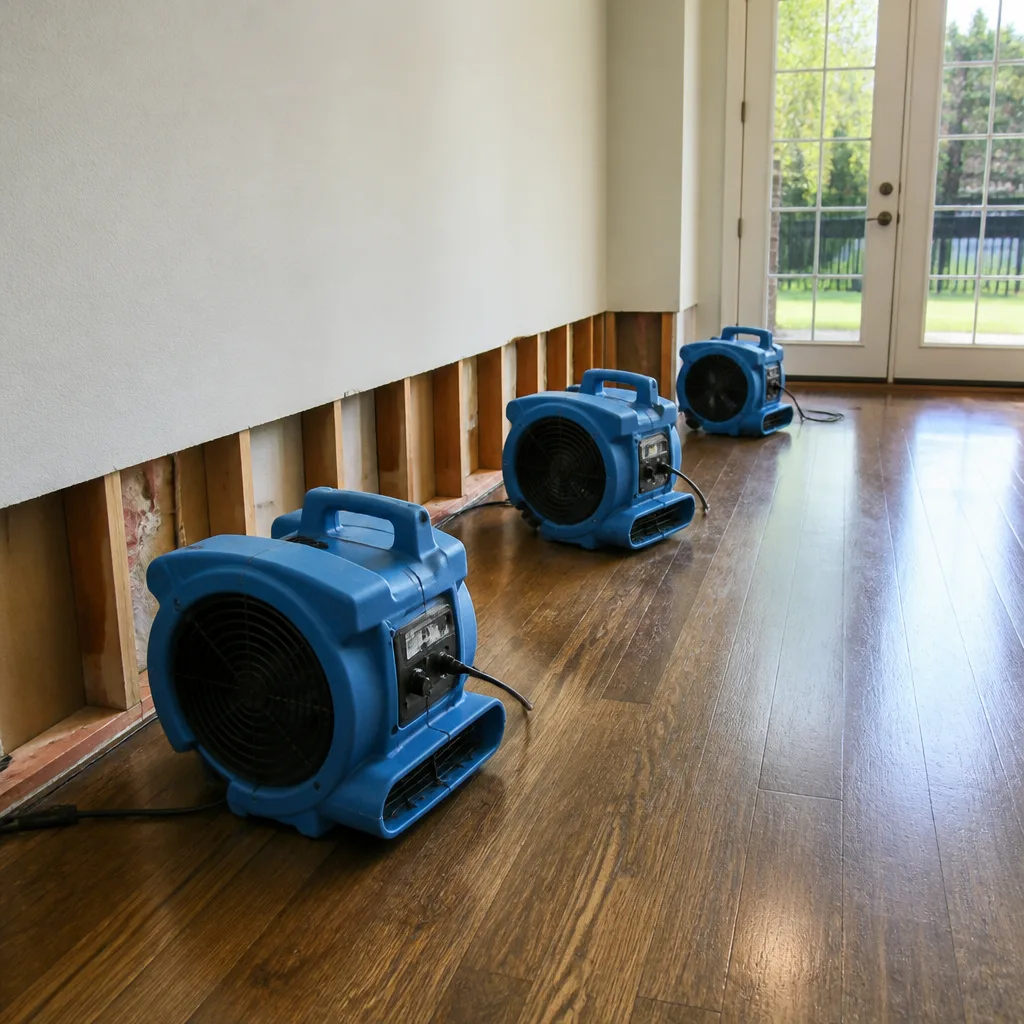
Water extraction in Colton has to happen fast, and it has to happen correctly the first time because of what the water carries. Standing water in a Colton home picks up the same black brake dust and diesel particulate that coats every north- and west-facing wall after a Santa Ana event. That means extraction is not just removing water; it’s removing contaminated water before it wicks into drywall and insulation, where the dust accelerates mold growth and ruins the materials. We run truck-mounted extraction units on Colton jobs, paired with Dri-Eaz air movers and Phoenix desiccant dehumidifiers that can handle the fine particulate load without clogging midway through the job.

For a single-room water extraction in Colton, expect $400 – $900. A whole-basement extraction with contaminated water and full material removal runs $800 – $1,800 for the extraction alone, with drying and dehumidification billed as a separate line item.
Dust and Diesel Particulate on Wet Surfaces
This is the Colton-specific problem most restoration crews ignore. After a Santa Ana wind event, the dust from the West Colton Union Pacific yard and the I-10 truck corridor gets pushed through every window gap, door sweep, and wall penetration. When that dust gets wet, it becomes a slurry that coats studs, subflooring, and the inside of ductwork. Standard air movers without proper filtration just blow that slurry around. Our Colton crew uses HEPA-filtered air scrubbers in containment zones and includes antimicrobial treatment in the scope because the dust itself becomes a growth medium for mold. A generic drying plan on a Colton home fails exactly here.
Category 3 Water and What It Means for Extraction
When the water in a Colton basement comes from storm runoff pushing mud and debris off the San Bernardino foothills, that’s Category 3 water, which carries sewage, bacteria, and heavy metals from the roadways. Extraction for Category 3 water is not “get the water out and dry.” It’s extraction, then removal of affected porous materials, then disinfection of the remaining structure. We document every step of that process to insurance standards because a Category 3 claim handled wrong becomes an adjuster’s nightmare and a family’s health risk.
Trusted Brands We Service in Colton
We work on all major equipment in Colton homes: Dri-Eaz drying and dehumidification systems that match what commercial restoration crews run, Phoenix desiccant dehumidifiers for low-grain drying in crawlspaces and basements, and B-Air air movers for high-velocity air exchange in tight spaces. For Colton customers, we stock common filters, particulate screens, and antimicrobial concentrates so a job doesn’t stall waiting on a part from a supplier in Ontario or Riverside. When your basement is flooded and the drying plan says we need a specific dehumidifier configuration, we already have what’s needed on the truck. Fast turnaround in Colton is not a slogan; it’s the reason a homeowner calls us instead of a crew that runs back to their shop across the county.
See the difference
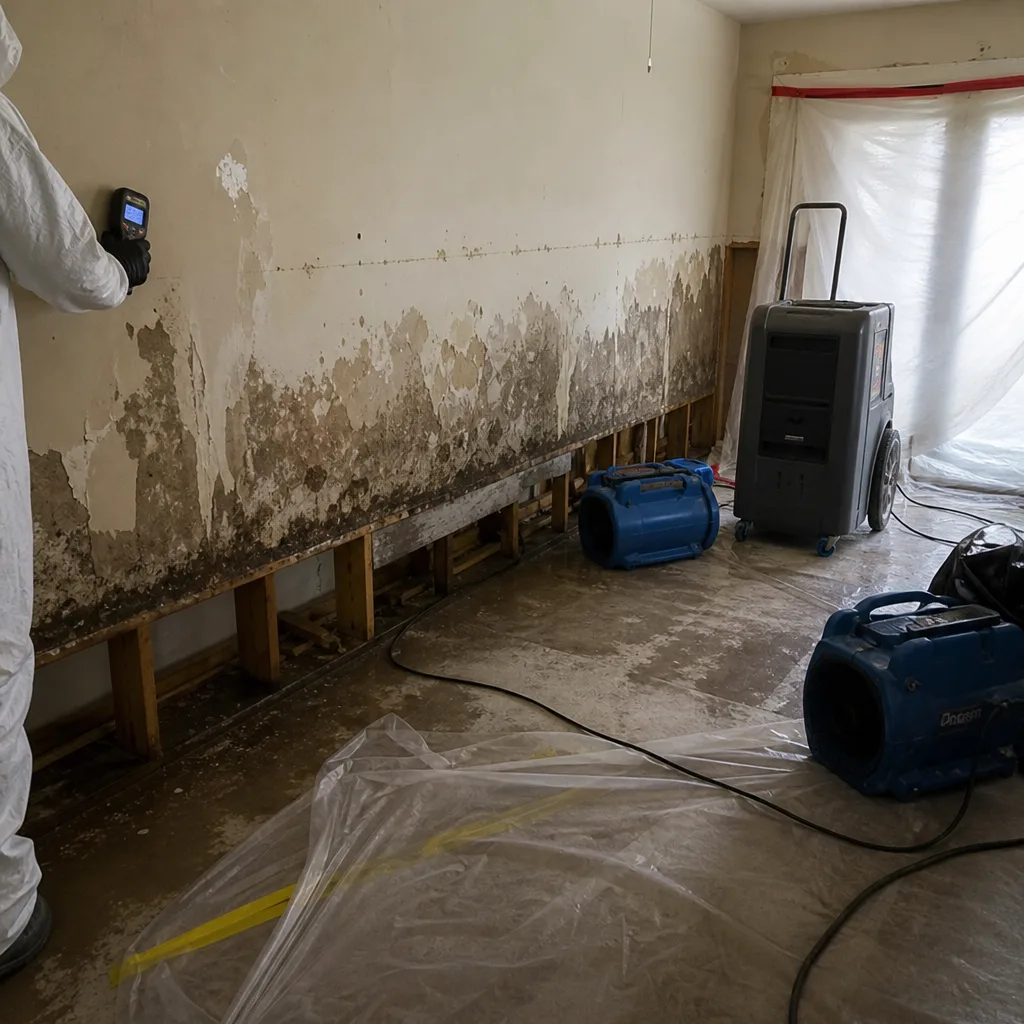 Before
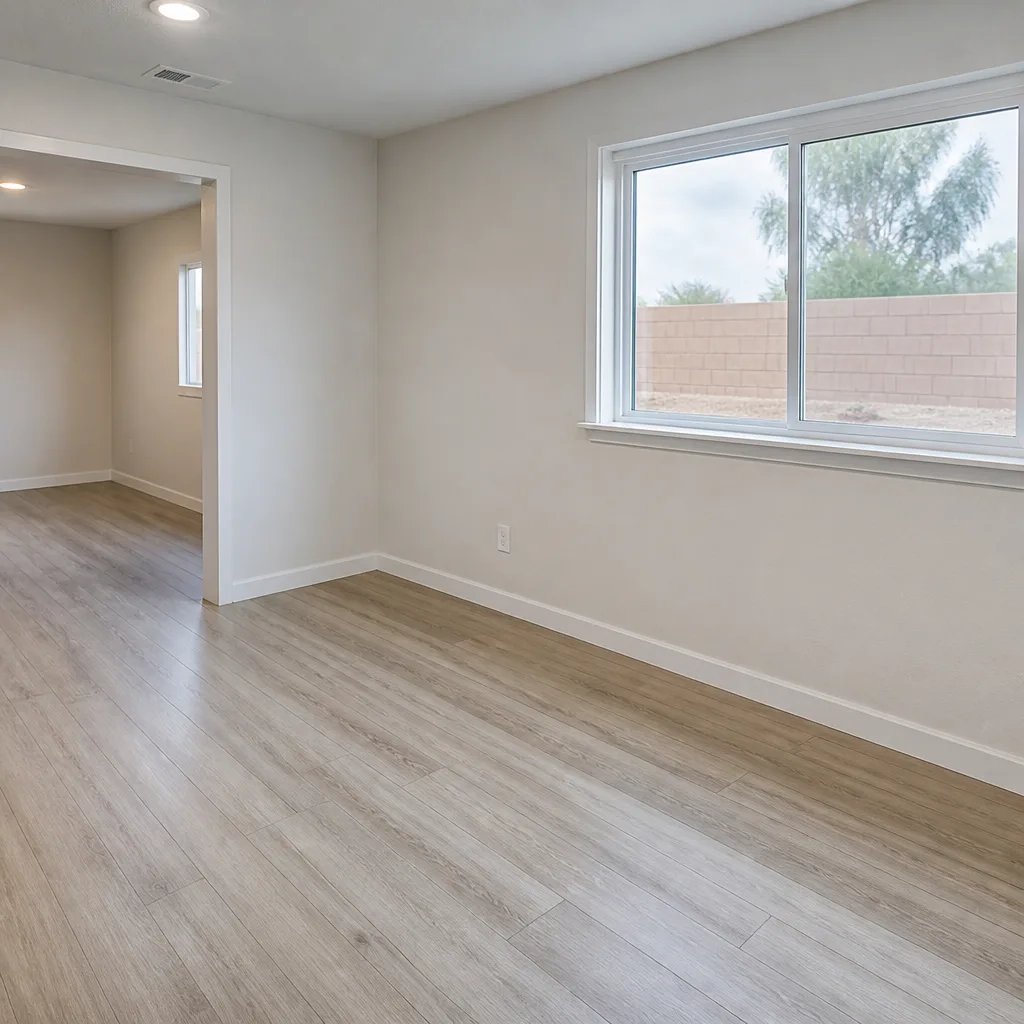 After
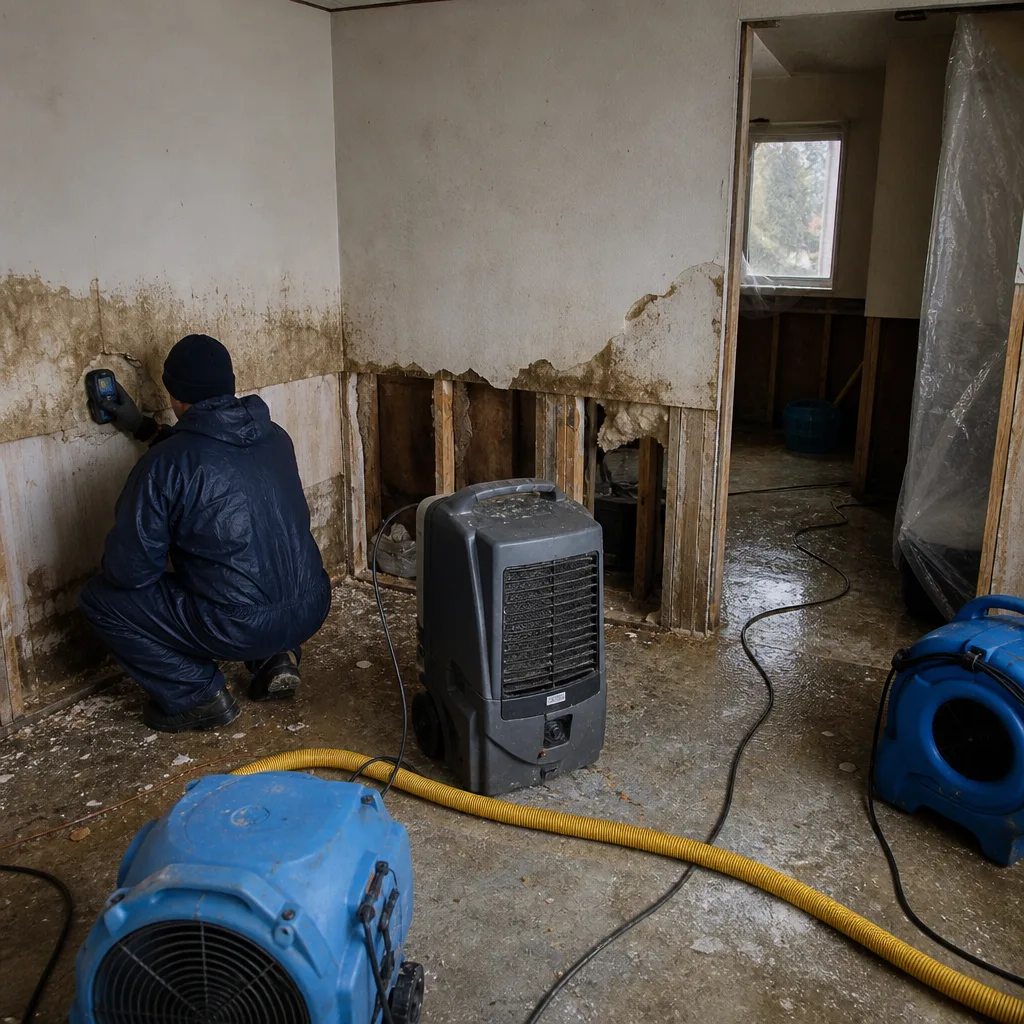 Before
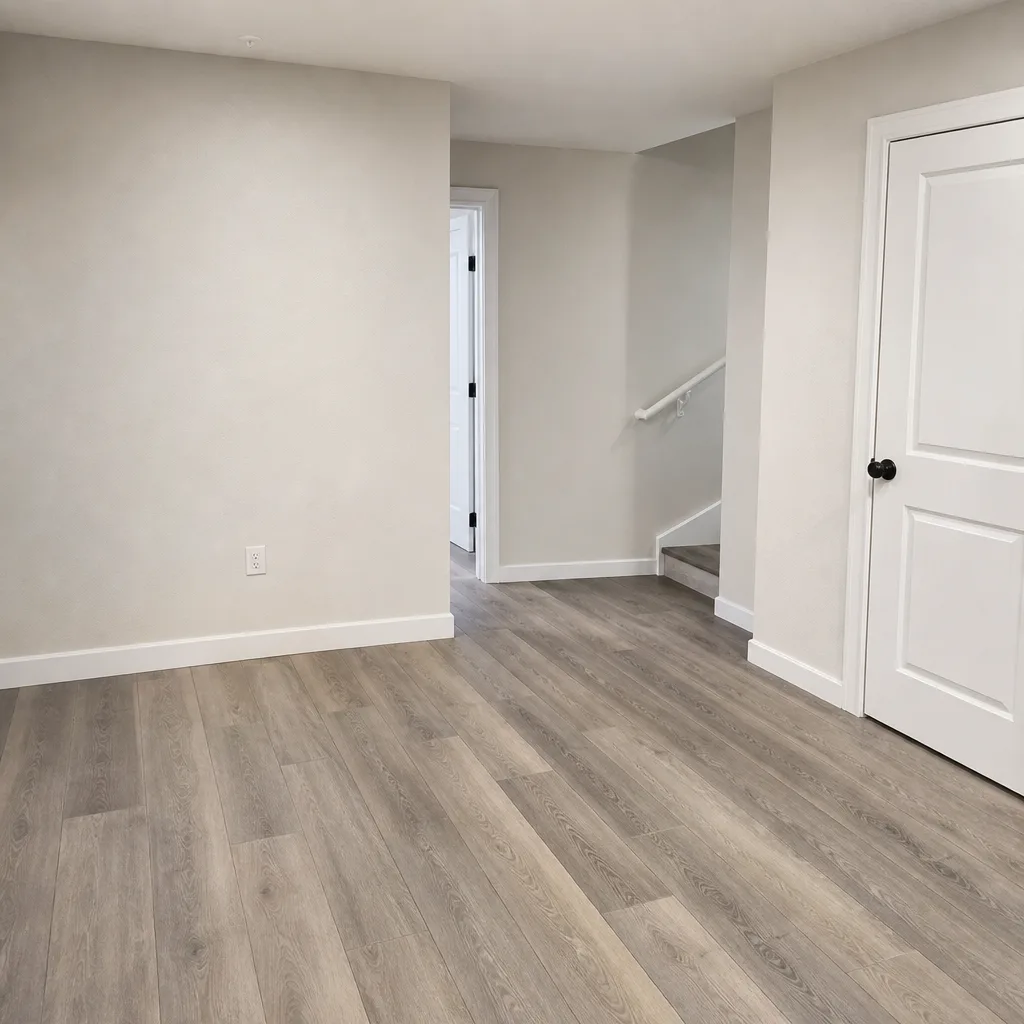 After
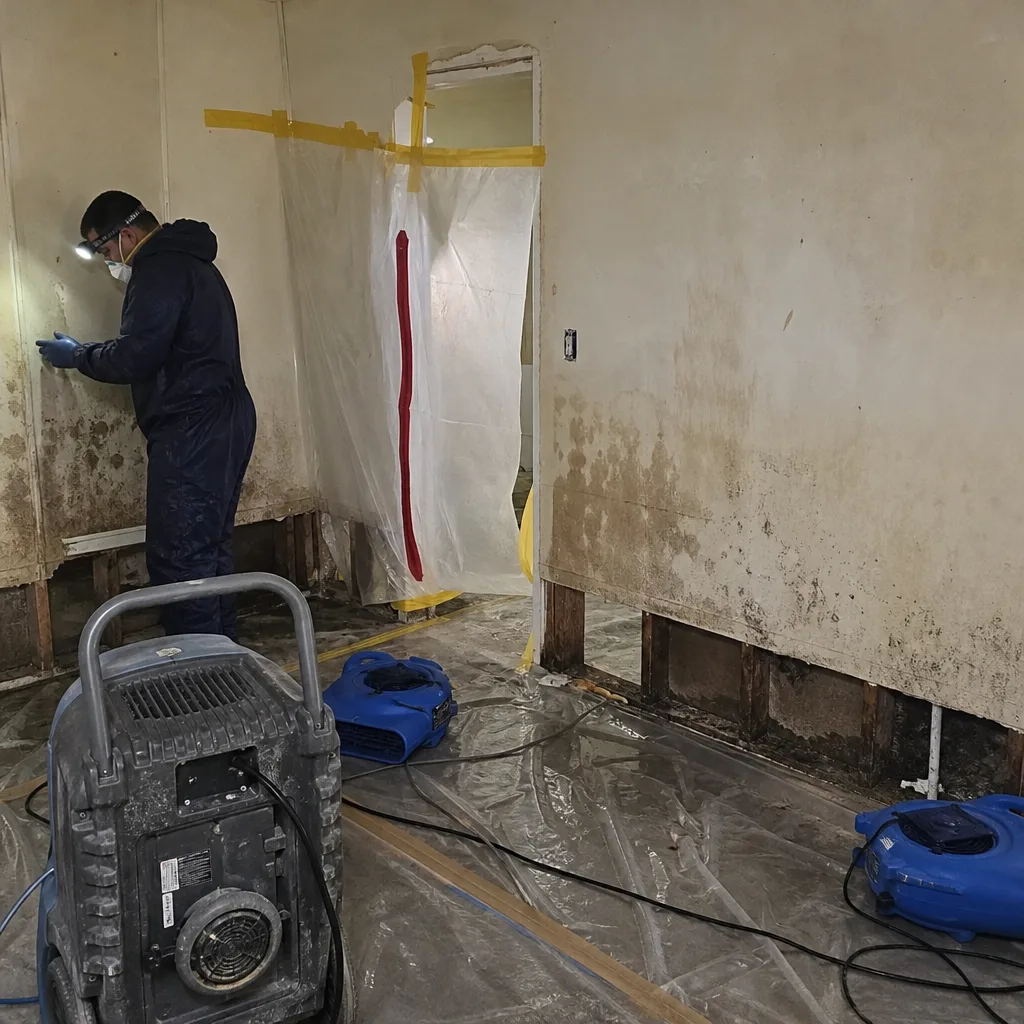 Before
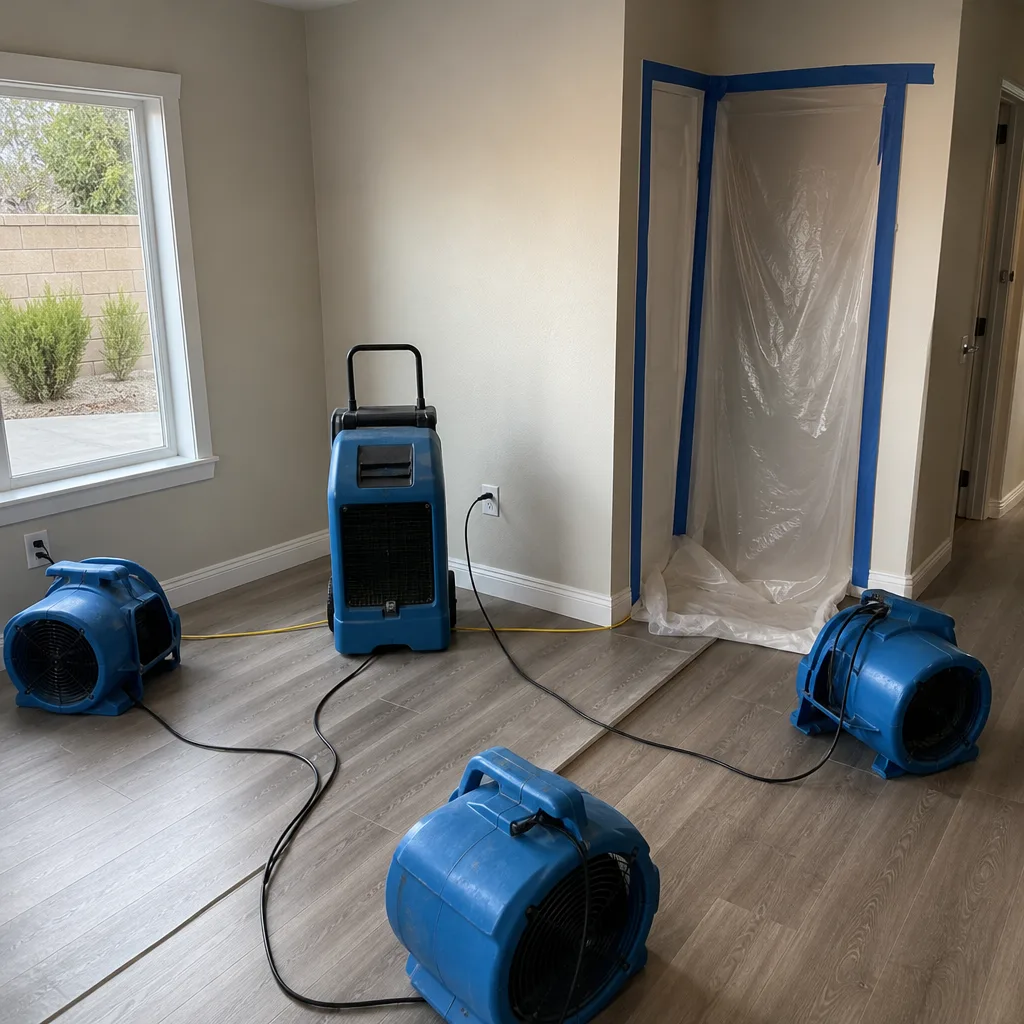 After
Common Water Damage Restoration Problems We See in Colton Homes
- Rotted sill plates on citrus-era bungalows near downtown and along Foothill Boulevard. Original wood framing that’s been fighting moisture for 80 – 100 years gives way after one hard winter rain. Water runs under the house and the homeowner doesn’t know until the floor feels soft near the wall line.
- Stucco walls trapping moisture after a flood. Colton’s 1960s – 80s tract homes in neighborhoods off La Cadena Drive and Washington Street have wood-frame stucco construction that reads dry on the surface while the framing behind it is saturated. We find this all the time with penetrating probes.
- Diesel dust contamination in wet wall cavities. After a Santa Ana event, the dust from the rail yard and I-10 gets pushed into wall assemblies, then any water intrusion turns that dust into a mold substrate. Standard drying without antimicrobial treatment fails on these jobs.
- Category 3 storm runoff from the Santa Ana River corridor. Low-lying streets near the river and Mount Slover receive mudflow and flash-flood runoff after post-fire rain seasons. Homeowners treat it like clean rainwater and delay extraction. It’s contaminated water, and it should be handled as such.
Pricing for Water Damage Restoration in Colton, CA
Colton restoration pricing is shaped by three local factors you won’t find in a national pricing guide. The housing stock includes early-1900s bungalows with original plumbing that costs more to access and dry. The dust from the West Colton yard means every wet job needs filtration and antimicrobial treatment that a cleaner city’s job wouldn’t. And the flood risk along the Santa Ana River corridor creates Category 3 water claims that require material removal and replacement, not just drying. A typical Water Damage Restoration job in Colton runs $1,200 – $4,800, with most emergency extractions landing between $800 and $1,800 before drying equipment and labor are added. We give every Colton homeowner a written scope before work starts, so you know the number before we touch a wall. Estimates are free. Call (855) 382-0478.
We Also Serve Cities Near Colton
Our Colton crew covers Grand Terrace, Highgrove, Loma Linda, and Rubidoux with the same IICRC-certified drying protocol and the same equipment fleet. If your home is in one of those neighboring cities, we can be there the same day. For more on our Colton service area, see our Water Damage Restoration in Colton page or call (855) 382-0478.
Serving Colton, CA — Our Local Coverage Area
We’re based in the Colton area and know this community well. Use the map below to see our service coverage — if you’re nearby, we can almost certainly help.
FAQs About Water Damage Restoration in Colton
Yes. The black dust on your HVAC intake after a Santa Ana event is the same diesel and brake dust from the West Colton rail yard and I-10 corridor that gets forced through every gap in your home. If that dust gets wet, from a leak or high humidity in the ductwork, it turns into a growth medium for mold and can spread contamination through your entire HVAC system. We inspect the duct interiors and include antimicrobial treatment in scopes where dust and moisture have combined. Call (855) 382-0478 for a documented assessment.
Water extraction on a pier-and-beam home has to account for horizontal moisture travel through joists and sill plates under the floor, not just standing water on the surface. The original wood siding and sill plates on Colton’s citrus-era bungalows are often already compromised, so water intrusion doesn’t stay in one room. We use moisture mapping and Injectidry cavity drying to reach the wet framing without tearing out your original floors. The extraction itself is the same truck-mounted process; the drying plan is what has to be different.
Category 2 water is significantly contaminated and can cause illness – think washing machine overflow or a dishwasher leak. Category 3 water is grossly contaminated, containing sewage, bacteria, or chemicals – think storm runoff flooding your basement from outside, or a sewer backup. The difference matters because Category 2 can sometimes be dried in place after extraction, while Category 3 water means porous materials like drywall, insulation, and carpet need to be removed and replaced. Drying Category 3 materials in place is a health risk and a failed insurance claim. We classify the water category on every Colton job and document it in the scope.
Mold growth typically begins within 24 – 48 hours on wet organic materials, even in Colton’s semi-arid climate. The dry heat actually makes it worse in one specific way: it masks surface moisture while the framing behind stucco or under flooring stays wet. A homeowner sees a dry-looking basement and delays restoration, while the mold is already active inside the wall cavity. Colton’s dust problem compounds this because the diesel particulate provides an additional food source for mold spores. Extraction and drying should start within 24 hours if you want to avoid mold remediation altogether.
Yes, we provide daily drying logs with moisture readings, equipment placement records, and photographic documentation for every Colton restoration job. These logs are formatted to what insurance adjusters expect to see: initial moisture mapping, daily psychrometric readings, drying goals, and final readings showing return to pre-loss condition. We deal directly with adjusters on your behalf where needed, and our documentation standard is one of the reasons insurance agents in the Inland Empire refer work to us. Call (855) 382-0478 for a free estimate and a written scope before any work starts.
Written by Nolan Pruett, Owner at Whitfield Water Damage, serving Colton and the Inland Empire.