


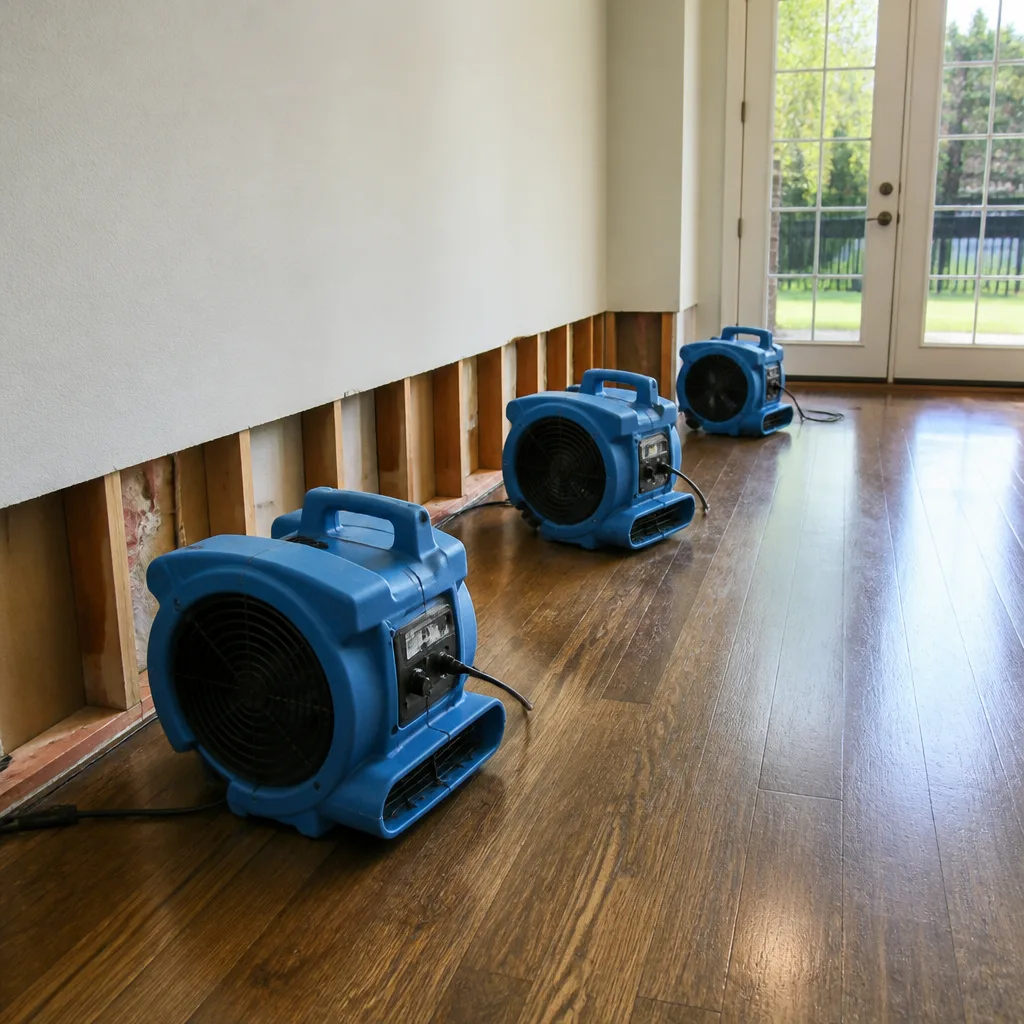
 Water damage drying
 Fire & smoke cleanup
 Mold remediation
 Storm response
 Sewage cleanup
 Reconstruction
Free visual inspection and a written scope of work before any mitigation begins - photos, moisture readings, and drying logs go in your claim file
The scope we write is the scope we bill. Anything new gets shown to you, in writing, before we touch it.
Get your free estimateFast, Reliable Water Damage Restoration Across Ontario
Water damage restoration in Ontario typically runs $1,800 to $6,500 for a standard Category 1 clean-water intrusion, while Category 3 jobs involving wind-driven rain through a compromised roof or a sewage event start around $4,000 and climb from there based on how much demolition is required. Most Ontario calls we take involve a burst pipe, a failed water heater, or a roof that a Santa Ana episode weakened months earlier finally letting winter rain into the slab. Our crew runs IICRC-certified drying protocol on every Ontario job, from the 1950s tract homes off Euclid Avenue to the newer two-story subdivisions up near 91764. If water is moving through your Ontario home right now, call (855) 382-0478 and we’ll start the extraction before the moisture maps define themselves.
Why Whitfield Water Damage Is Ontario’s Preferred Water Damage Restoration Company
Ontario sits in a genuinely weird weather position. The Cajon Pass funnels autumn wind straight into the eastern edge of the LA basin, so the city takes Santa Ana wind hits harder than most of the Inland Empire. Roofs lose shingles, stucco cracks, patio covers fold, and then the winter storm season arrives and drives rain through every weakness those winds exposed. Our Water Damage Restoration team knows this sequence because we work it every year in Ontario, from the older single-story tracts around Bon View Park to the warehouse-adjacent neighborhoods by the airport and I-10. Nolan Pruett built Whitfield around a simple position: certified technicians, professional-grade drying equipment, and documentation an insurance adjuster can approve without a second trip. That matters in Ontario, where a slab-foundation home with a soaked wall cavity has no crawlspace to dry into and every hour of delay moves moisture deeper into gypsum and framing.
We’re not a franchise crew running a generic playbook. Our technicians follow an IICRC-certified drying protocol on every Ontario job, which means moisture mapping before we set equipment, daily readings logged against target dry standards, and a drying log your adjuster can review against pre-loss condition. We run Dri-Eaz air movers, Phoenix dehumidification, XPOWER blowers, and Injectidry cavity-drying systems in Ontario homes because slab foundations and older wall assemblies punish shortcuts. The water is either out and dry or it is not, and the instrumentation tells us which.
Restoration work we handle
Emergency Water Damage Restoration in Ontario
Emergency Water Damage Restoration in Ontario is the call you make when water is actively spreading through a ceiling, pooling across a slab floor, or coming in around a window or patio door during a storm. In Ontario, the common trigger sequence starts with wind, not water. A Santa Ana event loosens shingles or cracked stucco months earlier, and the first winter downpour finds the path in. We start with source control, extraction, and containment, then moisture mapping decides what dries and what comes out. A standard emergency water call in Ontario runs $1,800 to $4,200 when extraction and structural drying begin within a few hours of the intrusion. Delays push that number up fast, especially on Category 3 jobs where the water carried roof debris and attic grit into the living space.
Immediate Extraction and Containment
When we arrive in Ontario, the first move is stopping the source and pulling standing water. We run truck-mounted extraction and set containment to keep humidity from migrating into rooms that are still dry. In open-plan mid-century tract homes, which Ontario has in volume across 91761 and 91762, skipping containment means the moisture load spreads into kitchens and hallways before drying is even scoped. We do not skip it.
Structural Drying on Slab Foundations
Ontario’s older housing stock sits on slab foundations, which creates a specific drying challenge. There is no crawlspace to vent into, so hidden moisture in wall cavities and under finished flooring has nowhere to go except into framing and drywall. We use Injectidry systems to force dry air into wall cavities and under floors without tearing out everything upfront. That is the difference between a repair and a rebuild, and it changes the final number on an Ontario claim.
Water Damage Repair in Ontario
Water Damage Repair in Ontario is the second phase after the drying is done or the part of the job where the water damage was caught late and materials already have to go. In Ontario homes, this often means drywall replacement on walls where wind-driven rain got behind stucco, flooring work on slab, or cabinet and trim repair after a supply line failure under a sink. Repair work runs $2,500 to $6,500 on a typical Ontario scope, assuming the framing dried to standard and did not need removing. If the intrusion sat for days before anyone caught it, the repair estimate climbs because the cut list grows and code-required materials like local permit inspections and moisture-resistant backing add line items.
Wind-Compromised Roof and Wall Repair
Ontario’s wind corridor means we see a lot of water damage repair that starts with roofing and exterior stucco. The repair sequence matters. Patch the roof, re-skin the wall, replace any soaked insulation, and only then close it up. Homeowners who skip the first step and fix only drywall end up doing the same repair twice when the next storm arrives, and in Ontario, the next storm always arrives.
Post-Extraction Reconstruction Scoping
After a Category 3 event in an Ontario home, we write a repair scope in writing before demolition starts. You get the cut list, the material grades, the drying record, and the price before work proceeds. That protects you from the open-ended estimate problem that plagues this trade, and it gives your adjuster a document they can actually process. Ontario is a competitive restoration market, and a written scope is the fastest way to tell the difference between a contractor and a sales crew.

Trusted Brands We Service in Ontario
We work on a broad range of water damage recovery in Ontario, and we run professional-grade equipment from Dri-Eaz, Phoenix, and XPOWER on jobs across the city. Those are the same brands insurance-preferred contractors use, and they matter because Ontario’s semi-arid climate pulls moisture out of drywall fast once the drying system is set, which means the equipment has to hold its target humidity curve across multi-day monitoring. We also carry Injectidry kits for wall cavity and subfloor drying on slab homes, where demolition-heavy approaches would add thousands to an Ontario repair bill. When you call us to a home off Archibald or up toward 91764, you get a certified team with the drying stack to match the job, not whatever was on the truck.
See the difference
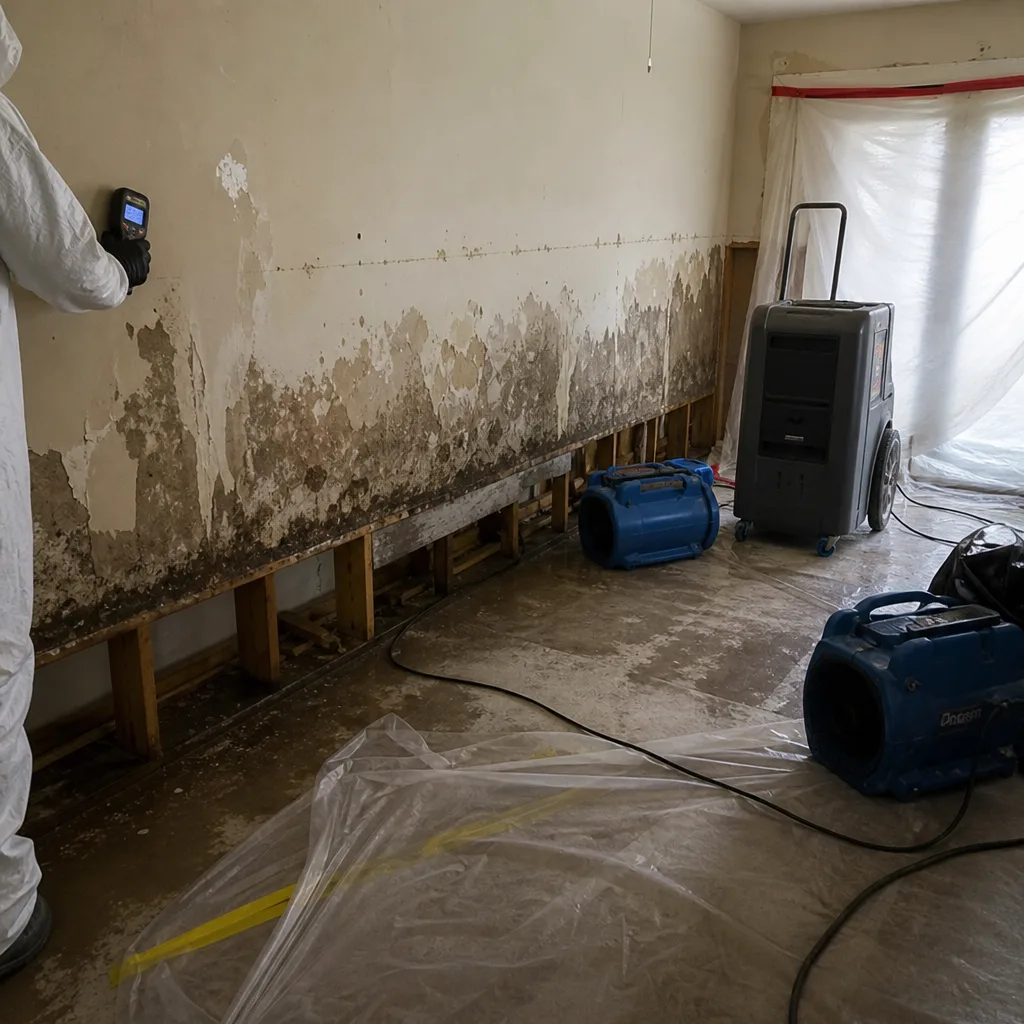 Before
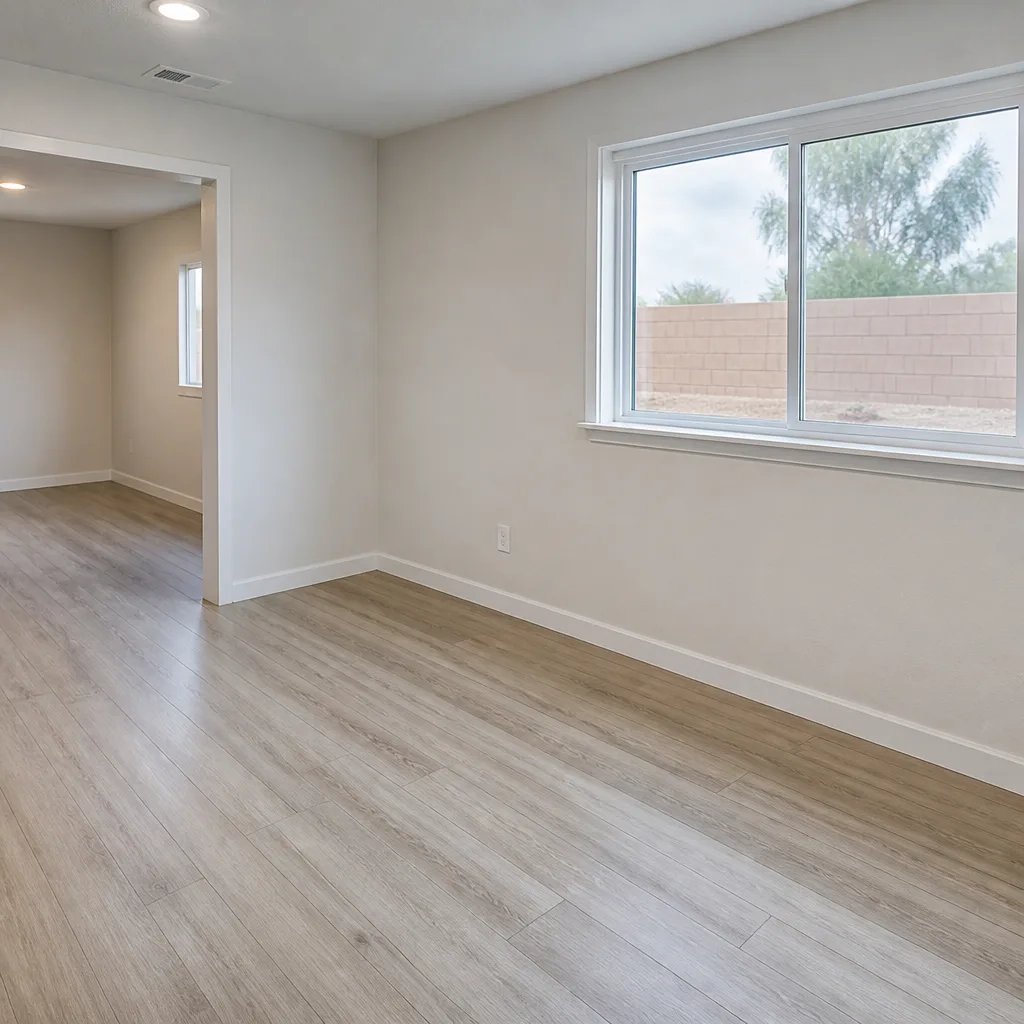 After
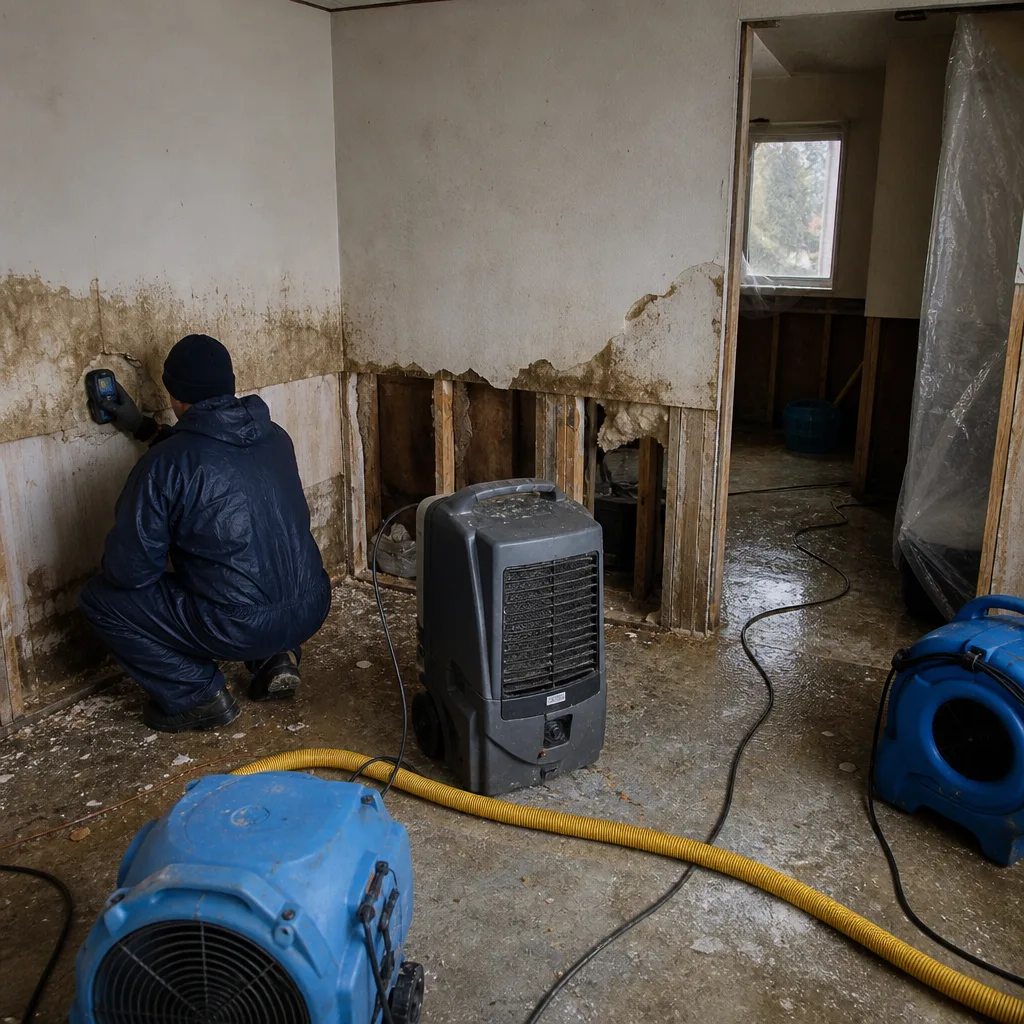 Before
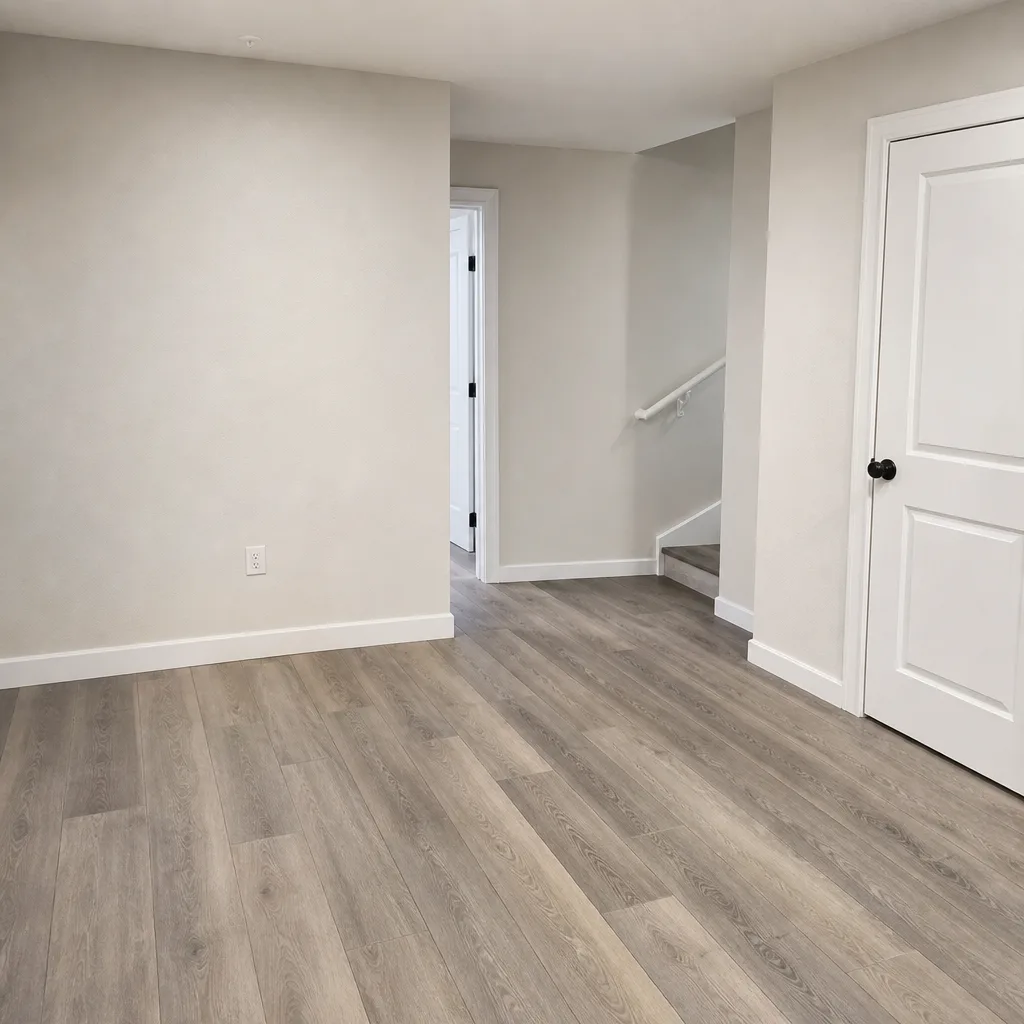 After
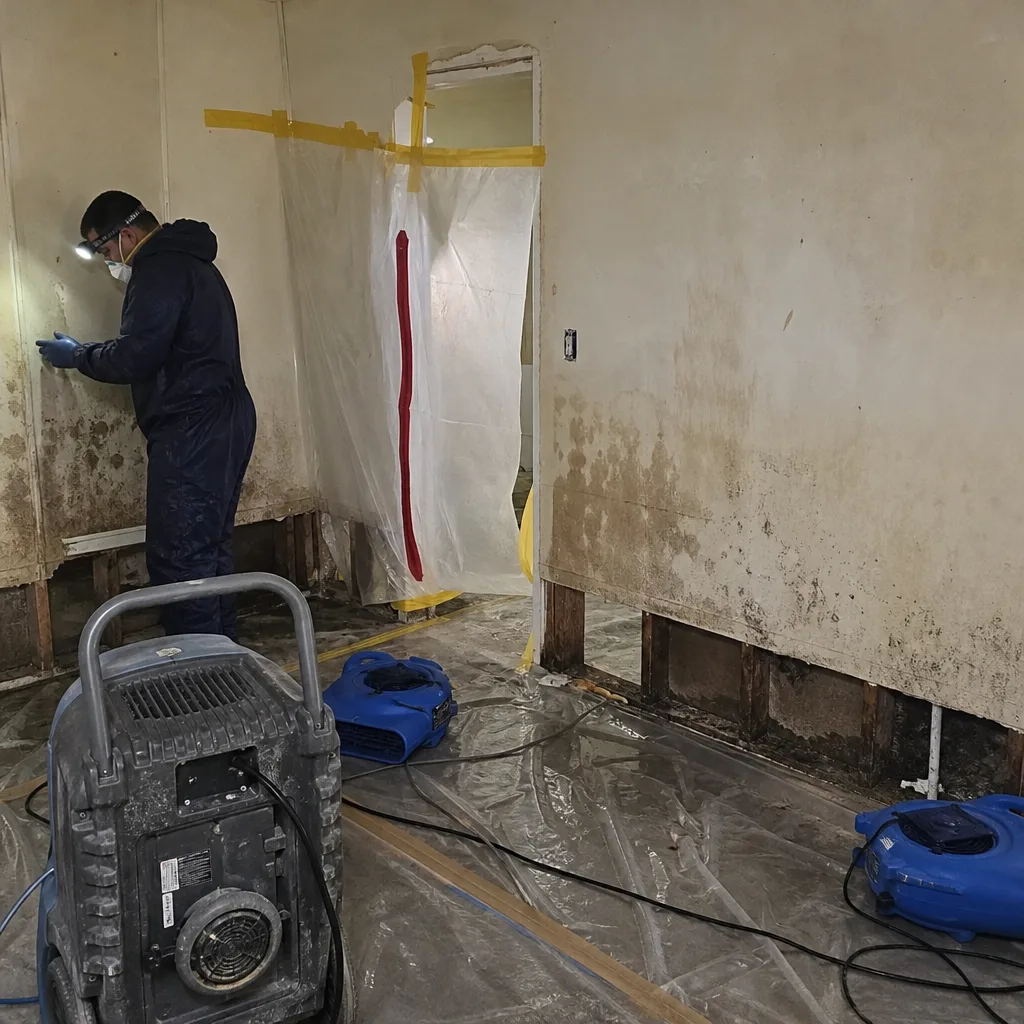 Before
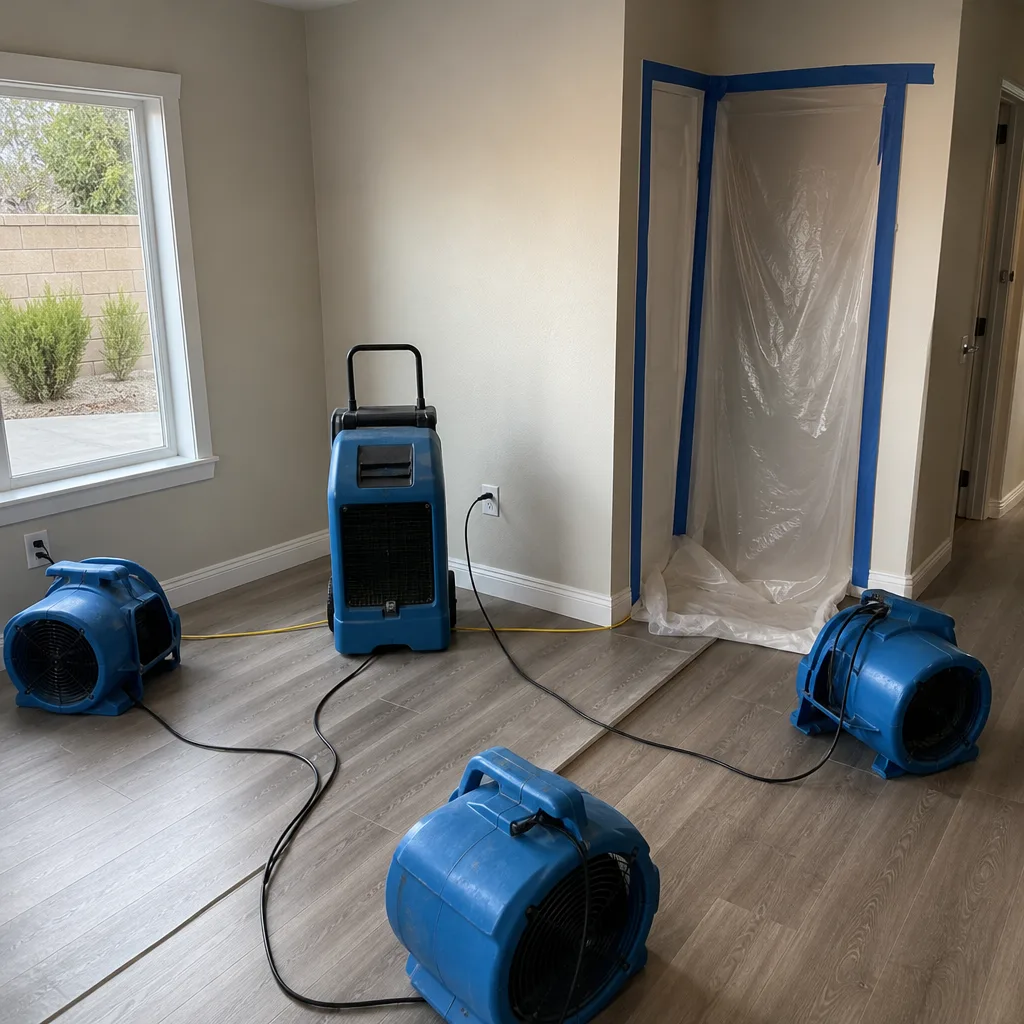 After
Common Water Damage Restoration Problems We See in Ontario Homes
- Wind-loosened roofs becoming winter floods. Ontario takes Santa Ana wind hits through the Cajon Pass, and a single event can shingle-strip whole blocks in 91761. Homeowners who wait for the winter storm to address loose shingles end up with water through the ceiling and into slab-on-grade rooms with no subfloor venting.
- Slab-foundation homes with hidden wall moisture. Ontario’s 1950s to 1970s tract housing was built on slabs, so water trapped in a wall cavity has no natural path out. We run moisture mapping on every Ontario job because what looks like a small stain near a baseboard can be a full cavity soak hiding behind primer.
- Category 3 intrusions treated as dryable. When roof debris and attic grit wash into an Ontario home during a storm, the water that goes down is contaminated and the materials it touches have to come out in many cases. Homeowners get told the opposite far too often by crews hoping for a smaller scope. We classify the water and show you the standard.
- Open-plan tract homes with runaway humidity. Mid-century Ontario homes tend to flow room to room, so a water event in the kitchen sends humidity across the whole house within hours. Without containment set early, the drying scope doubles and unaffected rooms get wet spots weeks later. We contain first, always.
Pricing for Water Damage Restoration in Ontario, CA
Ontario water damage restoration pricing breaks down in bands. Emergency extraction with structural drying runs $1,800 to $4,200 when we are in the door within hours. Repair work after drying, including drywall, trim, and flooring, adds $2,500 to $6,500 depending on scope. Category 3 jobs, where sewage or wind-driven roof contamination is involved, start around $4,000 before repair scope. What moves the number in Ontario: the water category, how long the intrusion sat before discovery, whether wall cavities are involved, and how much of the home is slab-finished versus raised. We write every Ontario estimate in writing before work starts, and estimates are free. Call (855) 382-0478 with the details of what happened and we will give you a realistic range on the first call, not a vague promise.
We Also Serve Cities Near Ontario
Whitfield Water Damage works across the eastern LA basin beyond just Water Damage Restoration in Ontario. We run calls into Montclair, Upland, Chino, and San Antonio Heights, bringing the same IICRC-certified drying protocol and professional-grade equipment stack to each. If your property sits in one of these nearby cities and you are dealing with water intrusion, call (855) 382-0478 and ask for the Ontario crew. We will be honest about our current ETA to your block.
Serving Ontario, CA — Our Local Coverage Area
We’re based in the Ontario area and know this community well. Use the map below to see our service coverage — if you’re nearby, we can almost certainly help.
FAQs About Water Damage Restoration in Ontario
In an Ontario slab home, mold can initiate in as little as 48 to 72 hours under the right conditions, and semi-arid Ontario summers with Stanta Ana heat cycles can accelerate surface growth on drywall and baseboards even faster. Because Ontario’s slab homes have no crawlspace ventilation, trapped moisture in wall cavities sits and feeds fungal growth longer than in raised-foundation homes. This means an Ontario water event that dries slowly becomes a mold remediation scope, not just a drying scope, and the cost compounds.
Yes, and this is the most common call sequence we see in Ontario. Cajon Pass Santa Ana wind strips shingles and cracks stucco across 91761 and 91764 months before the first winter storm, then the rain arrives and follows those exact failure paths into walls and ceilings. Ontario homes with slab foundations have no subfloor space to dry, so the water sits against framing and gypsum, making the winter intrusion substantially worse than it would have been without the earlier wind damage.
The water category governs whether materials can remain in place or must be removed, and this is written into IICRC standards. Category 1 is clean supply water and most materials can be dried. Category 3, common in Ontario wind and flood events, carries dirt, roof grit, or sewage, and any wet porous material is removed rather than dried. We classify every Ontario job by category before equipment goes down, and that classification is documented for your insurer.
On an Ontario emergency water call, we first stop the source, then extract standing water, set containment, and deploy Dri-Eaz air movers and Phoenix dehumidification to pull moisture out of the structure. For wall cavities and slab-floor assemblies in Ontario homes, we add Injectidry drying to avoid unnecessary demolition. We log moisture readings daily and give you a drying record that your adjuster can compare against pre-loss condition, a standard part of our IICRC-certified protocol.
Yes, Ontario wind damage to a patio cover or roofline often leaves the roof membrane or flashing compromised in ways that are not visible from the ground, and the first sustained rain afterward pushes water behind fascia and into the wall cavity. By the time you see a stain on an Ontario ceiling, the cavity above it has been wet for days. We trace the water path from the original wind compromise, not just the visible stain, because fixing the visible stain alone means the same call next winter.
Written by Nolan Pruett, Owner at Whitfield Water Damage, serving the city of Ontario and the wider Inland Empire with IICRC-certified water, mold, and fire restoration.