


 Water damage drying
 Fire & smoke cleanup
 Mold remediation
 Storm response
 Sewage cleanup
 Reconstruction
Free visual inspection and a written scope of work before any mitigation begins - photos, moisture readings, and drying logs go in your claim file
The scope we write is the scope we bill. Anything new gets shown to you, in writing, before we touch it.
Get your free estimateFast, Reliable Water Damage Restoration Across Villa Park
If water is spreading through your Villa Park home right now, here’s what you need to know: water damage restoration in Villa Park typically runs $2,800 – $7,500 for a standard room loss, and our crews respond to Villa Park calls within 60 – 90 minutes. We know Villa Park’s streets and slopes, its custom estates and aging plumbing, and we bring IICRC-certified drying protocol to every job. Call (855) 382-0478 for an immediate assessment from Nolan Pruett and the Whitfield Water Damage team. We’re based nearby and we understand what these homes demand.
Why Whitfield Water Damage Is Villa Park’s Preferred Water Damage Restoration Company
Villa Park isn’t like the tract-home cities around it. These are custom estates with complex additions, owner-specific finishes, and property values that make generic repairs a non-starter. Homeowners here tell us the same thing: they want the problem actually solved, not patched. That’s what we do. Nolan Pruett built this company on one idea: restoration should be documented, measurable, and done to a standard that holds up when an insurance adjuster reviews the file.
We’re members of the Restoration Industry Association and IFA, and every technician follows IICRC-certified drying protocol on every water loss. That means we don’t guess. We measure moisture levels, map the affected areas, and track drying progress with documentation your carrier will accept. Villa Park homeowners and the adjusters who serve them have come to expect that from us. We’ve handled losses in every corner of the 92861 ZIP code, from homes along Serrano Avenue to properties off Villa Park Road. The response works because we know the area, we know the construction, and we carry the equipment to deal with it on the first visit.
Restoration work we handle
Water Mitigation in Villa Park
Water mitigation in Villa Park is the critical first response that stops active water from causing more damage. For a home on a half-acre lot with a slab foundation and mixed plumbing, mitigation means shutting off the source, extracting standing water, and setting up the drying system fast enough to keep moisture from wicking into walls, cabinets, and under flooring. In Villa Park, a typical mitigation job runs $1,800 – $4,500 depending on the affected square footage and how far water has traveled. The failure point we see most often: waiting an extra day because the visible water “doesn’t look that bad” while moisture is already moving behind baseboards and under tile.
IICRC-Certified Drying Protocol, Not Guesswork
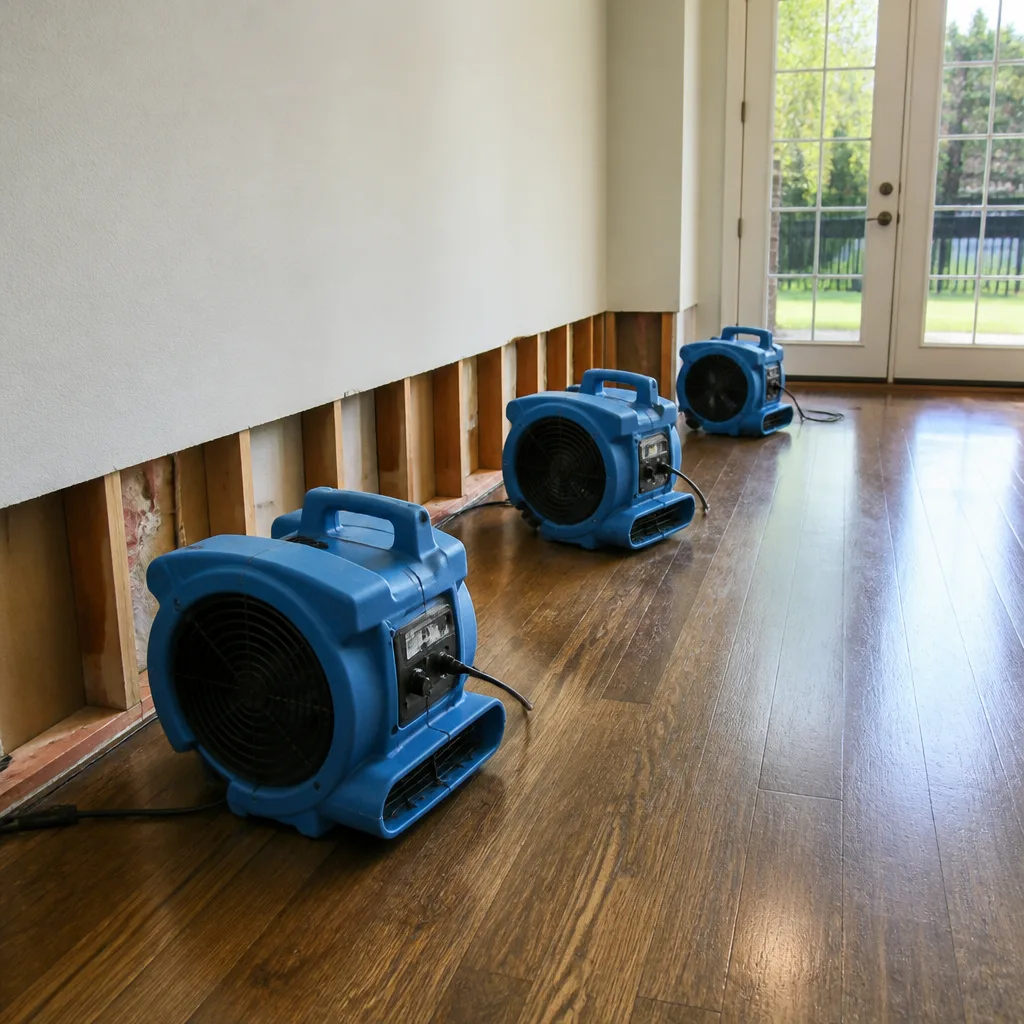
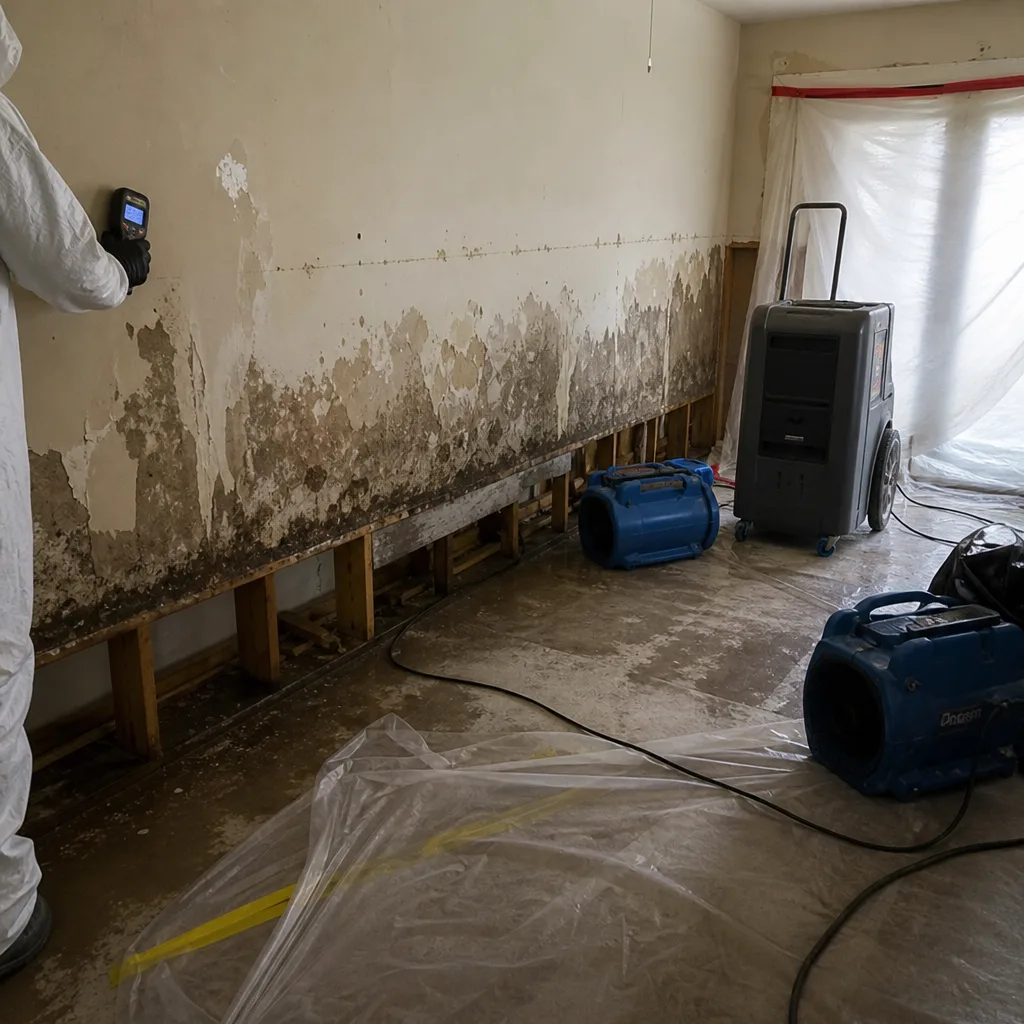
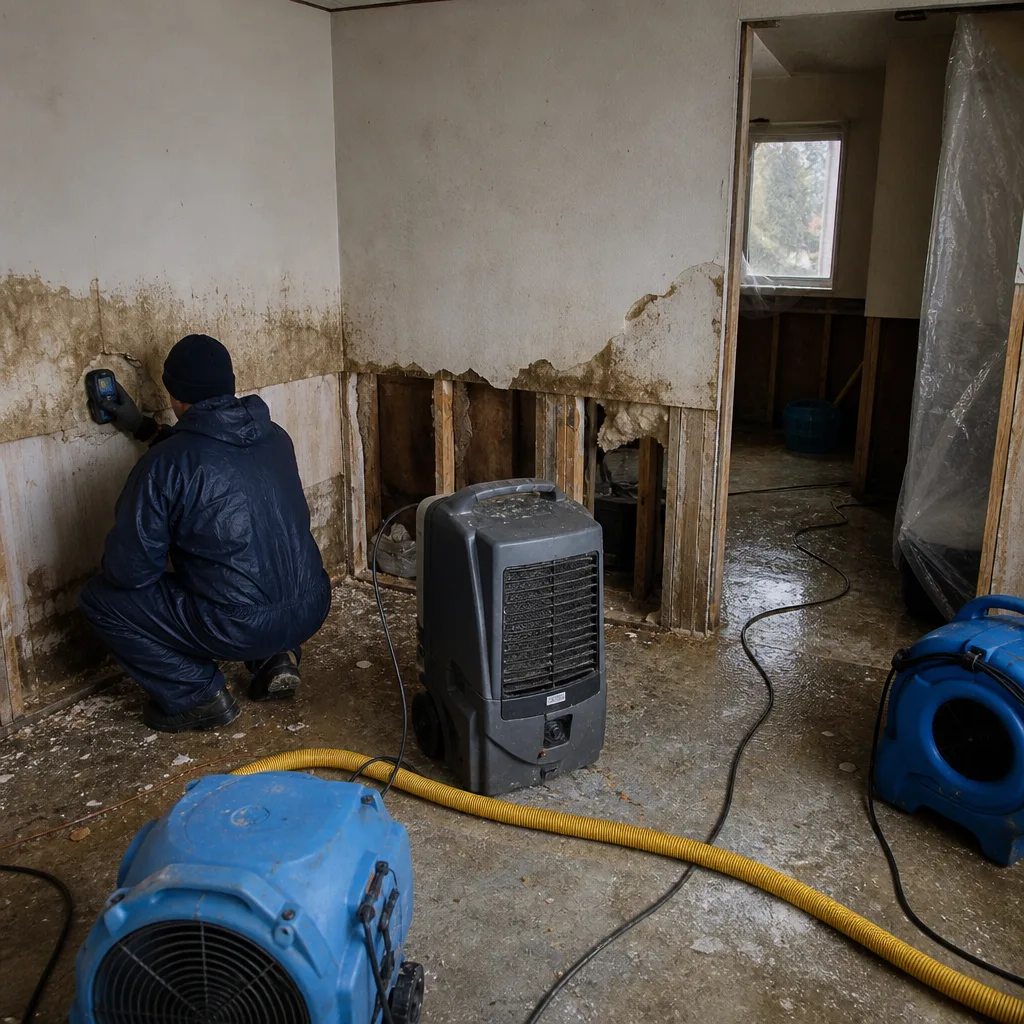
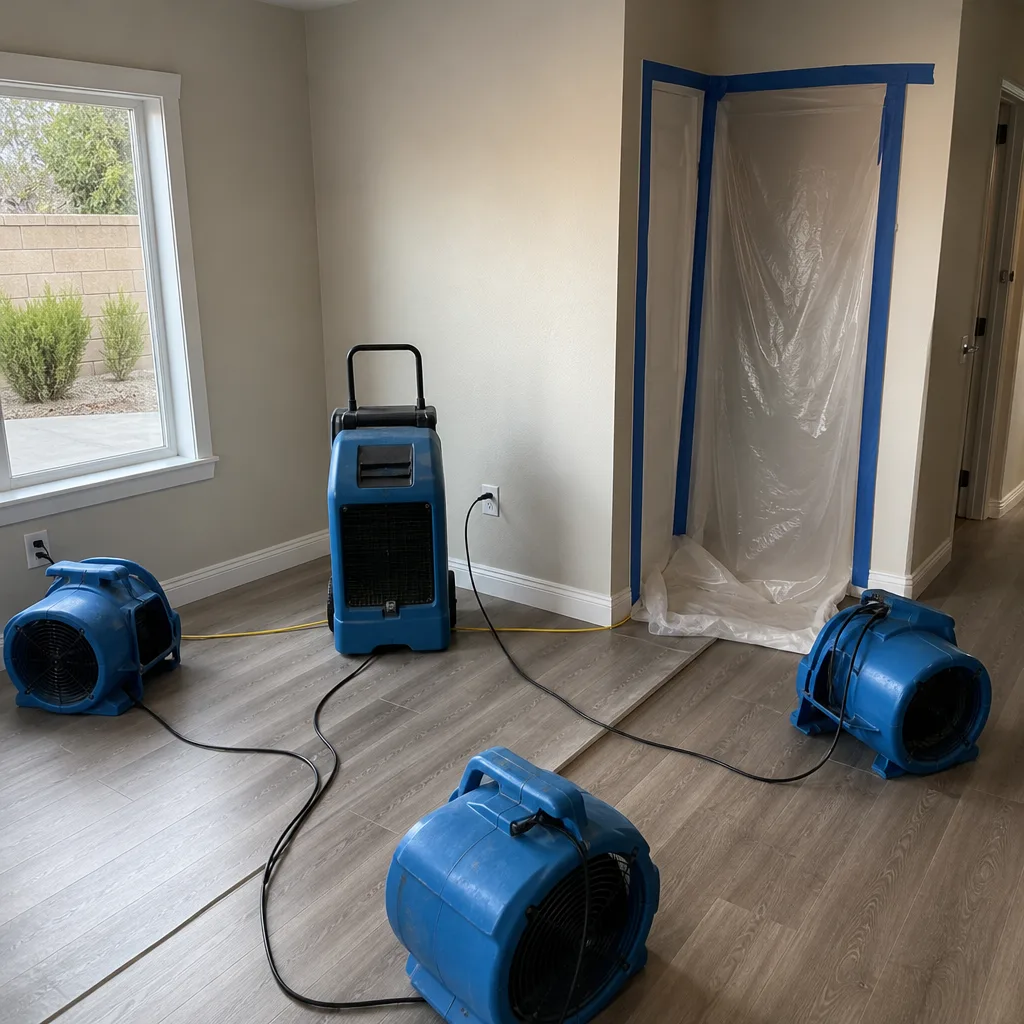
Every mitigation we run follows a science-based sequence. We map the moisture boundary with meters and thermal imaging, place professional-grade drying equipment, and log daily readings until the structure hits dry standard. In a Villa Park estate, this matters more than in a standard home because there’s more square footage to lose and more custom material at risk. We use a curated equipment stack including Dri-Eaz and Phoenix air movers paired with XPOWER blowers, sized to the specific room geometry and the home’s construction.
Non-Invasive Structural Drying for Custom Interiors
When water gets inside walls or under hardwood, we don’t default to demolition. Villa Park homeowners rarely want a tear-out that damages cabinetry, stone, or vintage millwork that can’t be matched. That’s why we run Injectidry cavity-drying systems that pull moisture from inside wall cavities and under flooring without removing finishes. This non-invasive structural drying approach reduces rebuild cost and disruption, and it preserves the original materials that make a Villa Park home what it is. Where demolition is genuinely necessary, we document it and explain exactly why before we make a cut.
Flooded Basement in Villa Park
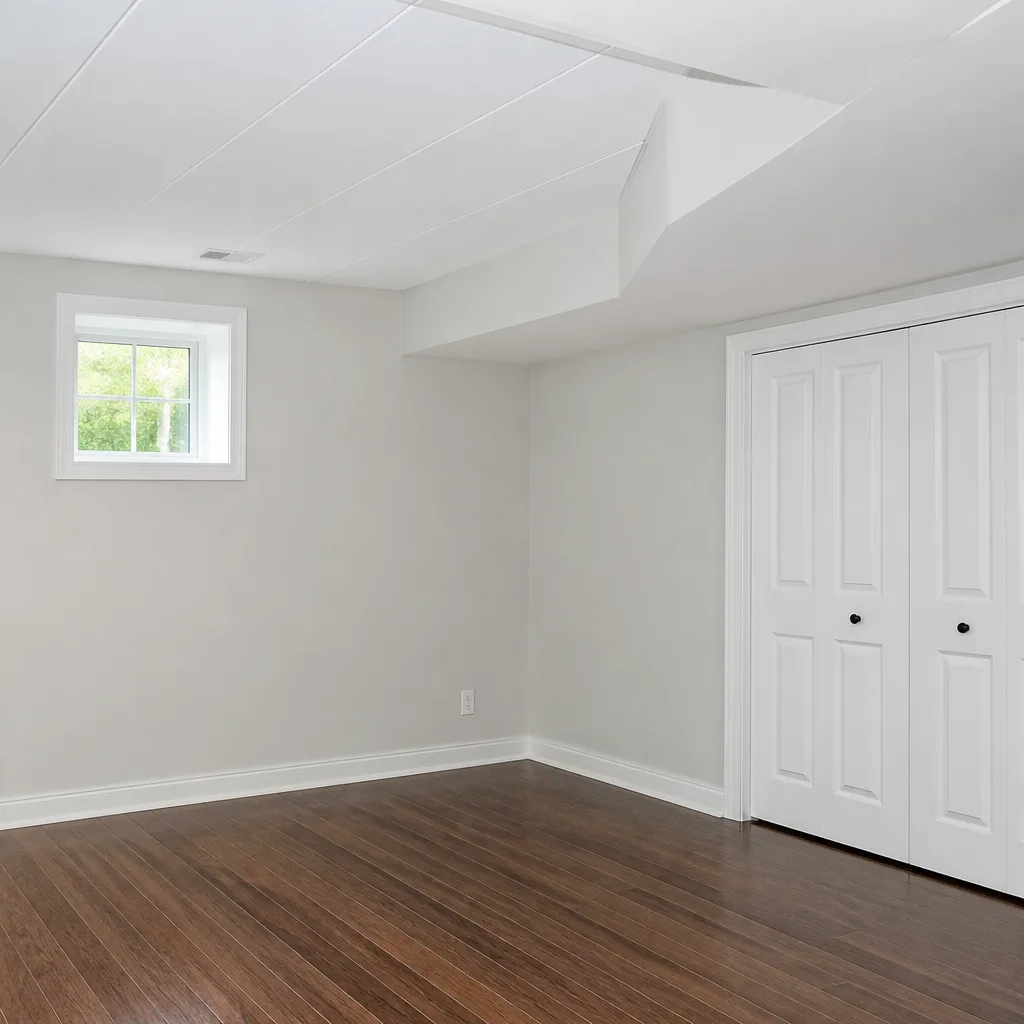
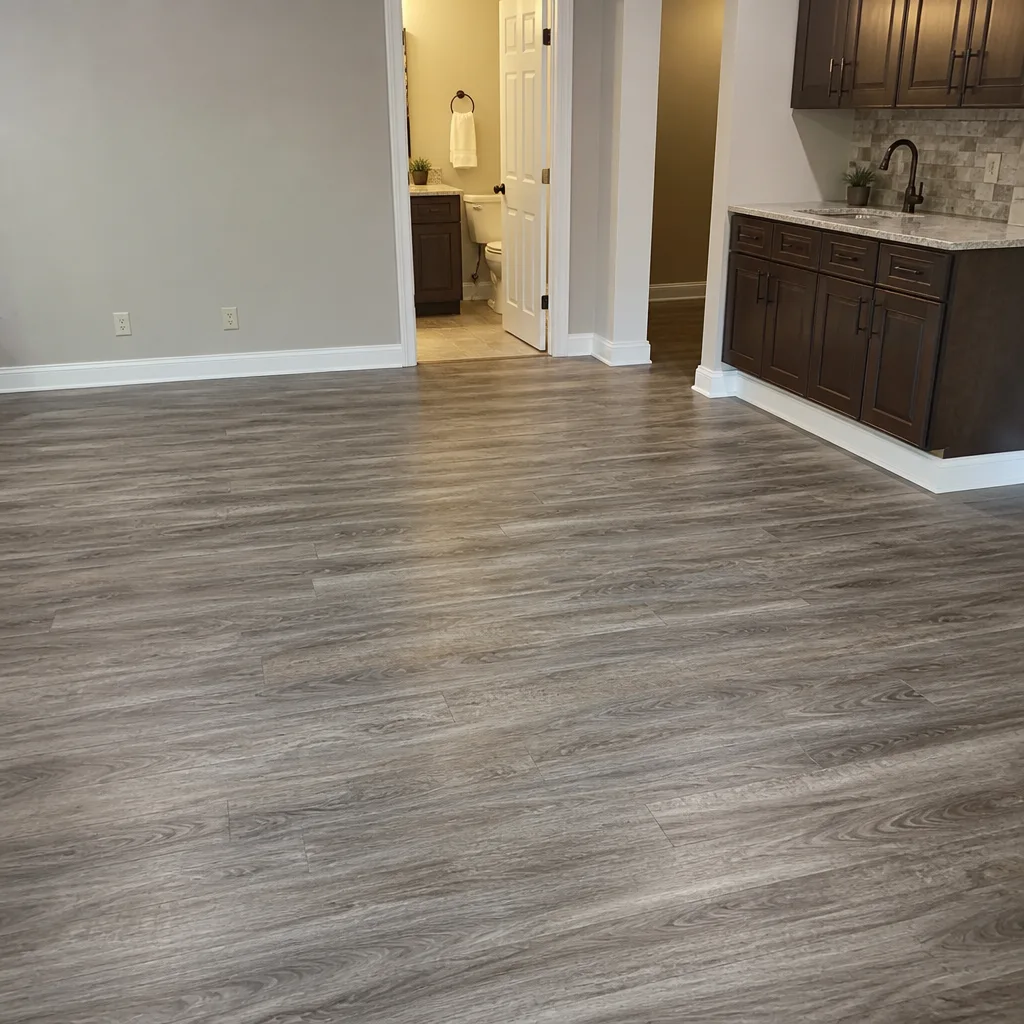
A flooded basement in Villa Park is often tied to root-blocked sewer laterals or drain line failures beneath the slab, not surface water. When the water shows up, the emergency is two-fold: the standing water itself and the moisture already migrating into walls and flooring. For a basement or below-grade space in a 1960s – 80s custom home, extraction and drying typically runs $2,200 – $5,800 in Villa Park, with the higher end reflecting extensive contamination or deep saturation. We start with rapid extraction and then determine whether the water is category 1, 2, or 3 based on its source. Category 3 water, which carries sewage or soil bacteria, requires full containment and HEPA filtration, not just a mop.
Root-Blocked Drain Lines and Slab-Wick
Villa Park’s mature trees are part of what makes the city feel established, but their roots go looking for water. Original cast iron and galvanized drain lines from the 1960s and ’70s are often cracked enough for roots to get in, and once a sewer lateral backs up, water pushes under the slab and into finished spaces. In a basement, the damage can sit hidden for days before it’s visible. We trace the water path back to the source, dry what’s saturated, and hand you documentation that shows your carrier exactly what happened.
Moisture Mapping and Documentation for Insurance
We treat every basement flood as a potential claim. That means we photograph before, during, and after, record moisture readings in writing, and produce a drying log the adjuster can review without pushback. For Villa Park homeowners, that documentation is often the difference between a denied line item and a covered loss. We coordinate directly with adjusters when asked, and the file we build supports the work we do.
Trusted Brands We Service in Villa Park
We work with the equipment brands restoration professionals actually trust. Dri-Eaz and Phoenix dehumidifiers and air movers are the workhorses on most of our Villa Park jobs, and XPOWER blowers give us the focused airflow needed in tight wall cavities and below-grade spaces. Injectidry is the tool that lets us dry without demolition, which matters when the baseboards are custom and the floors are wide-plank oak. Because we stock parts and replacement components for these brands, we can swap out a failed unit same-day on a Villa Park property, not two days later from a distributor. That continuity keeps the drying curve moving and the claim file clean.

Common Water Damage Restoration Problems We See in Villa Park Homes
- Hidden water behind stucco and under slab. Villa Park’s semi-arid climate means stucco cracks are common, and when a winter storm arrives heavy, water follows those cracks behind the exterior finish. Because the moisture is invisible until staining or odor appears, the damage is often more extensive than the homeowner realizes by the time we’re called.
- Mixed plumbing systems across additions. Many Villa Park homes are original 1960s – 80s builds with copper supply lines, galvanized sections, and PEX added during remodels. Tracing a leak across three different pipe materials takes time and testing, and a missed junction means the leak comes back after the drywall is repaired.
- Root intrusion into old drain lines. Mature citrus and ornamental trees on these large lots send roots into aging cast iron and galvanized sewer laterals. What starts as a slow drain becomes a backup that pushes water under the slab and into finished rooms, often on the far side of the house from the clog.
- Slab foundation moisture migration. Homes in the 92861 area sit on slab foundations, and when water enters below the slab, it travels laterally. Without proper moisture mapping, a restoration crew can dry the visible room and leave the hidden saturation in place, which means mold returns in weeks.
See the difference
 Before
 After
 Before
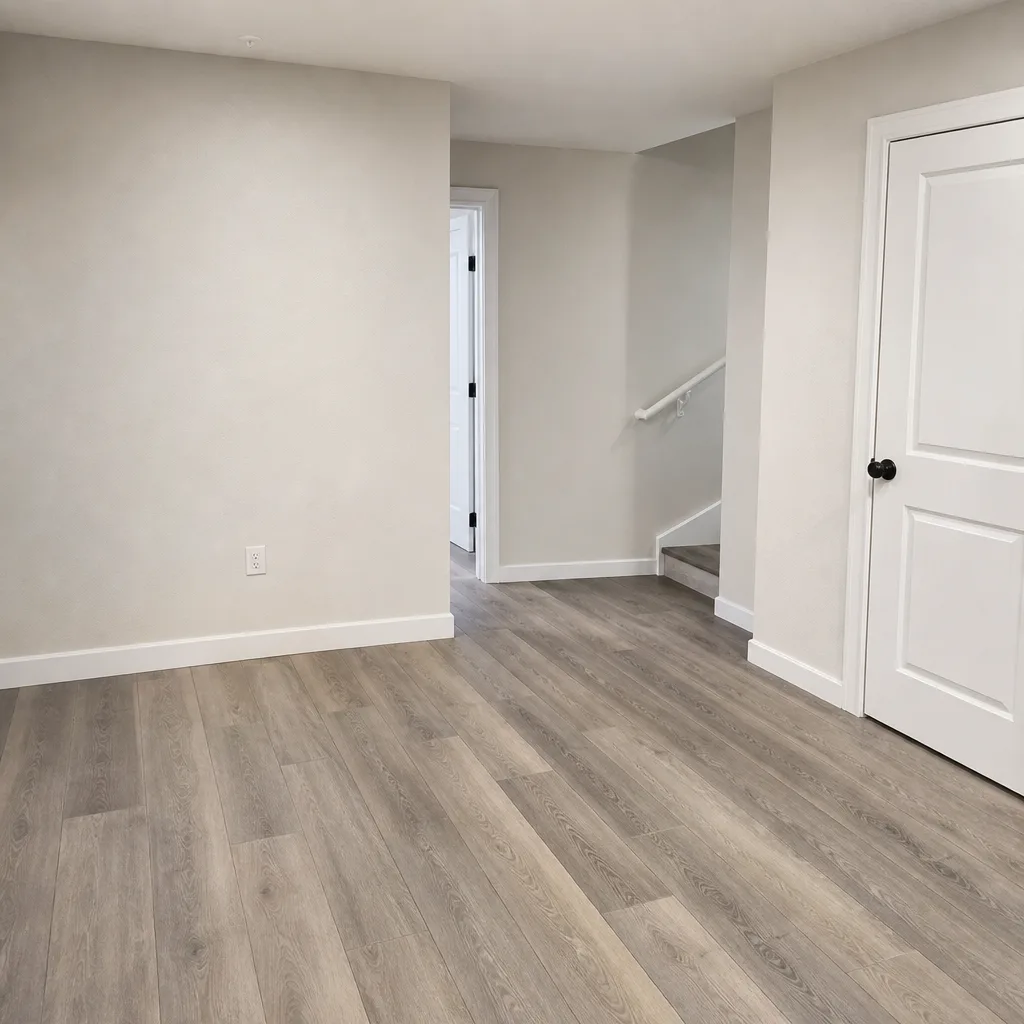 After
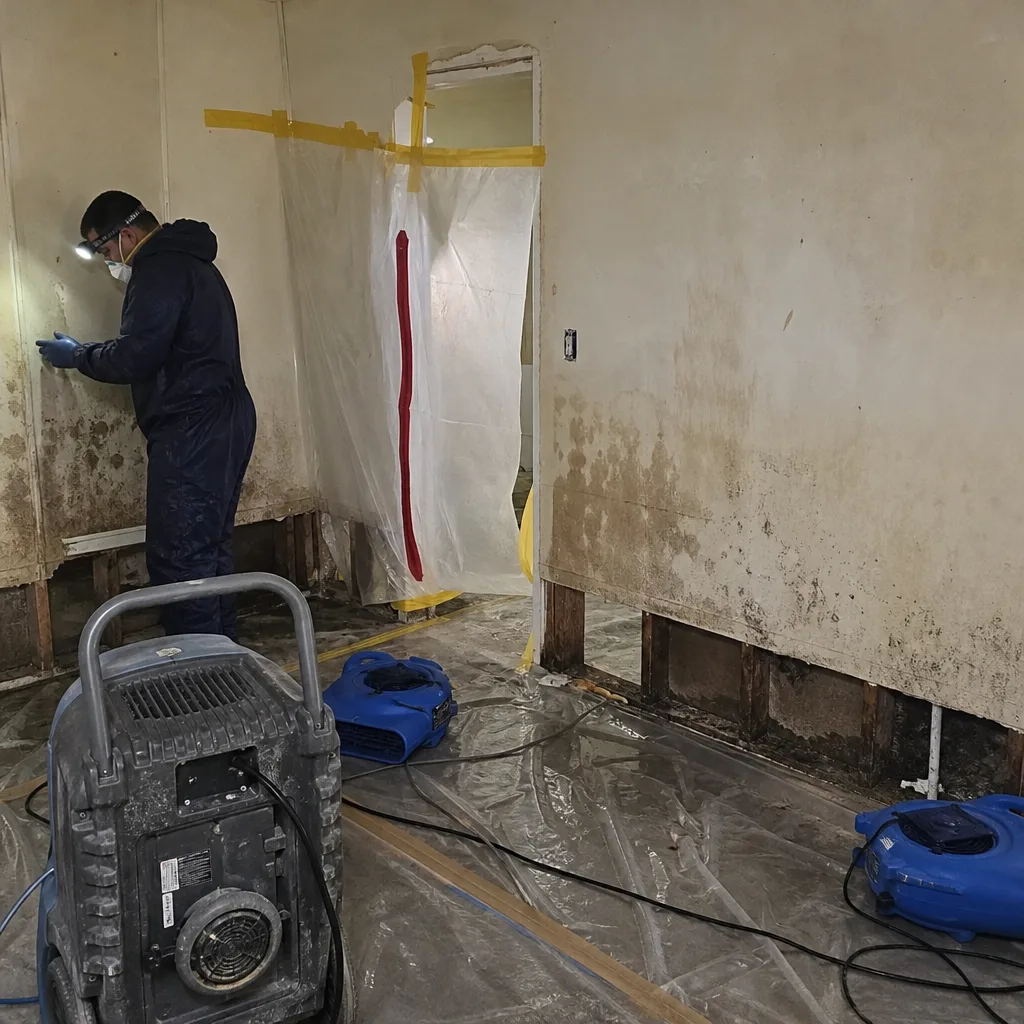 Before
 After
Pricing for Water Damage Restoration in Villa Park, CA
Here’s what you can expect to pay for water damage restoration in Villa Park. Water mitigation for a single room typically runs $1,800 – $4,500. Flooded basement extraction and drying ranges $2,200 – $5,800. A full structural drying project on a larger scale, involving multiple rooms or wall cavities, falls between $3,500 – $7,500. What moves the number: how far water traveled, whether category 3 contamination is present, how much Injectidry drying is required, and whether demolition of custom finishes is unavoidable. We give you a written scope before work starts, so you’ll know the number before we cut or dry anything. Call (855) 382-0478 for a free estimate based on your specific home and situation.
We Also Serve Cities Near Villa Park
Our team covers Water Damage Restoration across the surrounding Orange County area. We regularly respond to calls in Orange, North Tustin, Placentia, and Anaheim, bringing the same IICRC-certified process and professional equipment stack we use on Villa Park jobs. If you’re in one of these cities and dealing with a water emergency, the response is the same: call and we’ll dispatch immediately.
Serving Villa Park, CA — Our Local Coverage Area
We’re based in the Villa Park area and know this community well. Use the map below to see our service coverage — if you’re nearby, we can almost certainly help.
FAQs About Water Damage Restoration in Villa Park
Villa Park’s original homes were built with cast iron and galvanized drain lines that are now at the end of their service life, and many have PEX additions from remodels. This means water damage is often caused by a failing pipe or root intrusion, not just a visible leak, so we have to trace the source across mixed materials before drying begins. Skipping that step leads to recurring mold in the same spot within weeks. Call (855) 382-0478 if you suspect a hidden leak in your Villa Park home.
Yes. Villa Park homes have custom millwork, stone, and flooring that can’t be replaced with builder-grade stock, so we prioritize non-invasive structural drying with Injectidry systems to preserve those materials in place. When replacement is necessary, we document the existing finish and work with vendors to match the species, profile, and color as closely as the market allows. We understand that a visible seam in a custom floor is a loss in itself, and we plan around that from day one.
Most Villa Park water losses reach dry standard in 3 to 5 days. Extraction happens within hours of our arrival, and the drying phase depends on the square footage, the materials affected, and whether we’re drying wall cavities with Injectidry or just open air. A large custom estate with water in multiple additions can take 6 to 7 days. We give you a projected timeline in writing after the initial moisture assessment, and we update it daily as readings change.
Slab foundation water damage requires a different approach than raised-foundation homes. Water under the slab moves laterally, so we map the moisture boundary with meters and thermal imaging before setting up any drying equipment. If the water came from a root-damaged sewer lateral, that has to be addressed or the problem repeats. Our crews are trained specifically on slab-wick behavior, and we document the full path of moisture so the drying plan is based on evidence, not assumption.
Yes. Category 3 water, which contains sewage or other hazardous contaminants, requires full containment, HEPA filtration, and specific PPE protocols, and our technicians follow IICRC-certified procedures for these losses. In Villa Park, category 3 water often comes from sewer backups caused by root-damaged cast iron laterals, which means the water has been sitting in contact with soil and waste before it surfaces. We treat it as a contamination event, not a cleanup job. Call (855) 382-0478 if you have water from a sewer backup in your Villa Park home.
Water Damage Restoration in Villa Park, CA: Why Local Expertise Matters
Villa Park isn’t a standard suburb. These are original custom estates from the 1960s through the ’90s, many expanded with additions that created mixed plumbing runs and complicated rooflines. The homes sit on slab foundations with stucco exteriors and tile roofs, and the mature trees that line these streets remain from the city’s citrus grove past. All of that means water behaves differently here than it does in a 1990s tract home. Moisture moves behind stucco, under slabs, and through wall cavities in ways that are invisible until the damage is already significant. A restoration company that treats Villa Park like any other zip code will miss it. We don’t. We responded to a water loss in a 1970s custom ranch on Villa Park’s Serrano Avenue where a root-blocked cast iron sewer lateral had backed up under the slab, wicking into the baseboards of a recently remodeled addition. Our crew performed water extraction, used Injectidry to dry the hardwood flooring, and set up containment with HEPA filtration to prevent cross-contamination, all while documenting pre-loss condition with moisture mapping for the homeowner’s insurance carrier. That’s the difference between a restoration company and a crew that shows up with a wet vac.
The properties in the 92861 area command values that demand precision. Homeowners and carriers here expect restoration work done to a standard that doesn’t just dry the structure but preserves what was there before the loss. We match materials, we document every step, and we don’t hand you off to a third party for follow-up work. One certified team, all three disciplines: water, mold, and fire. Nolan Pruett has built Whitfield Water Damage around that principle, and it’s why Villa Park homeowners call us when the stakes are high.
Written by Nolan Pruett, Owner at Whitfield Water Damage, serving Villa Park and surrounding Orange County communities.