


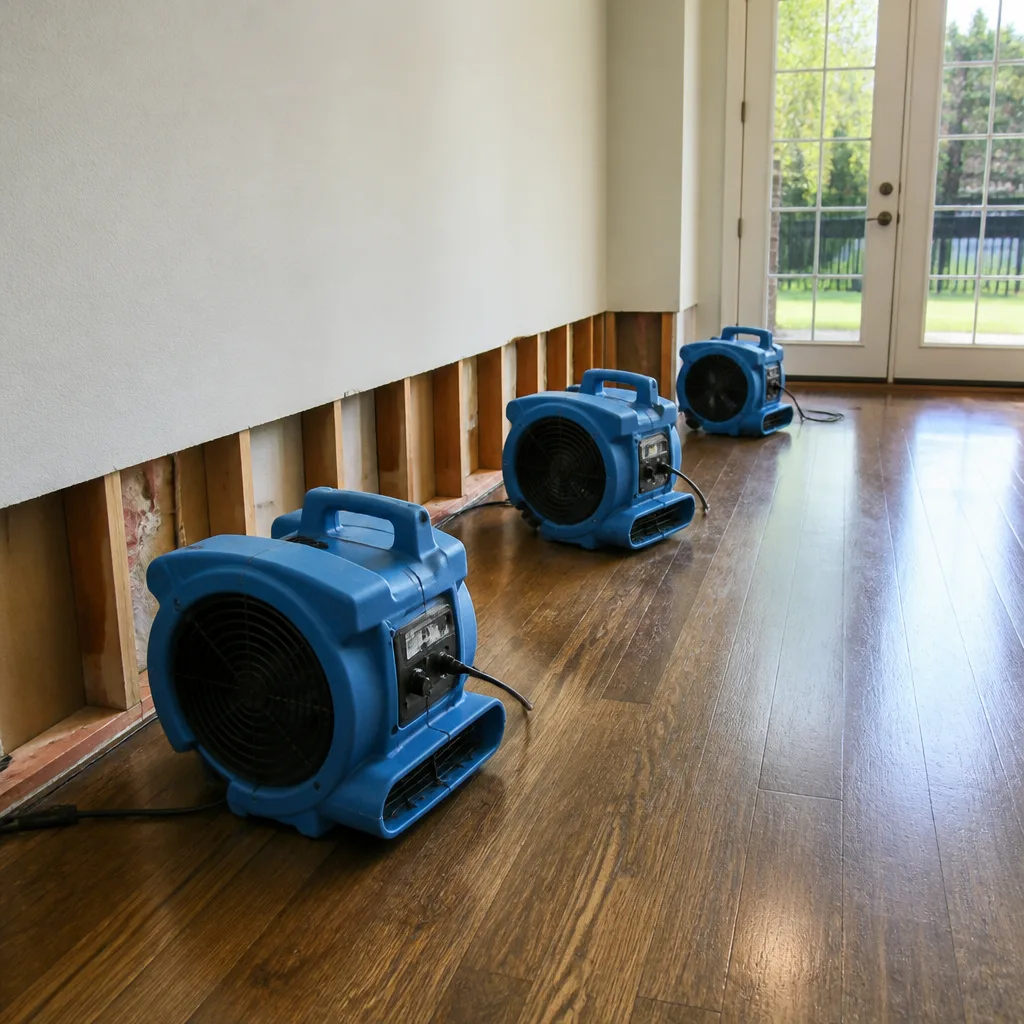
 Water damage drying
 Fire & smoke cleanup
 Mold remediation
 Storm response
 Sewage cleanup
 Reconstruction
Free visual inspection and a written scope of work before any mitigation begins - photos, moisture readings, and drying logs go in your claim file
The scope we write is the scope we bill. Anything new gets shown to you, in writing, before we touch it.
Get your free estimateFast, Reliable Mold Remediation Across Corona
Mold remediation in Corona typically costs $1,200 – $3,400 for a contained bathroom or closet job, and $4,000 – $12,000+ when hidden mold has spread behind stucco walls or into slab-adjacent cavities. Most Corona homes we assess need more than surface cleaning because the dry, semi-arid air hides exactly where moisture is still feeding growth. We respond to Corona homeowners and property managers across 92877, 92878, 92879, and 92880, with IICRC-certified protocol on every job. If you suspect mold or have a recent water intrusion you’re not sure dried fully, call (855) 382-0478 for a straight answer.
Why Whitfield Water Damage Is Corona’s Preferred Mold Remediation Company
Corona homeowners call us because the mold they find is rarely the whole story. A stucco wall that reads bone-dry on the surface can still hold moisture at the slab edge or behind the paper backing of drywall, and that’s where mold keeps returning. We run moisture mapping before scoping any mold removal, so the remediation plan addresses the source, not just the stain.
Nolan Pruett leads our team with an IICRC-certified drying protocol on every project, which matters in Corona because the surface-dry/hidden-wet split here is sharper than in coastal cities. We work with Dri-Eaz dehumidifiers, XPOWER blowers, and Injectidry cavity-drying systems to pull moisture from wall cavities without unnecessary tear-out. The documentation we produce is built to insurance adjuster standards, so when your carrier needs drying logs and moisture readings, we hand them over ready to review.
Our Mold Remediation team has worked in older postwar tracts near downtown and in newer master-planned homes in Dos Lagos and Sierra Del Oro. That matters because a 1970s single-story and a 3,200-square-foot 2005 build present very different remediation scopes, and we don’t treat them as the same job.
Restoration work we handle
Mold Removal Contractor in Corona
Mold Removal Contractor work in Corona means more than cutting out stained drywall. Corona’s semi-arid heat dries wall surfaces fast while moisture behind stucco, under tile, and along slab edges keeps feeding hidden colonies, so our first step is always moisture mapping into the wall cavities and slab-adjacent framing. Typical mold removal in a single contained bathroom or closet in Corona runs $1,200 – $3,400. When the problem has spread to multiple rooms or requires opening stucco or slab-adjacent wall cavities, expect $4,000 – $9,000. A full-home remediation with attic and HVAC treatment can exceed $12,000 depending on the square footage and how far the growth has traveled.
What the Job Involves
We contain the affected area with negative-air pressure, remove contaminated materials to IICRC standards, dry the remaining structure with Dri-Eaz dehumidifiers and XPOWER air movers, then apply antimicrobial treatment to framing. The goal is not just to remove visible mold but to leave the wall cavity dry enough that regrowth isn’t a season away.
How Long It Takes in Corona
A contained bathroom mold removal typically takes one to two working days. A multiple-room or slab-adjacent remediation often runs three to five days, with drying logs tracked daily. We don’t rush drying in Corona, because the dry air outside the wall gives a false sense of completion if we don’t verify readings inside the cavity.
Bathroom Mold Removal in Corona
Bathroom Mold Removal in Corona homes follows the same moisture-first approach, because a bathroom that looks dried out by mid-morning can still be holding water behind the tile flange or under the slab. Corona’s dry air evaporates surface moisture fast, but a pinhole leak in a shower valve or a failed wax ring underneath the toilet keeps feeding mold in the dark. Typical bathroom mold removal in Corona runs $1,200 – $2,800 when the growth is contained to one wall or ceiling cavity. If the damage extends into the subfloor or behind the shower surround, the job moves into the $3,000 – $5,500 range.
Postwar vs. Master-Planned Bathrooms
In older Corona homes near downtown and the 92879 corridor, bathrooms are smaller and often have original cast-iron drain lines and older shower pans that leak slowly. Mold there tends to sit in the wall plate and the first few inches of drywall above the slab. In newer master-planned homes in Eagle Glen or Sierra Del Oro, we more often find failed builder-grade caulk joints, improperly lapped shower pan liners, and exhaust fans that don’t move enough air for a windowless bath.
What We Check First
We pull moisture readings behind the shower valve, at the toilet flange, and along the slab edge, even when the tile and drywall feel dry. That first hour of moisture mapping usually tells us whether this is a contained bathroom job or a wall-cavity problem that runs into the adjacent bedroom or hallway.

Trusted Brands We Service in Corona
We run Dri-Eaz dehumidifiers, XPOWER blowers, and B-Air air movers on Corona jobs because they hold precise set-points in the heat and because local parts availability keeps turnaround tight. We also use Phoenix desiccants when the job requires low-grain drying in a finished home with hardwood or tile assemblies we’d rather not disturb. For Corona homeowners, our equipment means faster drying curves and fewer return visits, and carrying these brands locally means we’re not waiting on a warehouse in another county when a job hits day three.
Common Mold Remediation Problems We See in Corona Homes
- The surface-dry / hidden-wet split. Corona’s hot, dry air evaporates surface moisture within hours, so a stucco wall or slab floor reads dry while the cavity behind it holds moisture for weeks. We find mold growing behind baseboards and under tile underlayment in homes where the homeowner could swear the leak dried on its own.
- Santa Ana ash and smoke compounding mold in attics and HVAC. After a fall wind event, fine ash pushes through soffit vents and attic penetrations, and that particulate settles into the same insulation and ductwork that holds moisture. Homes in the foothill ZIPs (92881/92883) sometimes need attic deodorization and HVAC cleaning before a mold scope is truly closed out.
- Builder-grade doors and weatherstripping in newer tracts re-wetting remediated walls. In master-planned areas like Dos Lagos, we’ve repaired mold behind stucco only to return after the next wind-driven rain because a builder-grade door seals poorly and let water back into the same wall cavity. We address the door or weatherstripping as part of the scope now.
- Misclassifying contaminated water as clean. A slab leak that picks up soil bacteria, or a roof intrusion that carries bird droppings and ash, is category 2 or 3 water. Drying that drywall instead of removing it leaves mold and bacteria behind the paint. We classify the water source before we write the scope.
See the difference
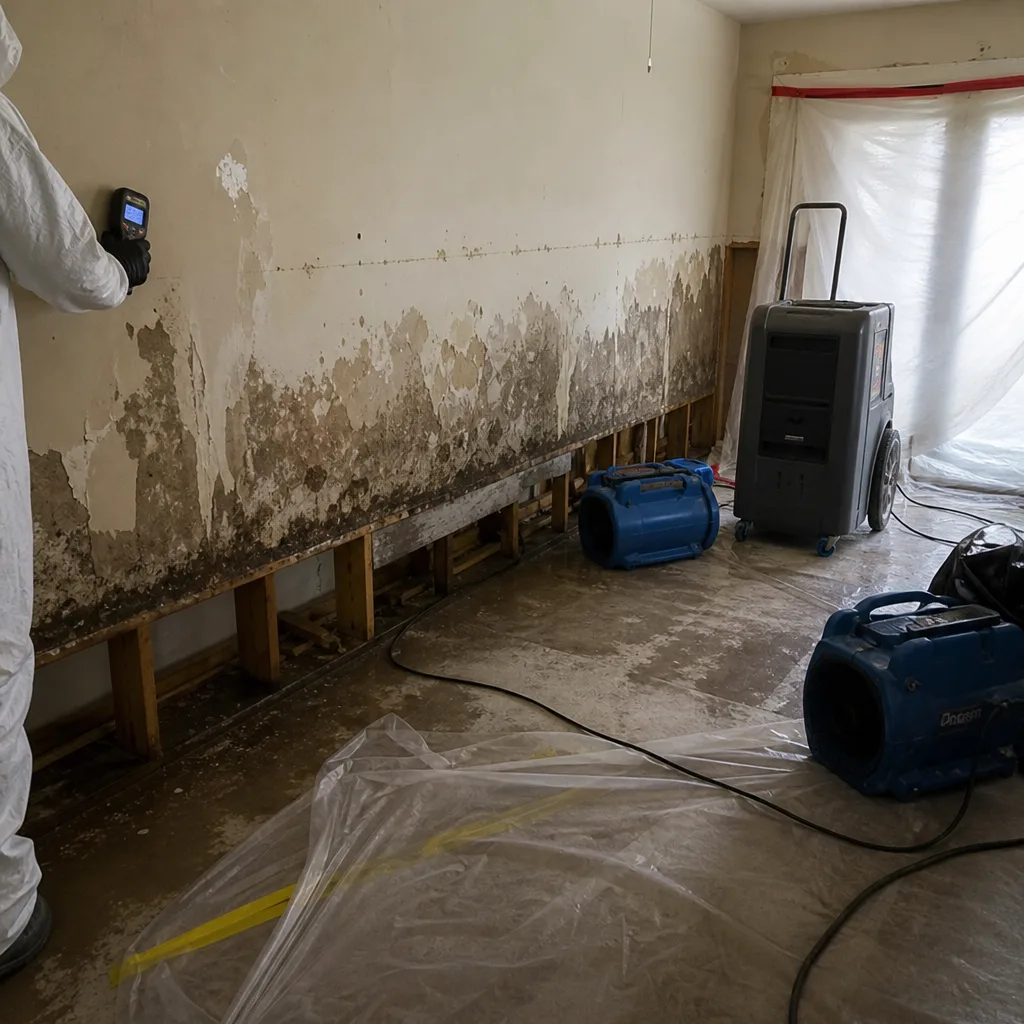 Before
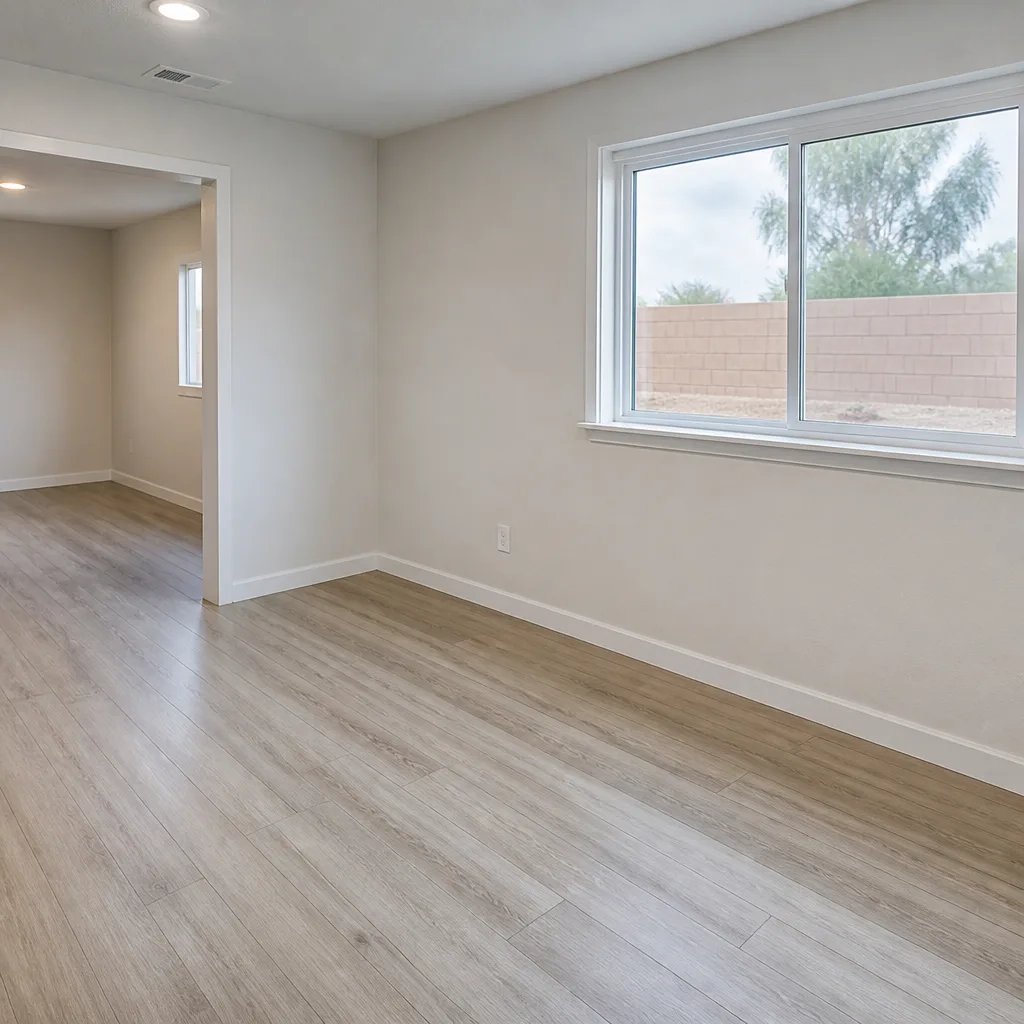 After
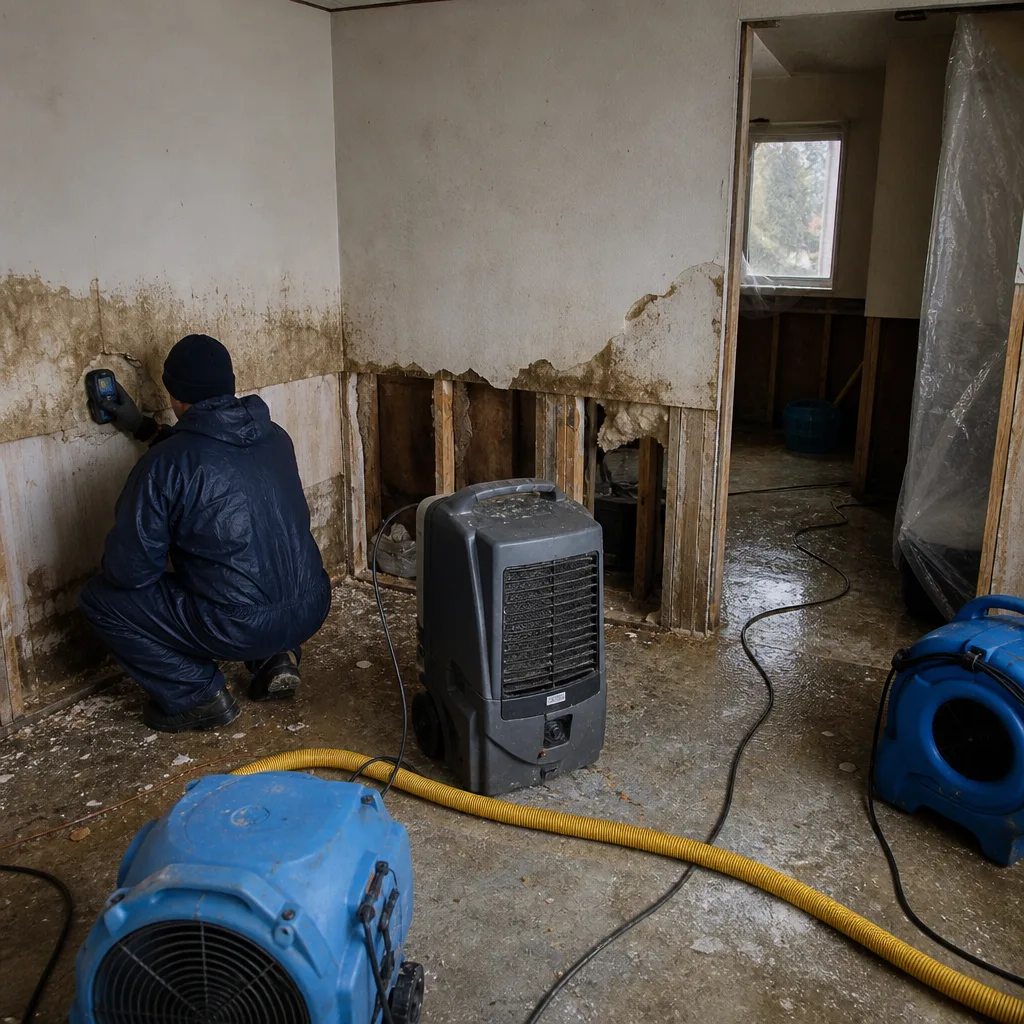 Before
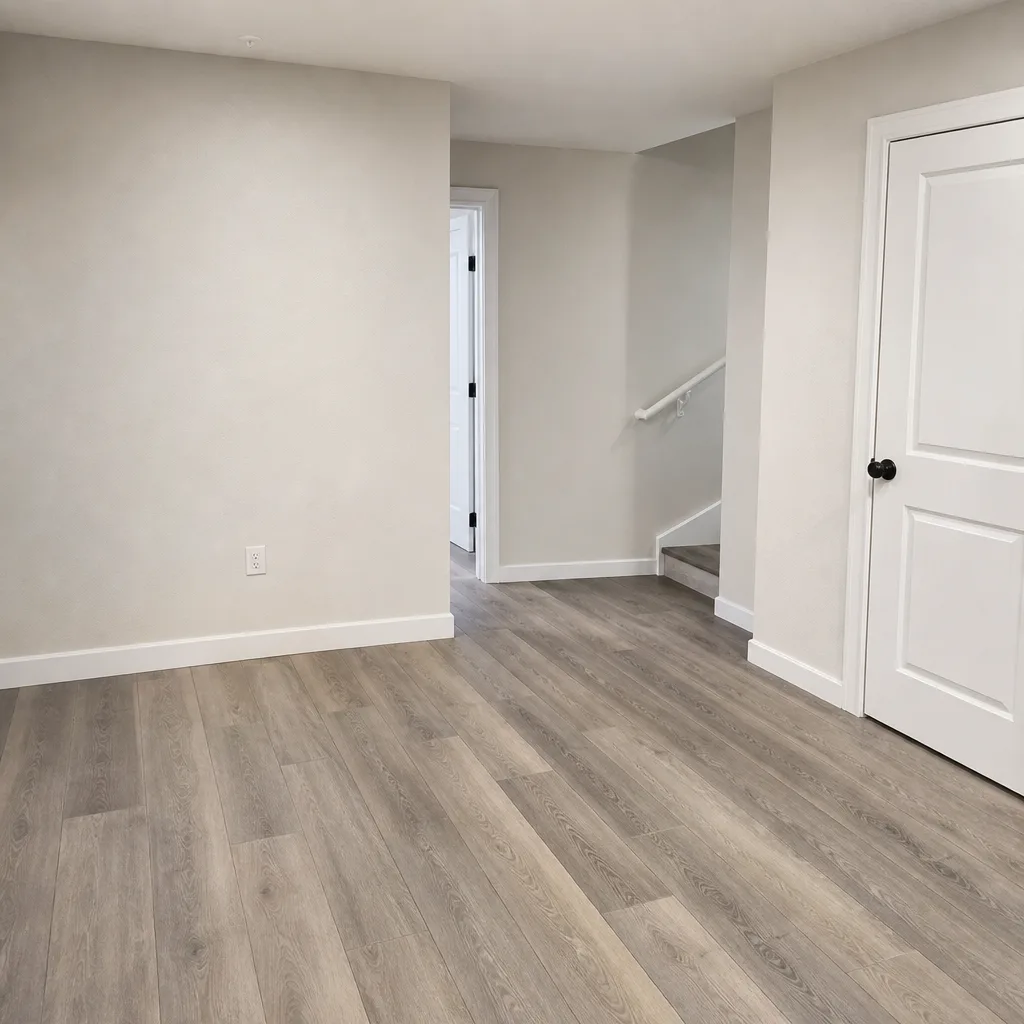 After
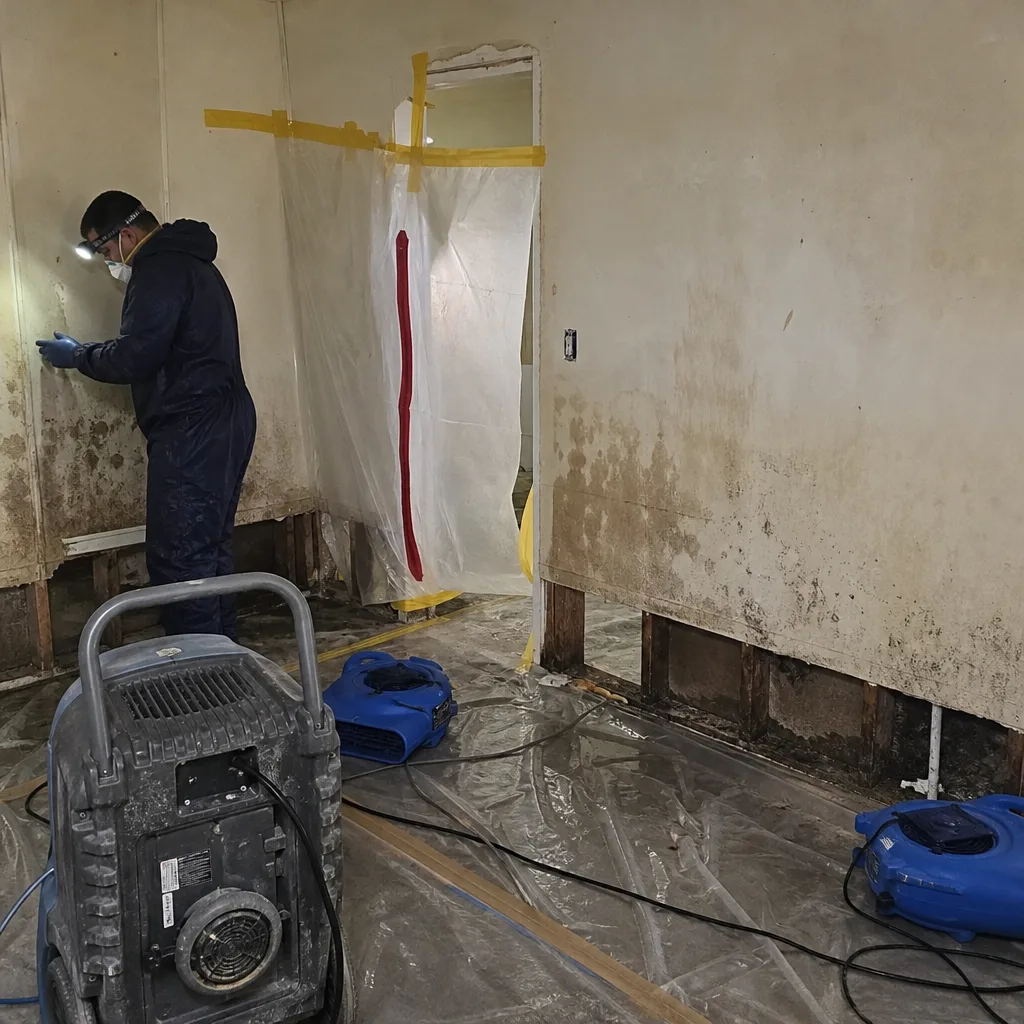 Before
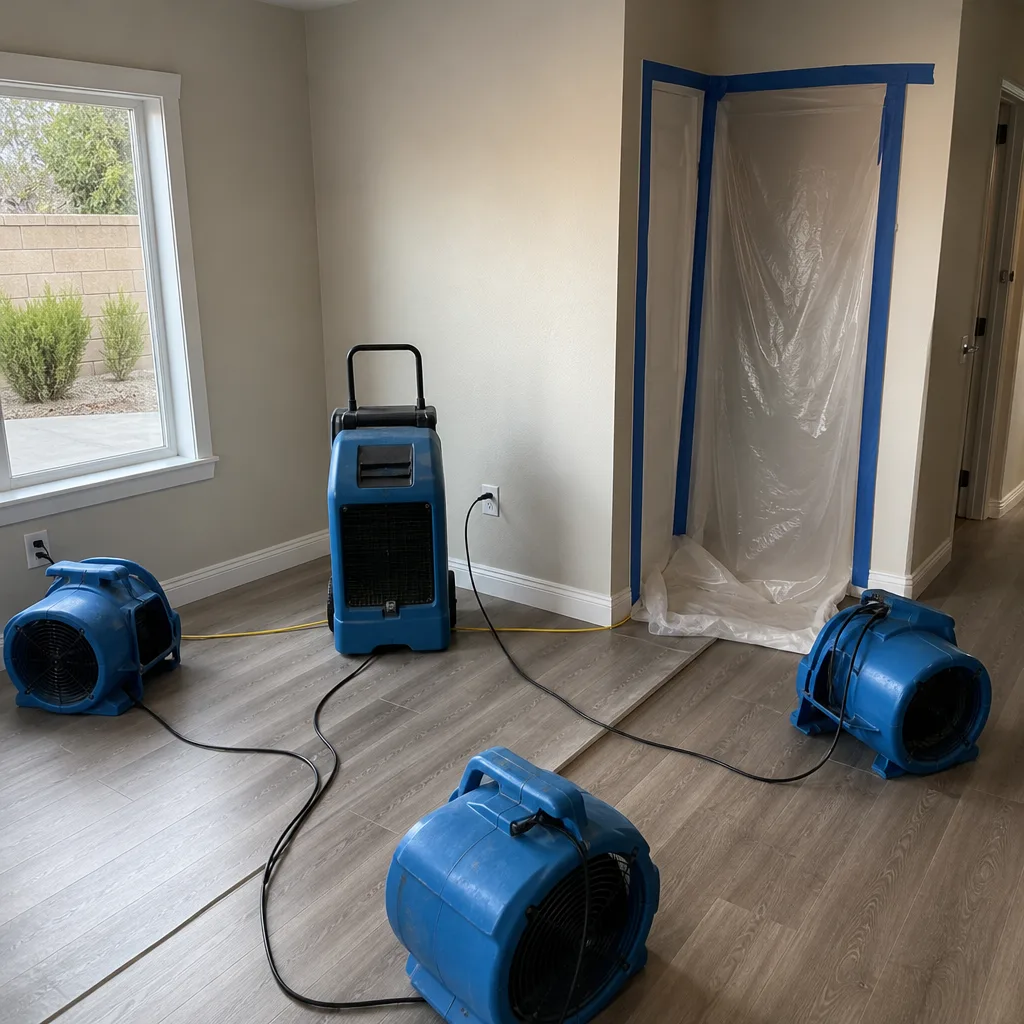 After
Pricing for Mold Remediation in Corona, CA
Here’s what Corona homeowners can expect to pay for common mold remediation scopes, including containment, removal, drying, and antimicrobial treatment:
- Contained bathroom or closet mold removal: $1,200 – $3,400
- Bathroom mold with subfloor or shower surround involvement: $3,000 – $5,500
- Multi-room or slab-adjacent mold remediation: $4,000 – $9,000
- Full-home mold remediation including attic or HVAC: $9,000 – $14,000+
What moves the price in Corona is how far moisture has traveled behind stucco or along the slab edge, whether the water source is clean or contaminated, and whether containment has to extend into living space. We write a detailed scope before any work starts, so you know exactly what’s being removed, dried, and treated, and why. Estimates are free. Call (855) 382-0478 and we’ll talk through what you’re seeing.
We Also Serve Cities Near Corona
Our Mold Remediation in Corona coverage extends to Home Gardens, El Cerrito Corona, Eastvale, and Norco. If you’re a homeowner or property manager just outside city limits, you’re still in our normal service area, and the same IICRC-certified protocol applies. Call (855) 382-0478 and we’ll confirm dispatch to your street.
Serving Corona, CA — Our Local Coverage Area
We’re based in the Corona area and know this community well. Use the map below to see our service coverage — if you’re nearby, we can almost certainly help.
FAQs About Mold Remediation in Corona
Because Corona’s dry air pulls moisture from the surface of drywall and stucco within hours, while the cavity behind the wall holds enough humidity to feed mold for weeks. In newer tracts like Eagle Glen and Sierra Del Oro, slab-on-grade construction means moisture travels laterally from a slab leak or roof intrusion and sits at the wall plate, which is exactly where the drywall feels dry to the touch. The only way to find it is moisture mapping into the cavity, not a surface reading. Call (855) 382-0478 and we’ll check the areas you can’t see.
Yes. Ash and smoke residue pushed through attic vents and HVAC penetrations settles into insulation and ductwork, which holds moisture and creates a food source for mold in the same attic spaces that already run humid after a roof leak. After a wind event, we often clean the attic and HVAC as part of a full mold scope, because removing wall mold while leaving smoke-laden insulation in the attic doesn’t finish the job. The two problems compound in foothill ZIPs more than most homeowners realize.
Mold can begin growing within 48 to 72 hours in the right conditions, and Corona’s heat accelerates the cycle once moisture is trapped in a wall cavity. The surface of the wall will read dry quickly, but the cavity behind stucco or along a slab edge stays warm and humid, which is the fastest-growing mold environment we see in the Inland Empire. If you’ve had a leak and suspect it didn’t fully dry, call (855) 382-0478 before the colony spreads.
It’s a different scope, yes. In older single-story stucco homes near downtown and the 92879 corridor, we’re often dealing with cast-iron drain lines, original shower pans, and small bathrooms with poor ventilation, so the mold typically sits in the wall plate and slab-adjacent drywall. In newer master-planned homes, we more often find builder-grade caulk failures, improperly lapped liner corners, and exhaust fans that can’t move enough air. Either way, the first step is the same: moisture mapping behind the shower valve and at the toilet flange before we open anything.
If the water source is category 2 or 3, contaminated drywall and insulation are removed and disposed of, not dried in place. That’s the distinction that matters for your health and for your insurance claim, and we document the water classification, the removal scope, and the drying logs so your adjuster sees the full picture. A slab leak that has picked up soil bacteria or a roof intrusion carrying ash and debris usually falls into this category. We’ll tell you what we’re dealing with and why, before any wall is opened.
Talk to a Remediation Expert in Corona
If you’ve found mold, smelled something off, or had a leak you’re not confident dried fully, call Whitfield Water Damage at (855) 382-0478. We’ll walk through what you’re seeing, tell you honestly whether it needs professional remediation, and schedule a moisture-mapped assessment in Corona at no charge. We work one job at a time, we document everything, and we don’t leave you with a surface fix and a growing cavity problem.
Written by Nolan Pruett, Owner at Whitfield Water Damage, serving Corona since 2001.