


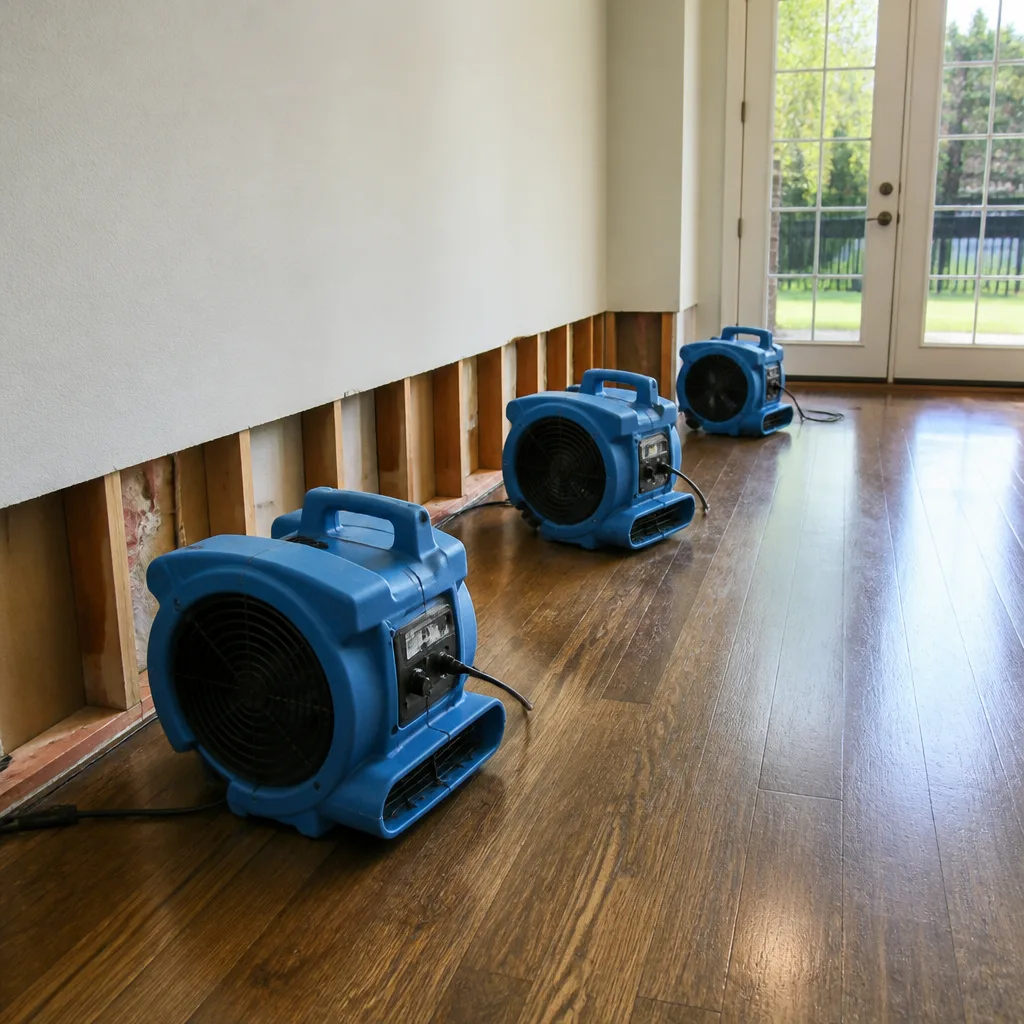
 Water damage drying
 Fire & smoke cleanup
 Mold remediation
 Storm response
 Sewage cleanup
 Reconstruction
Free visual inspection and a written scope of work before any mitigation begins - photos, moisture readings, and drying logs go in your claim file
The scope we write is the scope we bill. Anything new gets shown to you, in writing, before we touch it.
Get your free estimateFast, Reliable Mold Remediation Across March Air Force Base
Mold remediation in March Air Force Base means working inside an active Air Force Reserve installation and the adjacent March Inland Port, where older military-era buildings share a zip code with 1970s-era tract homes. Our IICRC-certified team understands the access protocols, building quirks, and moisture behavior unique to 92551. If you’ve found mold in a converted hangar, a mid-century barracks building, or a suburban home off Van Buren Boulevard, call (855) 382-0478 for an assessment. We’re familiar with the security requirements and the construction history here, which means fewer delays and fewer surprises once work begins.
Moisture doesn’t wait, and neither should you. The longer mold sits behind original framing or in a crawl space, the more it spreads, the more it costs to fix, and the more likely an insurance claim gets complicated. A Mold Remediation team that already knows March Air Force Base can get containment up faster and map moisture correctly the first time.
Why Whitfield Water Damage Is March Air Force Base’s Preferred Mold Remediation Company
We’re the contractor property managers call when a converted hangar at the March Inland Port shows mold after a roof leak or when a homeowner in the neighborhoods off Cactus Avenue finds black staining behind a bathroom wall. Our work here runs on IICRC-certified drying protocol, not guesswork. That matters when you’re dealing with mid-century military construction, where framing isn’t always where a standard moisture meter expects it to be.
Nolan Pruett leads our restoration crews, and our approach to every March Air Force Base job starts the same way: map the moisture, identify the source, contain the affected area, then dry and treat to documented standards. We’re active members of the Restoration Industry Association (RIA), which means our process gets held to a national professional standard, not an internal one. For Mold Remediation in March Air Force Base, that professional accountability matters more than in most places because the building stock is genuinely unusual.
Our clients in 92551 include homeowners near the base’s east side, commercial tenants at the Inland Port, and property managers who need documentation their insurance adjusters will accept without back-and-forth. We provide drying logs, moisture readings, and photo documentation on every job, organized to insurance standards.
Restoration work we handle
Black Mold Removal in March Air Force Base
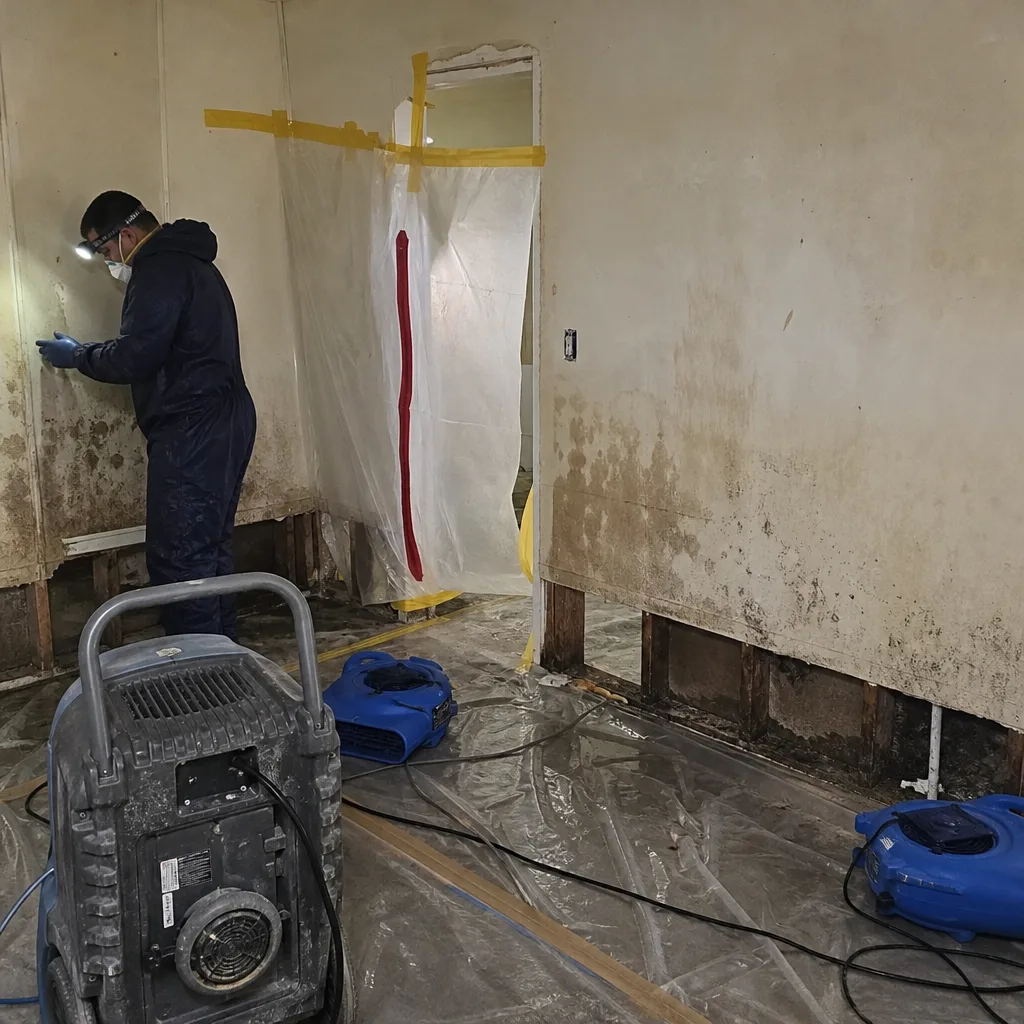
Black mold removal in March Air Force Base is a job we take seriously because Stachybotrys chartarum thrives in the exact conditions this area’s older buildings create: intermittent moisture, dead air spaces behind original walls, and slow leaks that go undetected for months in rarely-used hangar wings or storage areas. Our first sentence of advice to any 92551 homeowner or facility manager is this: don’t disturb it. Disturbing black mold releases spores into the air, which spreads the problem into HVAC systems and adjacent rooms. Our team sets up containment, runs negative air, removes affected material, and applies EPA-registered antimicrobial treatment to stop regrowth.
When does a March Air Force Base property need black mold removal specifically? When visible staining is dark green-black, accompanied by a musty odor that doesn’t clear with ventilation, or when moisture has been present for more than 72 hours on cellulose materials like drywall or old ceiling tile. In converted hangars with original wood framing, black mold often hides behind the drywall face, where moisture wicks up from original slab drains that no longer slope correctly.
Containment and Air Quality During Remediation
We run HEPA-filtered negative air machines during black mold removal to keep spores from spreading into occupied areas of a building. For hangars with large open volumes, containment is designed around original partition walls and door openings, which don’t always seal easily and require creative but code-compliant sealing. The goal is simple: make the work area smaller than the building and keep the air isolated.
Post-Remediation Verification
After we remove black mold and treat the affected surfaces, we verify the work with moisture readings and visual inspection. In March Air Force Base’s older structures, that means checking cavities behind original framing and around vintage drain lines, not just the visible drywall. We leave documentation that shows a moisture map, a scope of work, and drying logs your adjuster can review.
Mold Removal Contractor in March Air Force Base
Hiring a mold removal contractor in March Air Force Base means choosing someone who knows the difference between a 1940s barracks building and a 1980s tract house, because the remediation approach differs. A generalist contractor from Moreno Valley might quote you a tear-out and replace job for a converted hangar, but our IICRC-certified team first asks what’s behind the wall and how water got there. The wrong approach costs more, takes longer, and often leaves enough moisture behind that mold returns within six months.
For most March Air Force Base properties, mold removal involves source correction, containment, physical removal of mold-damaged material, HEPA vacuuming, antimicrobial treatment, and structural drying. The exact scope depends on what we find during moisture mapping, which we do before quoting firm numbers. You get a written scope of work before we start, so there’s no surprise upcharge after demolition reveals damage.
Invasive vs. Non-Invasive Drying Decisions
With Injectidry cavity-drying systems, we can often dry wall cavities and under-floor spaces without tearing out original materials. In a mid-century building, that preservation matters: original wood framing from the 1940s is often denser, better-aged, and more stable than modern lumber, and removing it should be a last resort. We match the drying method to the materials, not to the convenience of our schedule.

Working Within Security Perimeters
Mold removal inside the March Air Force Base perimeter or at the Inland Port means coordinating with base operations for access, escorts, and sometimes flight-schedule windows. Our crews arrive with all equipment and paperwork ready so we don’t burn a security window waiting on a missing manifest. That’s a March Air Force Base-specific problem we’ve solved repeatedly.
Trusted Brands We Service in March Air Force Base
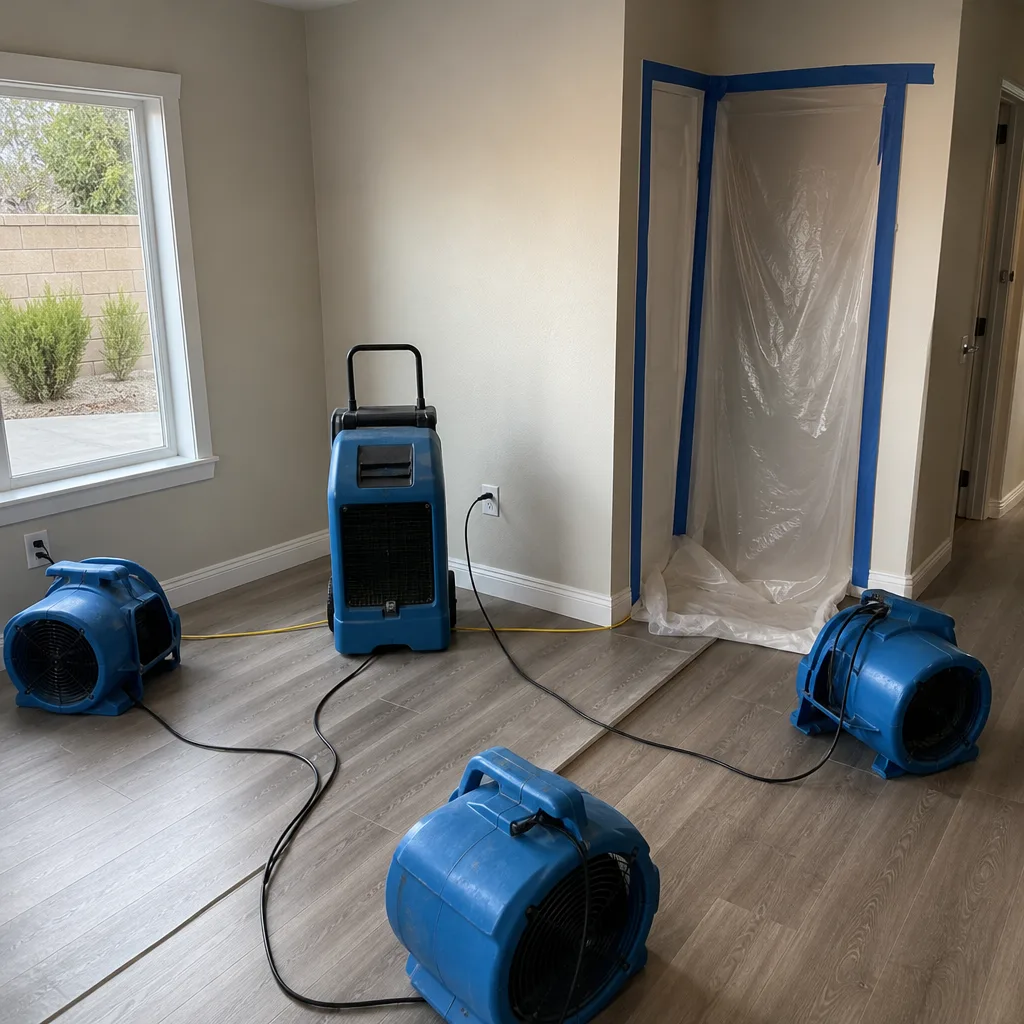
Our drying and air-scrubbing setup uses the same professional-grade equipment insurance-preferred contractors run: Dri-Eaz dehumidifiers, Phoenix air movers, XPOWER blowers, and B-Air negative air machines. We stock common replacement parts and consumables in our Victorville shop, so a March Air Force Base job doesn’t stall waiting on a filter or a relay. For converted hangars with large cubic footage, we size the equipment to the volume and the building’s known leakiness, because a drafty 1940s structure dries differently than a sealed 2000s house. We carry the equipment to handle both.
As a member of the RIA and IFA, our equipment standards and operating procedures are documented and auditable, which matters when an adjuster asks whether the drying was done to professional standards.
Common Mold Remediation Problems We See in March Air Force Base Homes
- Mold behind original hangar walls. Standard moisture mapping misses irregular military-era framing because stud spacing and fire-blocking aren’t where a modern scanner expects them. We map against the building’s actual construction, not a generic template.
- Incomplete structural drying in drafty buildings. Consumer-grade dehumidifiers can’t pull enough water from a large, hard-to-seal space. When drying falls short, mold rebounds in weeks, and the whole remediation gets redone.
- Security coordination delays letting water sit. A category 2 water loss that waits 48 hours for escort approval can escalate to category 3, which means a much larger remediation scope. We start coordination calls before we leave Victorville.
- Crawl space mold in older 92551 tract homes. Homes built in the 1970s and 1980s here often have vented crawl spaces that draw moist air in the winter. We treat the mold and the moisture source, not just the visible staining.
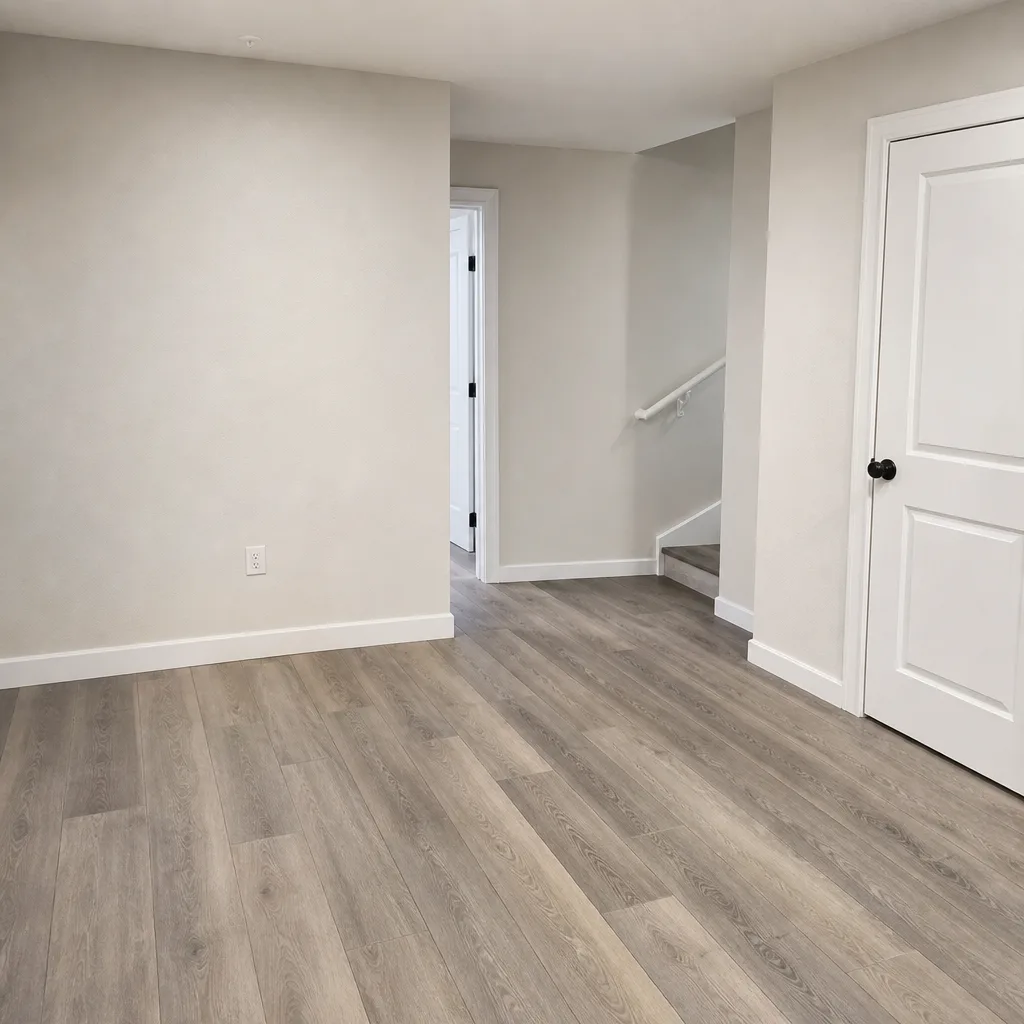
See the difference
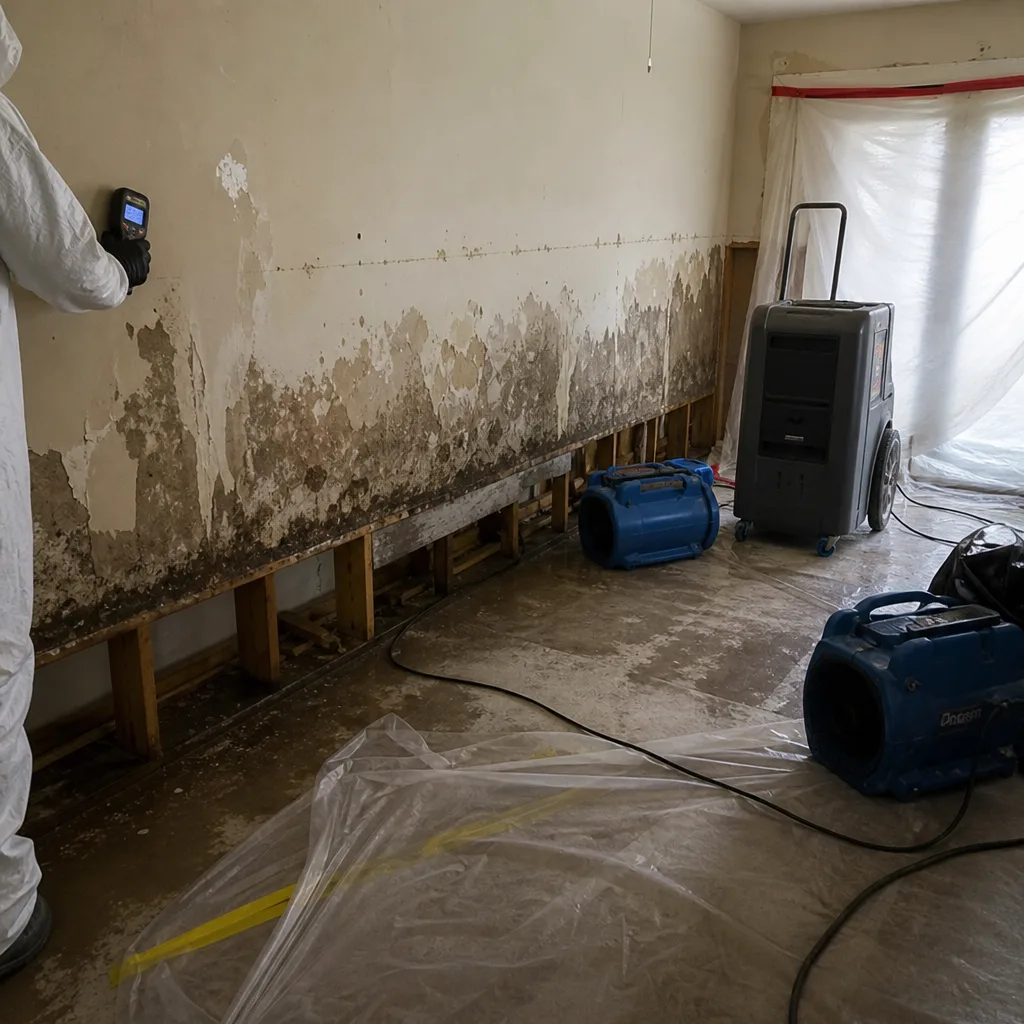 Before
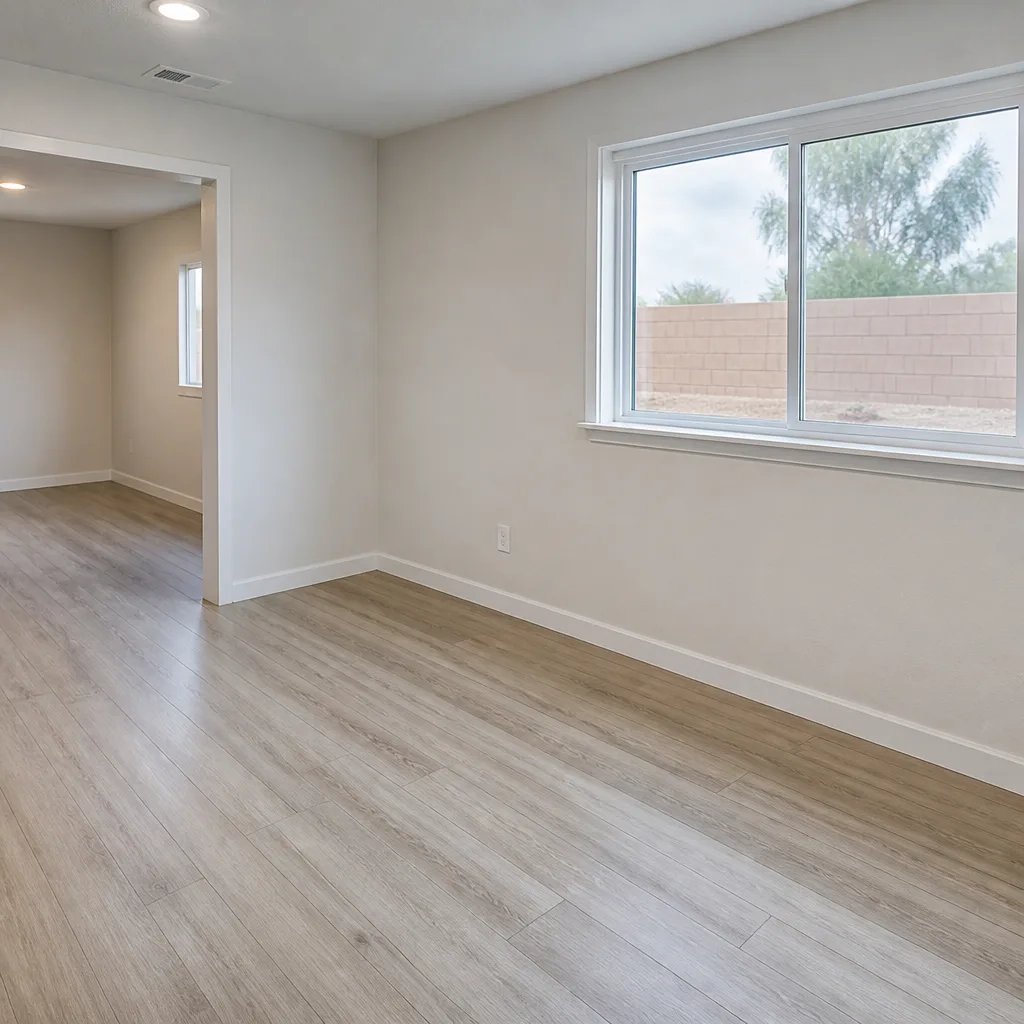 After
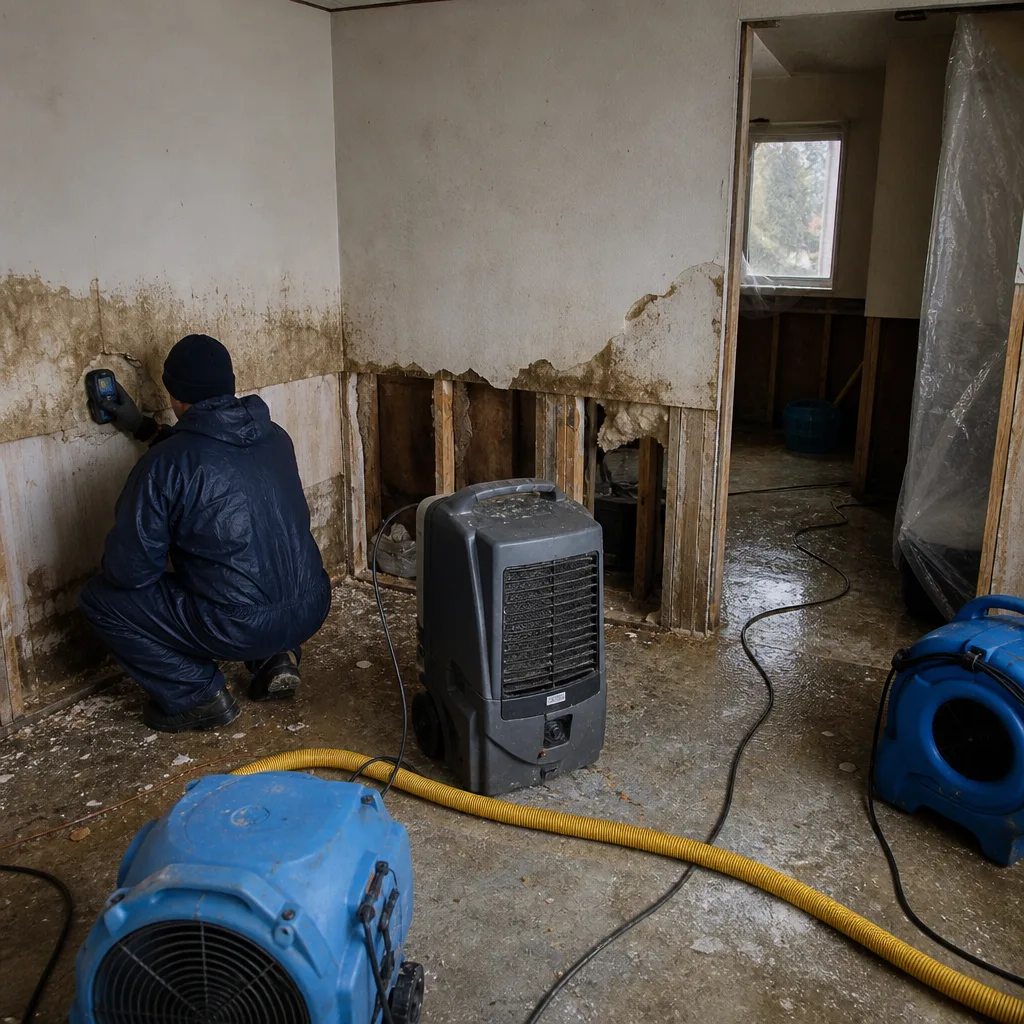 Before
 After
 Before
 After
Pricing for Mold Remediation in March Air Force Base, CA
Black mold removal in March Air Force Base typically runs $1,800 to $4,500 for a contained single-room job in a standard 92551 home. A converted hangar or larger commercial space at the March Inland Port runs $4,000 to $12,000 or more, depending on square footage, ceiling height, and access constraints. Moisture mapping and mold inspection start around $350 to $650. Crawl space mold treatment in a tract home usually lands between $1,200 and $3,200. Every job gets a free phone consultation and a written scope before any work starts, so you won’t get an open-ended bill. Call (855) 382-0478 for a site visit and firm pricing.
We Also Serve Cities Near March Air Force Base
Our team covers Moreno Valley, Woodcrest, Perris, and Good Hope, along with the rest of the western Riverside County corridor. If you’re managing a property near the base but outside the 92551 boundary, we’re already working in your neighborhood and can usually schedule an assessment within the same week. Our March Air Force Base coverage includes all residential and commercial addresses within the active base, the Inland Port, and the surrounding residential streets.
Serving March Air Force Base, CA — Our Local Coverage Area
We’re based in the March Air Force Base area and know this community well. Use the map below to see our service coverage — if you’re nearby, we can almost certainly help.
FAQs About Mold Remediation in March Air Force Base
Old military buildings have irregular framing, original slab drains, and additions that create hidden moisture paths a standard remediation plan misses. Instead of assuming a rectangular room with studs every 16 inches, we map the actual construction, find where water travels, and design containment around the building’s real geometry. That’s why a March Air Force Base-specific contractor is worth the call, not a generalist crew driving over from Moreno Valley.
Contain the area if you can, stop the water source, and call us at (855) 382-0478 before removing any material. In a hangar, a roof leak often travels along original trusses and drains before it shows up on the ceiling, so the visible stain may be the end of a much longer moisture path. We’ll map that path, document everything for your property owner or insurer, and set up drying and treatment in the same visit.
Yes. The area’s hot, dry, Santa Ana-driven climate dries surfaces quickly, but it doesn’t prevent mold inside wall cavities, crawl spaces, and poorly ventilated rooms where moisture stays trapped. In fact, intermittent wetting and drying can concentrate mold behind surfaces, where it’s less visible but still damaging. A single roof leak or plumbing failure is enough to start mold growth within 48 to 72 hours, even in 92551’s dry air.
Yes, we handle black mold removal throughout March Air Force Base and the entire 92551 zip, including residential streets, base housing, and commercial spaces at the March Inland Port. Our crews are IICRC-certified, and we follow containment and air-filtration protocols on every black mold job, no matter how small the affected area. Call (855) 382-0478 and we’ll schedule an inspection.
We first secure access and coordination with base or port operations, then set up containment and extraction, and finally run professional-grade drying equipment sized to the hangar’s actual cubic footage. Category 3 water, which contains sewage or other contaminants, means full removal of affected porous materials and antimicrobial treatment before drying. Our documentation includes photos, moisture logs, and a written scope so your insurance claim stays clean.
Contact Whitfield Water Damage in March Air Force Base
If you’re seeing mold, smelling it, or just suspect moisture where it shouldn’t be, call (855) 382-0478 today. Nolan Pruett and our IICRC-certified team serve March Air Force Base with the same process we’d want in our own buildings: documented, specific, and thorough. Estimates are free, and we’ll give you a written scope before any work begins.
Written by Nolan Pruett, Owner at Whitfield Water Damage, serving March Air Force Base and the Inland Empire.