


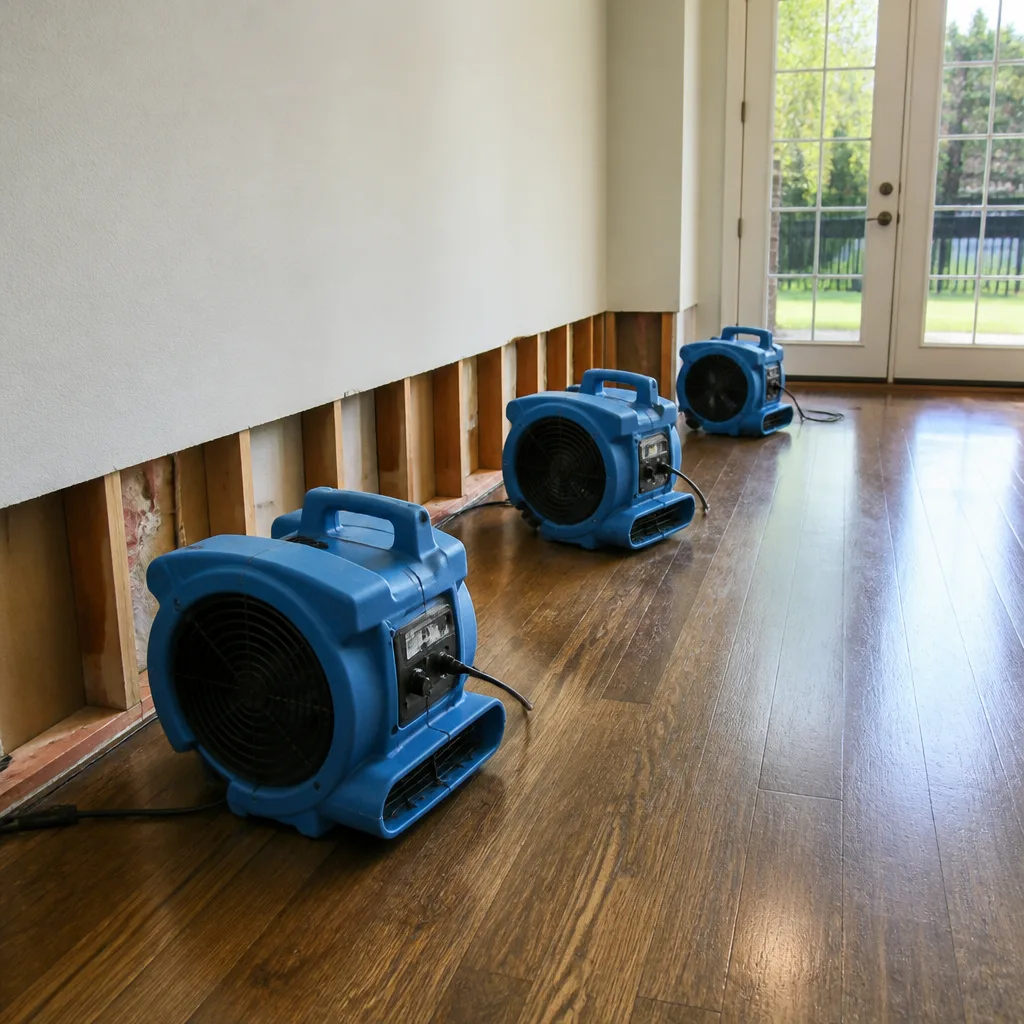
 Water damage drying
 Fire & smoke cleanup
 Mold remediation
 Storm response
 Sewage cleanup
 Reconstruction
Free visual inspection and a written scope of work before any mitigation begins - photos, moisture readings, and drying logs go in your claim file
The scope we write is the scope we bill. Anything new gets shown to you, in writing, before we touch it.
Get your free estimateFast, Reliable Mold Remediation Across Santa Ana
Mold remediation in Santa Ana typically runs $1,500 – $6,000 depending on how far moisture has traveled through your framing, and most jobs we handle are finished within three to five days. In older single-wall bungalows around downtown and the 92701 and 92703 ZIP codes, the job almost always means opening a wall rather than injecting drying air into a cavity, because there is no cavity to treat. We know this because we work these houses every week. Call (855) 382-0478 and we’ll walk you through what your specific situation needs.
Our Mold Remediation team covers all of Santa Ana, from the historic core near Main Street out to the 92702 and 92799 areas. When you call, you get a straight answer about whether you are looking at cleaning, containment, or structural drying.
Why Whitfield Water Damage Is Santa Ana’s Preferred Mold Remediation Company
Santa Ana homeowners keep calling us because we treat their houses the way the construction actually demands, not the way a franchise playbook says to. A 1920s bungalow off North French Street and a 1970s stucco tract home on slab need different approaches. Our technicians are IICRC-certified, which means they follow a science-based drying protocol on every job. We are also an RIA member and an IFA member, so there is professional accountability behind the work, not just a contractor license.
The calls we get from Santa Ana often start the same way: a homeowner smells something musty, or a property manager flags dark staining behind a baseboard, and nobody has been able to explain why it keeps coming back. The reason, in a lot of these older homes, is that the first crew dried the surface but never opened the wall to dry the framing. Nolan Pruett, who leads our mold remediation work, trains our team to find the hidden moisture before it becomes a recurring problem.
We also document everything to insurance standards. That matters in Santa Ana, where water claims on older homes get scrutinized. Photo documentation, moisture maps, and clear scope-of-work reports mean your adjuster sees exactly what we found and exactly what we did.
Restoration work we handle
Mold Inspection in Santa Ana
Mold Inspection in Santa Ana is where we start on almost every job, because in this city’s older housing stock, what you can see is rarely the whole story. A standard inspection runs $250 – $550 depending on how many rooms and zones we are evaluating. We use thermal imaging and moisture meters to map where water has moved, and we pay particular attention to plaster walls and the back sides of framing in single-wall construction.
When an Inspection Matters Most
If you bought or inherited a pre-1950s home around the 92701 or 92703 ZIP codes and you are noticing a musty smell with no visible staining, that is the exact scenario where hidden mold lives. Single-wall bungalows have no empty wall cavity, so moisture wicks straight into plaster and wood. The smell often shows up before any surface discoloration does. An inspection with thermal imaging can locate the wet zone before you start opening walls blind.
What You Get From the Report
We give you a written scope of what we found, moisture readings, and a recommendation for what actually needs to be done. If the moisture is contained and the framing is sound, we tell you that. If it needs opening and drying, we show you the numbers that explain why. You get that in writing before any remediation work starts.
Mold Removal Specialist in Santa Ana
Our Mold Removal Specialist work in Santa Ana focuses on the structural mold that hides in plaster and framing, which is the real issue in the 1900s-1940s homes that dominate the older core. Removal and remediation of an isolated area, like a single wall or a bathroom ceiling, typically runs $1,200 – $3,500. A whole-room containment job with structural drying can push toward $6,000 or more, particularly when we need to open multiple walls.
Containment and Source Removal
We build containment with negative air pressure so mold spores do not spread into the rest of the house during removal. Then we remove the affected plaster or drywall, clean the framing with antimicrobial treatment, and dry the exposed structure. In single-wall construction, this is the only reliable method, because the wood itself is the surface holding the moisture.

When the Wall Must Come Open
We will not tell you a single-wall wall can be dried with injectidry or cavity equipment. That approach works in newer suburbs with hollow wall assemblies, but in a 1920s Santa Ana bungalow, there is no cavity to inject into. Opening the wall is often faster, cheaper in the long run, and the only way to prevent rebound mold within weeks.
Trusted Brands We Service in Santa Ana
We run Dri-Eaz dehumidifiers and air movers on our Santa Ana jobs, along with Phoenix and XPOWER units when the job calls for specific drying capacity. Those are the same brands preferred by insurance-preferred restoration contractors. Because we run professional-grade equipment, not rental-grade fans, drying cycles on Santa Ana jobs tend to finish faster, and our moisture maps show it. We also maintain quick access to replacement parts for our equipment, which means less downtime on your job.
See the difference
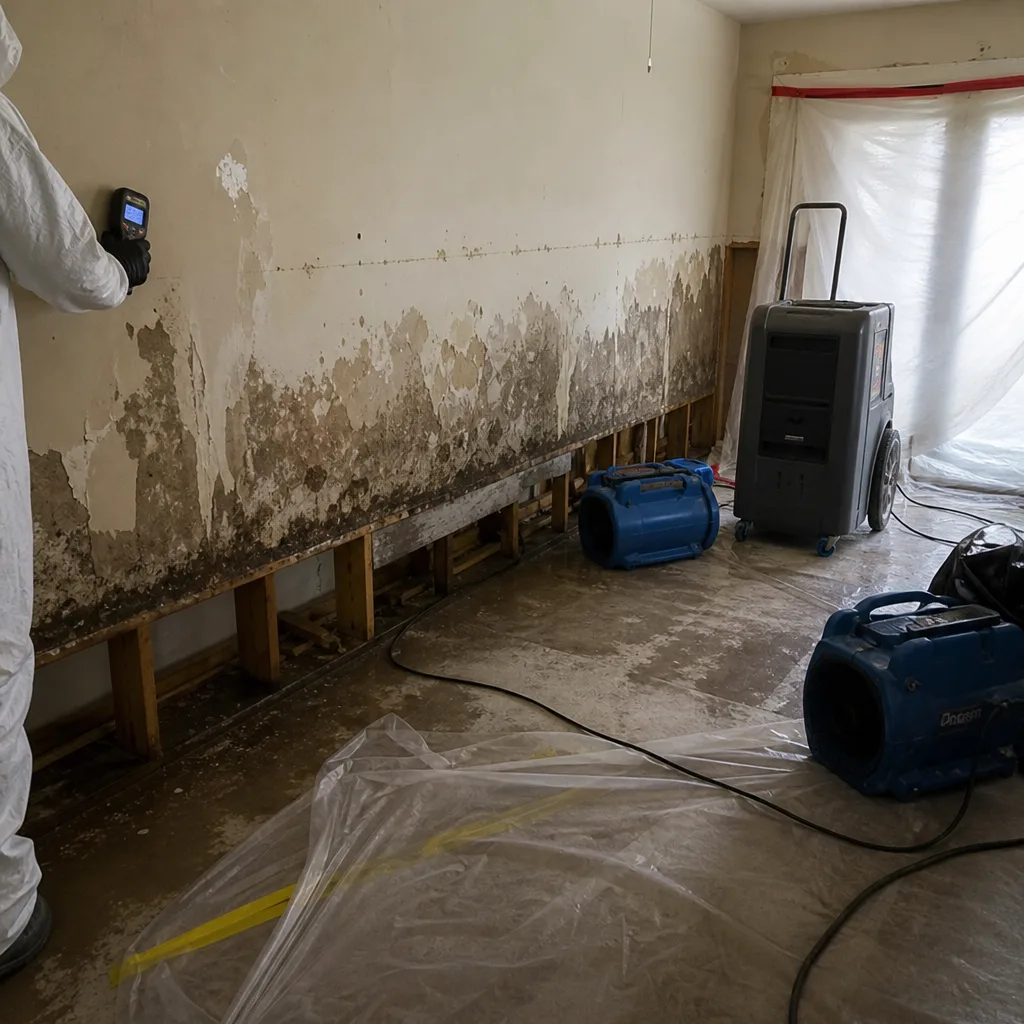 Before
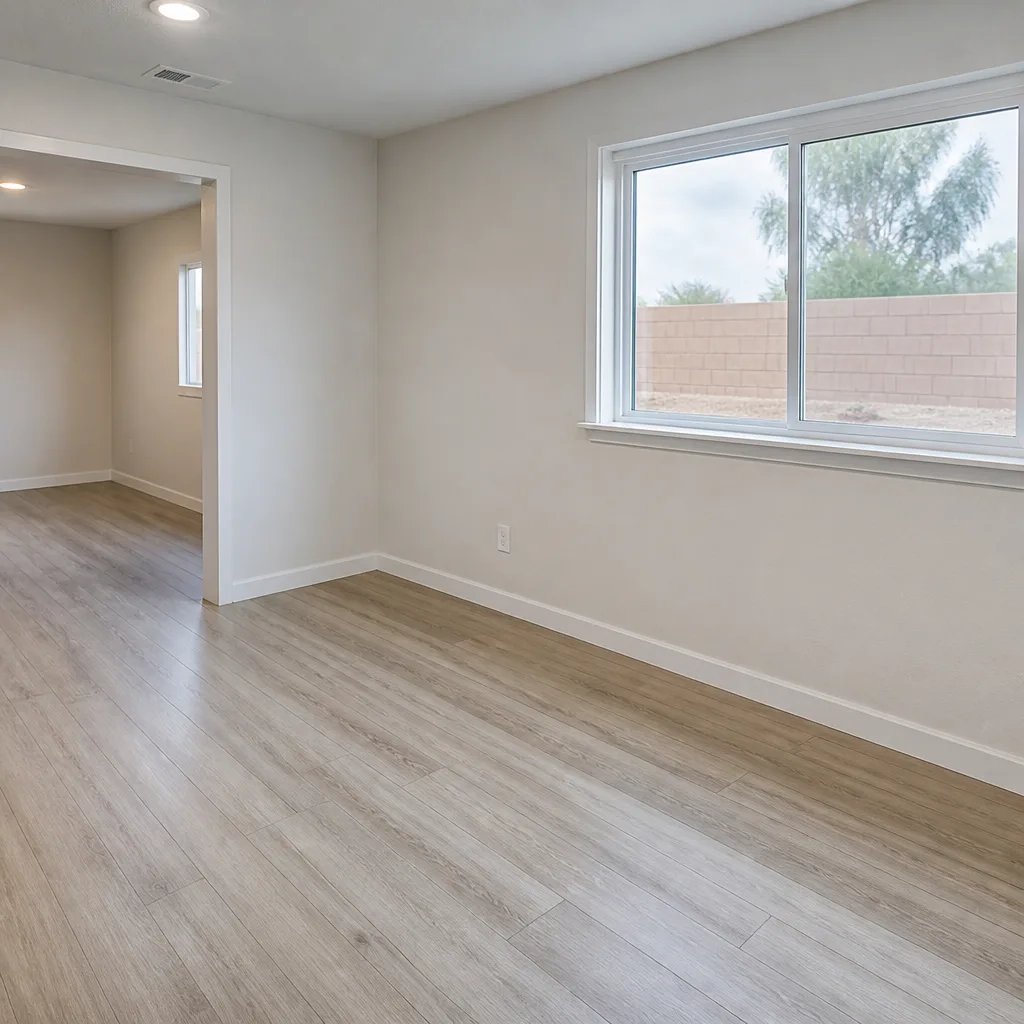 After
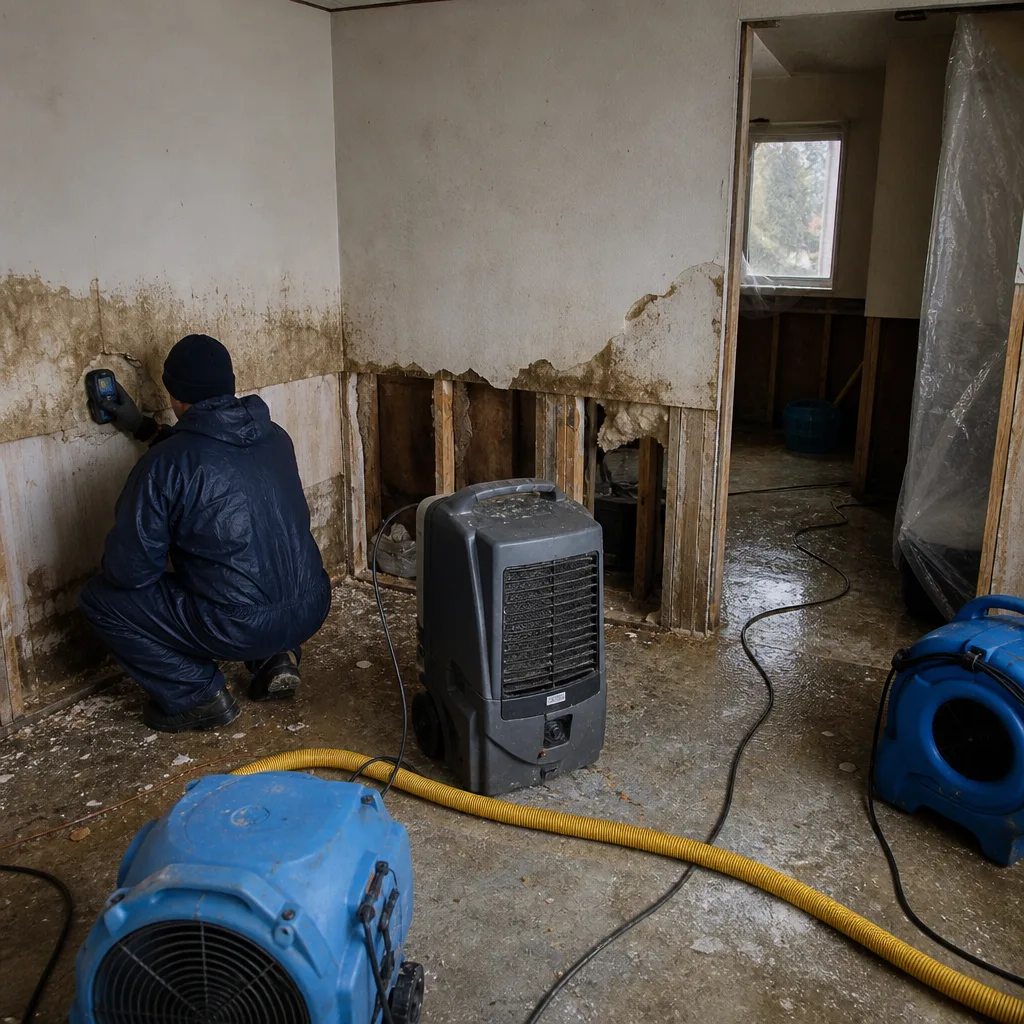 Before
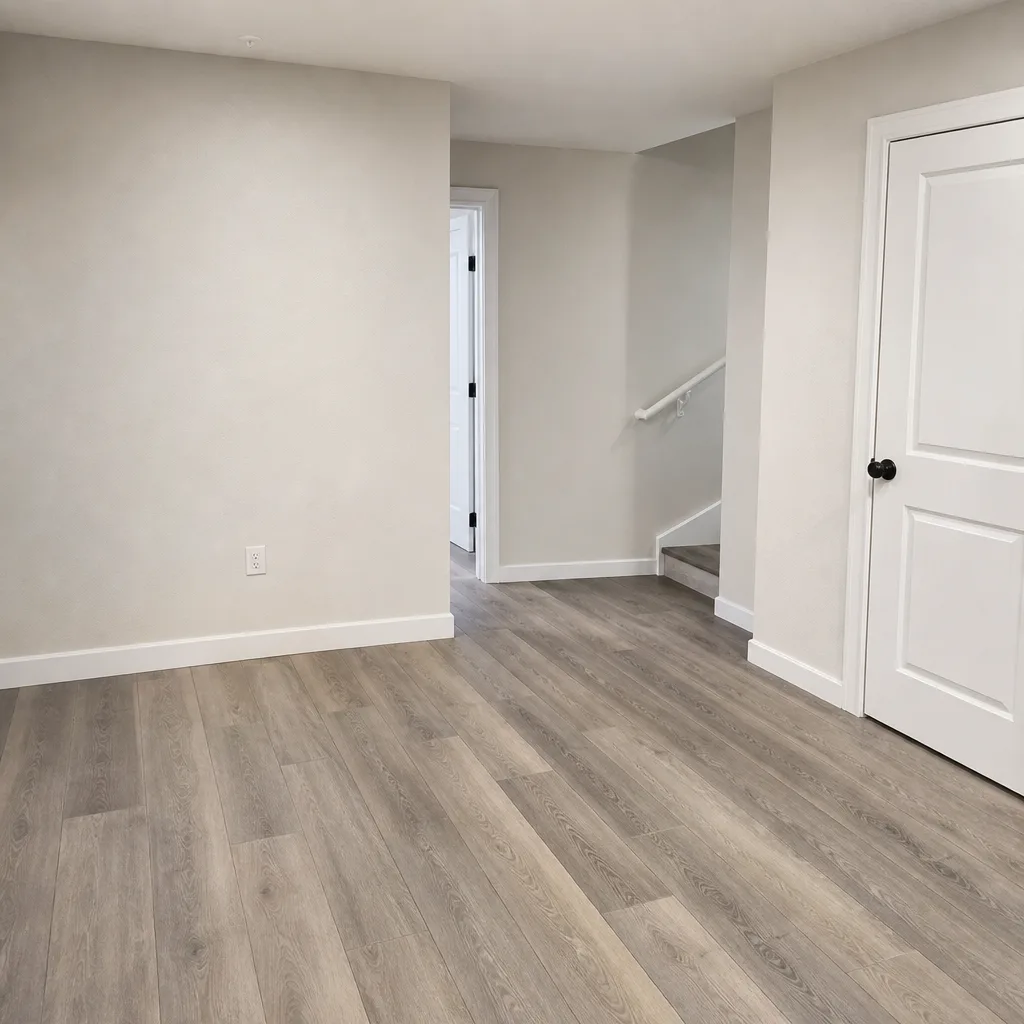 After
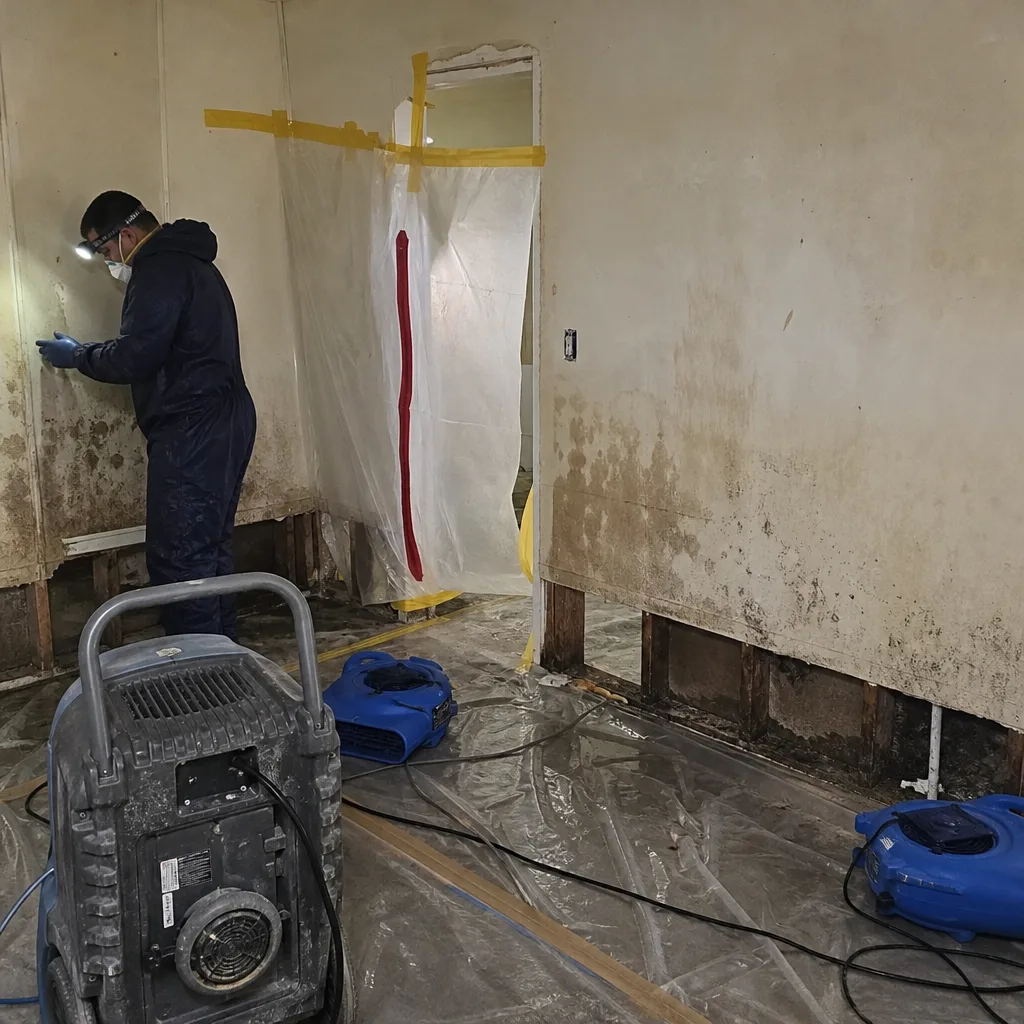 Before
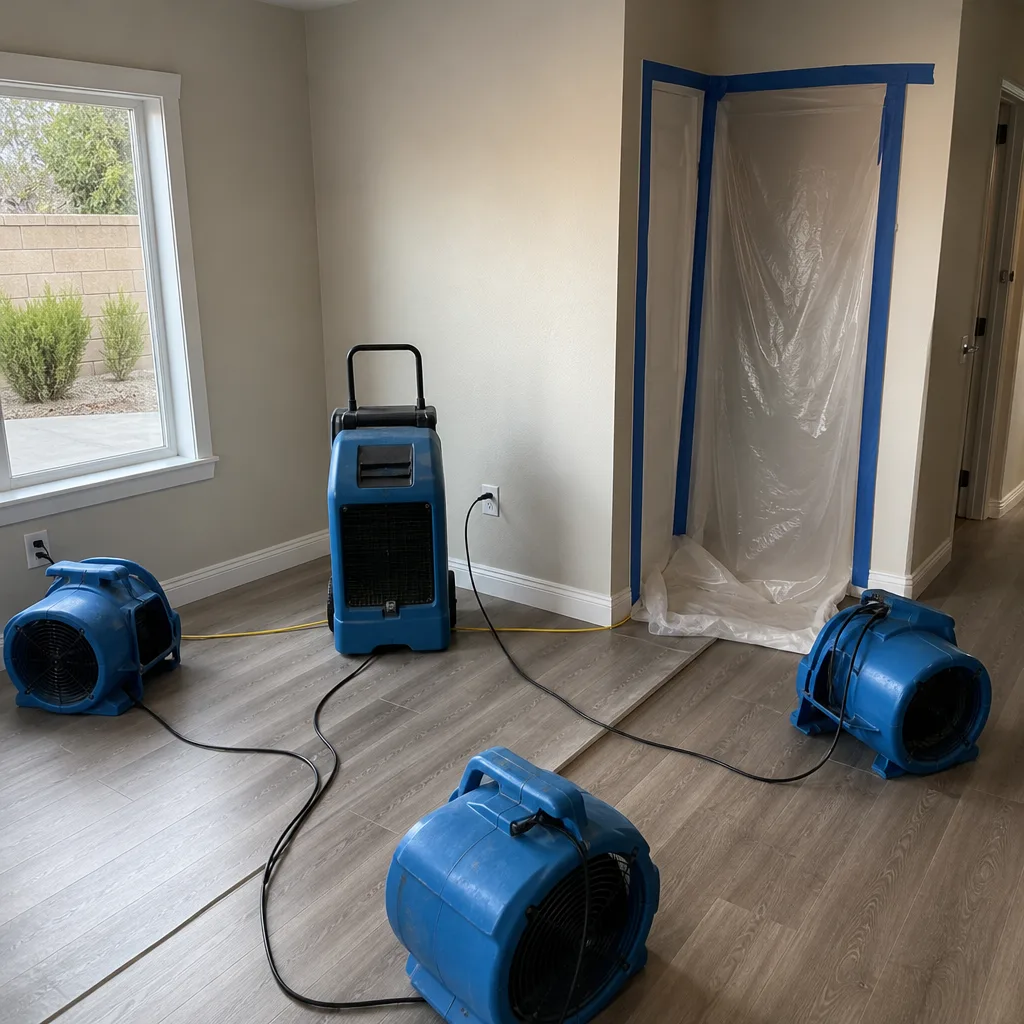 After
Common Mold Remediation Problems We See in Santa Ana Homes
- Hidden mold in single-wall assemblies. There is no wall cavity, so mold grows directly on the back of plaster and framing. Standard moisture meters read surface levels and miss the structural moisture entirely.
- Crews using cavity-drying equipment where it does not apply. Injectidry systems and wall-cavity drying are useless in a single-wall home. Without wall removal, trapped moisture leads to rebound mold within weeks.
- Post-Santa Ana wind moisture getting baked in. After wind-driven rain breaches an older roof, the dry heat that follows evaporates surface moisture into attic framing and wall studs. Mold colonizes before anyone sees staining.
- Original cast-iron and galvanized plumbing failing. Many older Santa Ana homes still have legacy supply lines. A pinhole leak inside a wall can run for weeks before it is noticed, and by then, the framing is already soaked.
Pricing for Mold Remediation in Santa Ana, CA
A typical mold inspection in Santa Ana runs $250 – $550. Isolated mold removal on a single wall or ceiling falls between $1,200 and $3,500. Full containment and structural drying after a water event, where multiple rooms are involved, runs $4,000 – $6,000 or more. What drives the price is how many walls need to open, whether framing requires cleaning or replacement, and how long drying equipment needs to run. We give you a written scope before any work starts, so you are never surprised mid-job. Call (855) 382-0478 for a free estimate.
We Also Serve Cities Near Santa Ana
Beyond Santa Ana, we handle mold remediation in Tustin, North Tustin, Orange, and Villa Park. Many of those homes share the same older construction patterns, especially in their historic cores. If you are managing a property in one of those cities, the same team and the same standards apply.
Serving Santa Ana, CA — Our Local Coverage Area
We’re based in the Santa Ana area and know this community well. Use the map below to see our service coverage — if you’re nearby, we can almost certainly help.
FAQs About Mold Remediation in Santa Ana
In single-wall bungalows, mold shows up fast because there is no wall cavity to slow moisture down. Water from a supply-line leak or washing-machine overflow wicks straight into plaster and framing. Plaster holds moisture for days, and wood stays wet even longer. Mold can colonize within 48 – 72 hours in those conditions. If you have a leak in an older Santa Ana home, call (855) 382-0478 the same day.
We use thermal imaging and moisture mapping to trace where water has moved, then we take targeted openings where the thermal signature and moisture readings show hidden moisture. You do not need to tear out an entire wall blind. The imaging shows us the shape of the wet zone, so we open exactly what is necessary to dry the framing and treat the affected area.
In a true single-wall home, no. There is no cavity to dry, so injectidry and other cavity-drying methods cannot work. The wall must be opened to expose the wet plaster and framing, dried with professional-grade air movers and dehumidifiers, then treated and closed back up. Anyone who tells you otherwise is likely to leave you with rebound mold in a month.
Category 1 is clean water from a supply line or a faucet. Category 2 is gray water from a washing machine or dishwasher overflow. Category 3 is black water, meaning sewage or floodwater. The category determines how aggressively we have to remove affected material and how much containment is required. Categories 2 and 3 almost always mean cutting out and disposing of the affected plaster or drywall rather than drying it in place.
Santa Ana winds drive rain sideways into older roof edges and window frames, and then the dry heat that follows bakes that moisture deep into attic framing and wall studs before anyone spots a stain. The result is hidden mold inside the structure, not surface growth on a wall. After any major wind event, an attic and wall moisture check is worth doing, even if you do not see a ceiling stain yet.
Written by Nolan Pruett, who leads mold remediation at Whitfield Water Damage, serving Santa Ana and surrounding cities with IICRC-certified drying protocols and structural drying expertise.