

 Water damage drying
 Fire & smoke cleanup
 Mold remediation
 Storm response
 Sewage cleanup
 Reconstruction
Free visual inspection and a written scope of work before any mitigation begins - photos, moisture readings, and drying logs go in your claim file
The scope we write is the scope we bill. Anything new gets shown to you, in writing, before we touch it.
Get your free estimateFast, Reliable Water Damage Restoration Across La Habra
Most water damage in La Habra isn’t from rain. It’s from aging galvanized pipes failing under slab foundations. When that happens, time matters. Our IICRC-certified team responds to La Habra homes in 90631, 90632, and 90633 with professional-grade drying equipment, including Dri-Eaz and Phoenix systems. Call (855) 382-0478 any hour. We arrive ready to stop the water, map the moisture, and dry the structure before mold can take hold.
Why Whitfield Water Damage Is La Habra’s Preferred Water Damage Restoration Company
La Habra homeowners call us because we understand what’s behind their walls. The city’s housing stock is dominated by mid-century tract homes built between the 1950s and 1970s. Many still run on original galvanized steel supply lines that have spent decades corroding in hard, mineral-rich water. When those pipes fail, they fail inside walls or under slabs, and that changes the whole restoration equation. Our Water Damage Restoration team follows IICRC-certified drying protocol, not guesswork, on every job. We’re also active members of the Restoration Industry Association and IFA, which means we answer to professional standards beyond a one-time license.
Nolan Pruett leads our restoration work with a simple rule: document everything to insurance standards, dry what can be saved, and remove only what cannot. That approach matters in La Habra, where slab leaks and hidden shutoff valves turn a small pipe failure into a house-wide emergency faster than most people expect. Our crews know the neighborhoods: the older core around Whittier Boulevard, the mid-century tracts near Euclid Street, and the hillside infill along the eastern edge where 1980s and 1990s construction sits on different foundations with different failure patterns.
Restoration work we handle
Water Damage Cleanup in La Habra
Water Damage Cleanup in La Habra means more than pulling standing water off a floor. Because this city’s homes were built in an era before modern moisture barriers and foundation sealing became standard, cleanup has to account for water that’s already traveled. A 1962 ranch on a slab-on-grade foundation will hold water differently than a 1970s split-level with a pier-and-beam crawlspace. We start every cleanup with moisture mapping across the full affected area, not just where the water is visible. La Habra homeowners typically pay between $1,200 and $3,800 for professional water damage cleanup, depending on how far the water has spread and whether wall cavities or subfloor areas are involved.
Structural Drying After Cleanup
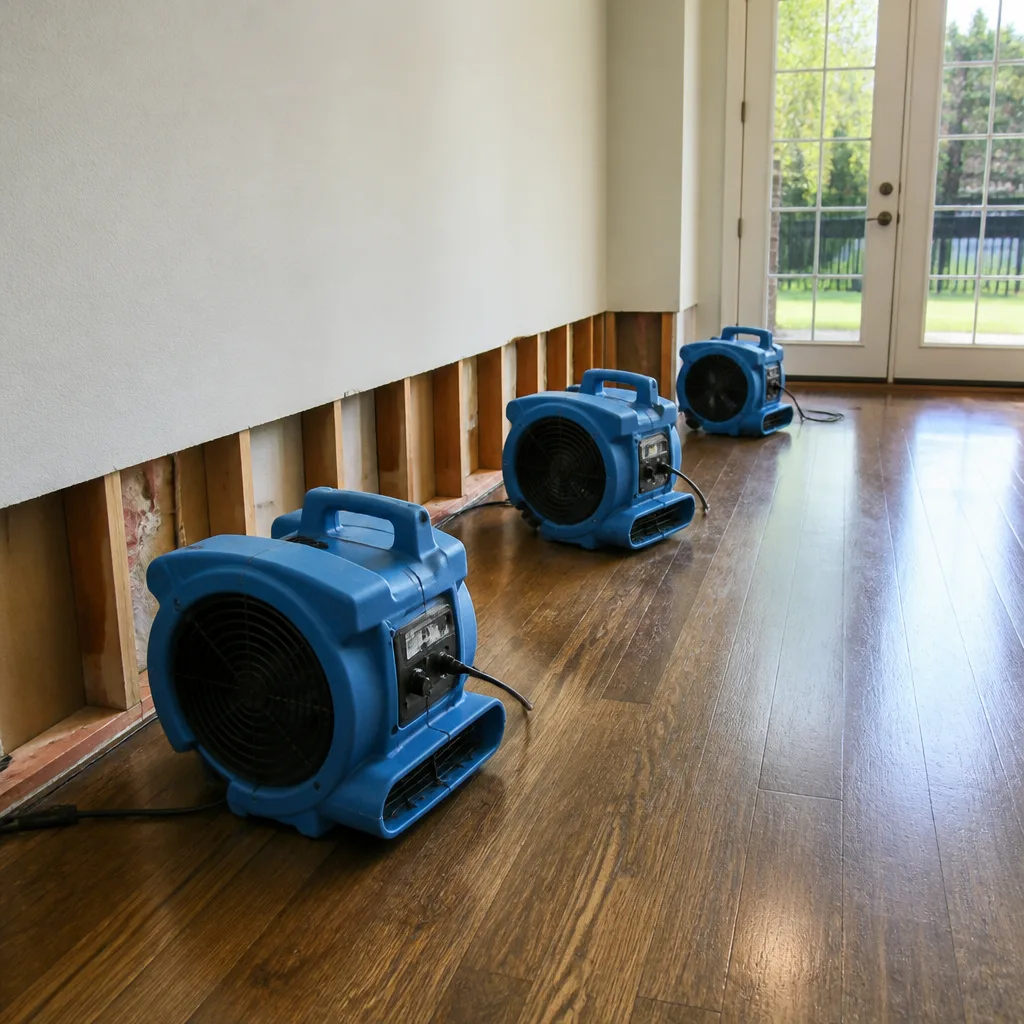
Extraction is step one. Drying is where the real work happens. We place Dri-Eaz and Phoenix air movers and dehumidifiers based on the room’s cubic footage and the moisture readings from our meters. This isn’t a set-and-forget process. We return daily to monitor drying progress against IICRC standards, adjusting equipment placement until we can document that materials have returned to acceptable moisture content.
Wall Cavity and Subfloor Drying
For La Habra homes on pier-and-beam foundations, water from a plumbing leak doesn’t stay near the visible puddle. It runs along joists, under floorboards, and into wall cavities that never see daylight. That’s why we use Injectidry systems for non-invasive structural drying. Injectidry lets us dry inside walls and under floors without tearing out drywall or pulling up floorboards unnecessarily. In many La Habra homes, this cuts demolition costs and rebuild time significantly compared to a tear-out-first approach.
Emergency Water Damage Restoration in La Habra
Emergency Water Damage Restoration in La Habra usually starts with a phone call from a homeowner standing in a puddle or hearing water moving somewhere it shouldn’t. The most common call we get here involves slab leaks from original galvanized supply lines. Those pipes were installed in the 1950s and 1960s, and La Habra’s mineral-heavy water has been working against them ever since. Emergency response covers water extraction, containment, and the first 24 to 48 hours of drying. For a typical La Habra slab leak affecting one or two rooms, emergency restoration runs between $1,800 and $4,500.
Slab Leak Response
A slab leak in a La Habra tract home often comes with a complication: the original plumbing may not have a dedicated shutoff for the failing line. We’ve responded to homes near Harbor Boulevard and Lambert Road where stopping the water required opening a wall to find a hidden valve. That delay matters. It means category 1 clean water has time to pick up contaminants from building materials and degrade to category 2 or category 3. Our crews are prepared for this. We arrive with the tools and the training to locate valves, stop the water, and begin extraction quickly.
Rapid Drying to Prevent Mold
La Habra is semi-arid. That sounds like it would help keep mold at bay, and it does, until the Santa Ana winds arrive. Those hot, dry winds accelerate evaporation from wet surfaces, which actually pushes moisture deeper into drywall and flooring. Then mold gets the humidity it needs to grow inside wall cavities. The IICRC standard is to get structural drying underway within 24 to 48 hours. In La Habra’s older homes, that window is urgent. We run B-Air air movers and dehumidifiers immediately after extraction to hit that target.
Trusted Brands We Service in La Habra
We work on all makes and models of plumbing-related damage in La Habra homes, and we keep our equipment fleet stocked with the brands that restoration professionals trust: Dri-Eaz dehumidifiers, Phoenix air movers, and XPOWER blowers. Because La Habra’s housing stock is older, we see a lot of original copper and galvanized supply lines alongside modern PEX replacements. Our team is trained to work across all of them, and we stock the drying equipment needed for both slab-on-grade and pier-and-beam foundations. When you call us about a leak in La Habra, we’re not waiting on parts. We’re loading the truck.
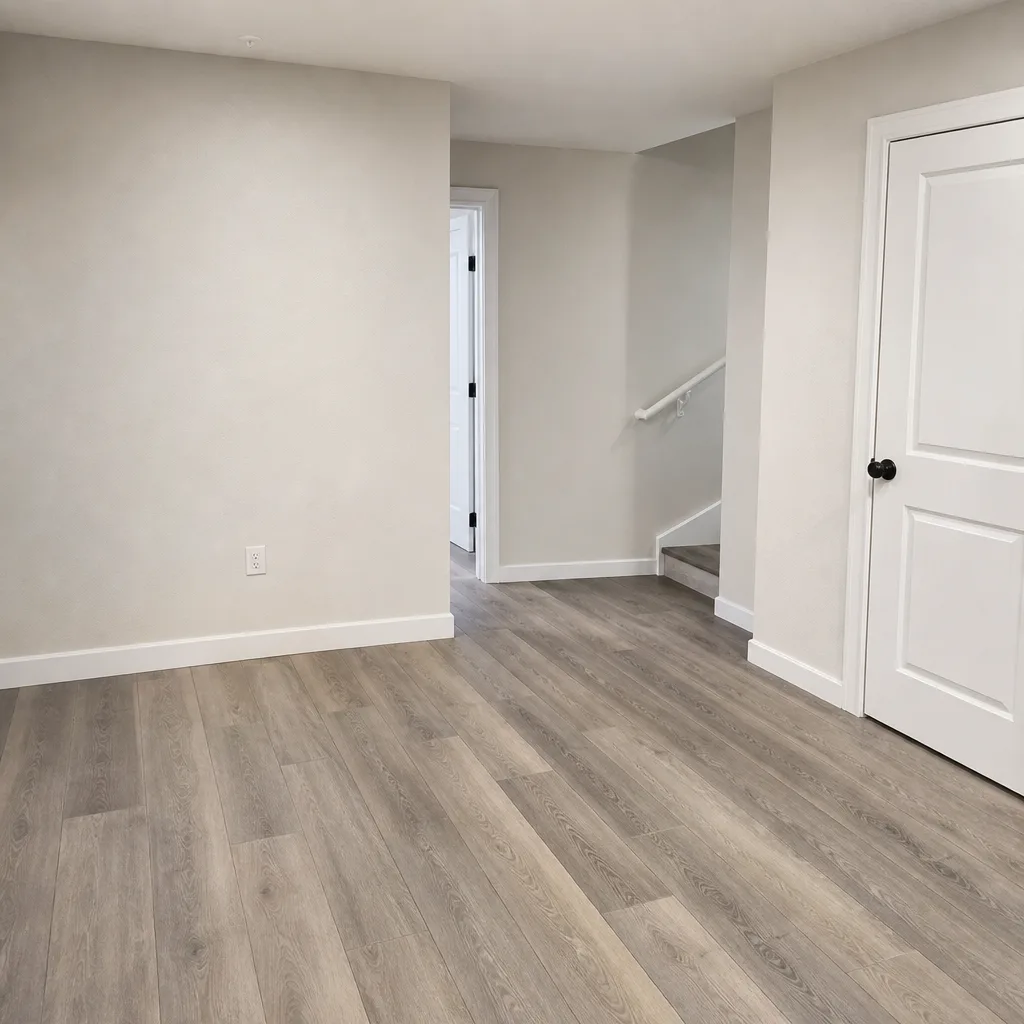
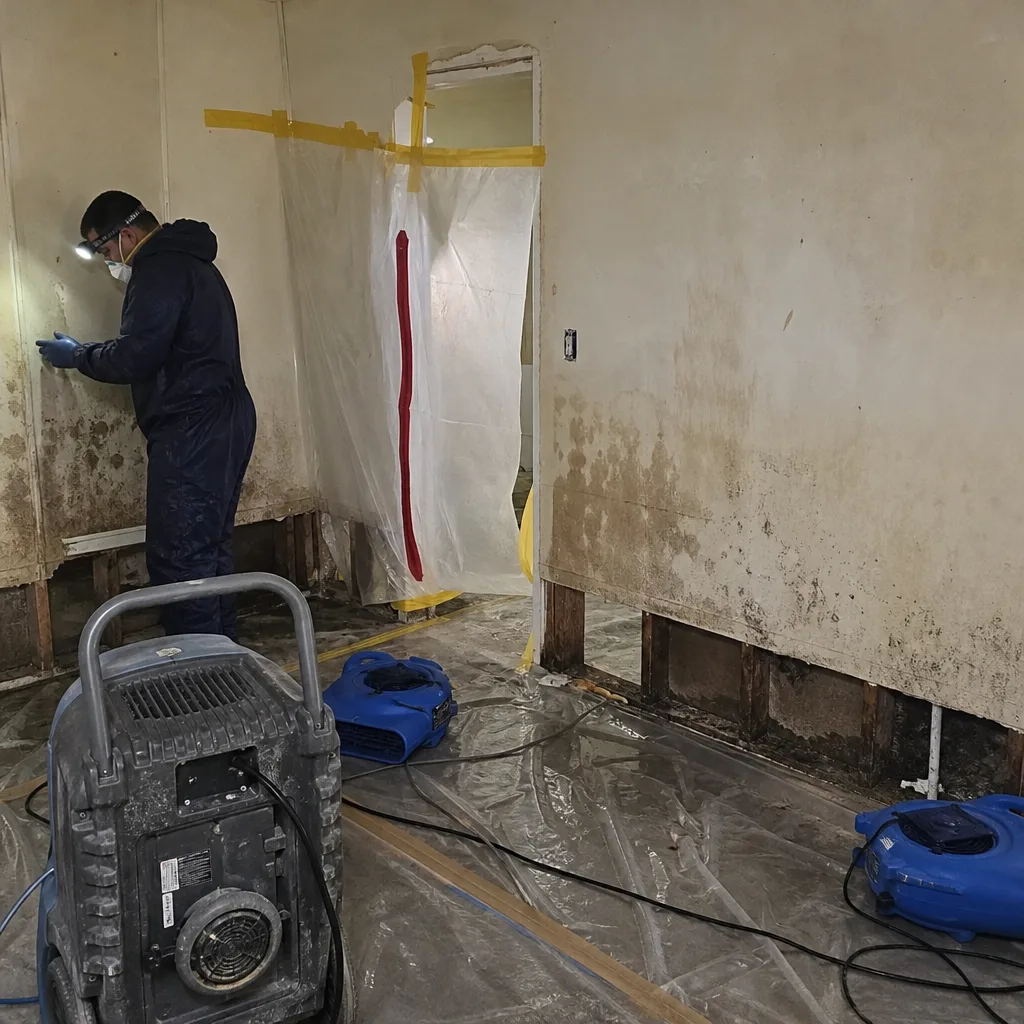
See the difference
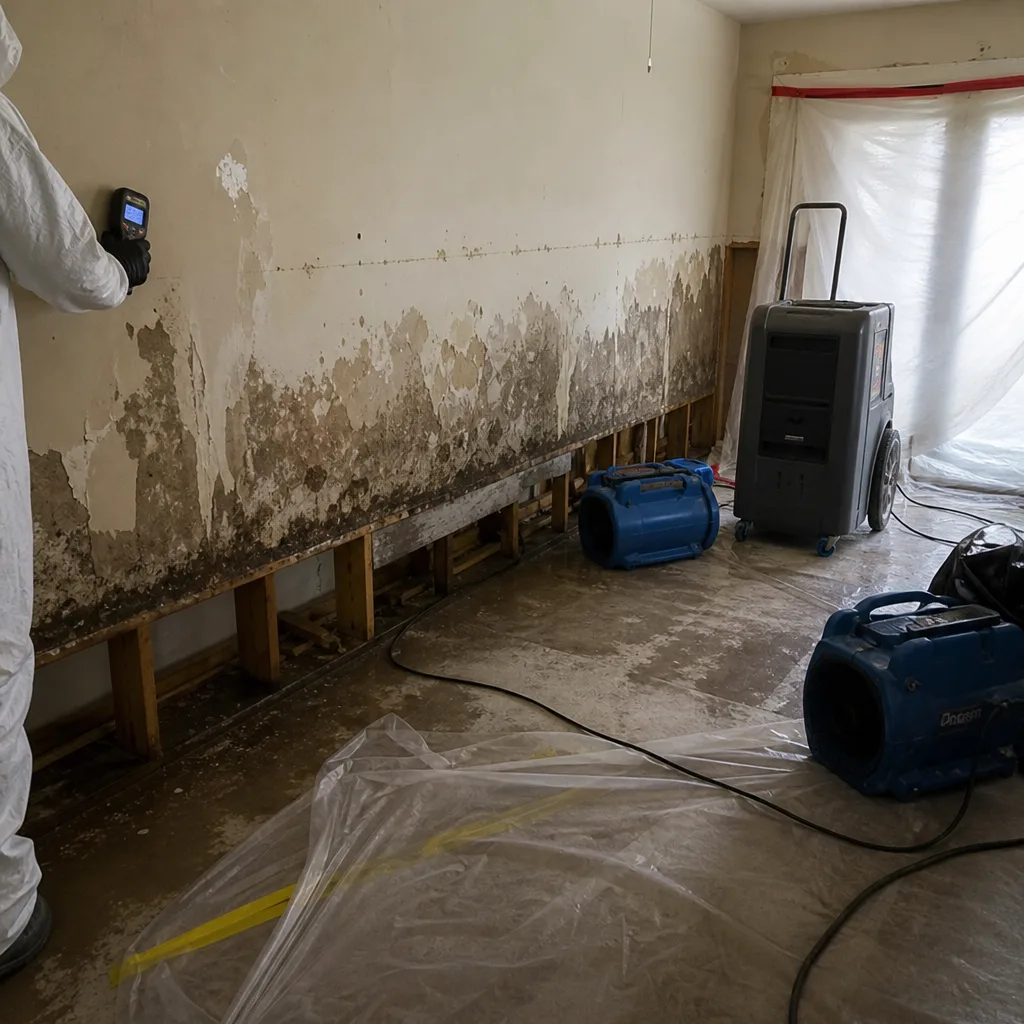 Before
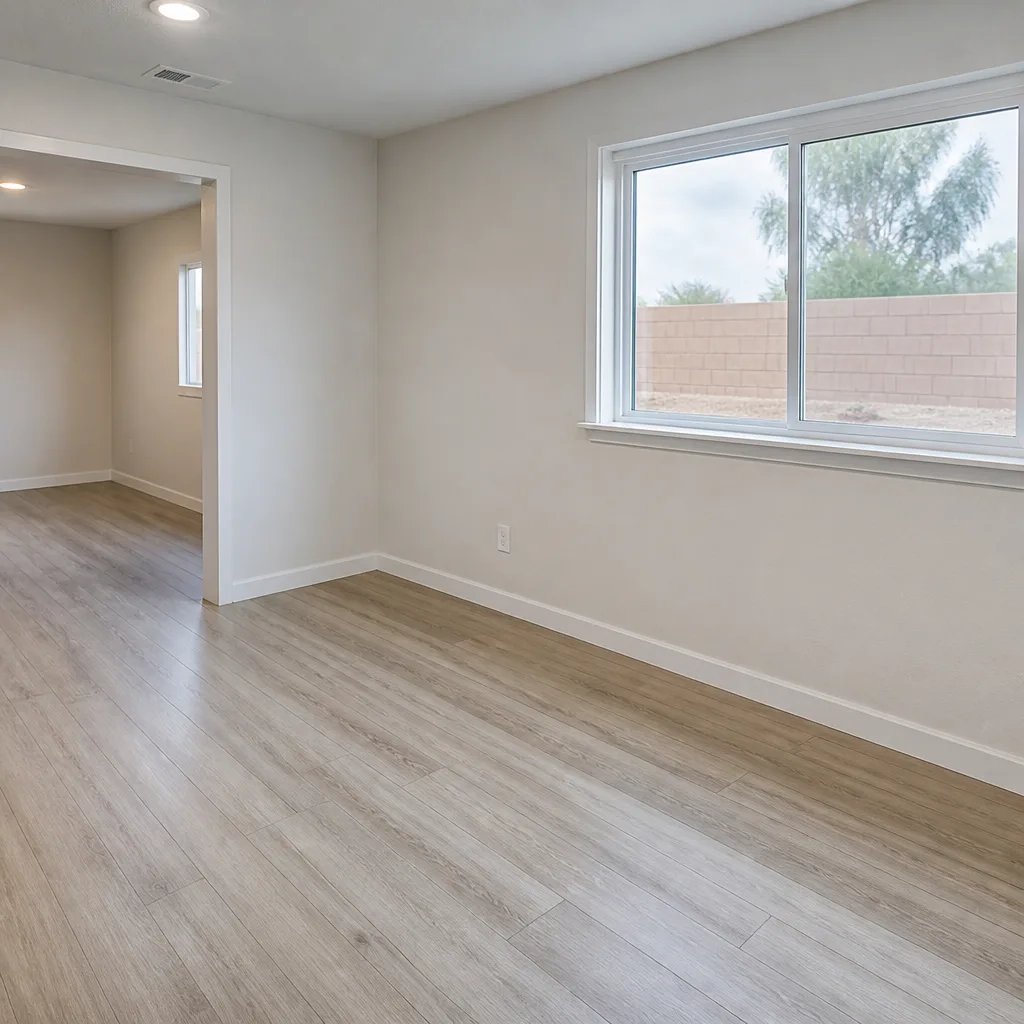 After
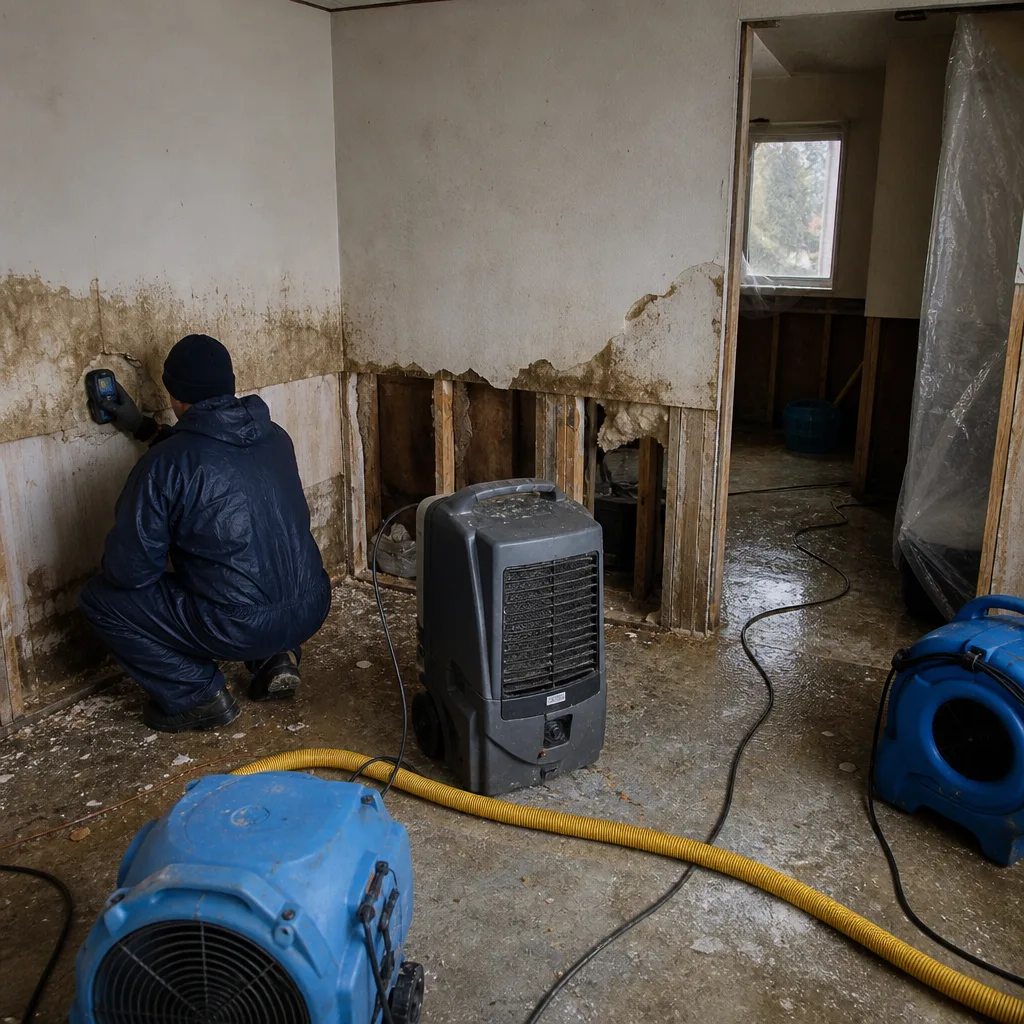 Before
 After
 Before
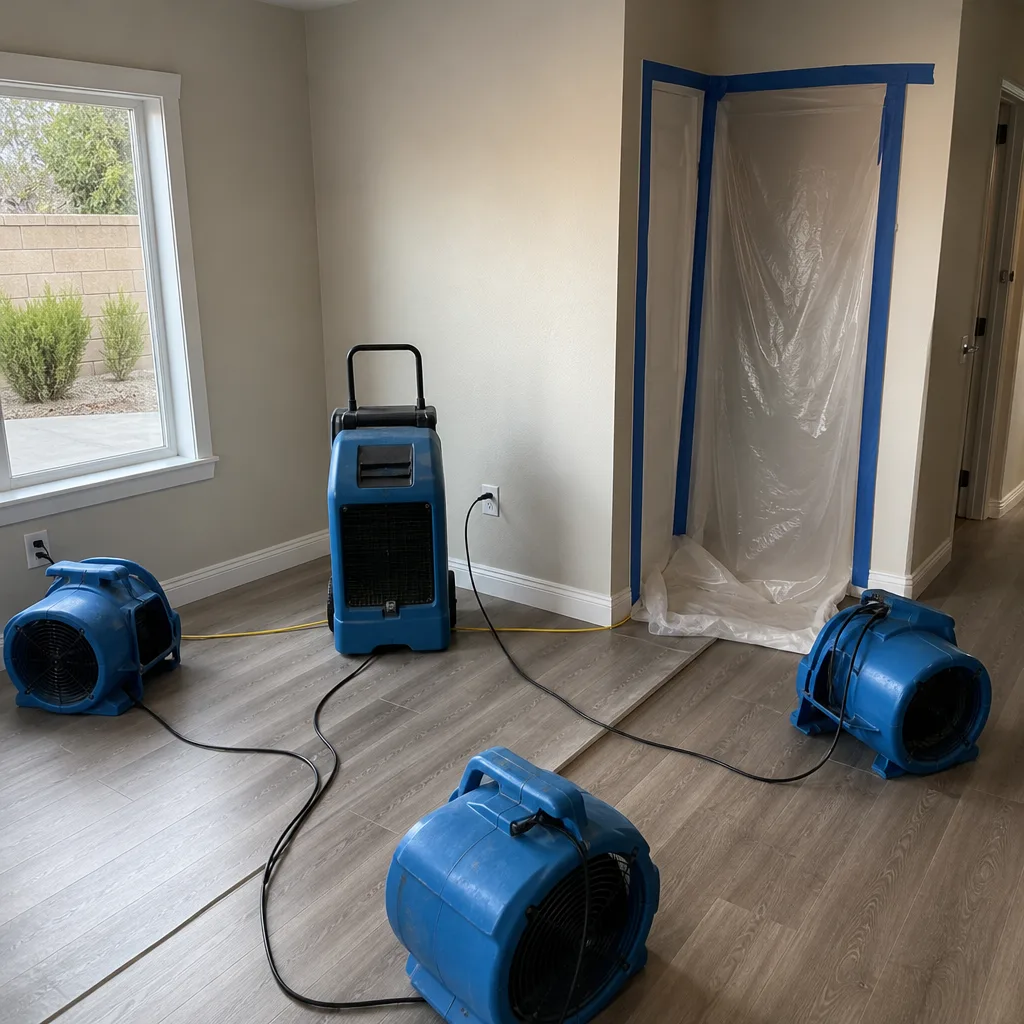 After
Common Water Damage Restoration Problems We See in La Habra Homes
- Hidden shutoff valves on original plumbing. Many La Habra homes built in the 1950s and 1960s don’t have a dedicated shutoff at each fixture or branch line. When a pipe fails under the slab, shutting off water to the whole house sometimes means cutting into a wall to find one buried valve. This delays extraction and can escalate the water category.
- Water traveling under pier-and-beam floors. Homes with raised foundations let water run along joists and under floorboards, well beyond the visible damage. If moisture mapping doesn’t extend into the crawlspace and adjacent rooms, drying will be incomplete. We always check beneath the house, not just the room where the leak started.
- Santa Ana winds accelerating mold growth. After any water event, La Habra’s hot, dry winds seem like they’d help dry things out. What they actually do is move moisture faster through building materials and into wall cavities. Homeowners who wait a few days often call us back for mold remediation, not just water damage.
- Old copper and galvanized pipe corrosion from hard water. La Habra’s water is mineral-dense, and it takes a toll on original plumbing. The failure we see most often is pinhole leaks in copper or full breaks in galvanized supply lines. These aren’t storm-related floods. They’re slow, hidden problems that turn into indoor floods when the pipe finally gives way.
Pricing for Water Damage Restoration in La Habra, CA
We Also Serve Cities Near La Habra
Our restoration crews regularly work throughout northern Orange County and the bordering LA County communities. If you’re in Fullerton, Brea, Buena Park, or Placentia, the same IICRC-certified team that serves La Habra covers your area too. We know this region’s housing stock, its plumbing patterns, and its moisture challenges. One phone call to (855) 382-0478 puts our team on the road to any of these cities, with the same equipment and the same protocol we use in La Habra every day.
Serving La Habra, CA — Our Local Coverage Area
We’re based in the La Habra area and know this community well. Use the map below to see our service coverage — if you’re nearby, we can almost certainly help.

FAQs About Water Damage Restoration in La Habra
How quickly can mold grow after a water leak in a La Habra home?
Mold can begin growing within 24 to 48 hours after a water event, and La Habra’s Santa Ana winds can speed that up by moving moisture deeper into wall cavities and under flooring. The IICRC standard calls for drying to begin within that 24 to 48 hour window. If you wait longer, especially in an older La Habra home with original drywall and no vapor barrier, you’re likely to need mold remediation alongside the water damage work. Call (855) 382-0478 the same day you notice the leak.
What should I do if my La Habra home has original galvanized pipes and I suspect a slab leak?
First, shut off the main water valve if you can locate it. If you can’t, shut off the water at the street. Then call us. La Habra’s mid-century homes often lack dedicated shutoff valves, and original galvanized supply lines fail from decades of hard-water corrosion. We’ll locate the leak, stop the water, and begin extraction and drying. Do not wait to see if it dries on its own. Water under a slab won’t evaporate quickly, and it’ll do more damage the longer it sits.
Why is water damage restoration different for pier-and-beam homes in La Habra?
Pier-and-beam foundations give water a path to travel under the whole house, not just the room where the leak happened. Water runs along floor joists, soaks into subflooring, and can sit in the crawlspace for weeks before anyone notices. That means our moisture mapping has to extend under the house, and our drying has to address the subfloor and joists, not just the visible surface. Injectidry systems let us dry those cavities without pulling up floors in La Habra homes with raised foundations.
Does La Habra get enough rain to cause water damage, or is it mostly plumbing issues?
La Habra’s water damage problems come mostly from plumbing failures, not storms. The city is semi-arid and rarely sees prolonged rain. The bigger risk is the original galvanized and copper piping in homes built from the 1950s through the 1970s. Hard, mineral-rich water corrodes those pipes from the inside out, and eventually they fail under slab foundations or inside walls. Winter rains do expose roof and window leaks in older La Habra homes, but those are a smaller share of our calls than slab leaks and supply line breaks.
What’s the difference between category 1, 2, and 3 water in restoration?
Category 1 water is clean. It comes from a broken supply line or a sink overflow and isn’t dangerous on contact. Category 2 water, sometimes called gray water, contains significant contamination. If a slab leak in La Habra sits long enough to pick up minerals and bacteria from old pipes and building materials, it degrades to category 2. Category 3 is grossly contaminated, like sewage or floodwater. The category determines the protocol: what gets dried, what gets removed, and what personal protective equipment our crews wear. Hidden shutoff valves in La Habra homes often mean water sits longer than it should, which is why we move fast once we arrive.
If you’re dealing with water damage in La Habra, call (855) 382-0478 now. We’ll answer, ask the right questions, and get a crew moving. Estimates are free, and our scope of work is in writing before we start.
Written by Nolan Pruett, owner at Whitfield Water Damage, serving La Habra and the surrounding Orange County communities.