


 Water damage drying
 Fire & smoke cleanup
 Mold remediation
 Storm response
 Sewage cleanup
 Reconstruction
Free visual inspection and a written scope of work before any mitigation begins - photos, moisture readings, and drying logs go in your claim file
The scope we write is the scope we bill. Anything new gets shown to you, in writing, before we touch it.
Get your free estimateFast, Reliable Water Damage Restoration Across San Bernardino
Water damage restoration in San Bernardino typically costs between $2,400 and $6,800 for a standard single-room extraction and structural drying job, with emergency response available to foothill neighborhoods within 60 to 90 minutes during active flooding events. If you’re dealing with a burst pipe in a 1950s stucco home off Del Rosa Avenue or watching mud push through a sliding door near the base of the San Bernardino Mountains, the first call you make determines whether you’re looking at a three-day dry-out or a three-week rebuild. Our Water Damage Restoration team is already serving San Bernardino with IICRC-certified drying protocols and professional-grade equipment, not guesswork. Call (855) 382-0478 and we’ll have a technician headed your way while the water is still spreading.
We know this city’s homes. We know that the 1940s and 50s stucco houses in the 92410 and 92411 ZIP codes hide moisture in original wall cavities that a surface reading won’t catch. We know that Santa Ana winds here don’t just knock over patio furniture – they force fine ash and smoke through aging door seals, and that ash holds moisture. And we know that after a foothill burn, a modest rain on the north end of town can send sediment-laden water into basements that have stayed dry for fifty years. That’s the work we do, and we do it with the same Dri-Eaz, Phoenix, and Injectidry equipment you’d find on an insurance-preferred restoration job.
Why Whitfield Water Damage Is San Bernardino’s Preferred Water Damage Restoration Company
When a pipe lets go at 2 a.m. in a house off Highland Avenue, the last thing you need is a generalist handyman with a rented carpet fan. San Bernardino homeowners and property managers call us because we arrive with a defined protocol, not a shrug. Every water damage job we run follows IICRC-certified drying methodology – moisture mapping before we move a single piece of furniture, psychrometric readings to set drying goals, and daily logs that document exactly where the moisture started and where it ended.
Our reputation in San Bernardino’s older neighborhoods comes from the jobs where we found what others missed. Behind original stucco. Inside wall cavities that had never been opened since the Eisenhower administration. Under vinyl flooring that looked dry on the surface but was holding a quarter-inch of water beneath. Property managers in the 92412 corridor and homeowners near Lytle Creek both deal with the same frustration: restoration companies that dry the visible surface and call it done. That’s not how we work. We’re part of the Restoration Industry Association (RIA), and that means accountability to a national standard, not just a local claim.
Nolan Pruett built Whitfield Water Damage around one conviction: restoration is a science, and San Bernardino’s housing stock demands the full application of that science. Mid-century construction doesn’t dry like new construction. Original plaster over wood lath holds water differently than drywall over steel studs. No two 1960s San Bernardino split-levels dry the same way, and a one-size-fits-all fan setup leaves moisture behind that becomes mold in three weeks. Our crews treat every job as a unique drying project with measurable endpoints.
Restoration work we handle
Water Mitigation in San Bernardino
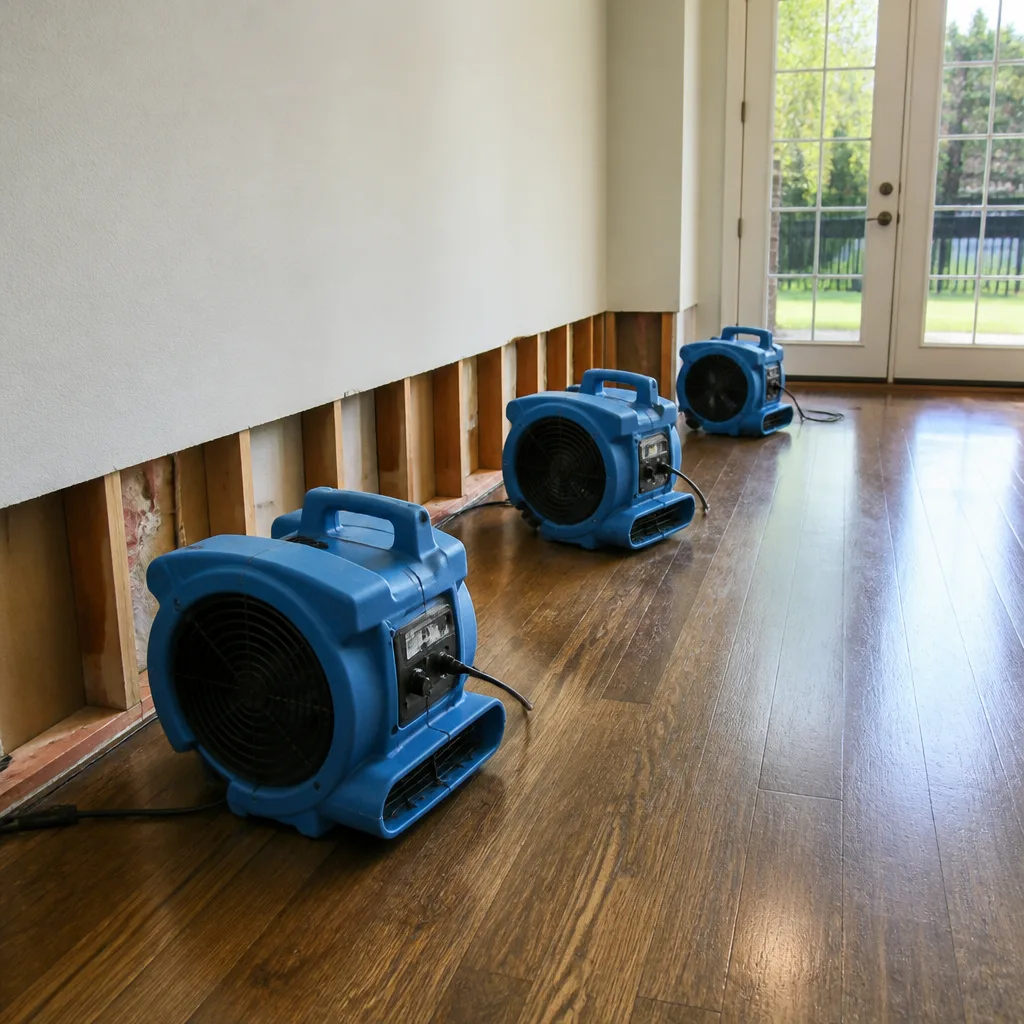
Water mitigation in San Bernardino is the emergency phase of water damage response: we stop the source, remove standing water, and begin structural drying before materials absorb enough moisture to fail. For a typical 400-square-foot room with standing water from a burst supply line, mitigation in San Bernardino runs $1,800 to $3,900, including extraction, containment, and the first 48 to 72 hours of drying equipment. When a homeowner calls us within the first few hours, we’re usually able to save the flooring and drywall. When water has sat overnight, porous materials like carpet pad and unsealed drywall absorb enough to require removal.
Moisture Mapping Before Any Drying Begins
Before we place a single air mover, we run moisture meters across every vertical surface and floor, then log the readings room by room. In San Bernardino’s older homes, that means checking behind baseboards, inside closets, and along the base of original stucco walls where water travels silently through the wall system. Those baseline readings become the benchmark we measure against every day until the structure reaches its drying goal.
Injectidry for Hidden Wall Cavities
Mid-century San Bernardino homes hide a lot of moisture in wall cavities that never see airflow. Our Injectidry cavity-drying systems pull water out from inside those spaces without tearing open finished walls. That’s non-invasive structural drying, and it regularly saves San Bernardino homeowners the cost and disruption of demo-and-rebuild on walls that only needed to be dried properly.
Flooded Basement in San Bernardino
A flooded basement in San Bernardino usually means one of two things: a storm event pushing water through a raised foundation vent or a plumbing failure in an older home with original galvanized supply lines. Flooded basement cleanup and drying in San Bernardino typically runs $2,200 to $5,500, depending on the square footage, the depth of standing water, and whether the water is category 1 (clean supply line) or category 3 (storm and sediment intrusion). Homes in the pre-war core of the 92410 ZIP code have raised foundations with open crawlspaces, and floodwater doesn’t stop at the basement wall – it moves into the framing, where it keeps wicking upward long after the standing water is gone.
Category 2 and 3 Water: What It Means for Your Basement
When mud, silt, or storm runoff is involved, we classify the water as category 2 or 3 and treat it accordingly. That means removing porous materials that can’t be sanitized – carpet, pad, cellulose insulation – rather than trying to dry them in place. San Bernardino’s post-fire debris flows routinely push category 3 water into basements on the north end of the city, and trying to dry that material without removing it is how you end up with a mold problem six weeks later.
Prewar Foundations and Unsealed Crawlspaces
Homes built before 1945 in San Bernardino’s core neighborhoods have different flooding behavior than newer construction. The raised foundations and unsealed crawlspaces mean water moves underneath the house, not just across the floor, and drying requires treating the subfloor and joists, not just the finished space. We run dehumidifiers rated for that crawlspace environment and document the drying with the same moisture logs we’d provide on a larger commercial loss.

Trusted Brands We Service in San Bernardino
We service and operate the brands that San Bernardino’s restoration industry trusts. Our drying fleet includes Dri-Eaz dehumidifiers, Phoenix axial air movers, and XPOWER blowers, plus Injectidry systems for cavity drying. Because we maintain our own equipment rather than renting job-to-job, we keep our units calibrated and available when a San Bernardino job needs them now, not next Tuesday. For property managers and homeowners who’ve had a previous restoration company show up with underpowered rental equipment, that difference shows up in drying time, and in the final moisture readings. We stock the consumables those systems require – filters, hoses, antimicrobial treatments – so we’re not waiting on a parts run in the middle of your emergency.
See the difference
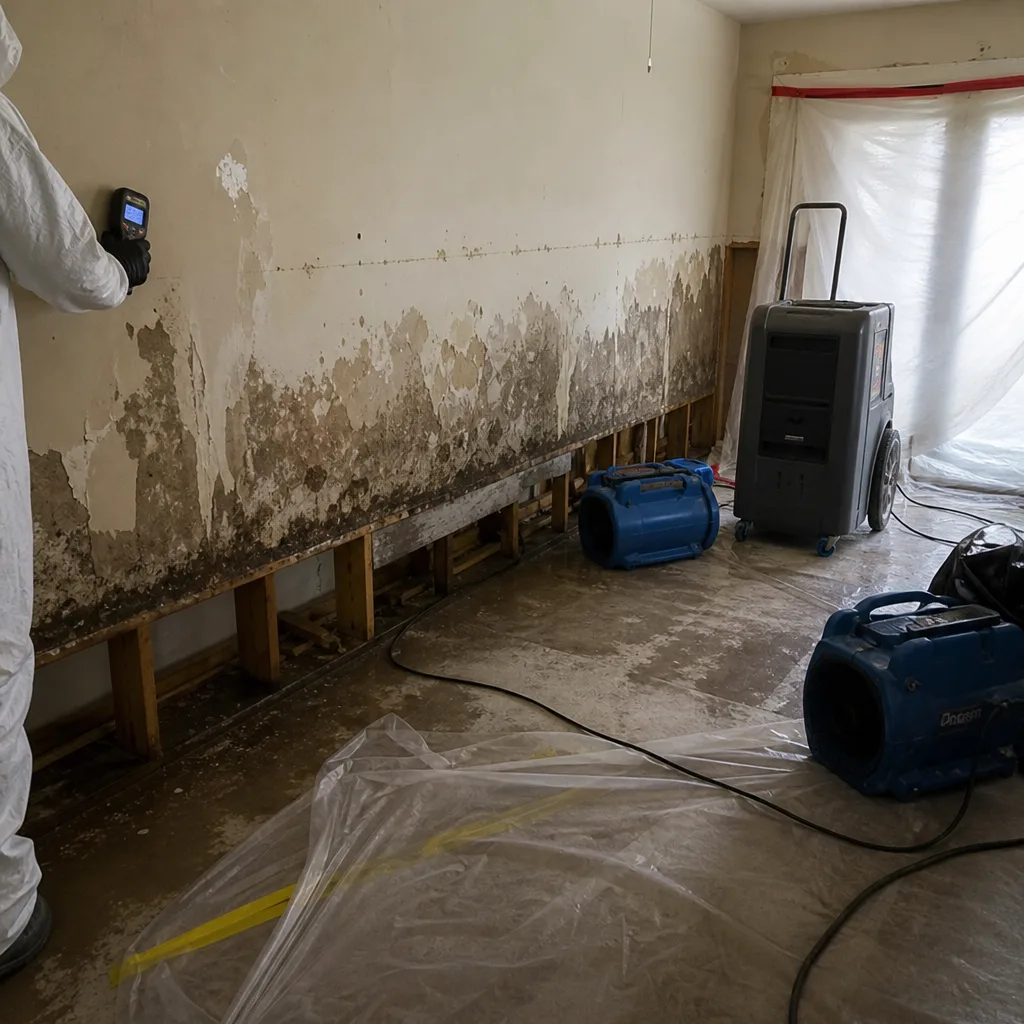 Before
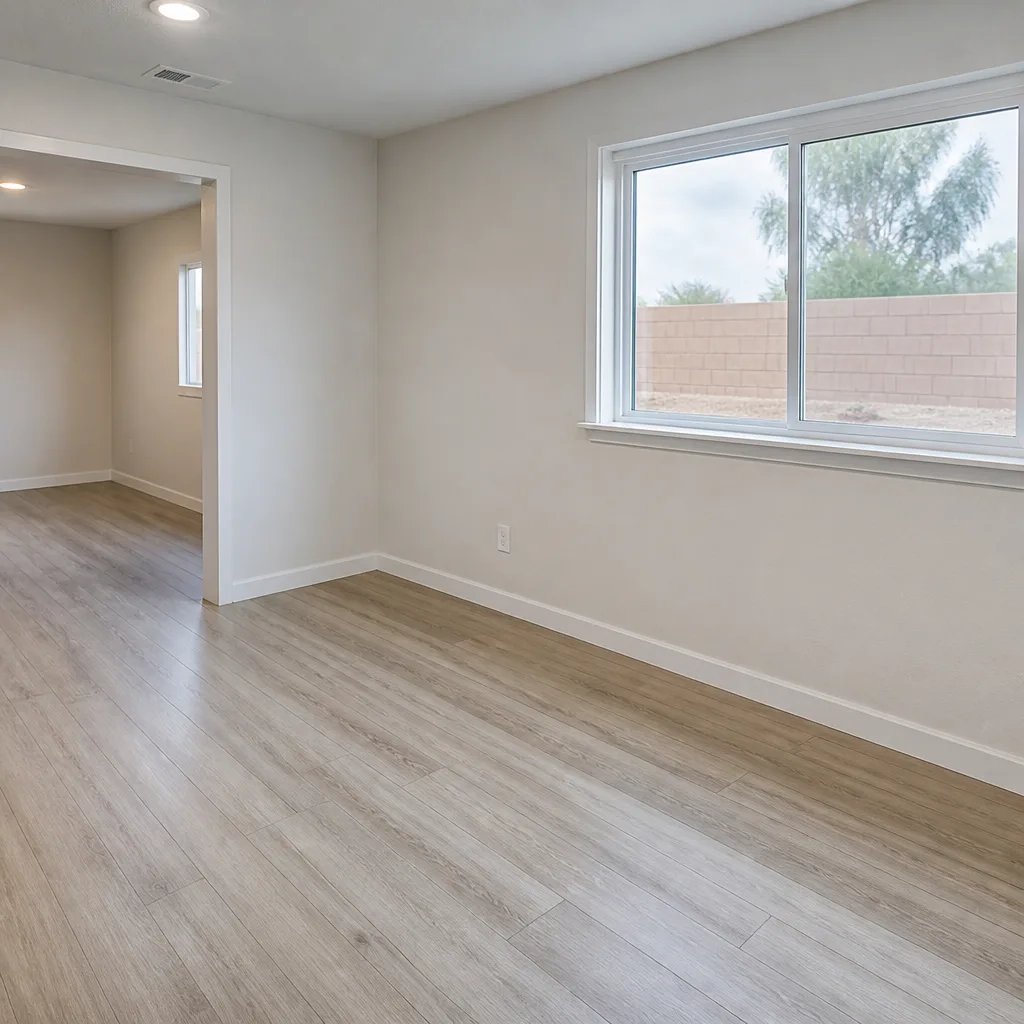 After
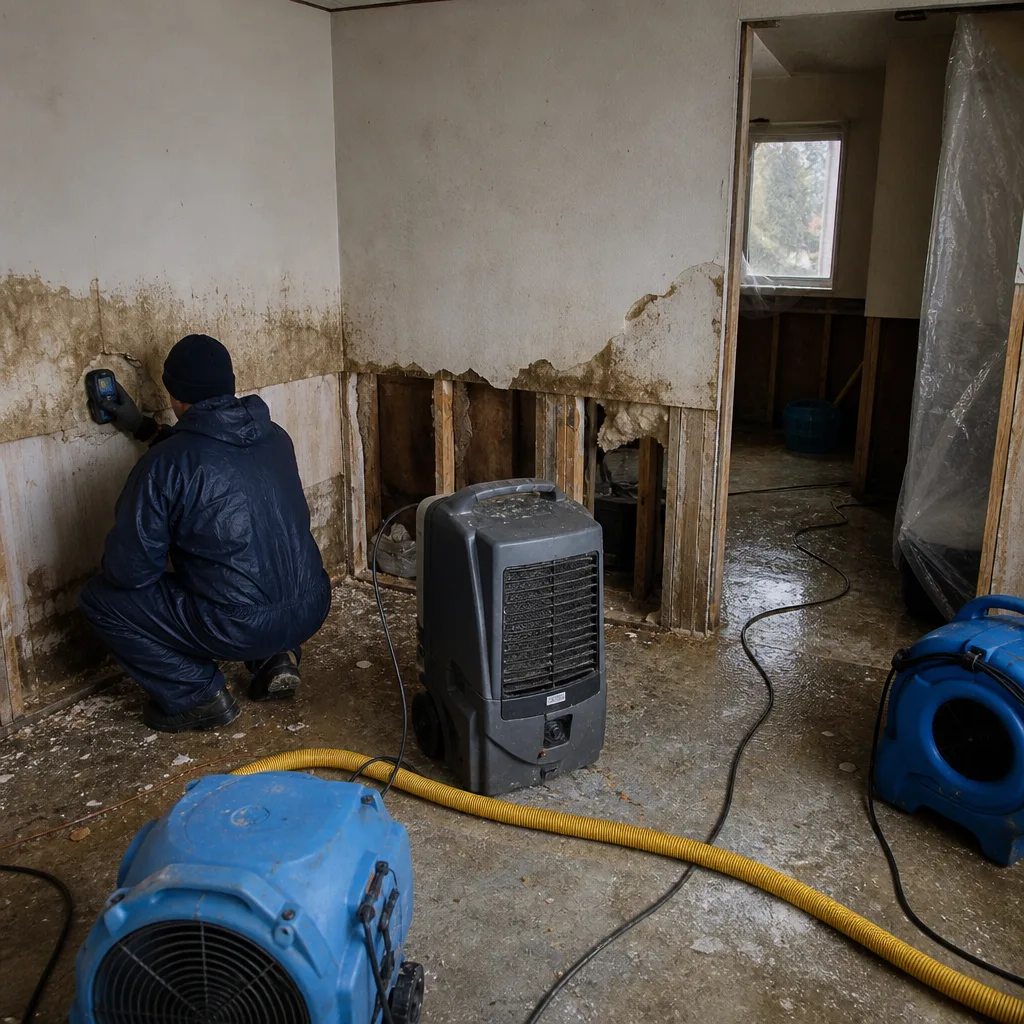 Before
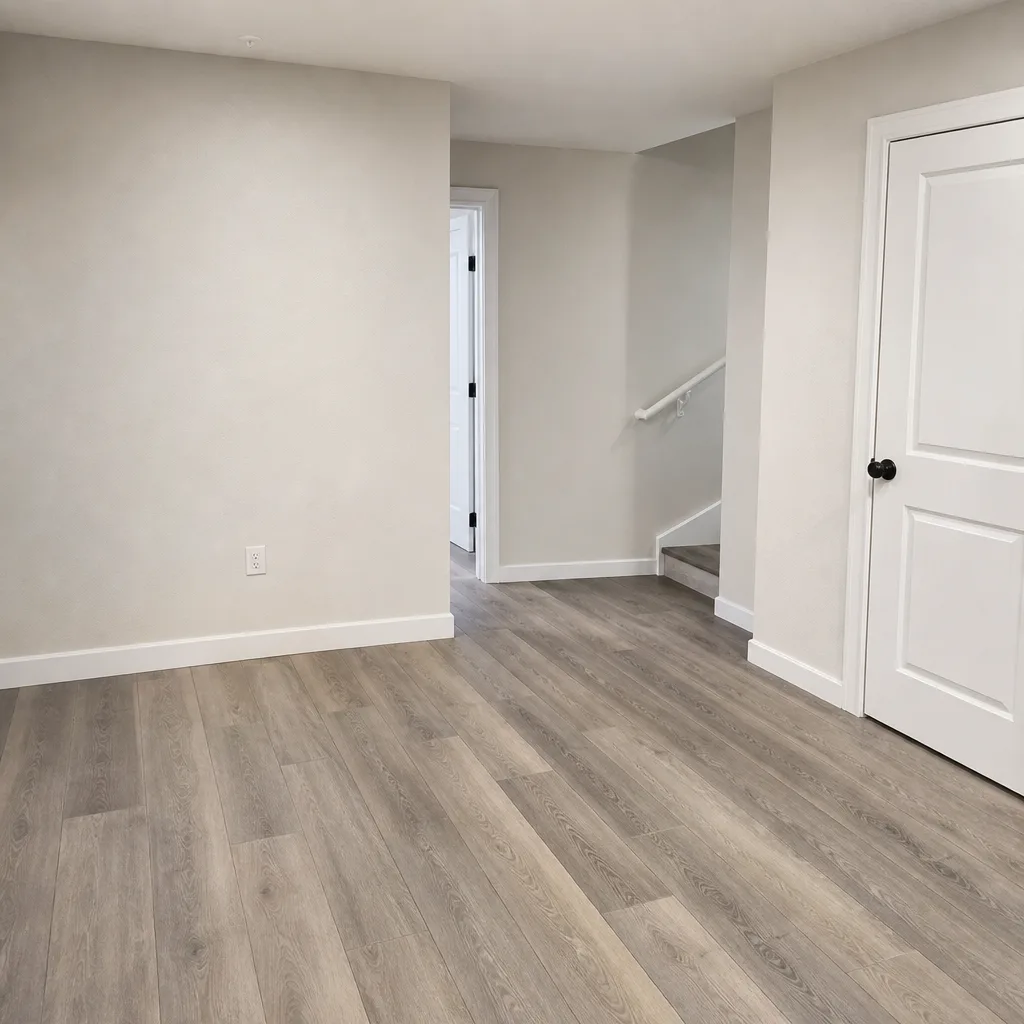 After
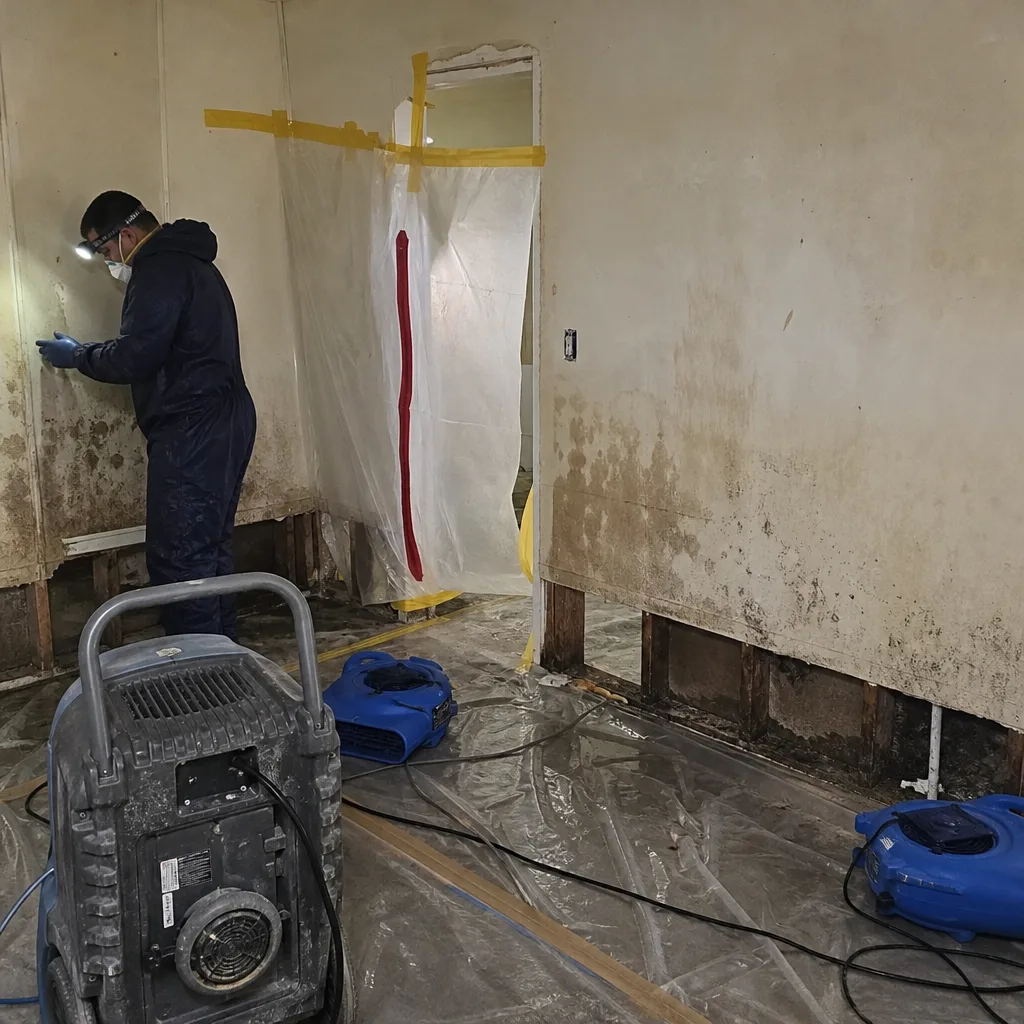 Before
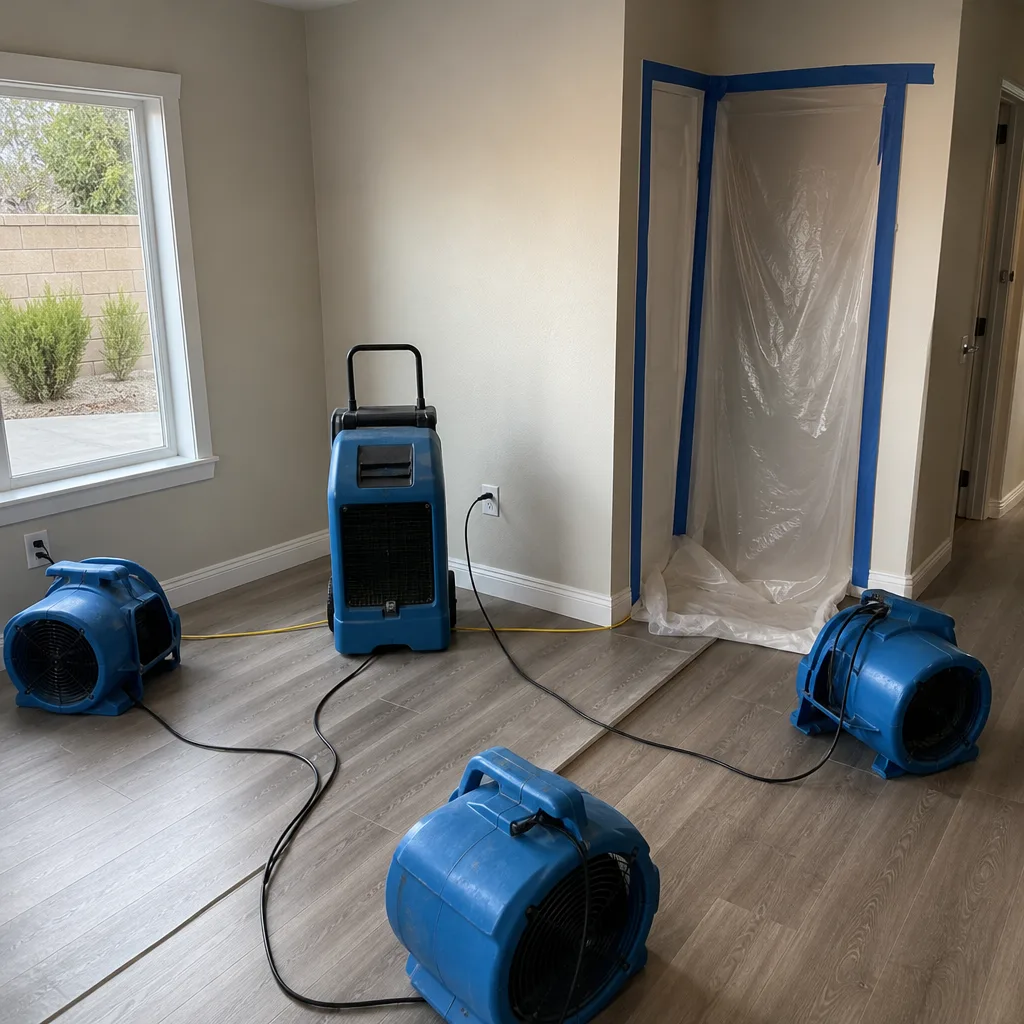 After
Common Water Damage Restoration Problems We See in San Bernardino Homes
- Ash and smoke intrusion through original door seals: Santa Ana winds push fine particulates through degraded weatherstripping on mid-century sliding doors and single-pane windows. That ash layer holds moisture against drywall and framing, creating conditions where mold develops within 24 to 48 hours of the first water event.
- Post-fire debris flow into previously dry basements: Burn scars above the foothill neighborhoods mean a modest storm can generate sediment-laden water moving through drainages that haven’t flooded in decades. That water carries silt, char, and contaminants that classify as category 3, requiring removal rather than in-place drying.
- Galvanized and polybutylene plumbing failures: A large share of San Bernardino’s 1940s-to-1970s housing stock has original supply plumbing well past its service life. Pinhole leaks in galvanized pipe behind walls go unnoticed for weeks, saturating wall cavities before any visible staining appears on the finished surface.
- Flat and low-slope roof ponding on mid-century homes: Many San Bernardino houses from the 1950s and 60s were built with low-slope or built-up roofs that pond water after heavy atmospheric-river storms. That water works through the roofing membrane and into the ceiling and wall system, and by the time you see a ceiling stain, the damage is already well established above it.
Pricing for Water Damage Restoration in San Bernardino, CA
Here’s what San Bernardino homeowners typically pay for water damage work, based on the scope we’re called out for most often:
- Emergency water extraction (single room): $450 – $1,100, including initial moisture assessment and standing water removal.
- Structural drying and dehumidification (per room, 3 – 5 days): $900 – $2,400, including daily moisture monitoring and equipment.
- Flooded basement cleanup (category 1, up to 800 sq ft): $2,200 – $4,700.
- Category 2 or 3 flood and sediment cleanup: $3,800 – $8,500, including porous material removal and antimicrobial treatment.
- Wall cavity drying with Injectidry (non-invasive): $1,600 – $3,900, avoiding demo and rebuild on salvageable walls.
What moves the number: the category of water, the square footage affected, how long the water has been standing, and whether moisture has reached wall cavities or subfloor. We provide a written scope with our moisture mapping and drying plan before work begins, so you’re not approving open-ended work. Estimates are free.
We Also Serve Cities Near San Bernardino
Whitfield Water Damage serves Water Damage Restoration in San Bernardino and the surrounding Inland Empire communities. That includes Muscoy, Highland, Loma Linda, and Rialto. If you’re located near the 210 or 215 corridor and dealing with a water emergency, call (855) 382-0478 and we’ll confirm dispatch availability while you’re on the phone.
Serving San Bernardino, CA — Our Local Coverage Area
We’re based in the San Bernardino area and know this community well. Use the map below to see our service coverage — if you’re nearby, we can almost certainly help.
FAQs About Water Damage Restoration in San Bernardino
Mud and debris flows can begin within 15 to 30 minutes of heavy rainfall on burned slopes above San Bernardino, even on properties with no flooding history. Burn scars remove the vegetation and root structure that normally hold soil, so water moves faster and carries more sediment. If your home sits in a foothill drainage path, treat the first significant rain after a fire as a flood watch event. Call (855) 382-0478 and we’ll start with a moisture assessment, not a cleanup guess.
Smoke and ash intrusion becomes a water damage issue because ash is hygroscopic – it pulls moisture from the air and holds it against whatever surface it settles on. In San Bernardino’s Santa Ana conditions, fine ash forced through door seals and window frames settles inside wall cavities where it combines with even ambient humidity to create damp conditions on drywall and framing. That hidden moisture, not the visible soot, is what leads to mold growth within days. Call us for a cavity inspection after a heavy Santa Ana event; the assessment is free.
Category 1 is clean water from a supply line or broken pipe. Category 2 is contaminated water – dishwasher overflow, washing machine discharge, or storm water that’s picked up surface contaminants. Category 3 is grossly contaminated water from sewage backups, ground flooding, or post-fire mud and debris flows. In San Bernardino, that category 3 classification applies to most storm and foothill flood water, and it changes the protocol: porous materials get removed and disposed of, not dried in place. We’ll classify your water during the initial assessment and show you in writing why it’s rated that way.
We dry mid-century stucco homes by treating the wall cavity as part of the drying equation, not a sealed box we hope stays dry. We run moisture meters behind baseboards and along the bottom plate of the framing to see how far water has wicked, then place Injectidry drying panels to pull moisture from the cavity without opening the stucco. In a 1960s San Bernardino home with original plaster over wood lath, that non-invasive approach regularly saves the wall. We monitor daily and don’t pull equipment until the numbers hit the drying goal, not the calendar.
Yes, and we treat pre-war basements and crawlspaces differently than modern slab construction. Older San Bernardino homes, especially in the 92410 core, have raised foundations with unsealed crawlspaces where water moves under the house and saturates subfloor and joists. We dry the crawlspace, the subfloor, and the finished space above as one system, using dehumidifiers sized for the crawlspace environment and documenting every reading. Flooded basement work in a pre-war home often takes a day or two longer than newer construction – plan on that, and we’ll keep you informed with daily drying logs.
If you’re dealing with water damage in San Bernardino right now, call (855) 382-0478. We’ll walk through what you’re seeing, tell you honestly what needs to happen first, and get a crew moving toward your address. Free estimates, written scopes, and drying that’s documented to insurance standards.
Written by Nolan Pruett, Owner at Whitfield Water Damage, serving San Bernardino and the Inland Empire since founding.