


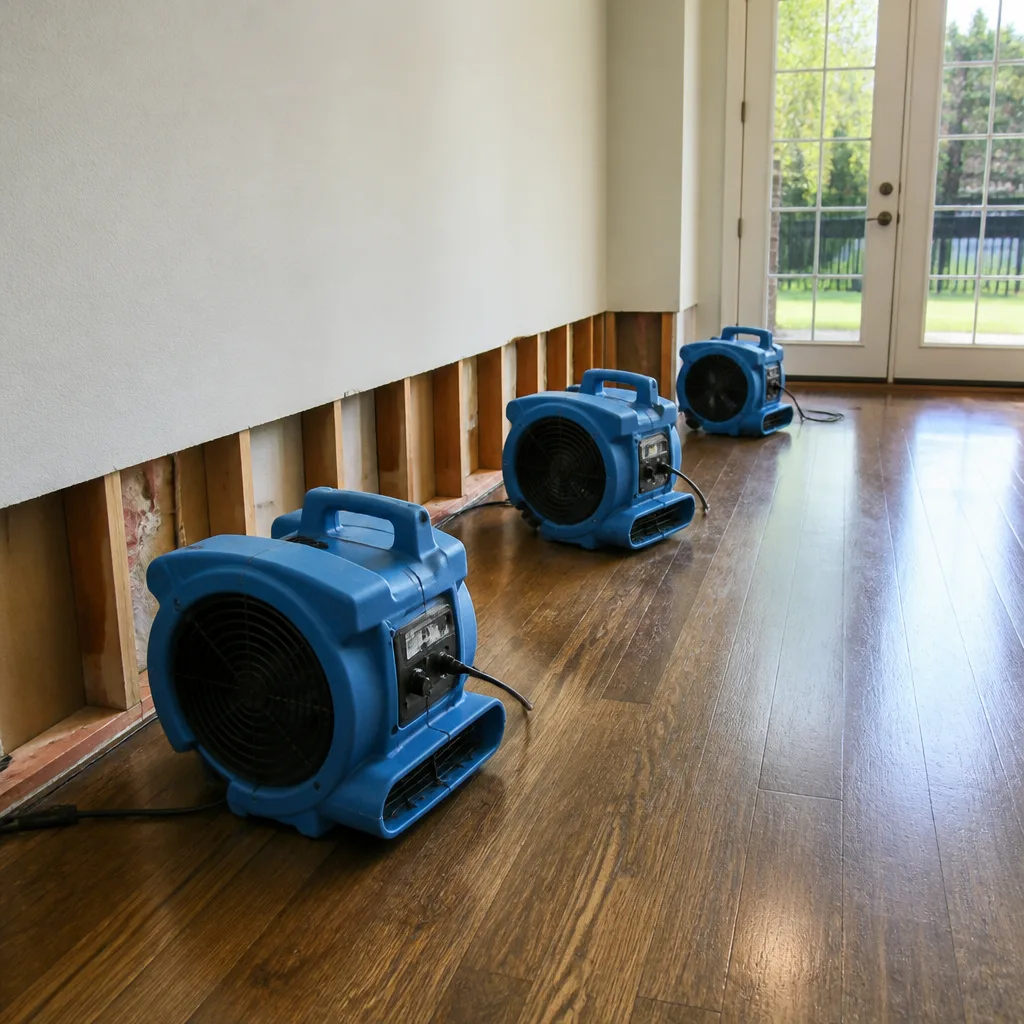
 Water damage drying
 Fire & smoke cleanup
 Mold remediation
 Storm response
 Sewage cleanup
 Reconstruction
Free visual inspection and a written scope of work before any mitigation begins - photos, moisture readings, and drying logs go in your claim file
The scope we write is the scope we bill. Anything new gets shown to you, in writing, before we touch it.
Get your free estimateFast, Reliable Water Damage Restoration Across Highland
Water damage restoration in Highland usually needs to happen within the first 24 to 48 hours, and the biggest mistake we see is waiting for visible dampness before calling. Highland’s dry heat pulls moisture out of the air so fast that soaked drywall and subflooring can look bone-dry on the surface while category 2 or 3 water sits trapped underneath. Our Water Damage Restoration team knows exactly where that moisture hides in Highland’s slab-on-grade foundations and 1950s-era cast-iron plumbing, and we bring professional-grade drying equipment to every job, from Greenspot Road acreage properties to stucco subdivisions off Baseline.
If you’re dealing with a burst pipe, a failed well pump, or a flooded basement right now, call (855) 382-0478. We dispatch certified technicians to Highland the same day.
Why Whitfield Water Damage Is Highland’s Preferred Water Damage Restoration Company
Highland homeowners call us because we treat this city differently than a generic restoration franchise would. A crew that only works in denser Inland Empire cities often underestimates how much moisture hides in a rural foothill property where a well and septic system are involved, or how quickly a semi-arid climate can disguise ongoing water intrusion. We account for all of that on every job.
Our process follows IICRC-certified drying protocol, and we document every step the way insurance adjusters expect. That means moisture mapping before we start, drying logs while equipment runs, and a written scope before anything gets torn out. Nolan Pruett leads our team, and he built Whitfield Water Damage around the principle that a homeowner should never have to guess whether a contractor actually dried the structure or just made it look dry.
We serve all of Highland including homes off Greenspot Road, the older tract neighborhoods near Baseline and Victoria, and the newer stucco subdivisions up toward the foothills. Response time to Highland from our Victorville base is typically under an hour for emergency water extraction.
Restoration work we handle
Flooded Basement in Highland
A flooded basement in Highland typically runs from $2,800 to $6,500 depending on how much water is standing, what got soaked, and whether the water reached category 2 or 3 contamination levels. The biggest cost driver is what the basement contains and how long the water sat. We extract the standing water first, then run structural drying equipment, and we always check for moisture that has wicked up into wood framing or behind drywall before we call the job done.
Why Highland Basements Fail Here
Highland’s older homes on slab-on-grade foundations don’t always have true basements, but the ones that do tend to be in the mid-century ranch homes near Baseline and down toward the East Highlands area. Many of these still have original cast-iron drain lines. When those fail, water comes up from below and sits against the foundation wall. The damage spreads inside the slab before you ever see it on the floor surface.
Containment and Antimicrobial Treatment
For basements in Highland homes with wells and septic systems, we set containment and apply antimicrobial treatment as standard practice. Rural water sources introduce different bacteria than municipal supply, and the last thing you want is mold blooming in unseen cavities 48 hours after the flood. We don’t skip this step, and we document it in the drying log.
Water Extraction in Highland
Water extraction in Highland usually costs between $1,200 and $3,400 for a standard residential emergency, though larger acreage homes and detached workshops with oversized spaces can push toward the top of that range or slightly higher. The key is getting extraction started before water migrates under baseboards, into wall cavities, and through the slab. In Highland’s dry heat, that migration can happen invisibly, so we use moisture meters and infrared mapping rather than relying on what looks wet.
Heavy-Duty Drying for Oversized Spaces
Highland’s rural properties often include detached garages, workshops, and barn-size outbuildings. A standard air mover built for a suburban living room won’t dry a 1,200-square-foot workshop with 12-foot ceilings. We deploy XPOWER blowers, Dri-Eaz dehumidifiers, and Injectidry cavity-drying systems sized for the actual cubic footage, not a one-size-fits-all fan package.

The One-Trip Standard
Highland homeowners with acreage tend to be self-reliant and want the job completed in a single visit, not spread across four half-days of slow drying. We plan extraction, equipment placement, and antimicrobial treatment to happen in one trip whenever the damage allows it. That’s the standard Nolan Pruett set for our crews from day one.
Trusted Brands We Service in Highland
Highland homes span five decades of plumbing and appliance evolution, and we service the full range. That includes cast-iron and galvanized pipes in 1950s and 1960s tract homes, copper and PEX in 1980s and 1990s stucco builds, and modern appliances with braided supply lines throughout the newer subdivisions. We also handle water heater failures, washing machine supply line bursts, and irrigation backflow issues that affect rural foothill properties more than most Highland homeowners realize.
See the difference
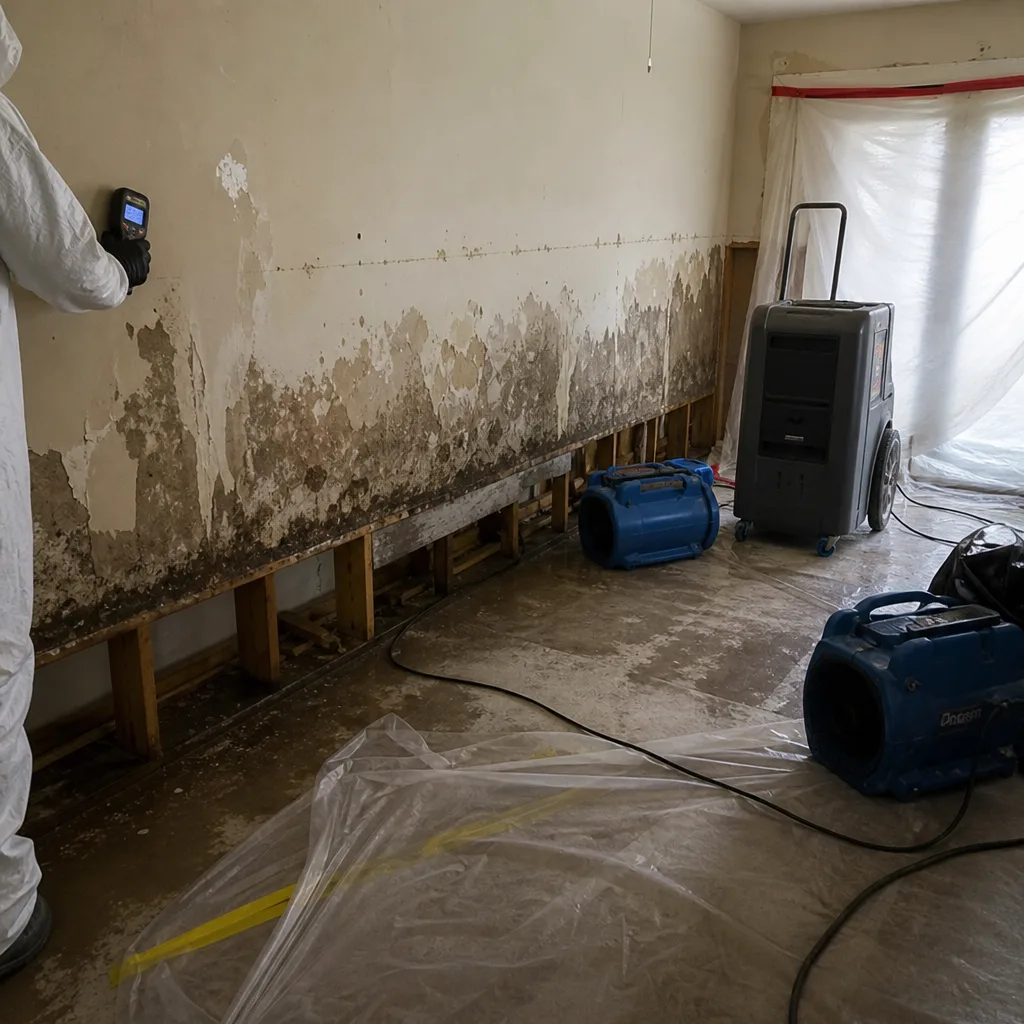 Before
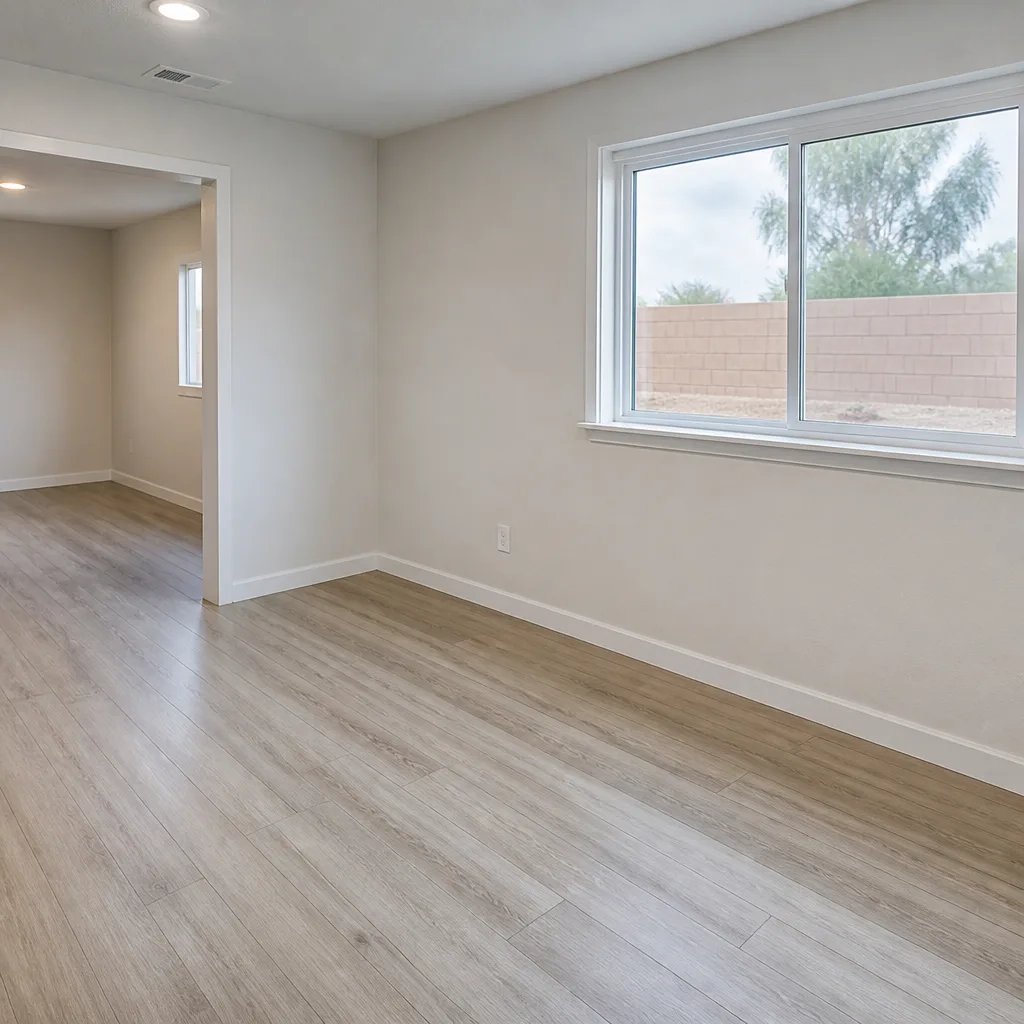 After
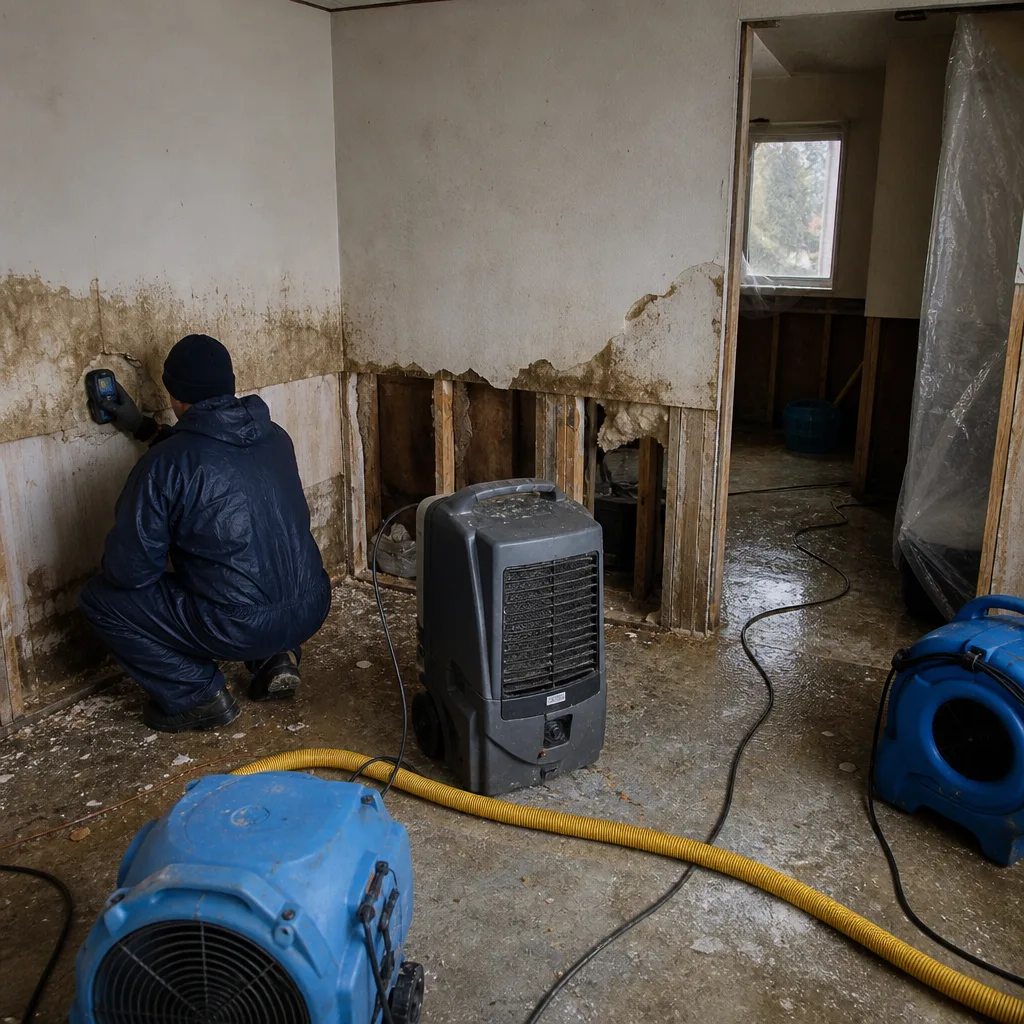 Before
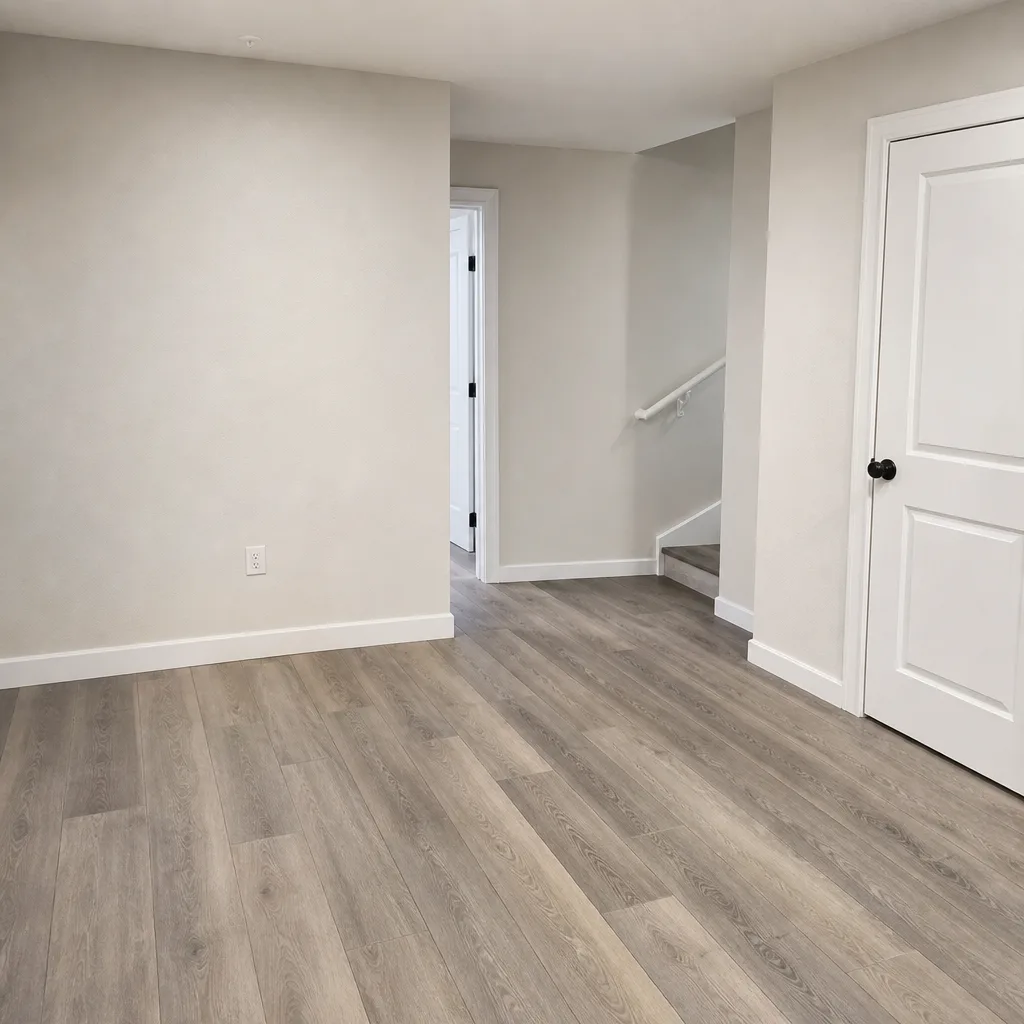 After
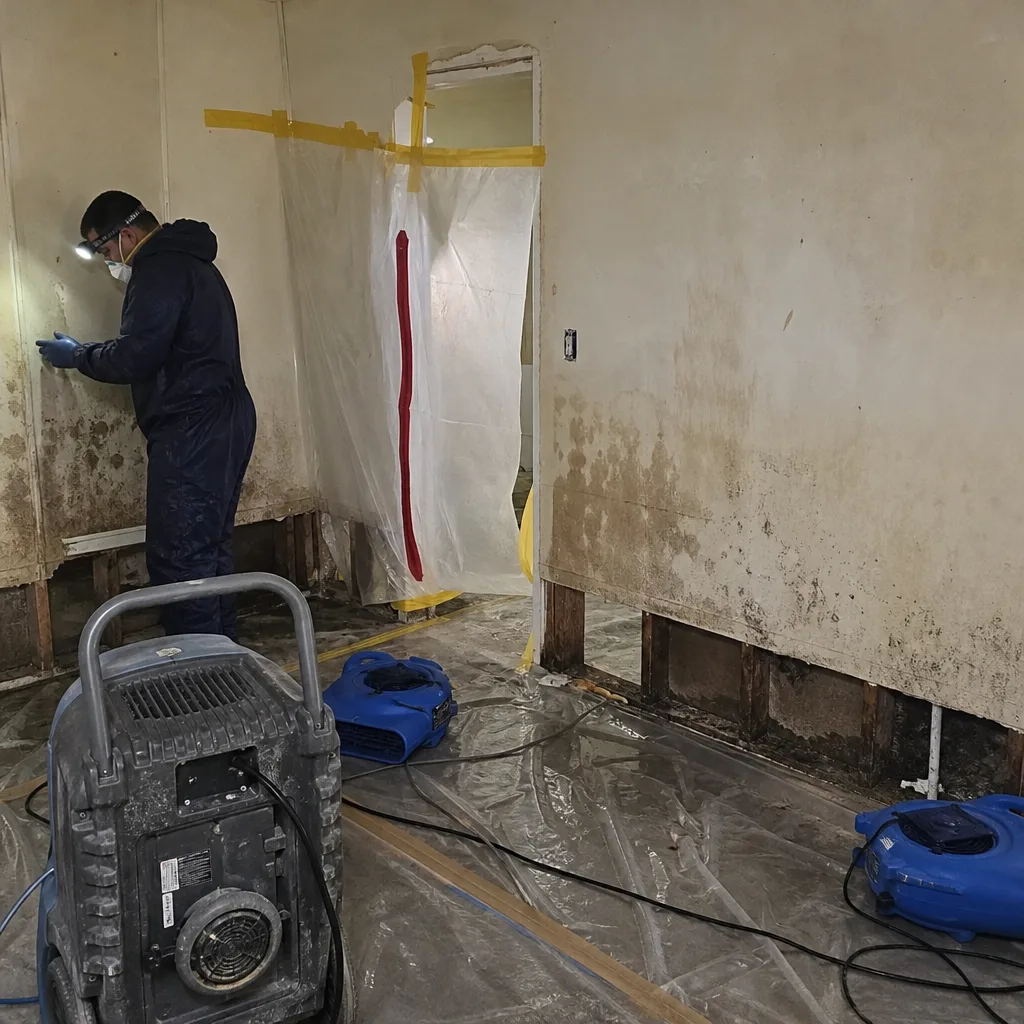 Before
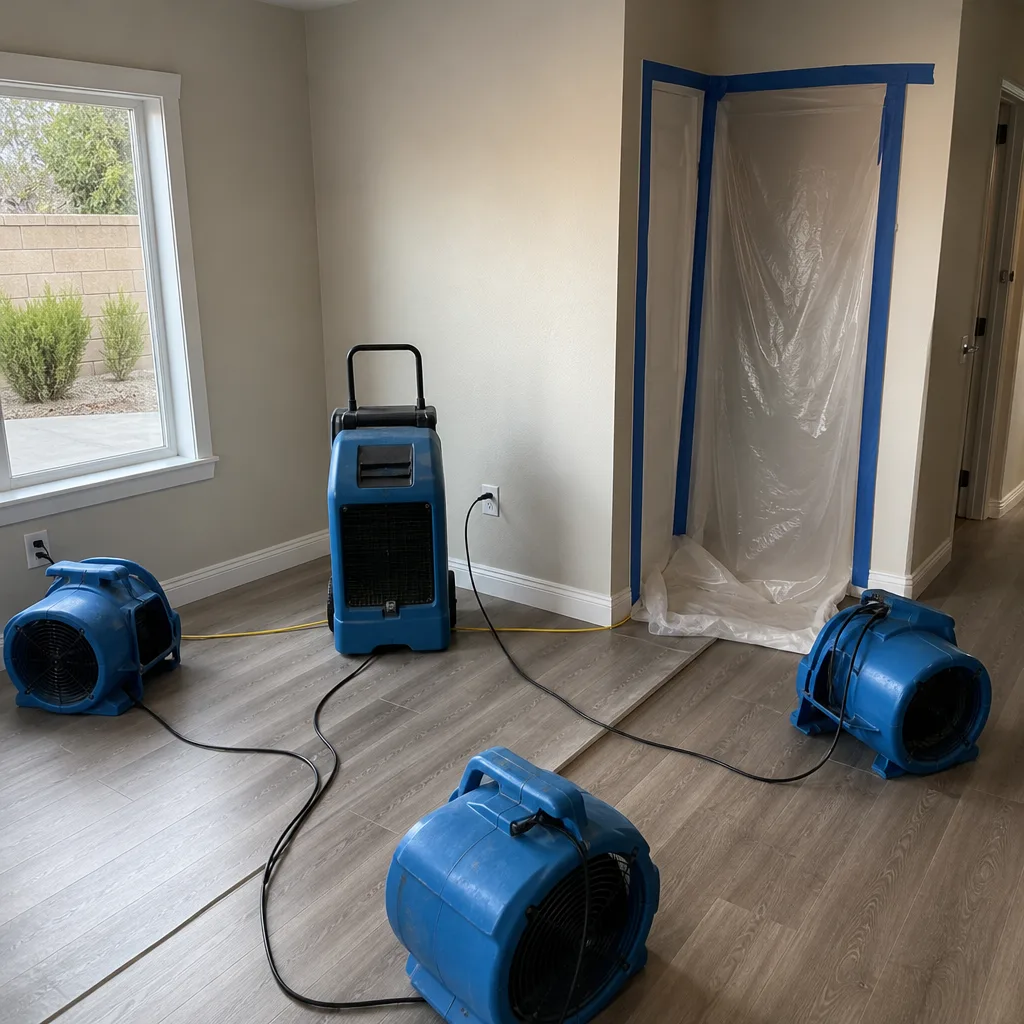 After
Common Water Damage Restoration Problems We See in Highland Homes
- Hidden moisture in slab-on-grade foundations. Highland’s dry heat evaporates surface water so quickly that homeowners think the floor is dry, but moisture trapped under tile or laminate keeps spreading through the concrete. By the time mold blooms, the damage is far worse than it needed to be.
- Original cast-iron and galvanized plumbing failures. Homes built in the 1950s and 1960s throughout Highland still run on pipes that should have been replaced decades ago. When they crack inside a wall or beneath a slab, the leak can run for days before anyone notices.
- Santa Ana wind debris driving into attics and HVAC systems. After a strong wind event, we routinely find ash and dust forced through roof vents and attic bypasses into living spaces. The damp corners left from an earlier water event then hold that dust, creating secondary problems.
- Incomplete drying on large workshops and detached garages. Contractors who don’t work rural properties often undersize their equipment for big outbuildings with heavy doors and poor ventilation. The structure never reaches the moisture content target, and callbacks follow.
Pricing for Water Damage Restoration in Highland, CA
Here’s what Highland homeowners should expect. Emergency water extraction: $1,200 to $3,400. Flooded basement restoration (including extraction, drying, and antimicrobial treatment): $2,800 to $6,500. Structural drying with Injectidry cavity systems for walls and subfloors: $1,500 to $4,000 depending on how many rooms are involved and how long drying equipment needs to run. Full burst pipe restoration including drywall and flooring: $4,000 to $9,000. Call (855) 382-0478 for a free estimate. We provide a written scope before work starts, and we document everything to insurance standards so your claim moves cleanly.
We Also Serve Cities Near Highland
Our Water Damage Restoration in Highland service extends to nearby communities throughout the eastern Inland Empire. We regularly respond to calls in San Bernardino, Muscoy, Redlands, and Loma Linda. If you’re anywhere in the San Bernardino Valley or up against the foothills, we can be there quickly.
Serving Highland, CA — Our Local Coverage Area
We’re based in the Highland area and know this community well. Use the map below to see our service coverage — if you’re nearby, we can almost certainly help.
FAQs About Water Damage Restoration in Highland
Highland’s semi-arid climate makes water damage harder to detect because surface moisture evaporates so quickly that soaked materials look dry while moisture remains trapped beneath flooring, inside walls, and within slab-on-grade foundations. That’s why we run moisture mapping and document drying logs with actual moisture content readings before, during, and after every job. Call (855) 382-0478 if you suspect hidden water damage.
Wells and septic systems introduce different bacteria and contaminants than municipal water supplies, which raises the contamination class of a flood and makes fast extraction and antimicrobial treatment critical. Highland’s rural foothill properties off Greenspot Road and toward the mountains often sit on acreage where water from a failed well pump spreads across large areas inside outbuildings. We extract first, treat second, and document all of it for your insurance carrier.
After a Santa Ana event, wind-driven ash and dust force through roof vents and attic bypasses into living spaces, and that debris settles into any damp or previously water-damaged areas. Highland sees a spike in post-wind dust-out and HVAC cleaning calls right after these events, often on properties still recovering from an earlier water loss. We recommend a full HVAC cleaning after any water event that coincides with a windstorm.
Yes. Mold doesn’t need standing water, just trapped moisture and organic material. Highland’s dry air pulls evaporation off the surface but moisture inside wall cavities, under flooring, and within a slab stays damp for days, giving mold exactly what it needs to grow within 24 to 48 hours. That’s why we set containment and apply antimicrobial treatment on every category 2 or 3 water event, even when the property looks dry.
Our crews run Dri-Eaz dehumidifiers, Phoenix air movers, XPOWER blowers, and Injectidry cavity-drying systems. The equipment stack matters because Highland’s oversized workshops and rural outbuildings need cubic-footage-matched drying power, not a generic fan set. We size every drying plan to the specific structure, and we leave a drying log showing daily moisture content readings.
Written by Nolan Pruett, Owner at Whitfield Water Damage, serving Highland and the surrounding High Desert since day one.