

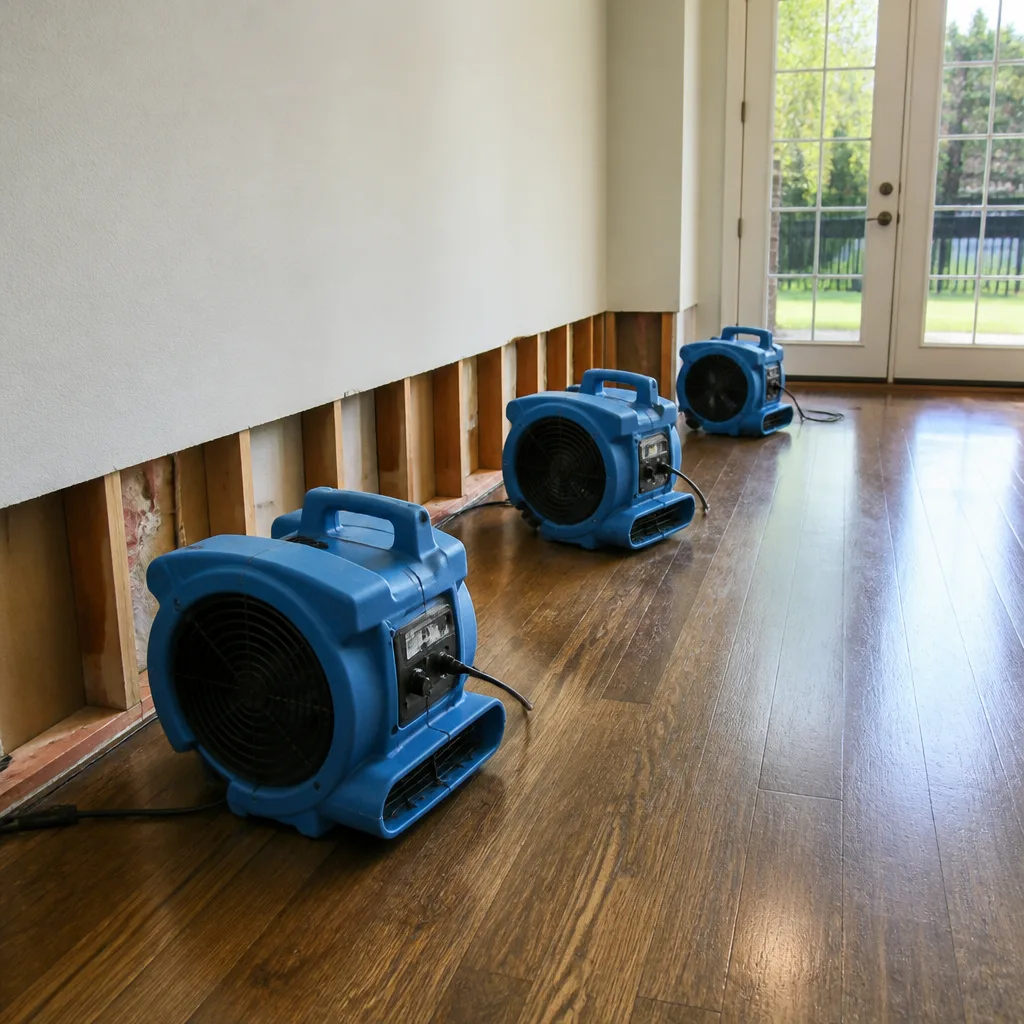
 Water damage drying
 Fire & smoke cleanup
 Mold remediation
 Storm response
 Sewage cleanup
 Reconstruction
Free visual inspection and a written scope of work before any mitigation begins - photos, moisture readings, and drying logs go in your claim file
The scope we write is the scope we bill. Anything new gets shown to you, in writing, before we touch it.
Get your free estimateFast, Reliable Water Damage Restoration Across Moreno Valley
Water damage restoration in Moreno Valley typically costs between $1,200 and $4,800 depending on how far water has traveled and what it touched along the way. We’re Whitfield Water Damage, and we’ve worked throughout the 92551, 92553, and 92555 tracts long enough to know exactly where water hides in these slab-on-grade stucco homes. When a supply line lets go in Moreno Valley, every minute counts because heat and trapped moisture inside a closed-up house start growing mold within 48 hours. Call (855) 382-0478 and we’ll have a certified crew on the road to your neighborhood immediately.
Why Whitfield Water Damage Is Moreno Valley’s Preferred Water Damage Restoration Company
Moreno Valley homeowners keep our number saved because we don’t send a salesperson first. Nolan Pruett built Whitfield Water Damage around a simple principle: show up with IICRC-certified technicians, document everything to insurance standards, and dry the structure correctly the first time. Our crews know the difference between a 1980s Copper Canyon tract home and a 1990s Rancho Belago build because that difference changes where water travels and how fast it dries. We’ve handled losses in Sunnymead Ranch and Edgemont, and we know those streets have original angle stops and water heaters reaching end of life together. When you call, you get a direct answer, a written scope before work starts, and a crew that treats your insurance claim like it matters.
Restoration work we handle
Water Damage Repair in Moreno Valley
Water Damage Repair in Moreno Valley means restoring a home’s structural integrity after water has done its damage, and in this city, that almost always involves slab foundations, stucco walls, and drywall that’s been wicked from below. When a Moreno Valley homeowner discovers a soft spot in the floor or peeling baseboards two weeks after a water-bill spike, the repair work often includes cutting back saturated drywall, treating the framing, and confirming the slab itself has dried to pre-loss moisture levels. Water damage repair in a Moreno Valley tract home typically runs $1,800 to $5,200, with the higher end covering multi-room slab saturation and cabinetry that’s swelled past saving. The work has to be done right because stucco homes trap moisture against the framing and latent damage shows up as mold months later if the drying wasn’t verified.
Burst Pipe and Supply Line Repair
Moreno Valley’s 1980s and 1990s subdivisions were built fast, and the copper and PEX supply lines are now failing on schedule. When an original angle stop under a bathroom sink lets go, it can run water across the slab for hours before anyone notices. We repair the plumbing, extract the standing water, and dry the affected rooms with documented moisture readings.
Ceiling and Roof Leak Restoration
Monsoon-season storms in Moreno Valley overwhelm stucco drainage and concrete tile flashing faster than most homeowners expect. Water intrusion through a roof penetration or failed parapet cap wicks into wall cavities and drips onto ceilings in closets and hallways first. We dry the cavity, not just the visible stain, using non-invasive structural drying that saves you from unnecessary demolition.
Water Mitigation in Moreno Valley
Water Mitigation in Moreno Valley is about stopping the loss from spreading, and in these slab-on-grade tracts, that means acting before water travels under tile, into wall cavities, and across shared partition walls. The window is tight because Moreno Valley’s summer heat turns a wet, sealed-up house into a mold incubator within two days. A typical water mitigation job in Moreno Valley runs $1,400 to $4,600, depending on whether we’re drying one room or a whole wing. Our crews use Dri-Eaz dehumidifiers and XPOWER air movers to pull moisture out of the air and the structure simultaneously, and we log readings daily so you and your adjuster both know the drying is actually working.
Emergency Water Extraction
When a water heater lets go in a 92553 garage, the water sheet-flows across the slab into bedrooms before you even know it happened. We arrive with truck-mounted extraction that pulls hundreds of gallons off the floor in the first hour. Standing water is the enemy because slab-on-grade homes have nowhere for that moisture to drain away on its own.
Structural Drying and Dehumidification
Drying a Moreno Valley tract home isn’t just running fans. Slab-on-grade construction means water travels horizontally under tile and behind baseboards, and the only way to confirm it’s gone is with penetrating moisture meters and thermal imaging. Our IICRC-certified drying protocol uses Phoenix dehumidifiers and Injectidry cavity-drying systems to dry inside walls without tearing out every sheet of drywall.
Trusted Brands We Service in Moreno Valley
We service and dry out homes regardless of the plumbing or appliance brand that failed, and we work with the same equipment brands insurance-preferred contractors use nationwide. Our Moreno Valley customers see Dri-Eaz dehumidifiers, Phoenix air movers, and Injectidry cavity-drying systems on every job, not rental-store fans that aren’t sized to the space. For Moreno Valley homeowners dealing with a failed Bradford White or Rheem water heater, a burst Uponor or Zurn PEX line, or a leaking Moen or Delta valve, we already know the parts and the failure patterns. We don’t stock plumbing parts, but our relationship with local Inland Empire suppliers means we can get a matching replacement valve or fitting to your Moreno Valley home the same day in most cases.
See the difference
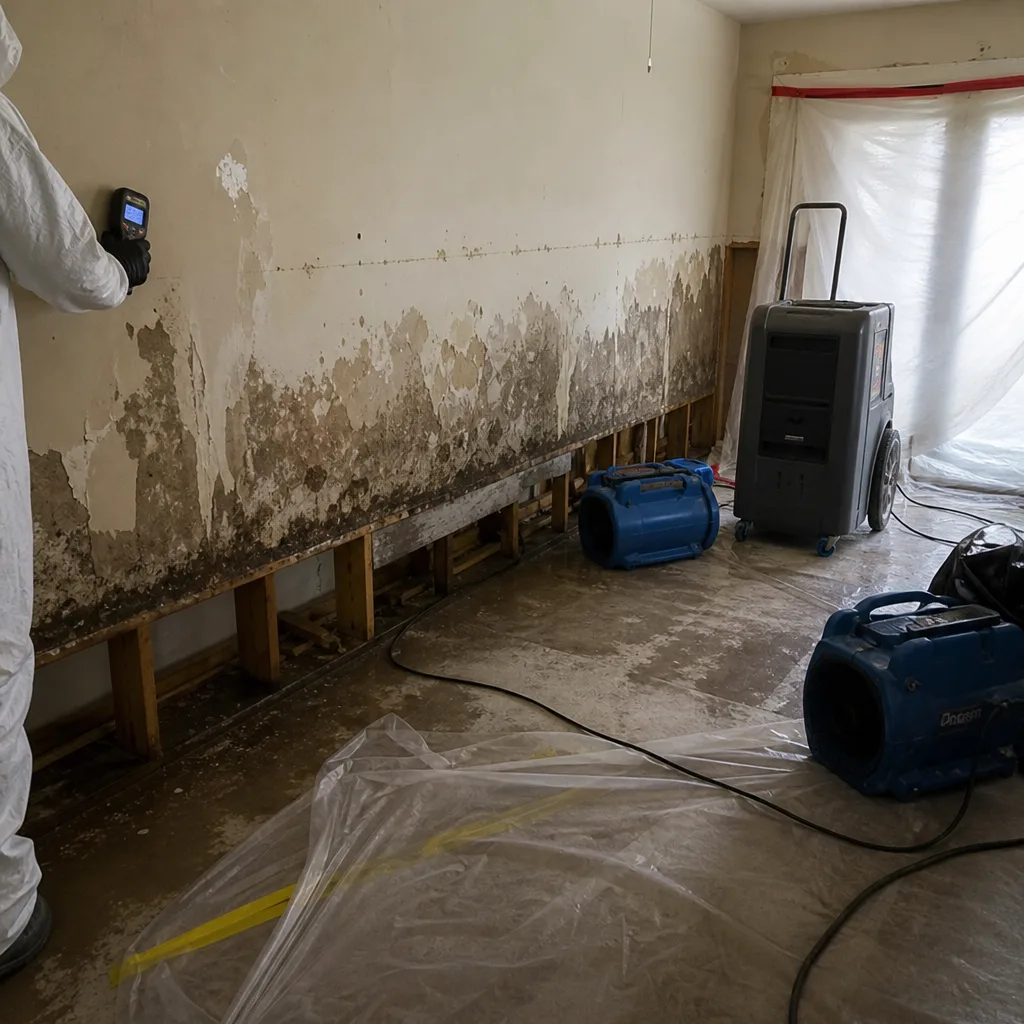 Before
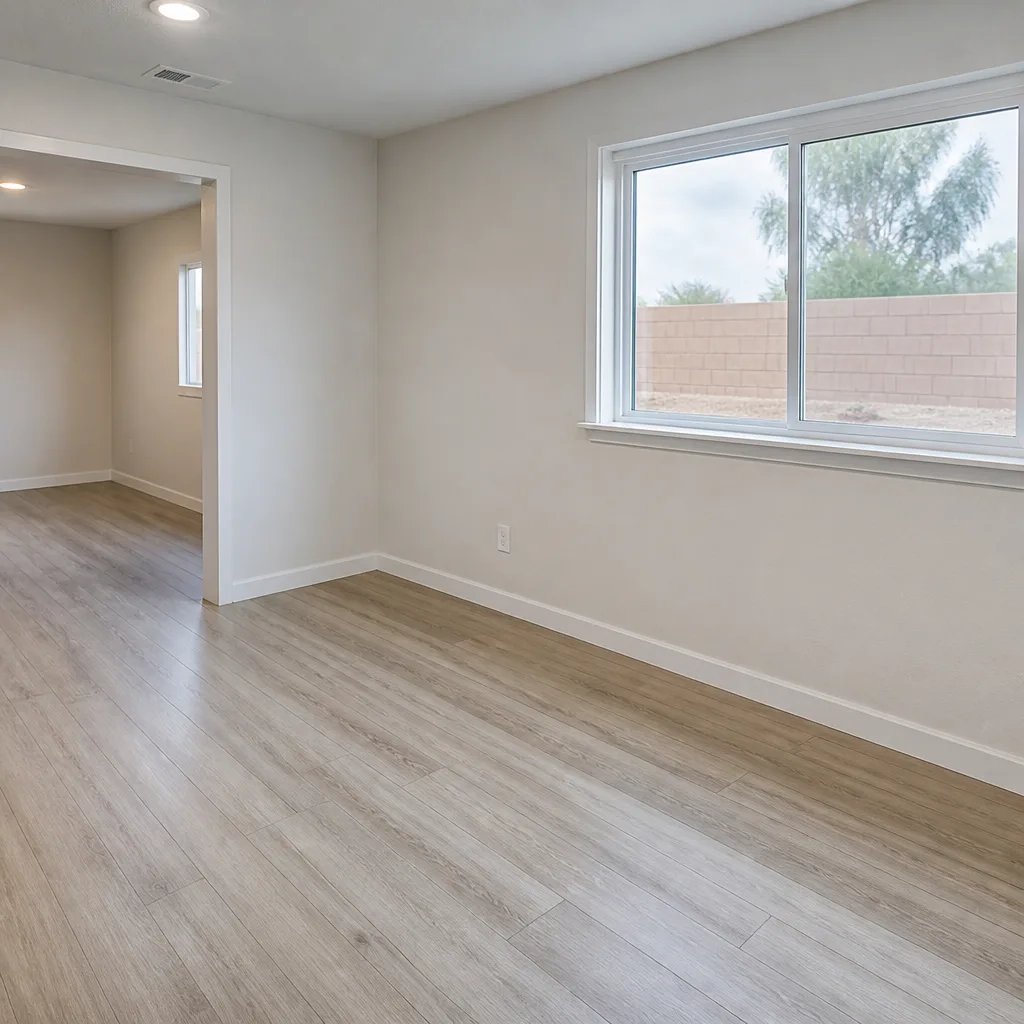 After
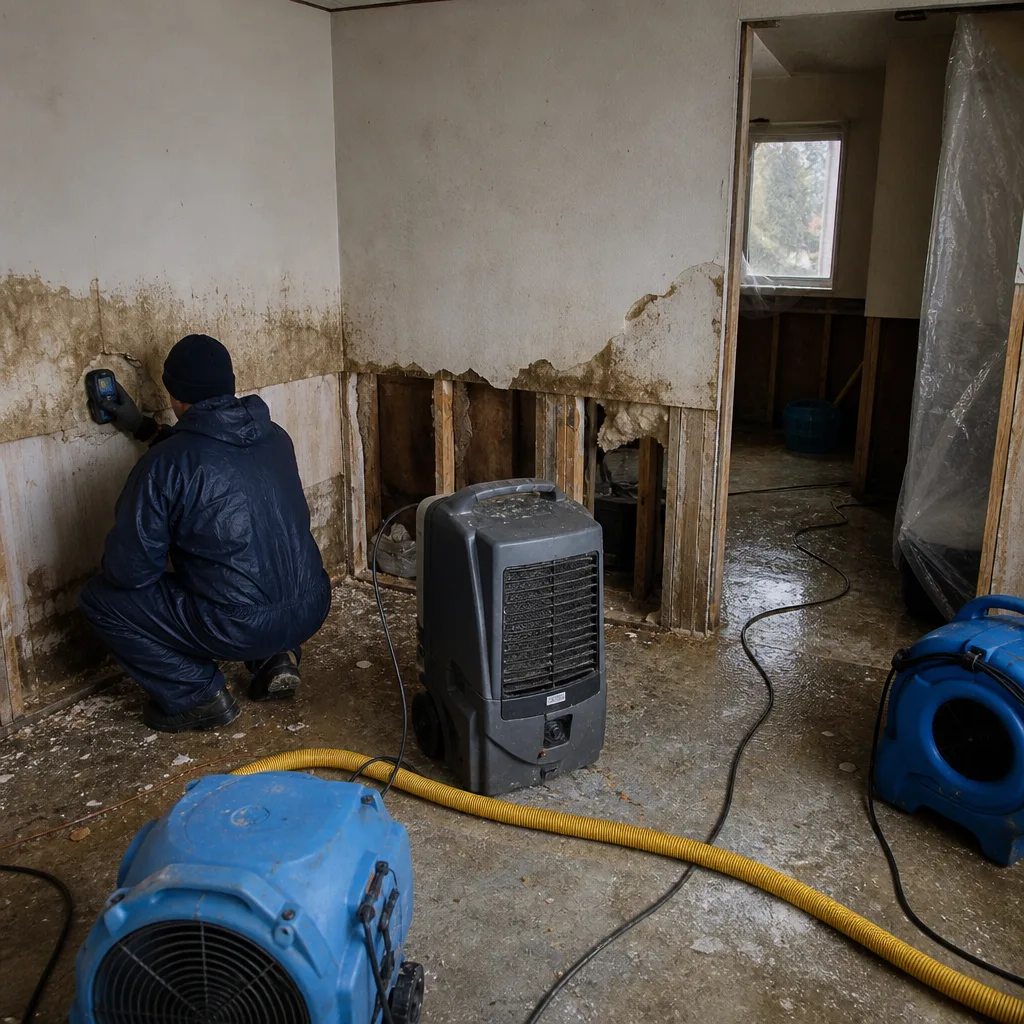 Before
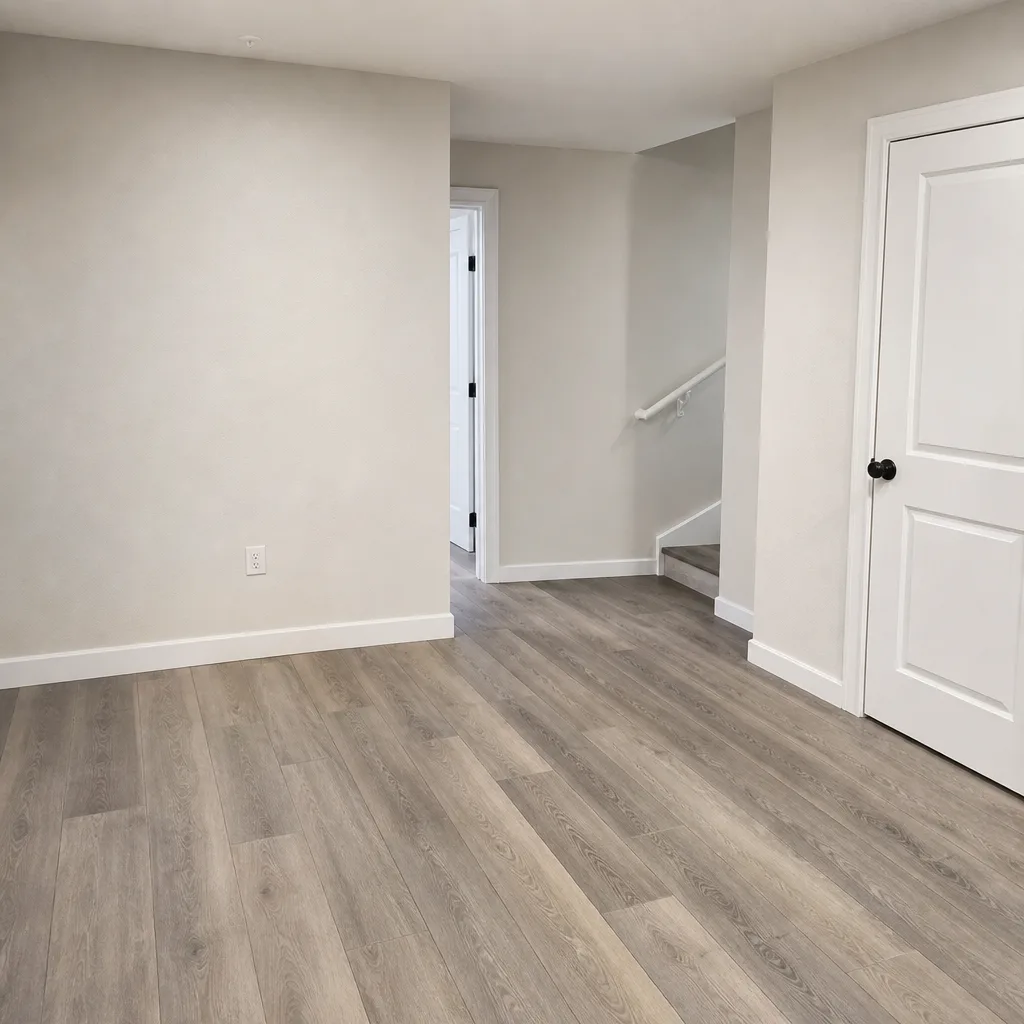 After
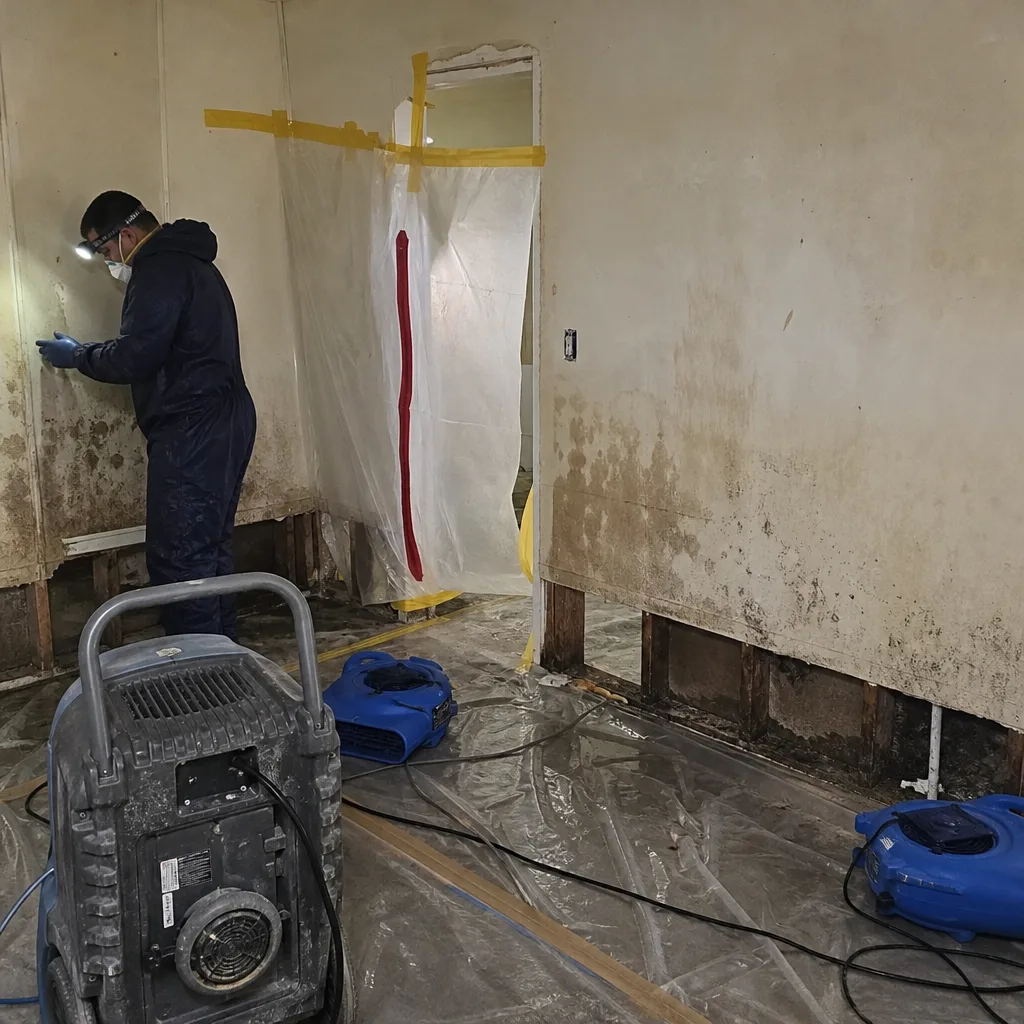 Before
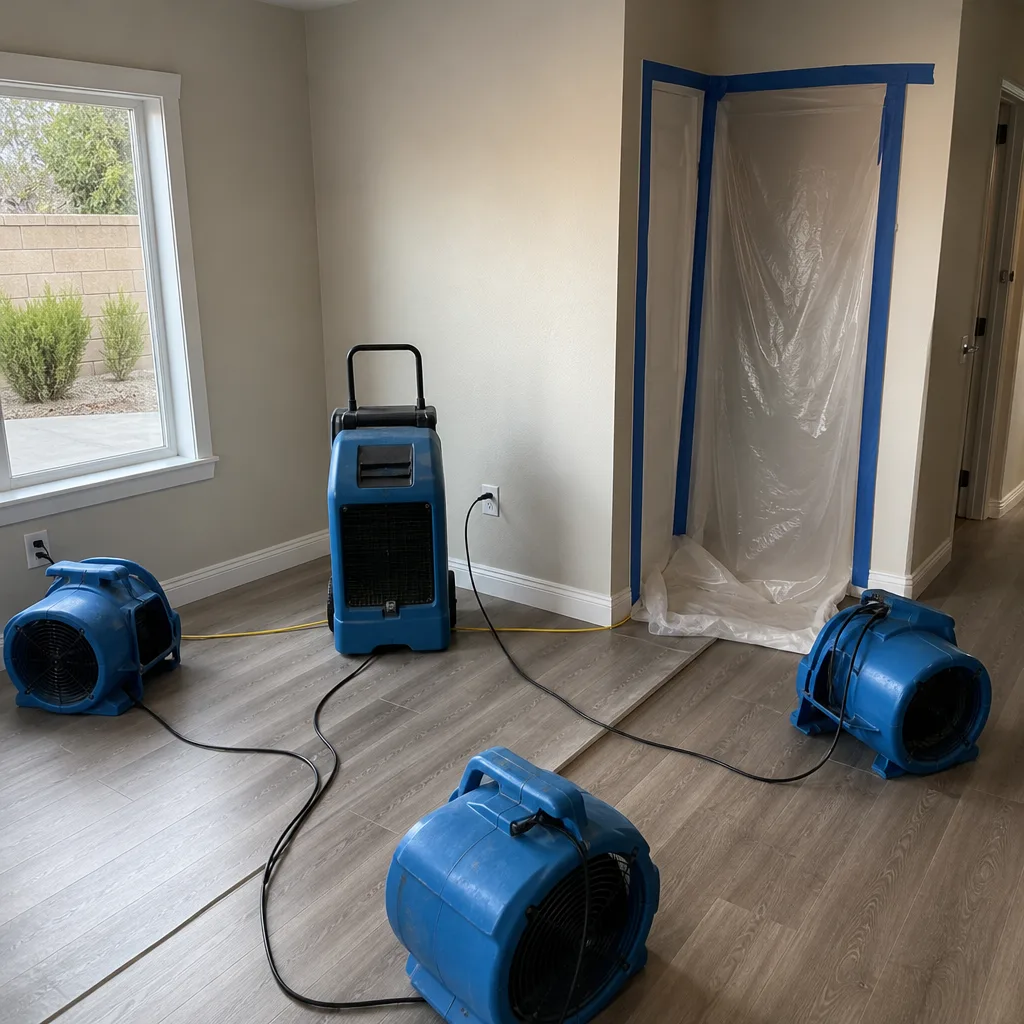 After
Common Water Damage Restoration Problems We See in Moreno Valley Homes
- Original 1990s water heaters failing in sync. In subdivisions built between 1988 and 1998, the original water heaters are well past their design life, and when one lets go on a Moreno Valley block, we often get two or three calls from neighbors within the same month. The failure is predictable, which means your risk is predictable, and a quick inspection beats a flooded garage.
- Slab leaks showing up as hot spots and water-bill spikes. Pinhole leaks in copper supply lines under the slab don’t announce themselves with a puddle at first; you notice a warm tile or a bill that jumped 40 percent. By the time the leak surfaces, water has often saturated the slab and wicked into adjacent bedrooms, and that’s when the real mess starts.
- Angle stops and hose bibs failing in clusters. The original shutoff valves installed throughout a 1990s Moreno Valley tract were never designed to last 30 years, and when one seizes or snaps, the water keeps flowing because the main shutoff at the street is often inoperable too. We see this on block after block in 92551 and 92553.
- Monsoon flash storms overwhelming stucco drainage. Moreno Valley’s semi-arid climate means most of the year is bone dry, then a summer monsoon drops an inch in an hour and every roof penetration, parapet cap, and scupper gets tested at once. The water that gets into wall cavities that afternoon is growing mold by the time you notice the stain two weeks later.
Pricing for Water Damage Restoration in Moreno Valley, CA
Water damage restoration in Moreno Valley runs a real range, and the numbers below reflect what we see on actual jobs in 92551, 92553, and 92555, not a national average.

- Emergency water extraction only: $450 to $1,200
- Single-room water mitigation (extraction, drying, monitoring): $1,400 to $2,600
- Multi-room slab leak restoration with structural drying: $3,200 to $5,800
- Full water heater failure restoration across slab into bedrooms: $3,800 to $7,200
- Mold remediation add-on after water damage: $1,800 to $6,000 depending on containment area
What moves the number is how many rooms the water reached, whether the slab wicked moisture under tile, and how much drywall and baseboard has to come out. We give every Moreno Valley homeowner a written scope and a line-item estimate before any work begins, and we never start a job without your sign-off. Call (855) 382-0478 for a free estimate, and we’ll walk the loss with you, show you the moisture readings, and explain exactly what needs to happen.
Key Takeaways for Moreno Valley Homeowners
- Slab-on-grade homes hide water differently; moisture travels under tile and behind baseboards before you see stains.
- Original 1990s water heaters and angle stops are failing on block-level schedules across the 92553 and 92555 tracts.
- Monsoon flash storms test roof drainage and stucco in ways the original builders never planned for.
- Documented drying to IICRC standards is what makes an insurance claim go smoothly.
We Also Serve Cities Near Moreno Valley
Our Water Damage Restoration team works throughout the Inland Empire from our Victorville base, and we serve homes and businesses across Moreno Valley plus the surrounding communities. If you’re in March Air Force Base, Woodcrest, Colton, or Loma Linda, we can typically reach your property quickly from the 60, the 215, or surface streets. The same IICRC-certified crew, the same professional-grade equipment, and the same documented drying process apply no matter which side of the city line you’re on.
Serving Moreno Valley, CA — Our Local Coverage Area
We’re based in the Moreno Valley area and know this community well. Use the map below to see our service coverage — if you’re nearby, we can almost certainly help.
FAQs About Water Damage Restoration in Moreno Valley
Mold can start growing within 48 to 72 hours after a water leak in a Moreno Valley tract home, and our semi-arid climate actually accelerates it because closed-up stucco houses trap heat and humidity like an incubator. The first 48 hours are the critical drying window, which is why we prioritize immediate extraction and start running dehumidification as soon as the standing water is gone. Call (855) 382-0478 the same day you notice the leak, and you dramatically lower the chance of a mold problem downstream.
Because your street was built all at once, by the same builder, with the same materials, and those original copper supply lines and water heaters are all reaching end of life on the same schedule. Moreno Valley’s 1980s and 1990s tracts were constructed in phases, and the original plumbing, angle stops, and water heaters were installed from the same truckloads. When one neighbor’s water heater lets go, the homes on either side likely have units of the same age and original condition, which is why we often get multiple calls from the same block within weeks.
Category 1 is clean water from a supply line or water heater; Category 2 is water with some contamination, like an overflowing washing machine or a sump that backed up; Category 3 is heavily contaminated water from sewage, a flood, or outdoor storm water that came in contact with the ground. The category determines how much has to be removed, what gets treated, and what has to be replaced entirely, because Moreno Valley’s slab-on-grade homes wick Category 2 and 3 water into porous materials that can’t always be dried and saved. Our IICRC-certified technicians classify the water on arrival, document it, and write the scope accordingly, so you don’t overpay for demolition or underpay for drying.
Yes, monsoon storm damage in Moreno Valley is driven by wind-driven rain that overwhelms roof drainage, stucco, and wall penetrations, while plumbing leaks come from inside the structure and pool on the slab. Monsoon water is Category 3 because it picked up contaminants from the roof, the soil, and the outside air before it entered your home, and it often arrives through multiple small openings at once, which makes the drying pattern more complex. We treat storm intrusion with containment and antimicrobial application as standard, whereas a clean-water plumbing leak may only need extraction and structural drying.
We use Injectidry cavity-drying systems and Phoenix dehumidifiers to pull moisture out from under tile and inside wall cavities without removing every square foot of flooring or drywall. The Injectidry system creates a directed vacuum that draws water out through weep holes and seams, and our moisture meters tell us exactly where the slab is still saturated so we only remove what actually needs to come out. In Moreno Valley’s slab-on-grade homes, this non-invasive structural drying approach regularly saves homeowners thousands compared to a tear-out-first approach, and we document every reading so your insurance adjuster sees the drying curve in black and white.
If you’re looking at a puddle, a stain, or a water bill that doesn’t make sense, call Whitfield Water Damage at (855) 382-0478. We’ll ask you a few questions, tell you what you’re likely dealing with, and get a certified crew to your Moreno Valley home without making you wait through a phone tree. Estimates are free and the scope is in writing before we start.
Written by Nolan Pruett, Owner at Whitfield Water Damage, serving Moreno Valley and the Inland Empire.