
Last updated October 30, 2026
 Water damage drying
 Fire & smoke cleanup
 Mold remediation
 Storm response
 Sewage cleanup
 Reconstruction
Free visual inspection and a written scope of work before any mitigation begins - photos, moisture readings, and drying logs go in your claim file
The scope we write is the scope we bill. Anything new gets shown to you, in writing, before we touch it.
Get your free estimateDamage Restoration Emergency Preparedness Guide for Victorville Homes
The difference between a $4,000 water damage claim and a $22,000 one is often the 90 minutes between when a pipe bursts and when a homeowner locates the main shutoff. And in a Victorville slab-foundation home, that shutoff location is not always where a panicked homeowner thinks it is. Most Victorville homes built before 2010 sit on concrete slabs, which means supply lines run beneath the floor or through exterior walls. When one fails, water doesn’t pool in a basement it doesn’t exist here. It travels horizontally through wall cavities, under tile, and into drywall, spreading silently while you search for the valve. This guide builds a documented response protocol for Victorville homes specifically, covering shutoff mapping, the first-90-minutes sequence, documentation standards that hold up in insurance claims, and how to pre-screen a restoration contractor before you actually need one. For Damage Restoration Warning Signs: A Victorville Homeowner’s Reference Guide, see our companion post..
Quick Answer
Water damage emergency preparedness for a Victorville homeowner means having a written shutoff map for your specific plumbing configuration, a 90-minute response protocol that starts with stopping the water and ends with a documented claim file, and a pre-vetted restoration contractor saved in your phone before the pipe actually bursts. The window between water release and professional drying determines whether you’re dealing with a clean-water Category 1 loss or a contaminated Category 2 event. A Victorville slab-foundation home has shutoff points that differ from homes with raised foundations or crawl spaces, and knowing your exact valve locations before 2 a.m. is the single highest-leverage preparedness step you can take.
Restoration work we handle
Table of Contents
- How to Build a Shutoff Map for a Victorville Slab-Foundation Home
- The 90-Minute Response Protocol: Shutoff, Power, Document, Call
- What to Photograph and Document Before You Touch Anything
- How to Pre-Screen and Save a Restoration Contractor Before You Need One
- Victorville Utility Contacts and Municipal vs. Private Line Failures
- Why Victorville’s Climate Accelerates Category 1 to Category 2 Water Loss
- Special Considerations for Victorville Two-Story Homes
- Documentation Adjusters Actually Want to See
How to Build a Shutoff Map for a Victorville Slab-Foundation Home
Every homeowner in Victorville should know exactly where water enters their house and where it can be stopped. In a slab foundation home, the main water line typically enters through the front-facing exterior wall, near the garage or water heater. The homeowner-side shutoff valve sits where that line passes from the meter box toward the house, usually 12 to 18 inches from the exterior wall. But older Victorville homes, particularly those built in the 1980s and 1990s in neighborhoods like Brentwood and the area around Doris Davies Park, sometimes have the main shutoff inside a wall access panel in the garage, not outside. If you don’t know which applies to your house, you need to find out before an emergency, not during one.
We recommend creating a physical map and posting it near your electrical panel. Here is the sequence to build it:
- Locate the meter box. In Victorville, most residential water meters sit in a concrete or plastic box near the curb or sidewalk. Open it and note whether your meter has a customer-side valve (a small wheel or lever on the house side of the meter). If it does, that’s your fastest shutoff point in a full-bore pipe failure.
- Find the main house shutoff. Trace visually from the meter box toward the house. Somewhere within the first 10 feet of the foundation, there should be a gate valve or ball valve. Ball valves have a lever handle that turns 90 degrees; gate valves have a round handle that turns multiple times. If yours is a gate valve older than 15 years, test it now because gate valves seize open, and the moment you discover that should not be during a burst pipe.
- Identify the water heater shutoff. If the failure involves the hot water side, shutting the cold water inlet valve at the top of your water heater stops hot water distribution without cutting the entire house.
- Note any fixture-level shutoffs. Toilets and sinks under Victorville code typically have individual angle stops. These matter for localized failures where killing the whole house isn’t necessary.
- Check for a pressure regulator. Many Victorville homes have a pressure reducing valve (PRV) where the main line enters. Note its location and visual condition. A failed PRV can allow municipal pressure spikes that burst aging CPVC or copper fittings.
- Draw the map. Sketch a floor plan footprint with the meter box, shutoff locations, water heater, and any access panels. Write down the direction to turn each valve (clockwise to close for most gate and angle stops; quarter-turn for ball valves).
- Photograph every shutoff point. Store the photos in a phone album labeled “Water Shutoff Map.” In an emergency, you won’t want to describe a valve to a dispatcher over the phone; you’ll want to look at the exact photo.
We’ve seen what happens when a Victorville homeowner calls a restoration contractor at 1 a.m. and can’t find the shutoff. The clock runs. Subflooring in a slab home wicks water along the concrete, pulling moisture beneath laminate, engineered wood, and baseboards. A shutoff map doesn’t prevent the pipe failure, but it removes the most expensive variable: time spent searching.
The 90-Minute Response Protocol: Shutoff, Power, Document, Call
When a water emergency starts in Victorville, the first 90 minutes are the difference between a localized drying job and a full mitigation project. The IICRC standard for water damage restoration, the S500, classifies water losses into categories based on contamination level. Category 1 water comes from a sanitary source, like a supply line or a faucet. Category 2 water has been significantly contaminated. The transition from Category 1 to Category 2 isn’t a formal timer, but the practical reality is that clean water sitting in a warm Victorville house, at 95 degrees in July, breeds microbial growth fast. That’s the escalation clock.
Here is the sequence that preserves both safety and insurance coverage:
- Stop the water. Use your shutoff map. If the source is a fixture, close the angle stop. If it’s a supply line or unknown, close the main house shutoff or the customer-side meter valve. If you can’t locate or operate the shutoff and water is actively flooding the house, call Victorville’s water department emergency line (listed in the section below) and request a utility-side shutoff at the meter.
- Assess electrical safety. If water has reached outlets, power strips, appliances, or any electrical fixture, do not step into standing water. Go to the breaker panel and shut off the circuits serving affected areas. If the panel itself is wet or you can’t reach it without stepping in water, call an electrician before entering, and advise the restoration dispatcher that electrical is involved.
- Photograph everything before you move anything. This is not the time to start mopping. Insurance claims are won or lost on pre-mitigation documentation. Shoot wide shots of each affected room, close-ups of visible water stains, and the source itself if visible. Include a timestamp (most phones add metadata automatically, but verify).
- Remove only what’s necessary for safety. Move small furniture, rugs, and personal items out of standing water only after photographing them in place. Do not start cutting drywall or pulling baseboards. That’s the restoration contractor’s call, and tearing things apart before documentation can complicate a claim.
- Call your pre-vetted restoration contractor. This should be the second call after the water department, if municipal shutoff is needed. A restoration company with 24/7 live dispatch, not an answering service that takes a message, is what you want. Describe the water source (clean supply line, toilet overflow, appliance, etc.), the approximate square footage affected, and whether electrical is involved.
The reason this sequence matters in Victorville specifically: summer temperatures routinely exceed 100 degrees, which accelerates evaporation and drives humidity into wall cavities. A Category 1 loss that gets extracted and dried within hours often stays Category 1. The same loss left overnight in a closed-up house becomes something else entirely. We prioritize extraction speed on the initial call because we know what that heat does to a structure between midnight and 8 a.m.
What to Photograph and Document Before You Touch Anything
Insurance adjusters process water damage claims based on documentation, not narrative. The goal is to create a record that makes the sequence of events obvious to someone who was not there. We have worked claims in Victorville where thorough homeowner documentation reduced the adjustment timeline by days, and other claims where missing pre-mitigation photos turned a straightforward loss into a dispute over pre-existing conditions.
Before any water is extracted or any materials are moved, capture the following:
- Wide shots of every affected room from two angles. These establish scope and extent.
- Close-ups of all visible water, including standing water depth if measurable, water stains, bubbling drywall, and warped flooring. Put a coin or ruler in the frame for scale.
- The water source. A burst supply line, failed water heater connection, overflowed toilet, or whatever originated the loss. If the source is inside a wall and not visible, photograph the area where water first appeared.
- Room-to-room transition photos. Show how far the water traveled by documenting threshold transitions, hallway wicking, and adjacent rooms that may not appear wet yet.
- The water meter reading. If your meter is accessible and safe to approach, photograph the register. A record of the meter reading at the time of discovery supports a claim of how much water was released.
- Contents in place. Furniture, rugs, electronics, and personal items that are sitting in water or in the path of wicking. Photograph them where they sit before moving anything.
- Timestamp verification. Most smartphones embed EXIF timestamps automatically. If yours doesn’t, take a photo of a clock, watch, or phone lock screen showing time and date in the frame at the start of your documentation sequence.
One thing we tell Victorville homeowners: do not discard anything until the adjuster or restoration project manager reviews it. Even materials that are clearly ruined may need to be documented as evidence for claims. A restoration contractor who follows documented IICRC-certified drying protocol will also photograph throughout mitigation, creating a second, professional documentation layer that aligns with insurer expectations. That dual documentation is what keeps a claim moving.
How to Pre-Screen and Save a Restoration Contractor Before You Need One
The worst time to choose a restoration contractor is at 2 a.m. while water is spreading across your slab. The best time is now, when you can evaluate qualifications without a clock running. Pre-screening a Victorville restoration company takes about 30 minutes and saves hours of uncertainty during an actual emergency. See DIY vs Professional Damage Restoration: The Victorville Homeowner’s Decision Guide to weigh your options.
Here is what to check, and what the answers actually mean:
- IICRC certification. The Institute of Inspection, Cleaning and Restoration Certification sets the standard for water damage restoration. An IICRC-certified firm follows the S500 drying standard, which dictates extraction methods, drying chamber setup, and moisture monitoring. Ask directly: “Are your restoration technicians IICRC-certified?” A firm that hesitates on this question is not the firm you want. Whitfield Water Damage operates under IICRC-certified drying protocol on every water damage job, and our team is part of the Restoration Industry Association (RIA), which holds members to ongoing professional standards.
- 24/7 live dispatch vs. answering service. Many restoration companies advertise 24/7 availability but route after-hours calls to a message service that promises “a technician will call you back in the morning.” That’s not 24/7 availability; that’s 24/7 message-taking. Ask what happens when you call at 3 a.m. on a Saturday: does a live person answer, and when does a technician physically arrive? A disaster does not wait for business hours, and neither should your restoration contractor.
- Equipment quality. The difference between professional drying and a rental-fan approach is equipment class. We run Dri-Eaz, Phoenix, and B-Air air movers, XPOWER blowers, and Injectidry cavity-drying systems. Injectidry matters in slab-foundation Victorville homes because it enables non-invasive structural drying inside wall cavities and under floors without tearing out drywall or flooring first. A contractor who only brings fans and a dehumidifier is not drying your wall cavities; they’re drying your surfaces while moisture continues to move through the structure.
- Scope of services. Water damage rarely stays water damage. If your water loss sits undried, you may need mold remediation. If a pipe failure follows a small electrical fire, you may need fire and smoke damage work. Hiring one firm that performs water, mold, and fire restoration in-house means you won’t be handed off to a second vendor mid-crisis, which in our experience is where claims get delayed and details get lost. Whitfield Water Damage handles water damage restoration, mold remediation, and fire damage restoration with one certified team.
- Insurance experience. Ask whether the company documents to insurance standards and works directly with adjusters. Restoration work that is not properly documented can create friction with a claim. A firm that photographs every phase, logs moisture readings, and communicates with adjusters in their language reduces the homeowner’s burden during the claim.
Save the number. Put it in your phone as “Restoration – Call First.” In an emergency, you want one call to reach a live dispatcher who asks the right questions and dispatches a crew with professional-grade equipment, not a franchise van with two air movers and a mop.
Victorville Utility Contacts and Municipal vs. Private Line Failures
Knowing whether a leak is yours or the city’s determines who pays for the mitigation and who stops the water. In Victorville, the water supply system is operated by the Victorville Water District, a division of the city, and the boundary between municipal and private responsibility sits at the service connection.
The general rule: if the failure occurs on the city side of the water meter, it’s the water district’s problem. If it occurs on the house side of the meter, it’s yours. But there’s nuance. The service line that runs from the meter box to your house is typically homeowner responsibility even though it crosses the property line area. A leak in that section can saturate your yard and eventually migrate toward the foundation, and it’s yours to repair.
Here are the Victorville-specific contacts and procedures:
- Victorville Water District emergency line: For water main breaks, meter box flooding, or utility-side failures, call the city’s water emergency number (available on the City of Victorville water division page). This is the line for leaks that appear to come from the street, the meter box itself, or municipal infrastructure, not from inside your house.
- Victorville Municipal Utilities Services: The city’s public works department handles sewer backups on the city side of the connection. If a sewer line backs up and you’re not certain whether the blockage is yours or the city’s, call them. If sewage is actively entering the house, the restoration protocol changes, and a Category 3 contamination response (protective equipment, containment, controlled demolition of affected porous materials) becomes necessary.
- Private property leaks: Any leak from a supply line inside your home, a water heater, an appliance, a toilet, a washing machine hose, or the service line between the meter and the house is your responsibility to stop and mitigate. Your homeowner’s insurance typically covers the resulting damage (less deductible), but not the pipe repair itself unless the policy has specific service line coverage.
One detail specific to Victorville: the high-desert climate means soil here is often dry and compacted. A slow exterior leak can travel along the irrigation path and show up as unexplained moisture in a slab floor weeks before any visible standing water appears outside. If you notice a warm spot on your slab floor, a musty odor with no obvious source, or water staining that comes and goes, investigate the service line between the meter and house before assuming it’s a roofing or interior plumbing issue.
Why Victorville’s Climate Accelerates Category 1 to Category 2 Water Loss
IICRC water damage classification is not climate-neutral. The same pipe failure in a coastal town and in Victorville follows different timelines because of the difference in ambient conditions. Victorville summers are hot and dry, with temperatures commonly above 100 degrees from June through September and relative humidity that can drop below 15 percent. Those conditions seem like they should help drying, but they create a specific risk: they drive moisture into enclosed spaces faster than homeowners expect.
Here’s the mechanism. When water saturates drywall or subfloor in a Victorville home during the summer, the hot exterior wall temperatures and the cool evaporative effect inside create a vapor pressure gradient. Moisture does not simply sit on surfaces; it is pulled into wall cavities, under flooring, and up through the concrete slab. The visible wet spot shrinks, which tricks a homeowner into thinking the problem is resolving itself, while the moisture load inside building materials increases.
That’s the path from Category 1 to Category 2. Clean water from a supply line picks up contaminants as it moves through a wall cavity: dust, insulation fibers, drywall paper, previous spills, and organic material. The S500 standard defines Category 2 as water with significant contamination that can cause discomfort or sickness. The cleanest source still becomes Category 2 if the water has traveled through a structural cavity before being extracted.
The implication for Victorville homeowners: time-to-extraction is the controlling variable. Four hours of standing water in a Victorville summer is not the same as four hours in a mild climate. This is not fear-based language; it’s the physics of vapor pressure and microbial growth in a high-desert environment. Professional drying with IICRC-certified protocol includes cavity inspection, moisture mapping, and non-invasive structural drying where appropriate, because the problem is rarely just the water you can see.
Special Considerations for Victorville Two-Story Homes
Victorville’s housing stock includes a substantial number of two-story homes, particularly in newer developments east of Interstate 15 and in areas like Westwinds and the neighborhoods around Green Tree Golf Course. Two-story homes introduce a failure mode that slab-on-grade single-story homes do not have: gravity-driven water travel through floor-ceiling assemblies.
When a supply line fails on a second floor, water does not stay on the second floor. It flows down through the floor cavity, saturating the ceiling drywall below, the floor joists, and the subfloor of the upper level. It then continues into the first-floor walls. In a two-story Victorville home, a burst supply line in an upstairs bathroom can deliver water to the garage ceiling, the kitchen, and the downstairs hallway before anyone notices. We have seen second-floor failures where the first visible sign was water dripping from a light fixture on the ground floor.
Two additional preparedness considerations for two-story Victorville homes:
- Know if you have a whole-house shutoff accessible on the ground floor. In many two-story homes, the main shutoff is at the point of entry on the first floor exterior wall. If the failure is on the second floor and you have no fixture-level shutoff that helps, you’ll need the main. Ensure your shutoff map accounts for a second-floor failure scenario where water is pouring through the ceiling.
- Mark your ceiling and attic access. If the home has an attic above the second floor, moisture from a roof leak or an HVAC condensation line failure can travel through the attic and present as a ceiling stain on the second floor, which then migrates down. Documenting the attic access and having it available for the restoration crew speeds both the assessment and the drying setup.
For multi-story drying, the restoration company needs to set up containment and drying equipment on multiple levels simultaneously. Equipment placement matters: air movers positioned on the first floor don’t dry a second-floor ceiling cavity. Injectidry cavity-drying systems can dry the floor-ceiling assembly from the upper level without tearing out the first-floor ceiling drywall, which saves both demolition cost and rebuild time. In our experience, a two-story water loss handled properly within the first 24 hours may avoid ceiling tear-out entirely; a delayed response virtually guarantees it.
Documentation Adjusters Actually Want to See
If you file an insurance claim for a water damage event in Victorville, the adjuster’s job is to determine: what happened, how much water was released, how much of the structure was affected, what mitigation was performed, and whether the drying was completed to a standard that prevents secondary damage. Your documentation supports every one of those determinations.
The most useful items to provide are:
- Pre-mitigation photographs showing water source, affected areas, and contents in place, taken before any extraction or demolition.
- Meter reading photographs with timestamps. If water usage continued after the failure was discovered, the meter record tells a quantifiable story about how much water was released.
- Moisture readings and drying logs. These come from the restoration contractor. An IICRC-certified firm logs initial moisture content, daily readings, and final readings before equipment is removed. Adjusters look for this drying log; a missing log is a reason to dispute whether drying was adequate.
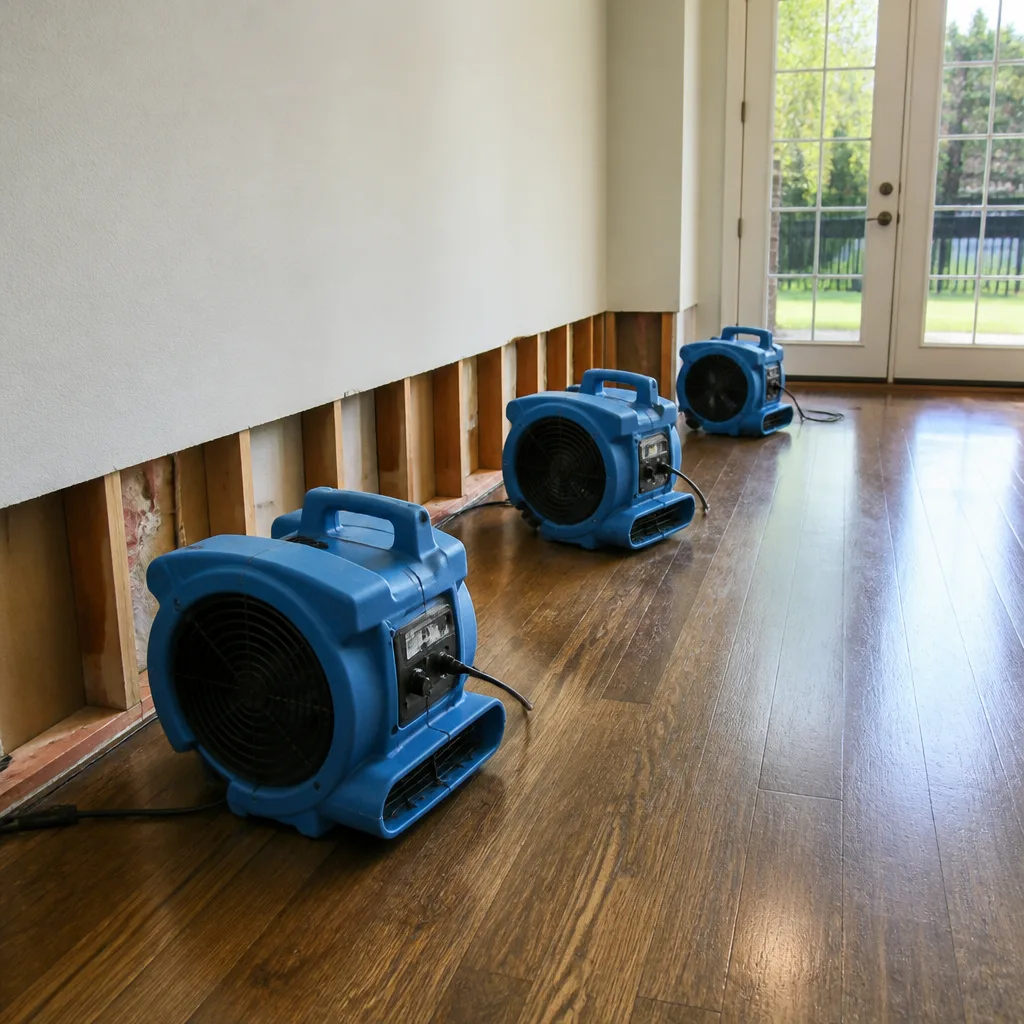
- Equipment photographs. Photos showing professional-grade drying equipment in place (air movers, dehumidifiers, Injectidry panels) demonstrate that mitigation was performed to a professional standard, not improvised.
- Communication records. Keep notes of who you called, when, what was said, and any reference numbers. A restoration contractor that communicates directly with your adjuster in the adjuster’s language removes a layer of the homeowner’s burden.
The common thread is that the documentation exists before the claim is filed. We document every phase of restoration to insurance standards because we understand that the claim is a parallel process to the physical mitigation, and one cannot wait for the other. A Victorville homeowner who photographs the scene thoroughly in the first hour and hires a restoration contractor that continues that documentation through drying is in the strongest possible claim position. For details on permits and compliance, read Damage Restoration Permits, Codes & Inspections in CA: What You Need to Know.
Common Mistakes to Avoid
- Waiting to see if it dries on its own. In a Victorville slab home, surface drying is deceptive. Moisture inside wall cavities and under flooring continues to spread even after visible water is gone. By the time you see no water, the structural damage has already progressed.
- Turning off the wrong valve. In the panic of a burst pipe, homeowners sometimes close the water heater supply when they needed the main, or close a gate valve that breaks in their hand. Test every shutoff valve on your map before you need it, and if a gate valve is stiff or corroded, have it replaced with a ball valve now.
- Using a shop vac on a large water release. A household shop vac extracts at a fraction of the rate of a professional truck-mounted or portable extraction unit, and it’s not designed for the water volume a burst pipe delivers. You’ll spend an hour extracting what takes a professional unit minutes to remove, and the delay compounds.
- Starting demolition before documentation. Pulling baseboards or cutting drywall before photographing the scene gives the insurer a reason to question the pre-existing condition argument. Document first, demo later, and ideally let the restoration contractor handle the demo.
- Hiring the first contractor who answers the phone. In a crisis, any phone number feels like a lifeline. But a contractor without IICRC-certified training or professional drying equipment can create a worse problem than they solve, leaving hidden moisture that becomes mold months later.
- Not knowing the difference between an answering service and live dispatch. Calling a restoration company at 11 p.m. and hearing “we’ll have someone call you back” is a delayed response, no matter what the website says. Pre-screen for actual live 24/7 availability.
- Assuming the city handles your meter-to-house line. In Victorville, that service line is typically yours. A leak there won’t be stopped by calling the water district if it’s on the house side of the meter, and the damage it causes inside the home is your claim to file.
See the difference
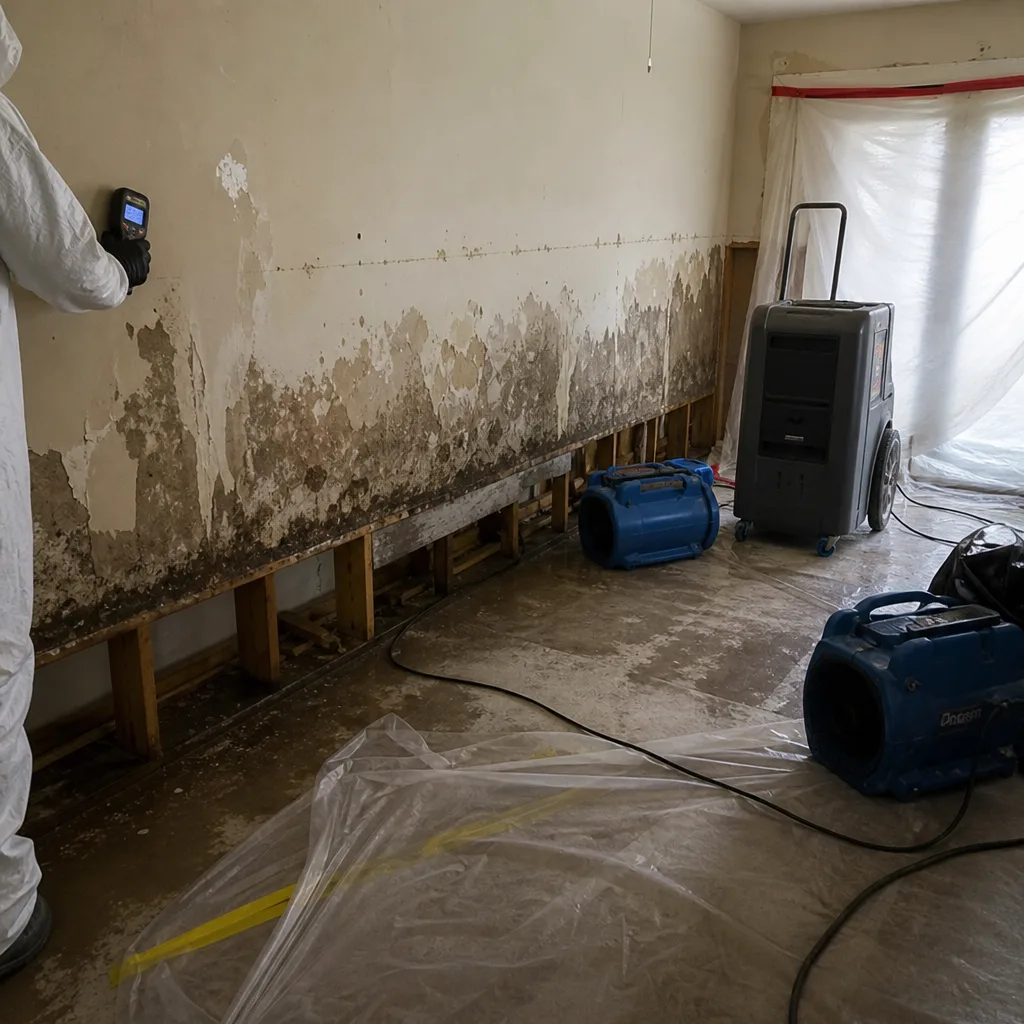 Before
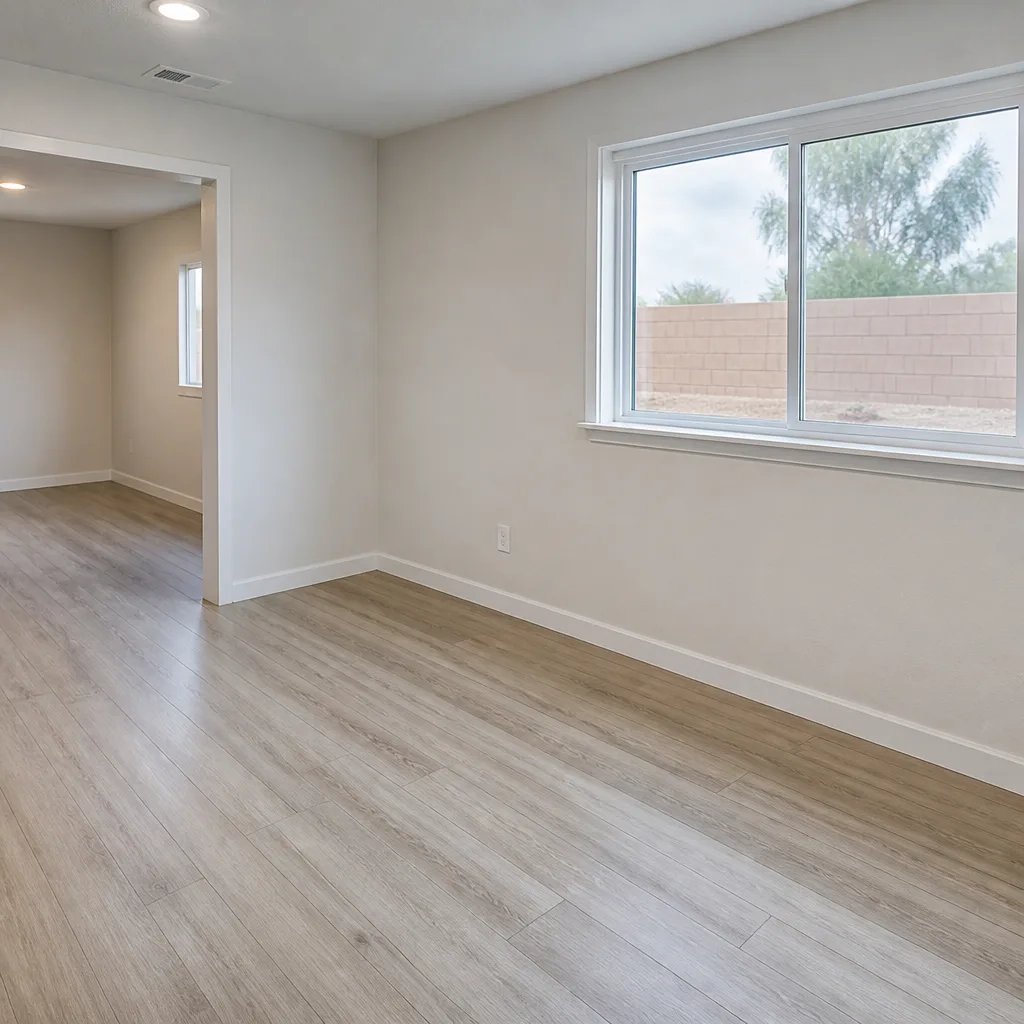 After
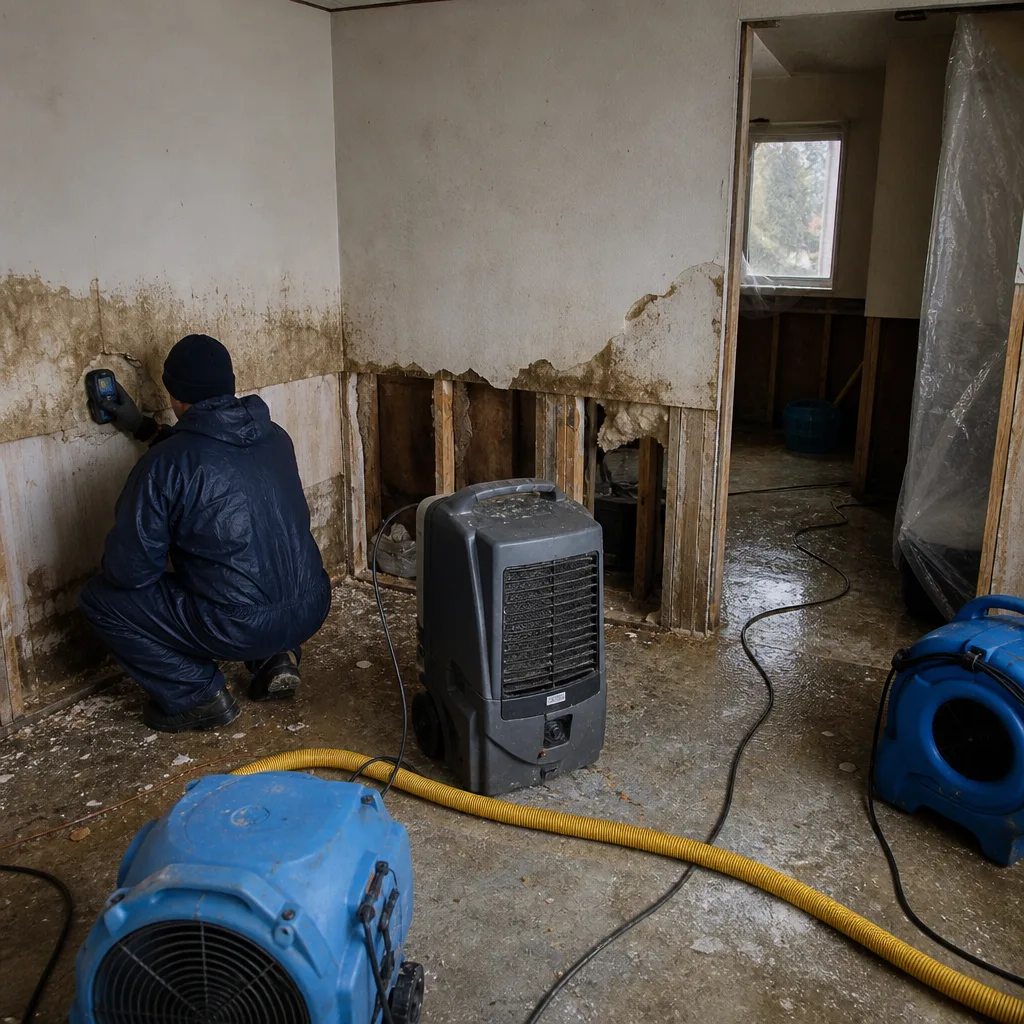 Before
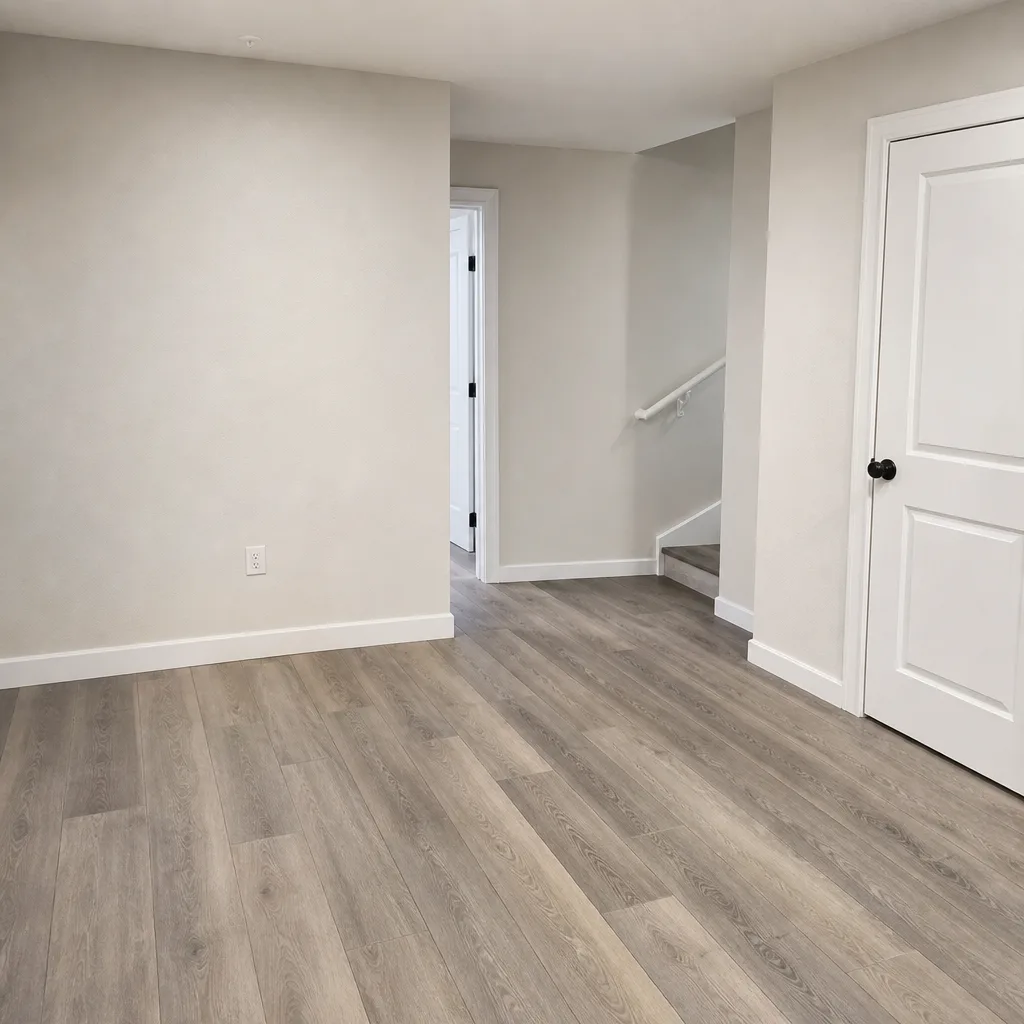 After
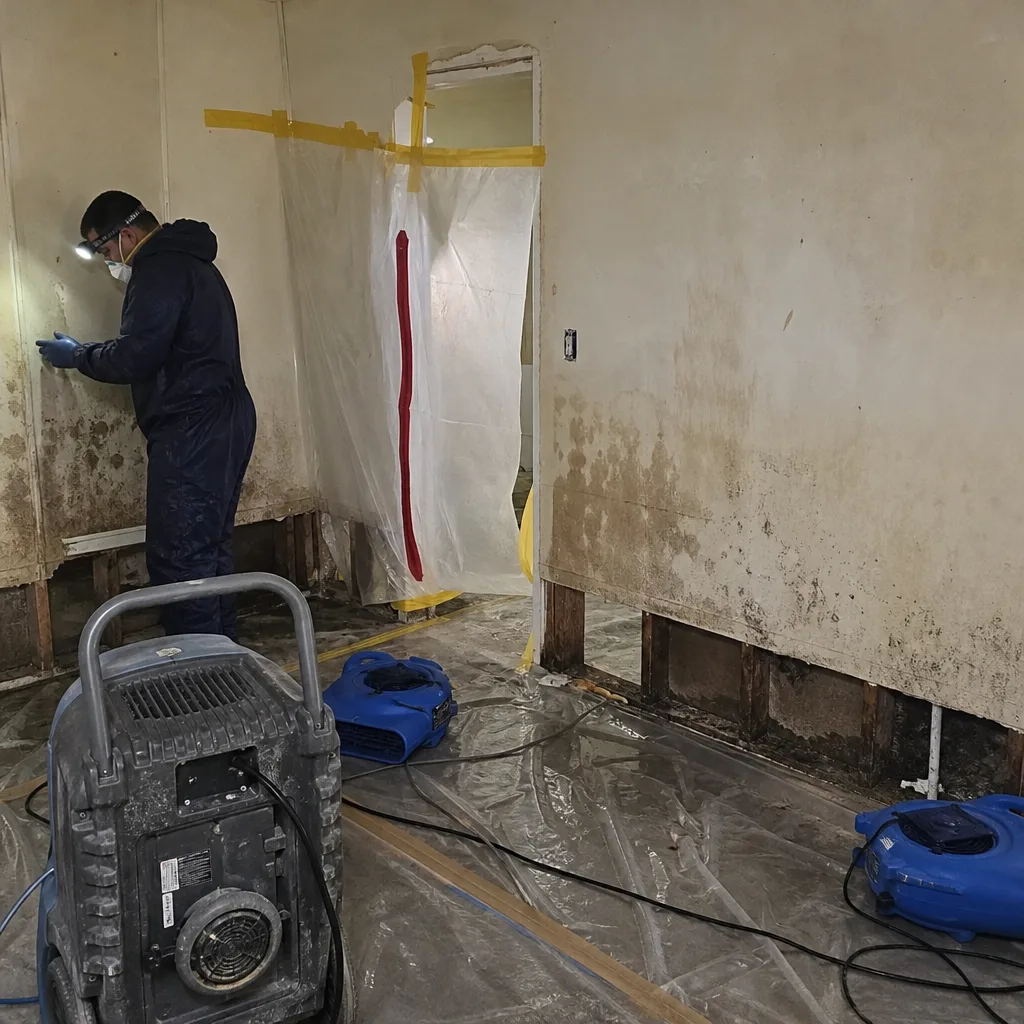 Before
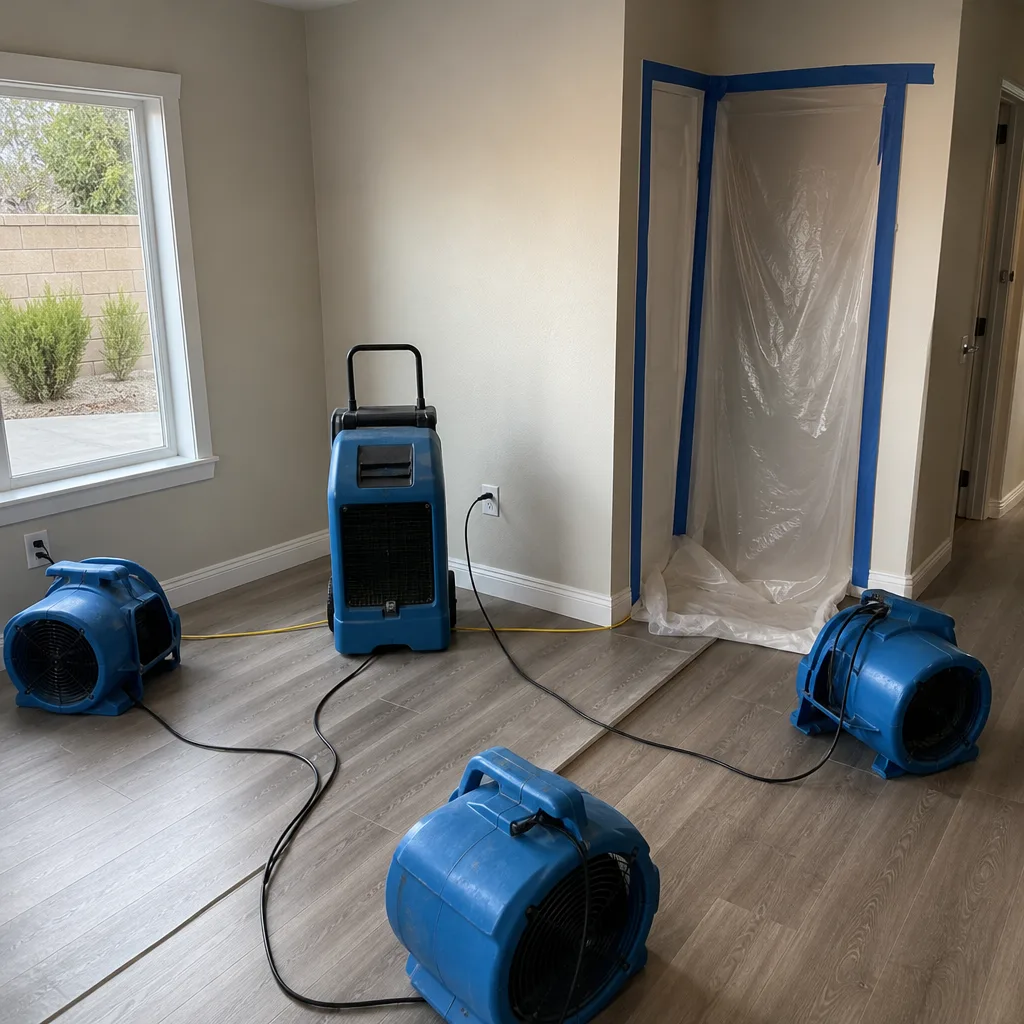 After
When to Call a Professional
Call a professional restoration contractor when the water source has been active for more than a few minutes, when water has reached drywall or flooring, when water has traveled through a wall or floor cavity, when electrical is involved, or when the source is a toilet overflow or any potentially contaminated water. Also call when you cannot determine how far the water traveled, when you smell anything unusual, or when mold is visible or suspected. In short, the threshold for professional involvement is low because the cost of a professional assessment is trivial compared to the cost of undried water inside a Victorville slab home. Whitfield Water Damage offers free estimates in Victorville. If you’re looking at water where it shouldn’t be, call (855) 382-0478. The sooner the drying starts, the smaller the claim, the shorter the disruption, and the lower the chance that a clean water event becomes a contamination event.
For more on the range of what we handle, see our Whitfield Water Damage home page for an overview of our restoration services across the high desert. If your situation involves a specific service, you’ll find detailed breakdowns on our Water Damage Restoration in Jurupa Valley page, our Mold Remediation in Jurupa Valley page, and our Fire Damage Restoration in Jurupa Valley page. The protocols we describe in this Victorville guide apply across all our service areas, including the Inland Empire communities we serve alongside Victorville.
Frequently Asked Questions
Water damage in Victorville should be addressed within the first few hours, not days. The high-desert heat accelerates vapor movement through wall cavities and slab foundations, and clean water left sitting can escalate to a Category 2 contamination event quickly. Extraction and professional drying should begin the same day the failure occurs. Call (855) 382-0478 for a free estimate and same-day response.
The IICRC (Institute of Inspection, Cleaning and Restoration Certification) is the credentialing body that sets the S500 standard for professional water damage restoration. An IICRC-certified contractor follows a documented, science-based drying protocol rather than guesswork. Whitfield Water Damage operates under IICRC-certified drying protocol on every water damage job.
Most standard homeowners policies in Victorville cover sudden and accidental water damage from a burst pipe, minus the deductible. The pipe repair itself is typically not covered unless the policy includes specific service line coverage. Proper documentation of the damage and professional mitigation records support the claim. Whitfield Water Damage documents every phase to insurance standards and works directly with adjusters.
Household fans and a consumer dehumidifier cannot dry wall cavities, subflooring, or the interior of a slab foundation. Surface drying that leaves hidden moisture leads to mold growth months later. Professional equipment from brands like Dri-Eaz, Phoenix, B-Air, and Injectidry is designed for structural drying and is calibrated to hit specific moisture targets, not just dry the visible surface.
If water sat in a Victorville home for more than 48 to 72 hours, or if moisture was trapped in a cavity, microbial growth can begin even if you don’t see visible mold. A musty odor, persistent staining, or allergy-like symptoms in specific rooms are indicators. Professional mold remediation addresses the source of the moisture and the affected materials under containment, not just surface treatment. Call us for a mold assessment if you suspect a problem.
A slab-foundation home has no crawl space or basement for water to drain into. Water travels horizontally through the concrete slab, under flooring, and into wall cavities. Homeowners should maintain a current shutoff map with meter box access details, photograph any moisture immediately, and call a restoration contractor with cavity-drying capability rather than one that only addresses surface water. Non-invasive structural drying with Injectidry systems avoids unnecessary demolition on slab homes.
The Bottom Line
Water damage emergency preparedness for Victorville homes is not a supply kit. It’s a documented protocol. A shutoff map that shows every valve and the meter box. A phone contact for a pre-vetted restoration contractor with IICRC certification, live 24/7 dispatch, and professional-grade drying equipment. A documentation habit that photographs everything before anything moves. And a clear understanding that in the high desert, the first 90 minutes determine whether a clean-water leak stays Category 1 or becomes a Category 2 contamination event that triples the scope and the cost. Do the 30 minutes of preparation this week. When the pipe bursts at 2 a.m., you’ll be making decisions, not searching for a valve. Browse our more guides & resources for additional Victorville home protection strategies.
Written by the team at Whitfield Water Damage, serving Victorville since 2011.