Last updated October 30, 2026
 Water damage drying
 Fire & smoke cleanup
 Mold remediation
 Storm response
 Sewage cleanup
 Reconstruction
Free visual inspection and a written scope of work before any mitigation begins - photos, moisture readings, and drying logs go in your claim file
The scope we write is the scope we bill. Anything new gets shown to you, in writing, before we touch it.
Get your free estimateDIY vs Professional Damage Restoration: The Victorville Homeowner’s Decision Guide
Here’s a number most Victorville homeowners never hear until it’s too late: a consumer-grade box fan moves roughly 1,500 cubic feet of air per minute. A single professional-grade XPOWER air mover moves between 2,500 and 5,000 CFM, and it runs for days, not hours, directed by moisture sensors placed inside wall cavities. The equipment gap is real, but the decision gap is wider: most DIY failures in the High Desert don’t come from lack of effort. They come from misreading the category of water involved and assuming Victorville’s dry air has done the work when it hasn’t. This guide gives you a framework to decide, based on the same classification system IICRC-certified technicians use, whether to grab a mop or grab a phone, and for how to hire a damage restoration contractor in Victorville when the situation calls for it.
Quick Answer
DIY restoration is only defensible for IICRC Category 1 water (clean supply-line water) covering less than roughly 10 square feet of non-porous or lightly porous surfaces, where the area can be fully dried within 48 hours. Anything involving Category 2 or 3 water, any water that has touched drywall or traveled under flooring, or any condition where moisture has persisted beyond 48 hours requires professional assessment, because mold colonization in Victorville’s climate happens faster than most homeowners expect, and failed DIY documentation becomes the reason insurance carriers deny otherwise valid claims.
Restoration work we handle
Table of Contents
- Understanding IICRC Water Categories: What Touched Your Floor Matters
- IICRC Classes 1-4: Why Square Footage Only Tells Half the Story
- The Victorville False-Dry Problem: When Low Humidity Lies to You
- The DIY Safe Zone: What a Homeowner Can Actually Do in the First Two Hours
- What Professional Restoration Does That Consumer Equipment Cannot
- The Insurance Documentation Problem: Why Failed DIY Voids Claims
- Why Mold and Fire/Smoke Are Never DIY Projects
- Cost Comparison: What You Actually Pay for Professional Restoration in Victorville
Understanding IICRC Water Categories: What Touched Your Floor Matters
The single most important variable in any water damage decision is not how much water there is. It’s what kind of water it was. The IICRC S500 Standard, the document that governs professional water restoration worldwide, divides intruded water into three categories. Once you know the category, the DIY-versus-professional decision often makes itself.
Category 1: Sanitary water. This is water from a clean source: a broken supply line under a sink, a failed washing machine hose before it touched anything, a punctured refrigerator water line. At the moment of release, this water is safe to touch. But Category 1 degrades. Left standing in a warm Victorville home for 48 to 72 hours, it becomes Category 2. Soaked into drywall and insulation for a week, it becomes Category 3. The clean label is a timestamp, not a permanent property.
Category 2: Significantly contaminated water. Dishwasher discharge, washing machine overflow that carried detergent and soil, water from an aquarium, a toilet overflow with urine but no feces. This water contains microorganisms and nutrients that accelerate biological growth. Skin contact should be avoided. If Category 2 water has soaked porous materials, those materials generally require removal or professional sanitation, because no amount of surface drying removes the contaminants left behind.
Category 3: Grossly contaminated water. Sewage, flooding from the Mojave River, storm surge, any water that came from outside the home during rain, or indoor water that sat long enough to support bacterial growth. Category 3 contains pathogens, bacteria, fungi, and potentially parasites. Any porous material touched by Category 3 water is considered contaminated and is a removal item. This is not a gray area. The IICRC standard is explicit. In Victorville, where residential flooding near drainage channels happens during rare but intense storm events, homeowners sometimes mop up receded floodwater and assume the problem is solved. It isn’t. The contamination remains in carpet pad, baseboards, and the bottom six inches of drywall.
Here is the plain-language decision rule: Category 1, small area, addressed immediately, and you may have a viable DIY project. Categories 2 and 3 are professional territory, full stop, because the failure modes aren’t about dampness. They’re about contamination that you cannot see, cannot measure, and cannot remove with consumer equipment. We’ve walked into Victorville homes where a homeowner spent three days drying a Category 3 sewage backup with box fans and a rented dehumidifier. The floors felt dry. The walls measured 19% moisture content. The smell never left.
IICRC Classes 1-4: Why Square Footage Only Tells Half the Story
Category tells you what the water is. Class tells you how far it traveled and how deeply it penetrated. The IICRC classification system divides water intrusion into four classes, and two of them make DIY drying effectively impossible regardless of category.
Class 1: Least amount of water. This is a small spill on a low-porosity surface like concrete or sealed tile. Less than 5% of the room’s surface area is affected. Minimal moisture remains in structural materials. A Class 1 Category 1 incident is the only scenario in this entire framework where a homeowner with a shop vac and some towels has a legitimate chance of complete restoration.
Class 2: Significant water on porous surfaces. Carpet and pad saturated, water wicked up drywall less than two feet, moisture remaining in structural framing. This requires extraction, followed by days of forced-air drying with professional-grade equipment. A homeowner cannot generate the airflow volume or the humidity control needed for Class 2 drying. The carpet may feel dry on top while the pad underneath holds water at mold-sustaining levels.
Class 3: Greatest amount of water absorption. Water came from overhead, soaked walls, or saturated insulation. Ceilings, walls, flooring, and subfloor are all wet. This is a burst upstairs pipe that rained into the kitchen. Class 3 requires chamber drying, cavity drying, and industrial-scale dehumidification. No consumer equipment lineup approaches this requirement.
Class 4: Deeply held or trapped water. Water has entered materials with low evaporation rates: hardwood flooring, plaster, concrete, brick, stone. Even after days of drying, these materials continue to release moisture from deep within their structure. Class 4 drying requires specialized techniques including, in many cases, the Injectidry cavity-drying systems we use on hardwood floors and inside wall assemblies in Victorville homes. A homeowner cannot dry a Class 4 loss with a rented dehumidifier. The physics don’t allow it.
The Victorville False-Dry Problem: When Low Humidity Lies to You
Victorville presents a unique deception for DIY restorers. The High Desert climate produces relative humidity routinely in the low teens. This dry air evaporates surface moisture astonishingly fast. A spill that would stay wet for days in Houston disappears from sight in a Victorville afternoon. Here’s the trap: evaporation is not drying. Evaporation is the phase change of water from liquid to vapor. Drying is when that vapor exits the structure. And this is where the false dry happens. Our seasonal damage restoration care guide for Victorville covers how this climate quirk changes with the time of year.
When surface water evaporates quickly in a low-humidity home, the vapor doesn’t leave. It re-condenses inside the cooler microclimate of a wall cavity, beneath a subfloor, or behind a baseboard. The visible surface looks and feels bone dry. Two inches below the surface, relative humidity inside the wall can sit above 70%, which is precisely the range where mold colonizes on paper-faced drywall and wood framing. We’ve measured wall cavities in Victorville homes that had been “fully dry” for two weeks, according to the homeowner, reading 22% to 28% moisture content. A healthy wall reads below 12%.
This false-dry scenario is dangerous for three reasons. First, the homeowner stops drying because the visible problem appears solved. Second, the hidden moisture keeps destroying materials slowly, so drywall begins to crumble, paint peels, and baseboards warp weeks or months after the event. Third, mold spores that would have been killed by proper drying instead find a stable, humid chamber and begin colonizing within 48 to 72 hours. In our experience, a significant portion of mold remediation work in the High Desert traces back to a water event that was “dried” with fans and open windows, then forgotten. The water category was clean. The response wasn’t.
Professional drying in Victorville accounts for this climate quirk. Technicians trained under IICRC protocol don’t rely on visible dryness or touch. They use moisture meters to measure material moisture content inside walls, under floors, and through baseboards. They place air movers not to chase visible water, but to create directed airflow across the surfaces where trapped vapor wants to re-condense. They monitor moisture readings daily until every affected material measures below the drying standard. The dry Victorville air becomes an ally in that process, not a substitute for it.
The DIY Safe Zone: What a Homeowner Can Actually Do in the First Two Hours
There is a legitimate, science-backed role for homeowner action immediately after water intrusion. Everything on this list is safe, builds no additional risk, and makes professional restoration more effective if it becomes necessary. Everything not on this list is a risk consideration.
- Stop the water at the source. Locate and close the nearest supply valve, or shut off the main water line to the house. If you don’t already know where your main shutoff is, find it now, before water appears. In Victorville, most residential mains are at the front of the property near the meter box or where the line enters the foundation.
- Remove standing water on non-porous surfaces. A wet-dry vac can extract water from tile, sealed concrete, and vinyl. This is safe and useful. It reduces how much water can migrate into porous materials.
- Remove furniture and items from the wet area. Wood furniture legs wick water. Cardboard boxes dissolve. Electronics short out. Lift anything movable off wet flooring and onto dry surfaces with plastic or aluminum foil under the legs to prevent staining.
- Blot, don’t scrub, any porous surface. For small Category 1 spills on carpet or wood, press clean towels into the surface to absorb what you can. Scrubbing pushes water deeper into fibers and grain. Do not use a consumer carpet cleaner; these inject more water than they remove.
- Open cabinet doors and remove drawers in affected areas. This creates airflow to the interior spaces where water hides. If the cabinet base is wet, prop open the doors and aim any available fan into the void. Surface airflow helps while you decide on the next step.
- Document everything you see. Photograph the source, the extent of the water, the materials affected, and any items damaged. If you end up filing an insurance claim, these initial photos are part of the timeline. If you call a restoration company, these photos help us assess the situation before we arrive.
That list is exhaustive for a reason. The DIY safe zone stops where porous structural materials begin. If your drywall is wet, if water has traveled under baseboards, if you can see water at the seam where wall meets floor, or if the water has been present for more than a few hours, you are now past what a homeowner can safely cure. The IICRC decision framework says so, and the insurance documentation requirements echo it. For a practical breakdown of what to check, see our water damage restoration maintenance checklist for Victorville homeowners.
What Professional Restoration Does That Consumer Equipment Cannot
It’s tempting to look at the price of a Home Depot rental dehumidifier (around $35 to $50 per day in Victorville) and compare it to a restoration company invoice. The comparison fails because the equipment isn’t doing the same work. A consumer dehumidifier can remove some moisture from room air. A professional drying setup removes moisture from materials, which is an entirely different physics problem.
We run Dri-Eaz and Phoenix dehumidifiers, which pull 70 to 130 pints of water from the air per day depending on the model, and run continuously for three to five days on a typical Class 2 job. The consumer rental unit at the big-box store pulls 20 to 30 pints per day on its best day, and its compressor cycles off as it reaches a setpoint, meaning it actually runs a fraction of the time. The difference isn’t incremental. It’s categorical.
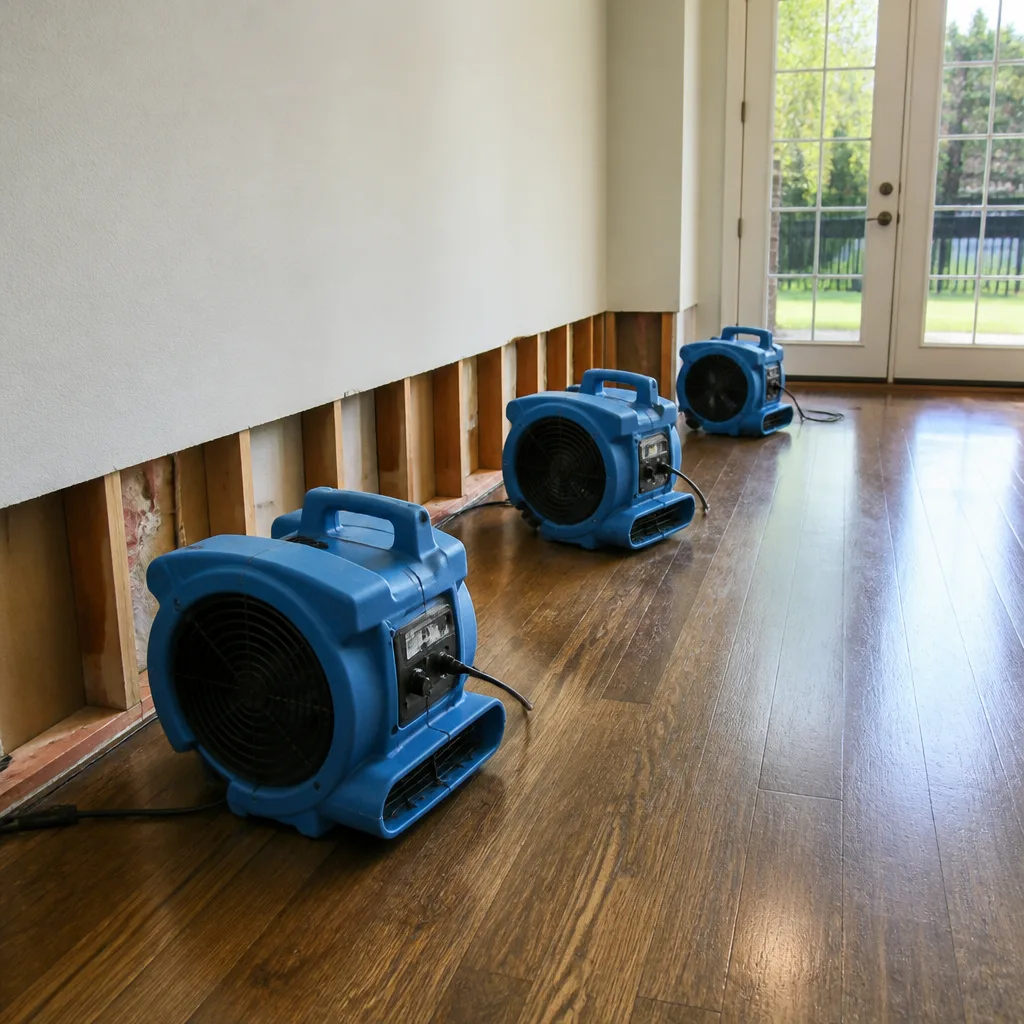
Beyond the dehumidification capacity, professional restoration deploys air movers at a specific count and placement based on square footage of affected surface area, not on gut feeling. XPOWER and B-Air blowers create the laminar airflow that converts moisture in materials back into vapor so the dehumidifiers can capture it. For water trapped in wall cavities or under hardwood, Injectidry systems pull air through the structural voids themselves using directed suction, drying the inside of the wall without cutting openings. No consumer tool approximates this. In a Victorville stucco-framed home, where exterior sheathing and interior drywall form a sealed chase, that cavity drying matters more than almost anywhere: the false-dry problem we described above lives exactly there.
Then there is the measurement. A professional job is not considered done when the floor feels dry. It’s done when moisture meters read below the target threshold across a documented grid of measurement points in flooring, walls, and structural wood. The drying record is part of the job file, and it becomes part of the insurance documentation if a claim is open. That record doesn’t exist on a DIY job. And when questions arise months later, the absence of that record is the answer.
The Insurance Documentation Problem: Why Failed DIY Voids Claims
Here is the scenario that plays out more often than insurance companies will say out loud. A Victorville homeowner has a clean Category 1 supply-line failure. They extract as much water as they can with a shop vac, run a rental fan for two days, and the carpet feels dry. They file a claim anyway, because the baseboards are warping and there’s a strange musty smell. The adjuster arrives, pulls back a corner of carpet, and finds the pad underneath soaked. The subfloor moisture meter reads 30%. There is visible mold starting at the drywall seam.
The adjuster then asks a simple question: what drying was performed? The homeowner says they ran a fan and a dehumidifier from the hardware store. The insurance carrier now has what it needs to dispute the claim under the policy’s mitigation requirements. Specifically, California homeowner policies include a duty to mitigate further damage, and when an insured party performs inadequate mitigation that demonstrably allowed the loss to spread, the carrier can deny the additional damage as caused by the homeowner’s failure rather than the covered peril. The mold growth, the warped baseboards, the drywall replacement: all of it becomes a dispute. The initial water event was covered. The spread wasn’t.
This is why professional documentation matters, and it’s why IICRC certification is meaningful beyond a marketing claim. An IICRC-certified restoration company follows a published, peer-reviewed drying standard. The daily moisture logs, the equipment placement records, the drying chamber measurements, the post-remediation clearance testing: these documents exist to satisfy insurance file requirements. When the adjuster reviews a professional restoration file, the mitigation question is closed. The drying was performed per standard. Compare that to a homeowner’s stack of rental receipts from the tool aisle. One of these files defends the claim. The other opens the claim to dispute.
Our team at Whitfield Water Damage home documents every water job to the standard that insurance carriers in California expect: photo documentation at intake, moisture map readings before drying begins, daily log updates during the drying period, and final clearance readings at completion. If you have an active claim, that file is your leverage. If you don’t, it’s your protection against future questions in a point-of-sale disclosure.
Why Mold and Fire/Smoke Are Never DIY Projects
Water is the only damage category with a legitimate, if narrow, DIY window. Mold and fire/smoke are different in kind. Here’s why.
Mold remediation: The DIY instinct for mold is usually a bleach solution and a scrub brush. This fails on multiple levels, and the IICRC S520 standard exists because surface treatment alone is a documented failure mode. First, bleach is not a registered mold remediation product at concentrations safe for household use, and its active ingredient breaks down quickly in the presence of organic matter, which is what mold is growing on. Second, visible mold is typically the smallest portion of the colony. The root structure, the mycelium, extends into the drywall, the wood fiber, the insulation. You can clean every visible speck and still have a live colony behind the wall. Third, the act of scrubbing releases spores into the air, and without containment, you just seeded the rest of the house. Professional mold remediation involves containment barriers, negative air pressure, HEPA filtration, and physical removal of materials that cannot be effectively cleaned. The Mold Remediation in Jurupa Valley work we do follows this protocol because the standard requires it, not because extra steps inflate the invoice.
Fire and smoke damage: Fire damage restoration is often misunderstood as “cleaning up after the fire department leaves.” In reality, smoke damage is chemically active for weeks. Soot particles are acidic and corrosive. They etch glass, pit metal fixtures, and permanently yellow painted surfaces if not neutralized within days. Smoke odor gets into every porous surface, and consumer odor treatments mask it briefly while failing to address the source. Professional restoration requires specialized sponges for different soot types, chemical treatments matched to the burned materials, thermal fogging or ozone treatment for odor, and often HVAC system cleaning because the furnace circulated smoke through every room. None of this is a weekend project. We cover this more fully on our Fire Damage Restoration in Jurupa Valley page.
Cost Comparison: What You Actually Pay for Professional Restoration in Victorville
A useful way to think about the DIY-versus-professional decision is to measure both sides accurately. Not the rental price, not the invoice line items, but total cost including failures.
- Typical Victorville water extraction and drying (Class 1, Category 1, small area): $350 to $750. A homeowner addressing this themselves might spend $60 on a wet-dry vac and $50 on fans, but the professional route here is often priced below the deductible on a homeowner policy, which raises the question of whether a claim even makes sense. This is the rare case where DIY is reasonable if the area is truly small and truly clean.
- Typical Class 2 water loss (carpet, pad, baseboard, lower drywall wet): $1,200 to $2,800 for professional extraction, demolition of affected materials, drying to standard, and basic reconstruction of removed drywall and base. A DIY approach on this scale typically leaves hidden moisture, and the eventual mold remediation plus rebuild runs $4,000 to $9,000.
- Class 3 or Category 3 loss (ceiling, walls, contaminated water): $4,000 to $12,000 for full restoration. There is no DIY scenario that results in a habitable, insurable, safe outcome at this scale.
- Pre-existing mold discovered after failed DIY drying: $2,000 to $6,000 for containment and remediation, depending on square footage and whether the HVAC system was contaminated. This is the most common hidden cost in the entire DIY calculus.
The financial decision isn’t “cheap route versus expensive route.” It’s “likely-cheap-and-probably-not-finished versus expensive-and-complete.” And in Victorville specifically, the false-dry climate effect means the probability of incomplete DIY drying is higher than in more humid regions where dampness stubbornly announces itself. Here, it hides.
Common Mistakes to Avoid
- Treating all water the same. A toilet supply line break and a sewage backup look similar when the floor is wet. The IICRC categories treat them as different problems with different protocols. Treating Category 3 as if it were Category 1 spreads contamination through your home and puts your family’s health at risk.
- Using the wrong kind of fan. A pedestal fan or box fan moves air in one direction with low velocity. Professional drying requires multiple high-velocity air movers positioned to create continuous airflow across the entire wet surface. A single fan aimed at one spot leaves the rest of the area to its own devices.
- Stopping when the surface feels dry. Again, the Victorville false dry. Touch is not measurement. If you didn’t use moisture meters, you don’t know whether the job is done. The materials will tell you in three to six weeks, by which point the repair cost has multiplied.
- Pulling up carpet without understanding what’s underneath. Carpet is sometimes salvageable with professional cleaning and drying. Pulling it up destabilizes the pad underneath and exposes the subfloor to contamination. Don’t remove flooring without knowing what the pad and subfloor readings are, and what the category was.
- Delaying the call to “see how it goes.” Every 12 hours of delay in a water event in a warm High Desert home moves the project one step closer to mold. The timeline is tight. The professionals’ first job is faster than the mold clock.
- Assuming insurance will cover it regardless. If you perform inadequate mitigation and the damage spreads, your carrier can dispute the spread. The claim doesn’t get denied because you tried. It gets disputed because the file shows the spread happened after a failed, undocumented drying attempt.
- Mixing DIY cleanup with professional assessment. If you plan to file a claim or call a professional, don’t tear out materials first. The damage evidence is part of the assessment. Remove movable items and standing water, sure. But don’t rip out baseboards or drywall before a professional sees them. Your insurance file depends on that record.
See the difference
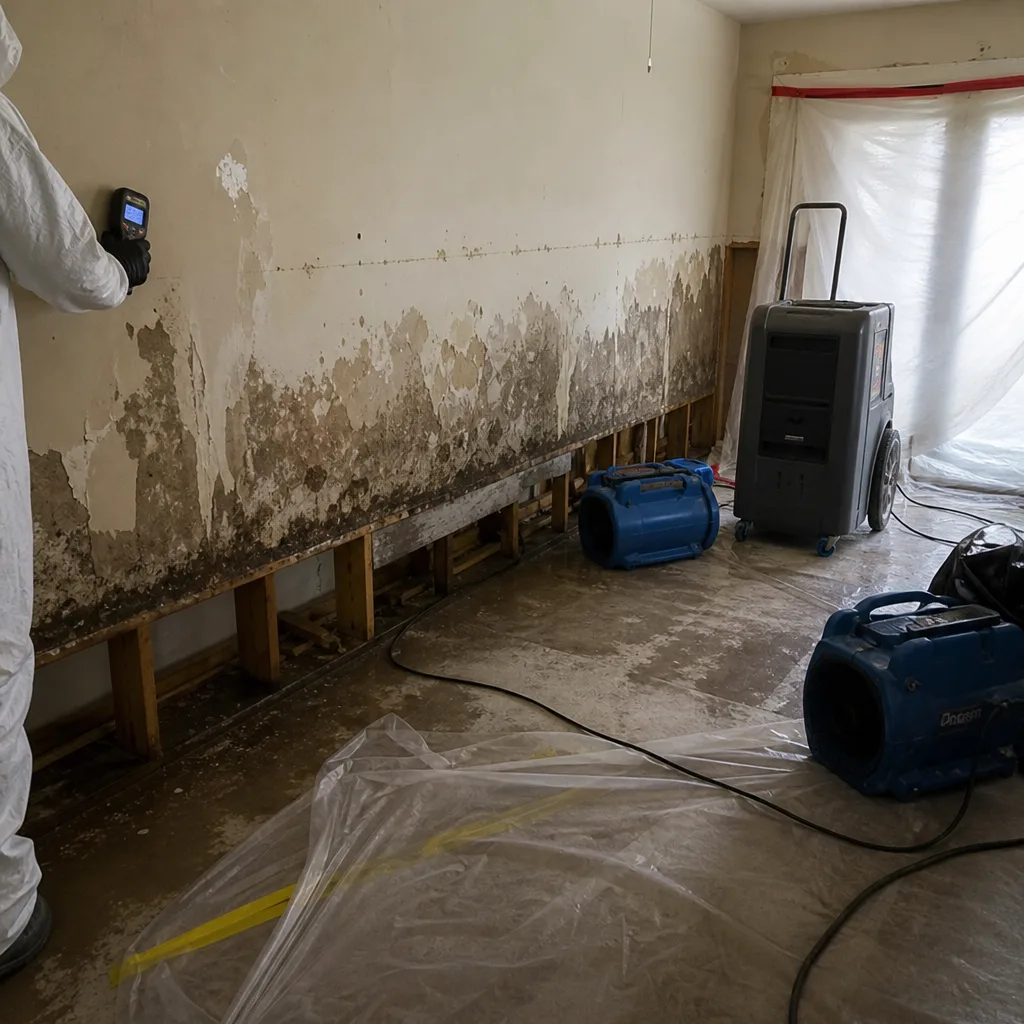 Before
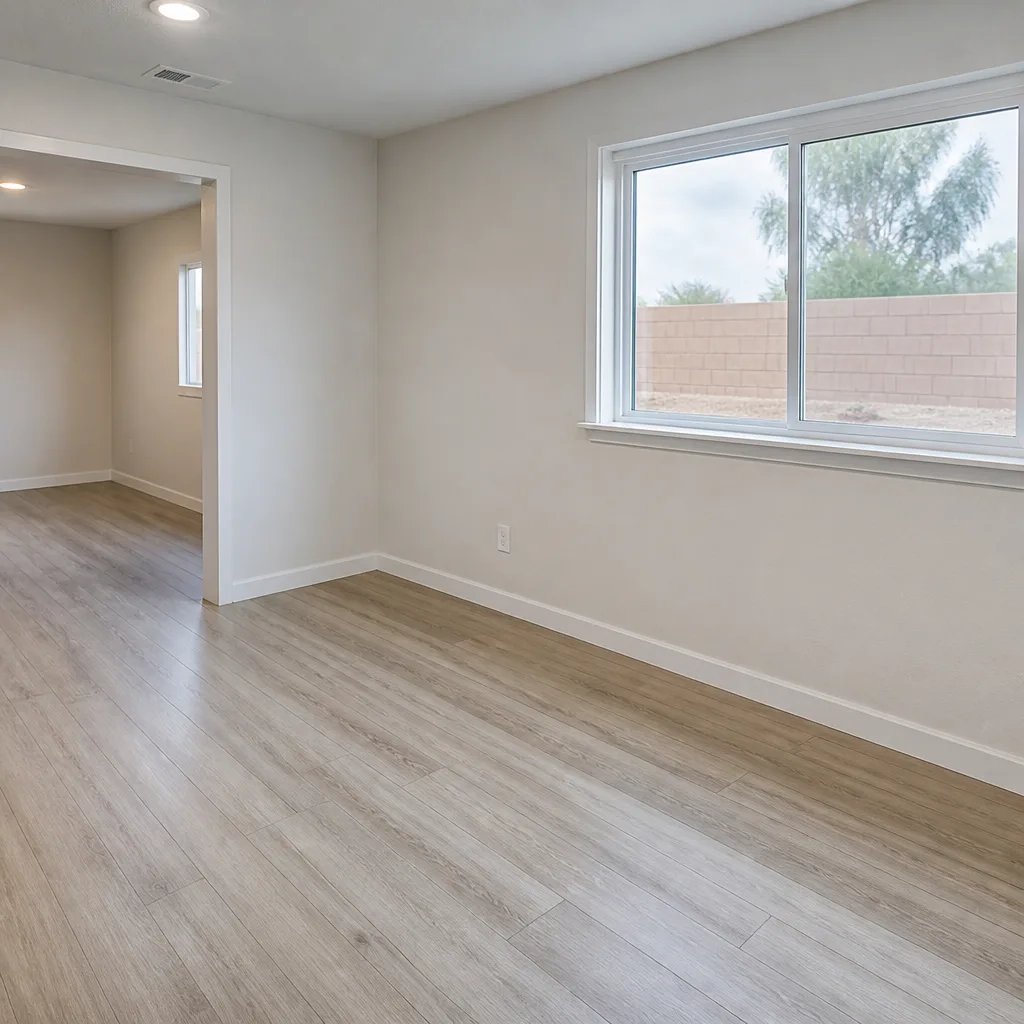 After
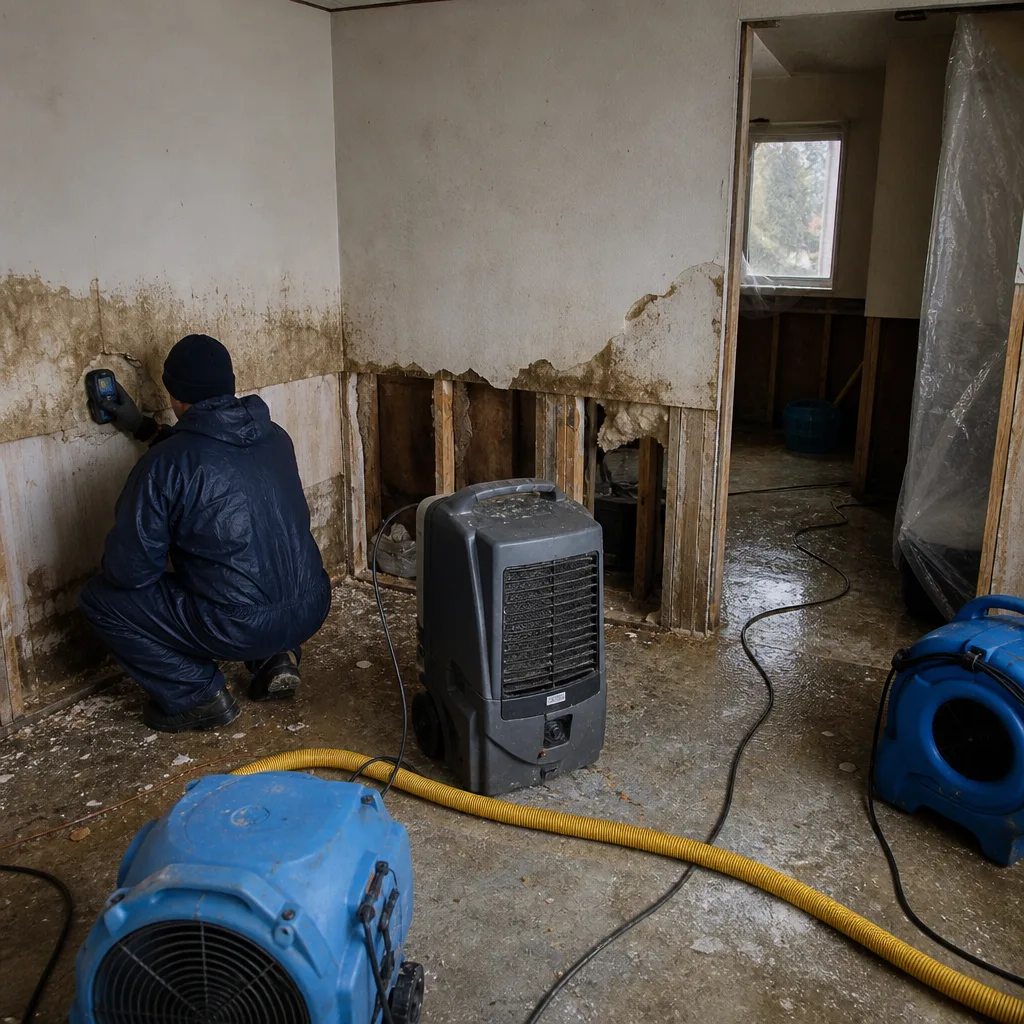 Before
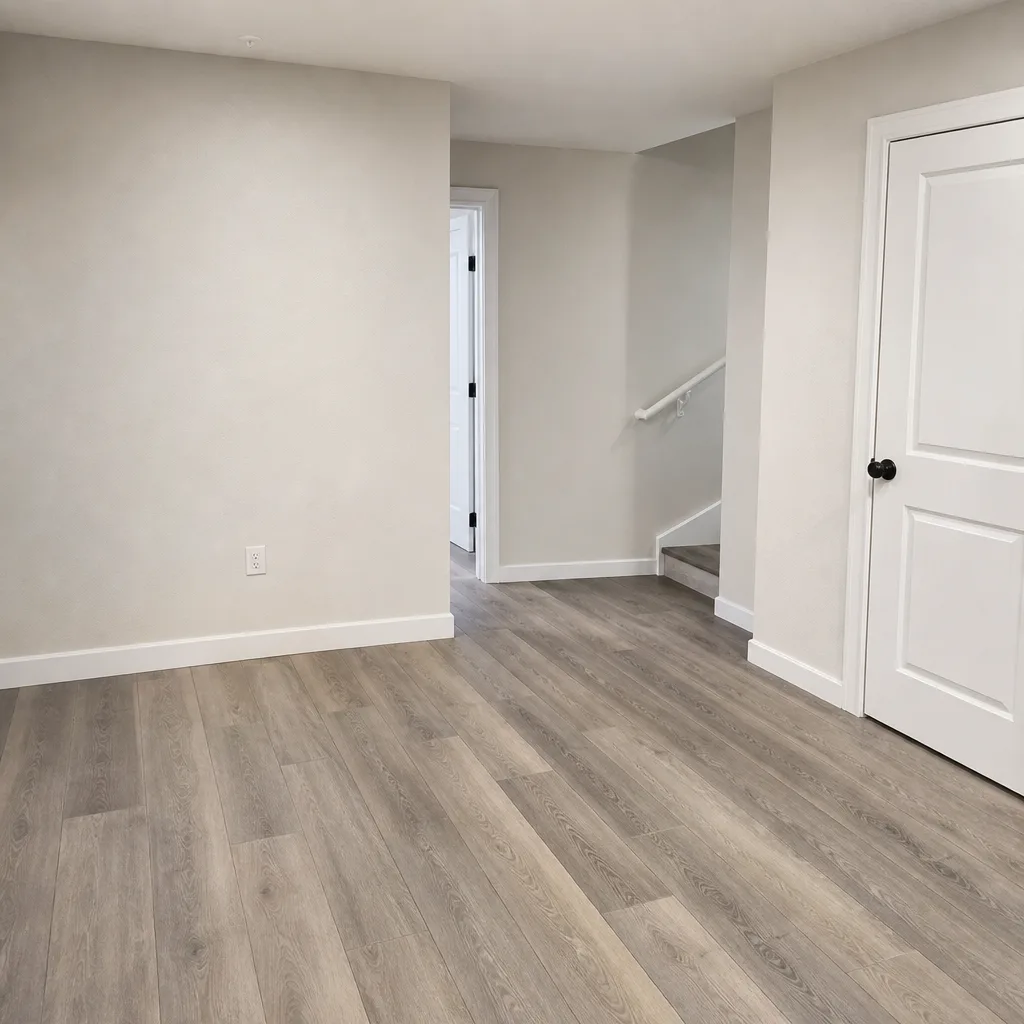 After
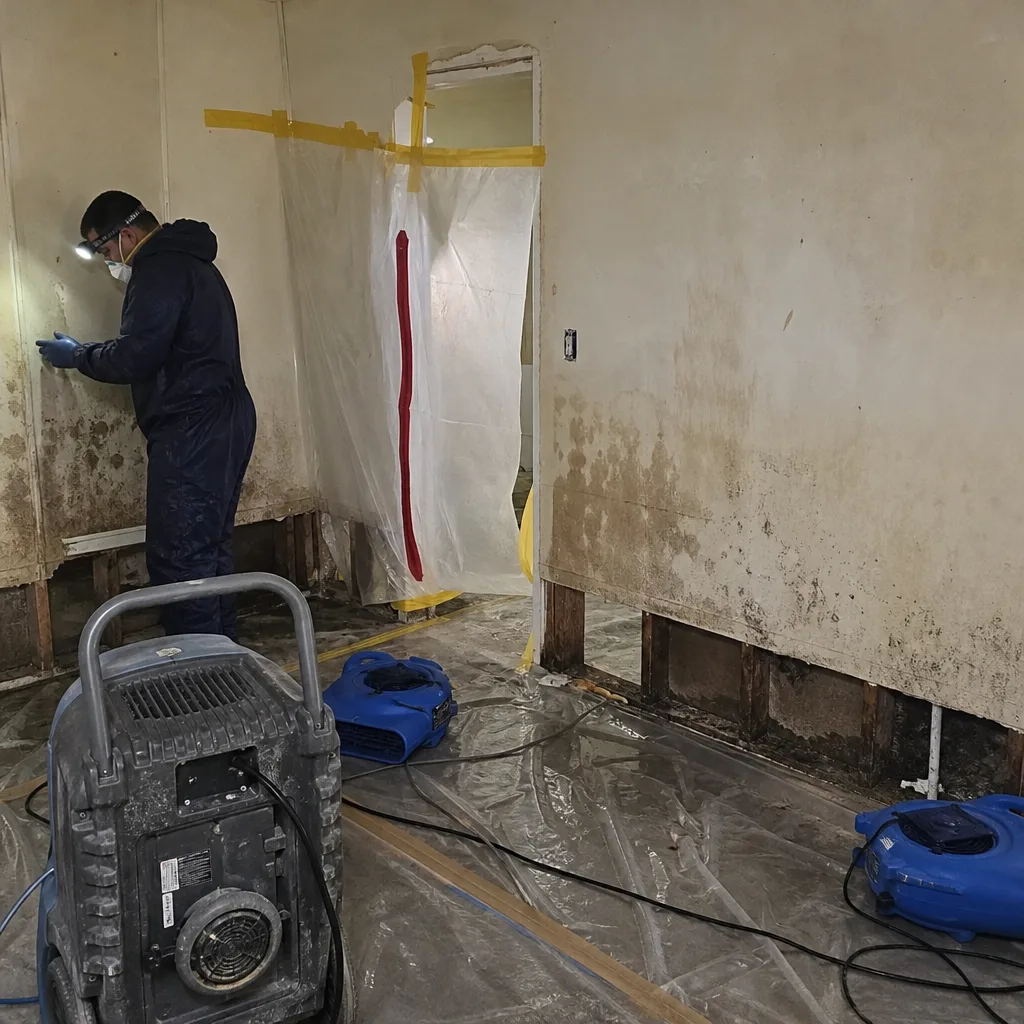 Before
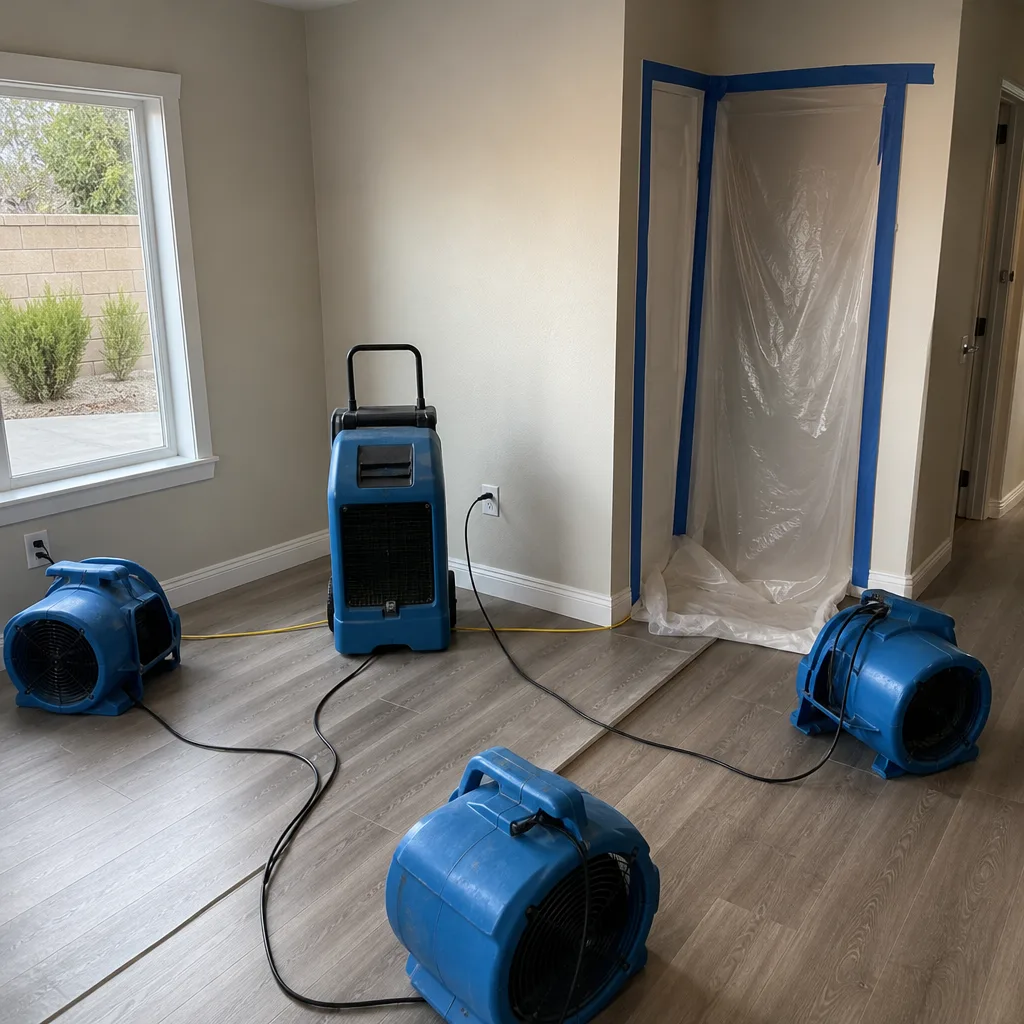 After
When to Call a Professional
The decision framework is straightforward. Call a professional if the water is Category 2 or 3. Call if the affected area includes drywall, hardwood, insulation, or any material a moisture meter would measure. Call if water has been present more than 48 hours. Call if you smell anything musty or see any visual evidence of mold. Call if you plan to file an insurance claim and want documentation that holds up under adjuster review. Call if you can’t see where the water traveled, which means: any time water reached a wall. Call if the event involved sewage, flooding, or any water from outside the house. If you’re unsure which category your water falls into, the uncertainty itself is a reason to get a professional assessment. Whitfield Water Damage offers free estimates in Victorville – call (855) 382-0478.
We’re also happy to look at water damage, mold, and fire restoration from the same certified team. No handoffs, no second vendors. For those in the neighboring areas, we work throughout the High Desert, including Water Damage Restoration in Jurupa Valley, applying the same IICRC-certified drying protocol on every job.
Frequently Asked Questions
You don’t, unless the water came from a known clean source like a supply line or a spilled glass and it has been present for less than a few hours and it only wet non-porous surfaces like tile or sealed concrete. If the water touched drywall, carpet pad, wood flooring, insulation, or any porous material, you cannot know without moisture measurement. The safe play is to treat clean, small, fast-addressed spills yourself and call for a professional assessment on everything else.
Most California homeowner policies cover sudden and accidental water damage from plumbing failures, appliance malfunctions, and storm-related intrusion. Gradual leaks, long-term seepage, and flood damage from rising groundwater are typically excluded or require separate coverage. The real question is whether your mitigation response protects the claim. Professional drying with documentation to IICRC standards does. Failed DIY drying often opens the claim to dispute on the spread of damage.
Mold colonization can begin within 48 to 72 hours under the right conditions: a moisture source, organic material like drywall paper or wood, and temperatures between 40°F and 100°F. Victorville’s summer indoor temperatures create ideal conditions, and the false-dry effect inside wall cavities holds moisture there even when the visible surfaces feel dry. If a water event is not properly dried within 48 hours, mold is a real risk regardless of how dry the floor feels.
No. Big-box rental departments stock consumer-grade dehumidifiers and air movers that are a fraction of the capacity of professional equipment such as Dri-Eaz, Phoenix, XPOWER, B-Air, and Injectidry systems. Even if you could rent professional-grade equipment, the skill isn’t the machine. It’s knowing where to place air movers, what target moisture levels to hold, when the drying is actually complete, and how to document it. The equipment without the protocol produces the same false-dry outcome with slightly more airflow.
Assuming the high desert air will finish the drying. Victorville’s low humidity evaporates surface water quickly, which creates the appearance of dryness, but the vapor re-condenses inside wall assemblies, under floors, and behind baseboards. The homeowner stops drying because the visible problem looks solved, and hidden moisture persists at mold-sustaining levels for weeks. The biggest mistake is stopping early based on what the surface feels like.
Most Class 1 and Class 2 water losses dry in three to five days with professional equipment and daily monitoring. Class 3 and 4 losses take a week or longer. The reconstruction phase, if drywall or flooring is removed, adds schedule time depending on material availability and scope. The drying phase is the critical window: it’s where the decision between restoration and demolition is made, and it cannot be rushed or skipped.
The Bottom Line
The DIY-versus-professional question in damage restoration isn’t a matter of willingness or budget. It’s a matter of classification. Clean water on a small, hard surface, addressed within hours: a homeowner can handle that. Anything else, and you’re taking on a risk that compounds hourly in the Victorville climate. The cost of professional restoration is often less than the cost of failed DIY plus the remediation that follows. And when insurance is involved, professional documentation is not a luxury, it’s the difference between a paid claim and a disputed one. When in doubt, call for a professional assessment. The estimate is free, and the clock is already running. For more guides & resources on protecting your Victorville home, visit our blog.
Written by the team at Whitfield Water Damage, serving Victorville since 2011.