
Last updated October 30, 2026
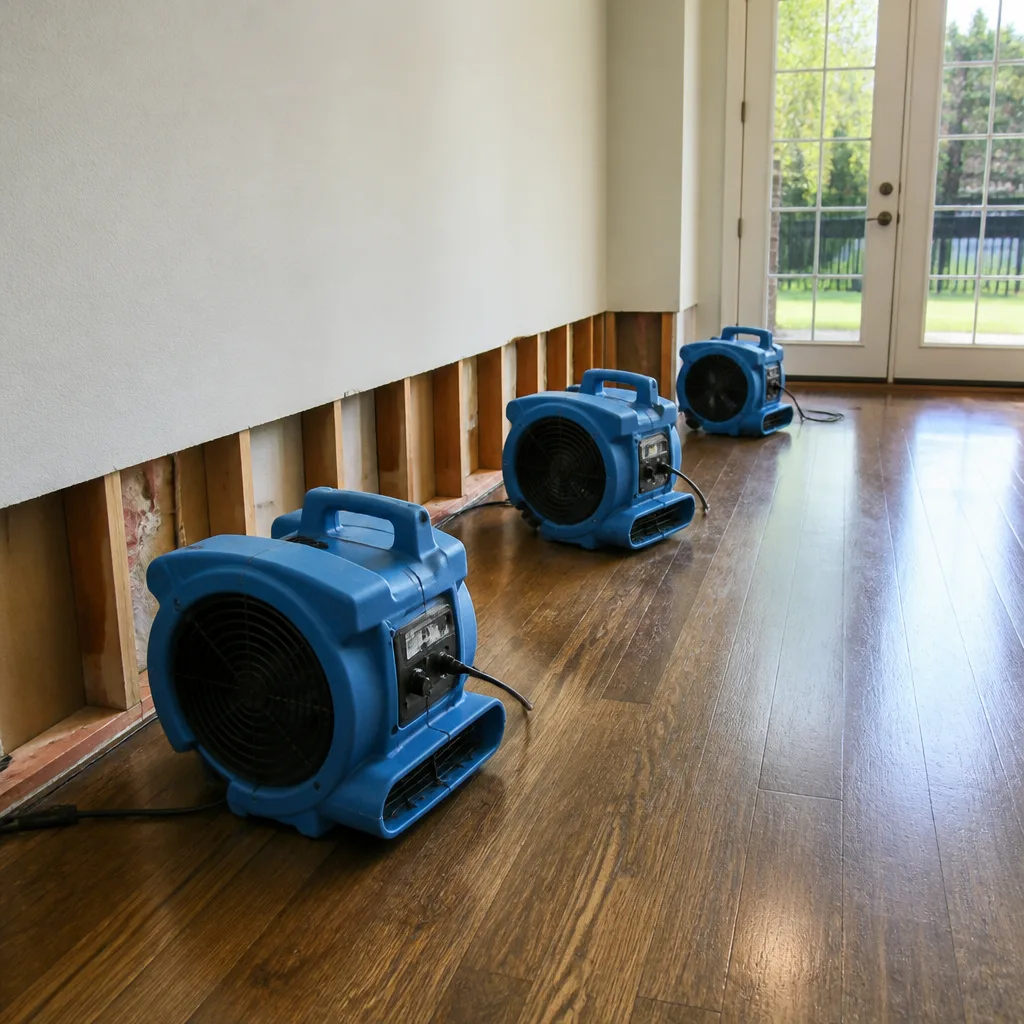 Water damage drying
 Fire & smoke cleanup
 Mold remediation
 Storm response
 Sewage cleanup
 Reconstruction
Free visual inspection and a written scope of work before any mitigation begins - photos, moisture readings, and drying logs go in your claim file
The scope we write is the scope we bill. Anything new gets shown to you, in writing, before we touch it.
Get your free estimateDamage Restoration Permits, Codes & Inspections in CA: What You Need to Know
Here’s a number that should wake up every homeowner in Victorville: a significant portion of water damage restoration jobs that involve cutting into drywall or pulling out framing materials are completed without a building permit, even though California code requires one. The contractor gets paid and moves on. The homeowner gets left with unpermitted work buried inside their walls, and that work surfaces later during an insurance claim dispute or an escrow inspection, when it’s most expensive to fix. This guide walks through exactly which restoration scopes trigger California permit requirements, how the Victorville and San Bernardino County process actually works, and how to protect yourself from contractors who treat permits as optional paperwork. For more guides & resources on protecting your home, see our blog.
Quick Answer
In California, a building permit is required for restoration work that removes or replaces structural framing, removes more than a small area of drywall, alters electrical or plumbing systems, or changes any load-bearing component. Minor cosmetic patches and surface cleaning typically don’t require a permit, but once you’re exposing wall cavities, cutting out wet drywall beyond a single sheet, or touching framing, you’ve crossed into permitted territory. In Victorville, permit applications run through the city’s Building and Safety Division, and unpermitted structural work can complicate both future insurance claims and property resale.
Restoration work we handle
Table of Contents
- What Actually Triggers a Permit in Restoration Work
- Why Restoration Contractors Skip Permits (And Why You Shouldn’t Let Them)
- The Victorville Permit Process: Step by Step
- San Bernardino County vs. City Permitting: Who Governs What
- What Unpermitted Restoration Work Costs You Down the Road
- Contractor License Requirements: Who Can Legally Pull a Permit
- Post-Completion Inspections and Your Permanent Property Record
- Mold Remediation and Fire Restoration: Where Codes Get Stricter
What Actually Triggers a Permit in Restoration Work
The California Building Code (CBC) doesn’t have a separate chapter for “restoration.” What it has is a set of thresholds that apply to any work on a structure, regardless of why the work is happening. A flood, a pipe burst, or a kitchen fire doesn’t exempt you from those thresholds, and that’s the part most homeowners in Victorville never hear until it’s too late.
Here’s the line-by-line reality:
- Drywall removal beyond one sheet. Replacing a single water-damaged sheet of drywall is generally treated as a repair and doesn’t trigger a permit under CBC Section 105.2. But once you’re pulling out two, three, four sheets, or an entire wall cavity to dry framing and insulation, you’re into building alteration territory. The City of Victorville Building and Safety Division treats multi-sheet removal as work that requires a permit because you’re now exposing the structure underneath.
- Any structural member exposure or replacement. If water has wicked into bottom plates, studs, joists, or headers, and any of that wood needs to be cut out and replaced, that’s structural alteration. No gray area here. Structural work always requires a permit in California, full stop.
- Electrical proximity. If your restoration scope involves moving, replacing, or even disconnecting and reconnecting electrical outlets, switches, or wiring that got wet, you’re now triggering electrical code requirements. Wet wiring is a fire hazard, and California’s electrical code requires that any modification be inspected.
- Plumbing modifications. If the leak source requires replacing a section of supply line or drain pipe, that’s plumbing work and it falls under separate plumbing permit requirements.
- Insulation replacement. Pulling out wet insulation and replacing it inside an exterior wall means you’re touching the building envelope. Energy code compliance comes into play here, and permits are required for insulation replacement that’s part of a larger repair.
What doesn’t require a permit: surface cleaning, antimicrobial application on accessible surfaces, dehumidification of an open room, and patching a single small hole. But here’s the trap that catches Victorville homeowners: a restoration contractor who starts with “we’ll just open a small inspection hole to check the framing” often finds the damage extends further. The hole grows. The drywall comes down. And suddenly you’re in permitted territory without anyone having filed anything.
In our experience working on Water Damage Restoration in Jurupa Valley and the Victorville area, the most common permit-triggering scenario is a slab leak that saturates a wall from the baseboard up. By the time you see the paint bubbling, the bottom six to twelve inches of drywall and the base plates beneath it are already compromised. That’s not a patch job. That’s a permit job.
Why Restoration Contractors Skip Permits (And Why You Shouldn’t Let Them)
Let’s be blunt about why this happens so often. A permit means wait time. In Victorville, plan review for a straightforward repair permit can take anywhere from a few days to two weeks depending on workload and complexity. For a restoration contractor facing a homeowner with standing water in the living room, a two-week delay sounds like career suicide. So many contractors present it as a choice: “We can start today without the permit, or we can wait two weeks with the permit while your walls keep rotting.”
That framing is false, and it’s one of the most damaging things that happens in the restoration industry.
The reality is that emergency stabilization, water extraction, and drying can begin immediately without a permit. California code and local building departments recognize the immediate need to mitigate damage. What requires a permit is the reconstruction and structural repair phase. A legitimate contractor knows how to sequence this: extract, dry, and stabilize first, then file the permit for the repair work while the drying continues. The permit doesn’t delay anything if the contractor plans properly.
Contractors who skip permits are doing it for one of three reasons: they’re not properly licensed, they’re trying to underbid competitors by avoiding permit fees and inspection time, or they simply don’t know the code well enough to know the work requires a permit. None of those reasons is a good one for you.
The most dangerous part is this: under California law, the property owner is ultimately responsible for permitting compliance, not the contractor. If a contractor completes unpermitted work on your Victorville home and then disappears, the liability sits with you. The City of Victorville can require you to tear out and expose the work for inspection, pay double permit fees, and in extreme cases face fines for work done without proper authorization. The contractor faces little practical consequence.
When our technicians scope a water damage job, the first determination after stabilization is which phase of the work requires a permit and which does not. We use IICRC-certified drying protocol to map the moisture boundary precisely, which means we don’t open walls speculatively. That precision matters for permitting: any area we open is opened because moisture readings support it, and we document exactly what was exposed and why. That documentation becomes part of the permit record when the repair phase begins.
The Victorville Permit Process: Step by Step
If your restoration work requires a permit in Victorville, here’s the actual process you’ll work through. This is the sequence we’ve walked dozens of homeowners through, and it’s worth knowing before you’re standing in a flood.
- Determine jurisdiction. Confirm whether your property is within Victorville city limits or falls under unincorporated San Bernardino County. Most Victorville addresses are city jurisdiction, but some edge properties near the Mojave River or north of Bear Valley Road are county territory. The city’s Building and Safety Division handles city permits; the county’s Land Use Services Department handles county permits.
- Obtain a permit application. Victorville’s Building and Safety Division accepts permit applications online through the Accela Citizen Access portal. You’ll need the property address, a scope of work description, and in many cases a simple floor plan or diagram showing which walls are being opened and which structural members are being replaced.
- Submit for plan review. For straightforward repair permits, plan review is typically expedited. Victorville’s building department processes repair permits faster than new construction because the scope is limited and the existing conditions are known. Typical turnaround for a restoration repair permit is three to ten business days.
- Pay permit fees. Fees are calculated based on the valuation of the work. For a typical wall cavity drying and drywall replacement job, permit fees in Victorville generally run in the low hundreds of dollars. It’s a small line item compared to the cost of the work itself, but it’s the line item that protects you permanently.
- Complete the work. The permit must be posted on the job site while work is in progress. Your contractor is responsible for requesting inspections at the appropriate stages, typically rough-in (when framing is exposed and before drywall goes back on) and final (when the work is complete).
- Request final inspection. A Victorville building inspector comes out to verify the work matches the approved scope and complies with current code. The inspector checks the framing replacement, the electrical work if applicable, and the insulation. Once passed, the permit is closed and the record is permanent.
One thing that surprises Victorville homeowners: the inspector is not your adversary. Building inspectors in San Bernardino County tend to be practical about restoration work. They know you didn’t choose this project. Their job is to confirm the work is safe and code-compliant, not to make your life harder. A contractor who warns you that “the inspector will hold things up” or “the city will make this complicated” is usually working harder to avoid inspection than the inspection itself would require.
San Bernardino County vs. City Permitting: Who Governs What
Victorville is an incorporated city, which means the city’s Building and Safety Division is the primary permitting authority for most properties within city limits. San Bernardino County Land Use Services only handles permits for unincorporated areas. This distinction matters because you can find conflicting information online, and using county requirements when you actually need city permits (or vice versa) creates delays.
If you’re not sure which jurisdiction your property falls under, the quickest check is your property tax bill or the assessor’s parcel number lookup. The APN will identify the jurisdiction. Or call the Victorville Building and Safety Division directly at the standard city offices and ask them to confirm. They’ll tell you in two minutes whether your address is in their jurisdiction.
The practical differences between city and county permitting for restoration work are modest. Both follow the California Building Code. Both require permits for structural work. Both charge fees based on project valuation. The main difference is process and turnaround time. Victorville city permits for simple repair work tend to move faster than county permits because the volume is lower and the review process is more localized.
There’s also a difference in inspection scheduling. Victorville building inspectors typically schedule within a few days of a request. County inspectors cover a much larger geographic area and can sometimes have longer lead times. If you’re doing restoration work on a county parcel, build that extra time into your project plan.
For homeowners near the edges of Victorville, around the Mojave River corridor or the areas north of the I-15 toward Oro Grande, confirming jurisdiction before you start any work is essential. It’s a five-minute check that prevents a permit from being filed in the wrong jurisdiction, which is a headache that takes weeks to untangle.
What Unpermitted Restoration Work Costs You Down the Road
Let’s put real consequences on the table, because “you might have a problem later” is too vague to change anyone’s behavior. Here’s what actually happens in Victorville when restoration work goes unpermitted:
Insurance implications. Most California homeowners insurance policies include language requiring that any repairs to the property comply with applicable law and code. If you file a future claim and the adjuster discovers prior unpermitted structural work, the carrier can deny the claim or reduce the payout. This happens. It’s not theoretical. An insurance company looking for a reason to limit a large payout will find unpermitted work and use it.
Escrow complications. When you sell your Victorville home, a buyer’s inspector may flag unpermitted work, especially if it’s visible or if there’s a permit history gap. The seller disclosure form asks directly about any work done without required permits. Lying on that form is fraud. Disclosing it means the buyer can demand a price reduction or the work be retroactively permitted before closing. Either way, it costs you.
Retroactive permitting. It is possible to get a permit after the fact, but it’s unpleasant. The Victorville Building and Safety Division can require you to expose the work so the inspector can verify it was done correctly. That means cutting open finished walls to show the framing. If the work is found to be substandard, you’re paying to have it redone. The permit fees also double as a penalty.
Contractor leverage. A contractor who did unpermitted work knows you’re in a bind. If you discover problems with their work later, you have less legal leverage because the work itself was never properly documented or inspected. A contractor with a permit trail is accountable; a contractor without one has already shown they’re comfortable operating outside the rules.
The pattern we see most often in Victorville: a homeowner has water damage, hires a low-bid contractor, the contractor rips out drywall and replaces framing without permits, and two years later the homeowner is trying to sell or file an insurance claim and the missing permit becomes the entire conversation. Our Damage Restoration Warning Signs: A Victorville Homeowner’s Reference Guide covers other red flags to watch for. That’s avoidable with one question asked early: “Will you be pulling a permit for this work?” If the answer is no, ask why. If the answer is that it’s not needed, get that in writing.
Contractor License Requirements: Who Can Legally Pull a Permit
In California, permits must be pulled by a licensed contractor with the appropriate classification for the work being done. This is where restoration work gets tricky, because different phases of the job can require different licenses.
A general building contractor (Class B license) can pull a permit for most structural repair work, including framing replacement, drywall replacement, and general reconstruction. However, Class B contractors are limited in the value of subcontracts they can take if they’re not performing the work themselves.
Electrical work requires a C-10 electrical contractor license. Plumbing work requires a C-36 plumbing license. If your restoration job includes electrical or plumbing modifications, those trades either need to be performed by the appropriately licensed specialty contractor, or the general contractor needs to manage those subcontractors under their permit.
Here’s the critical distinction for restoration specifically, and one we explore in our DIY vs Professional Damage Restoration: The Victorville Homeowner’s Decision Guide: a restoration contractor whose primary expertise is drying and remediation is not automatically licensed to perform structural repair. A company that does water extraction and drying under an IICRC methodology may not hold a Class B general building license, which means they legally cannot pull a structural repair permit. In that scenario, the proper sequence is: the restoration company handles mitigation and drying, and a licensed general contractor handles the permitted repair work. Or you work with a company that holds both the restoration certifications and the contracting license necessary to see the job through from start to finish.
When our team at Whitfield handles a water damage job from Whitfield Water Damage home base in Victorville, we’re clear about what we’re doing at each phase. Mitigation and structural drying follow IICRC protocol. Any structural repair that requires a permit is performed under the appropriate contracting license. We don’t blur those lines, because blurring them puts homeowners in exactly the unpermitted-work trap this guide is warning about.
Membership in organizations like RIA and IFA matters here because those associations require adherence to professional standards beyond the bare minimum license. A contractor who’s invested in professional accountability is less likely to cut a corner that requires fifteen minutes of paperwork.
Post-Completion Inspections and Your Permanent Property Record
When a permitted restoration job passes its final inspection, the permit is closed and the record becomes part of your property’s permanent file with the Victorville Building and Safety Division. This record is searchable and follows the property, not the owner. When you sell, the buyer’s agent or inspector can pull the permit history and see that the work was done, permitted, and inspected.
This is the documentation that proves your restoration work happened correctly. It’s the answer to the question, “Was this properly repaired?” that every future buyer and insurance company will ask. It’s also the documentation that protects you from liability if a future owner discovers something they don’t like.
Here’s what you should request from your contractor at the completion of any permitted restoration work:
- A copy of the final inspection approval from Victorville Building and Safety
- The permit number for your records
- Photos taken during the work showing what was exposed and what was replaced
- Documentation of any materials used, especially for structural components
- The moisture documentation showing the structure was dry before being closed back up
That last item deserves attention. IICRC standards specify that structural drying should reach documented dryness before reconstruction begins. A properly dried structure means mold won’t grow inside your newly rebuilt walls. Documentation of that drying demonstrates to any future reviewer that the work met professional standards. Equipment brands like Dri-Eaz, Phoenix, and B-Air air movers generate consistent, verifiable drying conditions, and the moisture readings taken before closing walls provide the permanence of record that matters.
We’ve seen homeowners in Victorville successfully resolve insurance disputes and escrow questions because they had this documentation. We’ve also seen homeowners who had none of it spend weeks trying to reconstruct what happened behind their walls. The difference was a contractor who understood that documentation is part of the job, not an optional add-on.
Mold Remediation and Fire Restoration: Where Codes Get Stricter
Permit requirements for water damage are largely about the structural work associated with drying and repair. Mold remediation and fire restoration add their own layers of code compliance, and they’re worth understanding separately.
Mold remediation in California is governed by the Toxic Mold Protection Act and related provisions of the Health and Safety Code. The California Department of Public Health has published guidance on mold remediation practices, and while there’s no separate “mold permit,” remediation work that involves removing contaminated drywall, insulation, or structural materials triggers the same building permit requirements as water damage. The mold guidance adds documentation requirements: remediation contractors must document the scope of contamination, the containment methods used, and the clearance testing that confirms remediation was successful. That documentation becomes important for future disclosure, and in a mold-sensitive transaction, its absence can be a deal-breaker.
Our work on Mold Remediation in Jurupa Valley and the Victorville area follows the same principle: any removal that crosses into structural territory goes through the permit process. Injectidry cavity-drying systems help here because they allow us to dry wall cavities and subfloor spaces without opening everything up. Less demo means less permit-triggering work, and that’s better for the homeowner in every way.
Fire restoration adds a stricter layer. Fire damage that compromises structural integrity, including charred framing members, weakened floor systems, or damaged roof trusses, requires structural permits that often go beyond a simple repair permit. The scope of a fire damage repair permit is typically more involved because the inspector needs to verify that all fire-compromised materials were identified and either replaced or reinforced. There’s also the smoke and soot remediation component, which has its own restoration standards. Our Fire Damage Restoration in Jurupa Valley experience has shown that fire jobs in California almost always involve at least one permit, and often more, because of the way fire damage spreads to structural members that aren’t visible until demolition begins.
In both mold and fire scenarios, the permit serves as your insurance that the work was done thoroughly. A contractor who skips permits on a mold job is also likely to skip clearance testing. A contractor who skips permits on a fire job may cover up charred framing rather than replacing it. The permit is the mechanism that forces the work into the open, where an inspector can verify it.
Common Mistakes to Avoid
- Believing “restoration work doesn’t need permits.” This is the myth that starts everything else. Restoration work is still building work. The permit requirement follows the work, not the reason for the work.
- Letting emergency urgency override permit compliance. Yes, water damage is urgent. Extract and dry immediately. But emergency drying doesn’t require a permit, and the repair phase that does require one isn’t delayed by proper sequencing.
- Hiring a restoration company without confirming their contracting license. Drying certification is not a contracting license. You need both for a job that involves both drying and repair, or you need two different companies working in sequence.
- Assuming the contractor “handled the permits.” Ask to see the permit. Ask for the permit number. A contractor who actually pulled a permit will show it to you. One who didn’t will deflect.
- Ignoring jurisdiction questions. Victorville city limits versus San Bernardino County unincorporated areas matter. Confirming jurisdiction is a five-minute task that prevents weeks of delay.
- Failing to document moisture readings before closing walls. If walls are closed without documented dryness, you’re sealing in whatever moisture remains. IICRC protocol requires documentation before enclosure, and that record is your protection.
- Treating permit fees as an optional expense. A few hundred dollars in permit fees is the cheapest insurance you’ll ever buy against a future that includes insurance disputes and escrow problems.
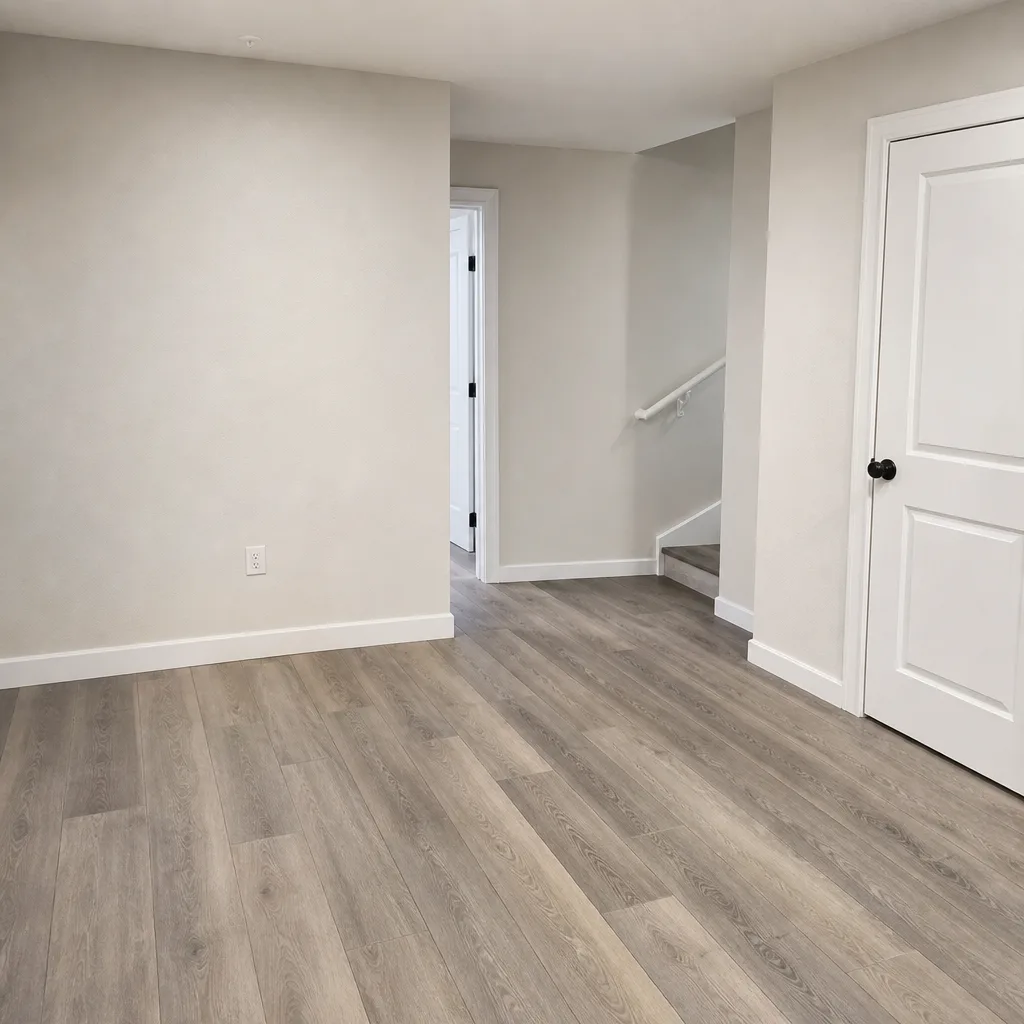
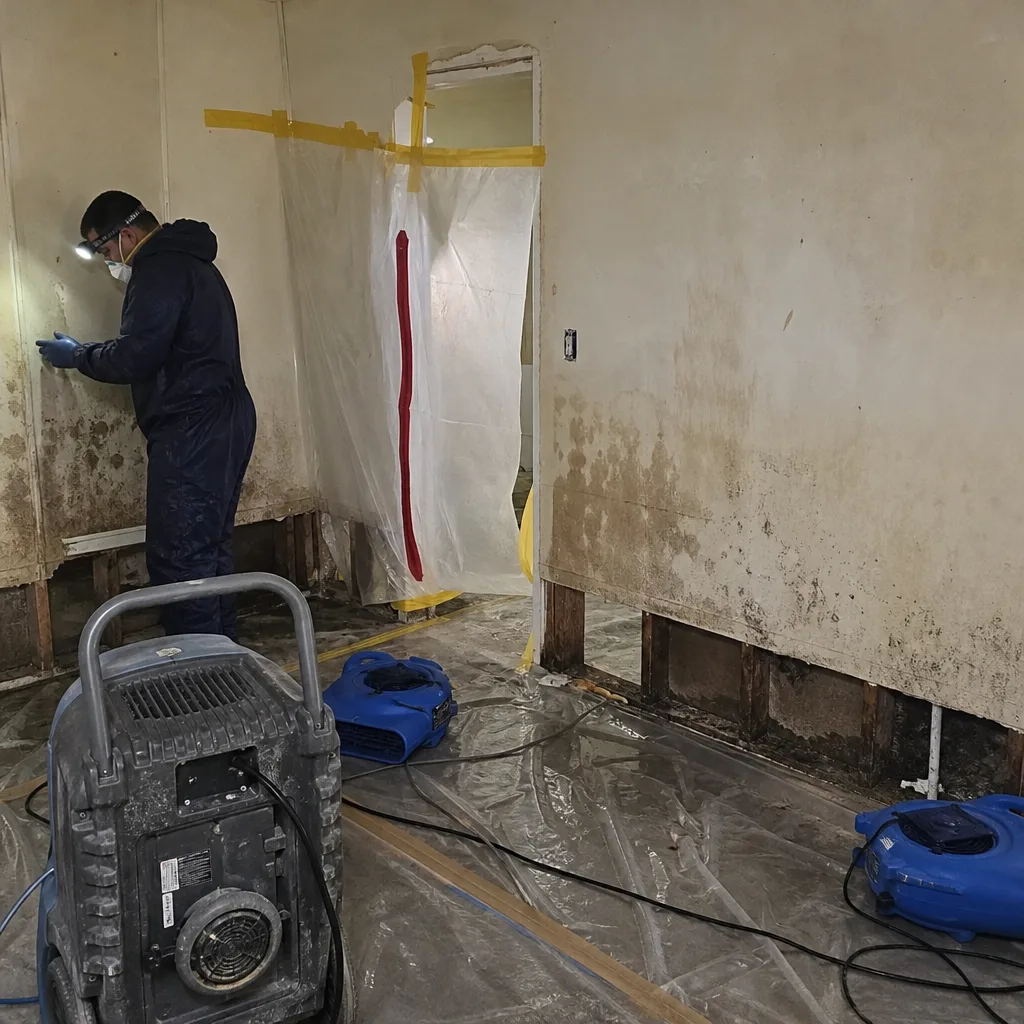
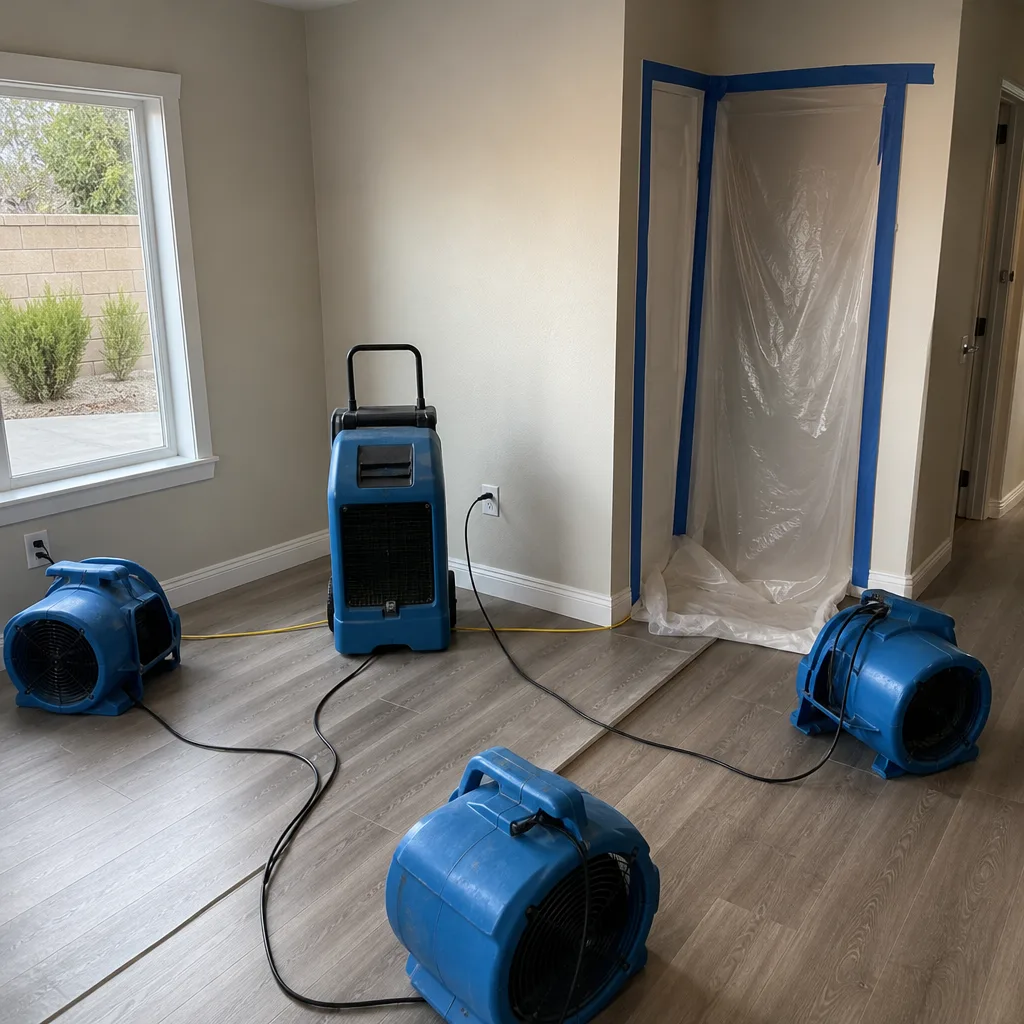
See the difference
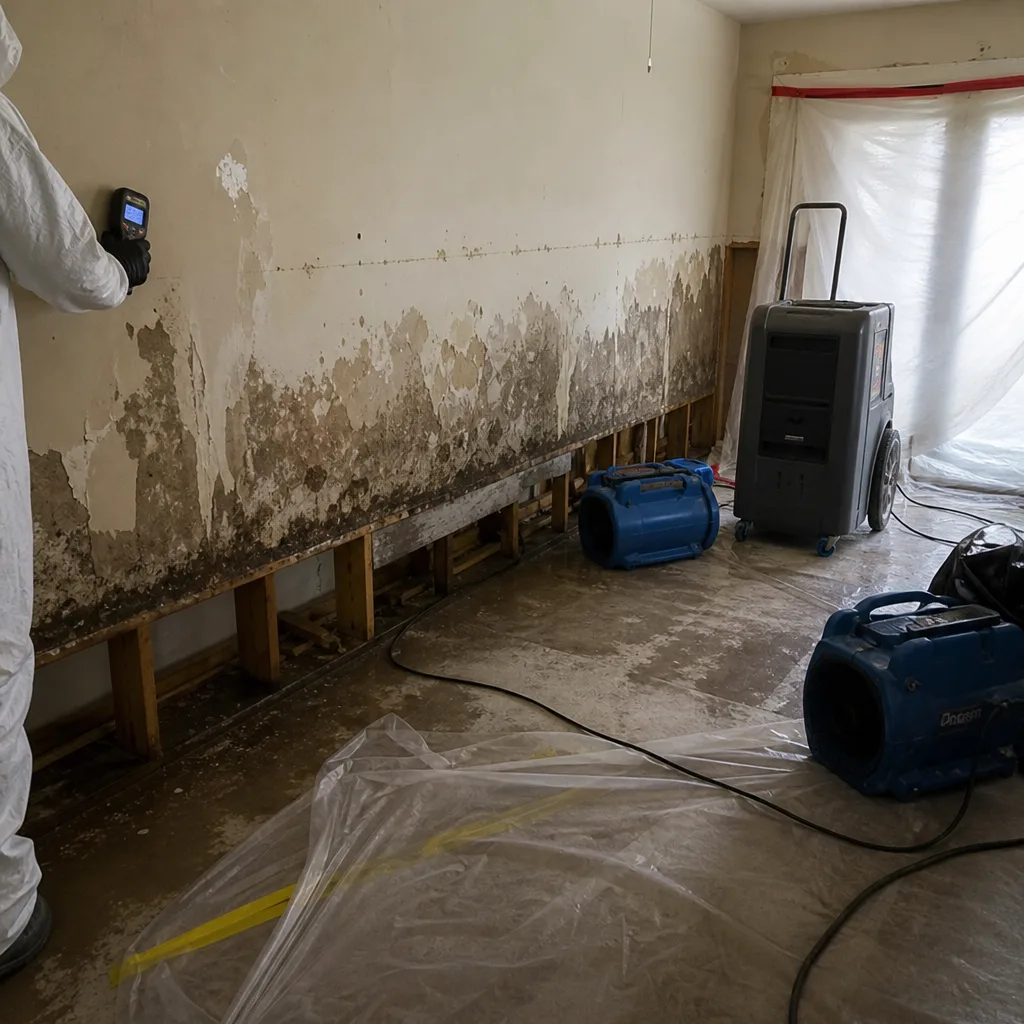 Before
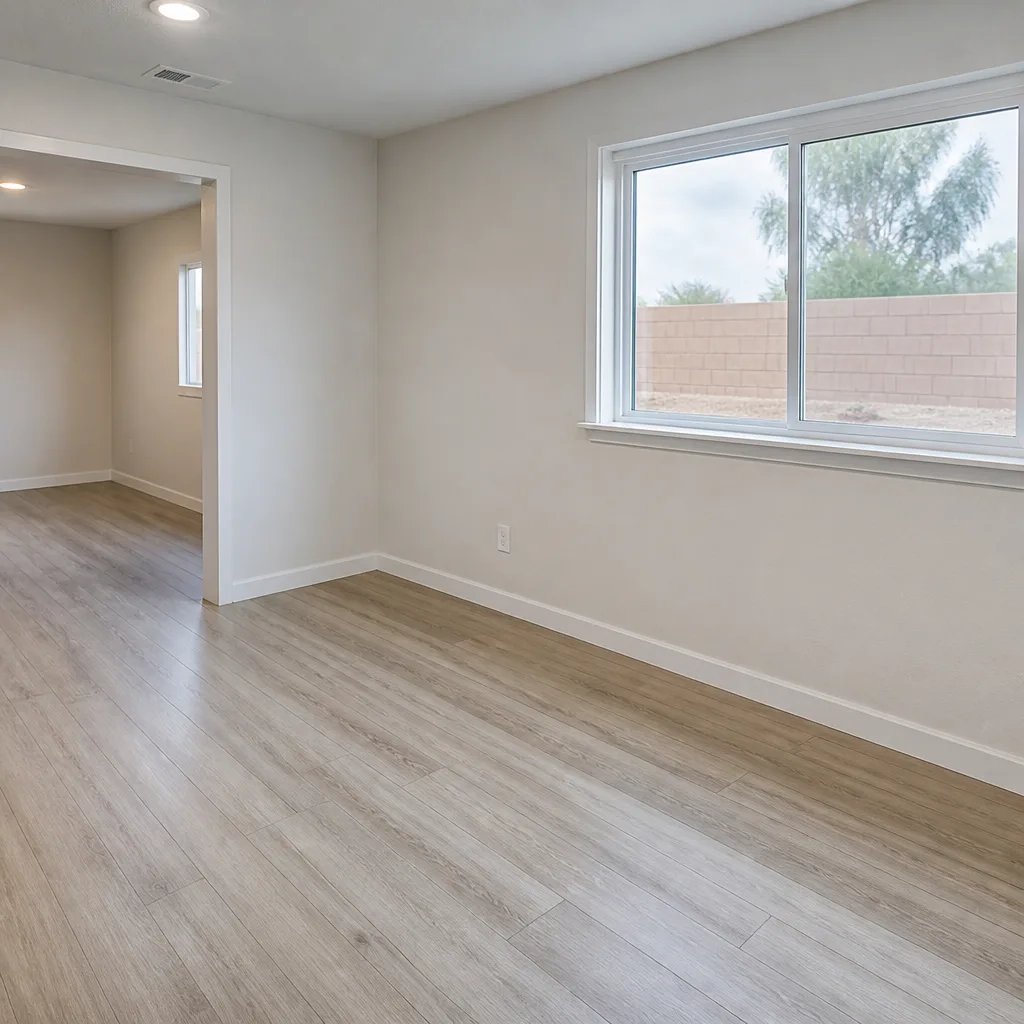 After
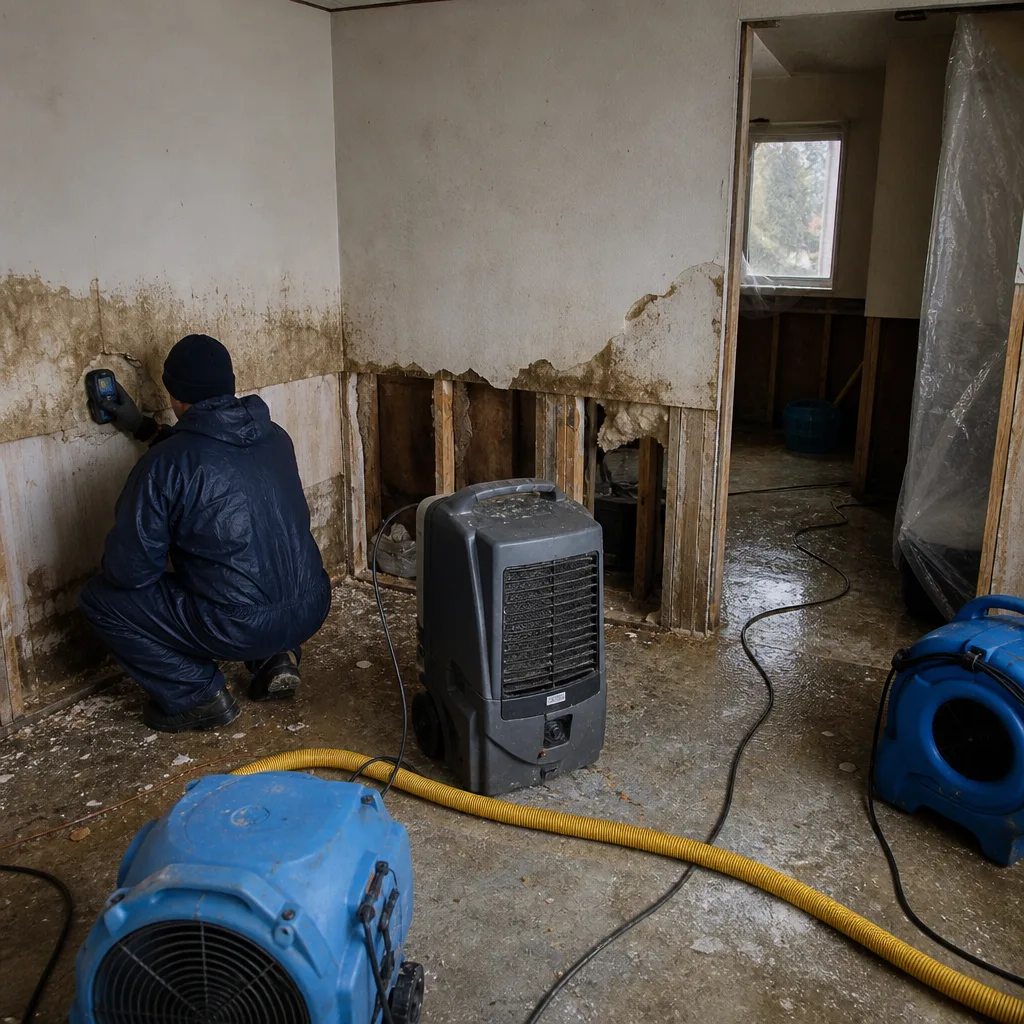 Before
 After
 Before
 After
When to Call a Professional
If you’re facing water damage that has penetrated beyond surface level, mold that extends into wall cavities, or fire damage that has compromised any structural component, you need professional help and you need it now. These are not DIY scenarios, and the permit complications are only one reason why. A trained restoration professional knows what to look for behind the visible damage, understands which work will trigger permit requirements, and can sequence the job so emergency mitigation happens immediately while permitted work processes in parallel. Whitfield Water Damage offers free estimates in Victorville and the surrounding area. Our team is IICRC-certified in drying methodology, which means we follow a documented, science-based protocol rather than guesswork. If you’re uncertain about whether your damage requires permits or professional equipment, our How to Hire a Damage Restoration Contractor in Victorville: A Step-by-Step Guide can help you evaluate options, or call (855) 382-0478 and describe what you’re seeing. We’ll tell you honestly what you’re dealing with and what the next steps should be, whether or not you end up working with us.
Frequently Asked Questions
You need a permit if the repair involves removing more than one sheet of drywall, replacing any structural framing, altering electrical or plumbing systems, or replacing insulation. Simple drying with fans and dehumidifiers does not require a permit, and neither does patching a single small hole. If walls are being opened to expose framing, that’s a permit-triggering scope.
For most repair permits, you’re looking at three to ten business days for plan review, plus the time needed to schedule and pass inspections. Emergency mitigation and drying can proceed while the permit processes, which means the overall timeline to a completed repair is typically not extended by permit compliance.
You can apply for a retroactive permit through the Victorville Building and Safety Division, but the city may require you to expose the work for inspection, and permit fees will be doubled as a penalty. Documentation of the work, photos, and material receipts will help demonstrate that the work was done correctly. If the work was done incorrectly, you may need to pay for corrections before the permit can be issued.
Most homeowners insurance policies include coverage for code upgrade costs and permitting as part of the covered repair, as long as the permit is obtained through the proper process. Unpermitted work that requires retroactive permitting is a different situation and may not be covered. Your adjuster can confirm what your specific policy includes, but legitimate permit costs on a documented claim are generally part of the covered scope.
Mold remediation triggers the same building permit requirements when it involves removing contaminated drywall, insulation, or structural materials. California also adds documentation requirements under the Toxic Mold Protection Act, including scope of contamination records and clearance testing documentation. The permit covers the building work; the remediation documentation covers the health and safety verification.
Ask for the permit number and verify it directly with the Victorville Building and Safety Division. You can call the city or check online through the Accela portal. The permit should be posted at the job site during active work. A contractor who hesitates to provide the permit number or makes excuses about why verification isn’t possible is telling you something important.
The Bottom Line
California building permits exist to ensure that work done inside your walls is safe, code-compliant, and permanent in the public record. Restoration work is no exception. The urgency of a water intrusion or fire event doesn’t suspend the code, and contractors who tell you otherwise are offloading liability onto you. In Victorville, the permit process for restoration work is straightforward, relatively fast, and inexpensive compared to the cost of the problems it prevents. Ask for permits. Verify they’re pulled. Keep the documentation. That’s the difference between a home with clean title and clean walls, and a home with hidden liabilities that surface at the worst possible moment.
Written by the team at Whitfield Water Damage, serving Victorville since 2011.