
Last updated October 30, 2026
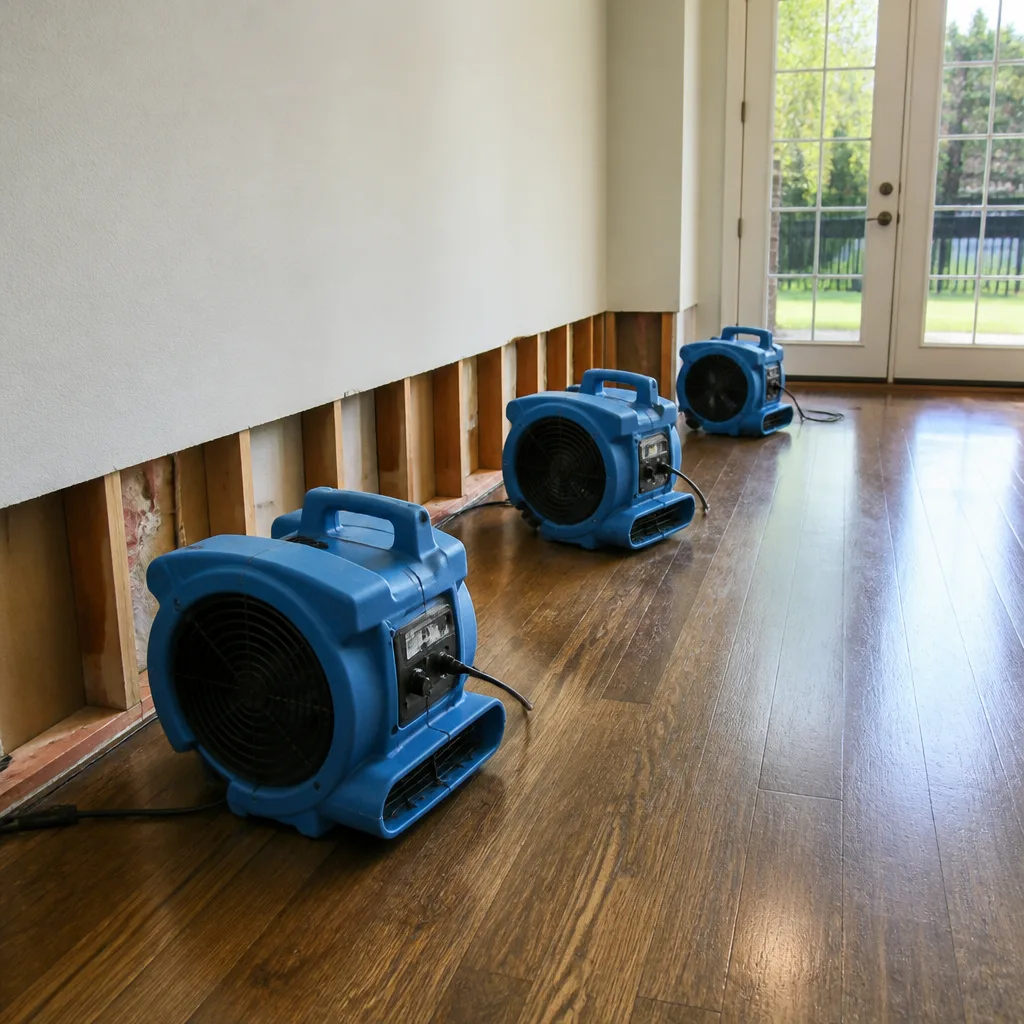 Water damage drying
 Fire & smoke cleanup
 Mold remediation
 Storm response
 Sewage cleanup
 Reconstruction
Free visual inspection and a written scope of work before any mitigation begins - photos, moisture readings, and drying logs go in your claim file
The scope we write is the scope we bill. Anything new gets shown to you, in writing, before we touch it.
Get your free estimateHow to Hire a Damage Restoration Contractor in Victorville: A Step-by-Step Guide
California’s contractor licensing database takes about two minutes to search, yet fewer than one in ten homeowners in Victorville check it before signing a restoration authorization. The result is predictable: unlicensed operators collect insurance checks for work that fails inspection six months later, and the homeowner is left paying twice. This guide gives you a due-diligence framework you can actually execute in 20 minutes, even with water spreading across your floor, and you can find Water Damage Restoration Troubleshooting: Common Problems and How to Fix Them for deeper guidance. By the end, you’ll know exactly what to verify, what to ask, and what to refuse to sign before anyone sets up a fan in your house.
Restoration work we handle
Quick Answer
Hiring a damage restoration contractor in Victorville comes down to verifying three things in real time: IICRC certification, active CSLB license status with matching workers’ compensation coverage, and liability insurance in the contractor’s name. Then you confirm their equipment list includes LGR dehumidifiers with psychrometric logging, refuse any assignment of benefits clause, and insist on a written scope of work with line-item pricing before work begins. This filters out roughly 90% of the operators who advertise restoration services in the High Desert.
Table of Contents
- Step 1: Verify IICRC Certification Before Anyone Arrives
- Step 2: Check CSLB License Status and Insurance in Real Time
- Step 3: Ask Equipment Questions That Separate Pros from Generalists
- Step 4: Understand Assignment of Benefits Clauses and What to Refuse
- Step 5: Demand a Written Scope of Work, Not an Authorization Form
- Step 6: Recognize Victorville-Specific Red Flags
- Common Mistakes to Avoid
- When to Call a Professional
- Frequently Asked Questions
- The Bottom Line
Step 1: Verify IICRC Certification Before Anyone Arrives
The Institute of Inspection, Cleaning and Restoration Certification (IICRC) is the restoration industry’s credentialing body. A technician who carries IICRC certification has completed coursework in drying science, structural remediation, and contamination protocols, then passed a proctored exam. They’re trained to follow the S500 water damage standard and the S520 mold remediation standard, which means they work from a defined process, not from intuition about where fans should point.
Here’s the thing most Victorville homeowners miss: you can verify this yourself in under five minutes. The IICRC maintains a public directory. A legitimate contractor will tell you the name of the certified technician who will actually be on your job, and you can look that person up while the crew is still in the driveway. If the person who answers the phone can’t give you a tech name to verify, that’s your first red flag.
In our experience, the certification conversation also reveals how the company operates. A real restoration firm will say “our lead tech is IICRC-certified, here’s their name.” An unlicensed operator will say “we do everything by the book” without naming a standard. The difference matters because drying a structure incorrectly creates problems you can’t see for weeks: warped subfloors, persistent odor, mold growth inside wall cavities.
Also worth knowing: IICRC certification is not a license. It’s a training credential. You still need to verify the CSLB license separately. They’re two different checks, and you need both.
Step 2: Check CSLB License Status and Insurance in Real Time
In California, any contractor performing work over $500 must hold an active license from the Contractors State License Board (CSLB). Restoration work almost always exceeds this threshold, which means the CSLB lookup tool at cslb.ca.gov should be your first stop after a loss. Type in the company name or license number and confirm three things:
- License status is “Active” – not expired, not suspended, not revoked. The database updates in real time.
- The license classification matches the work – restoration generally falls under General Building Contractor (B) or a specialty classification. If the license says “painting” and they’re offering mold remediation, walk away.
- Workers’ compensation coverage is listed – if a crew member gets injured in your home and the contractor has no workers’ comp, you can be held liable. This is not a theoretical risk. The CSLB shows workers’ comp status on the license detail page.
The two-minute search pays off. Victorville sees a steady flow of out-of-area crews who follow storms and floods across state lines. Some have licenses that are active in Nevada or Arizona but not California. The CSLB database immediately shows whether their California license is current.
Liability insurance is the second check, and it’s separate from the CSLB. Ask for a certificate of insurance (COI) directly from the contractor’s insurer, not a photocopy from the contractor. The COI should list the policy holder as the company you’re hiring, with general liability coverage appropriate for restoration work. A crew that carries a COI with another company’s name on it is a red flag worth walking away from.
Insurance matters more in restoration than in most trades because restoration crews do demolition as part of the job. They’re removing drywall, cutting away carpet, and hauling material. If they damage your door frame on the way out, you want their liability policy, not your homeowner’s deductible, to cover it.
Step 3: Ask Equipment Questions That Separate Pros from Generalists
The fastest way to identify a professional restoration crew in Victorville is to ask two equipment questions. Generalists fail both.
Question 1: “What class of dehumidifier are you bringing?”
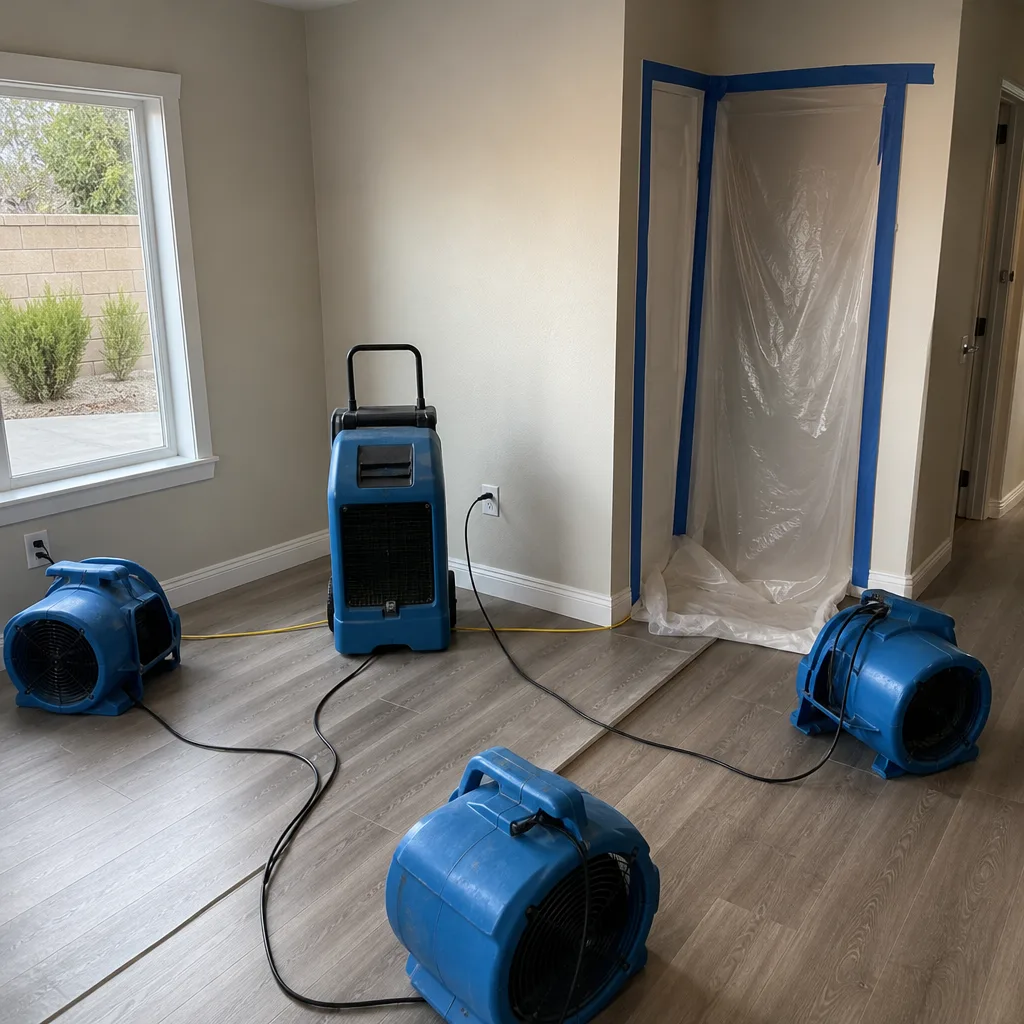
A professional water damage crew uses LGR (low grain refrigerant) dehumidifiers, typically in the 130-pint-per-day or larger capacity range. These units remove moisture down to a much lower humidity level than the residential dehumidifier from a hardware store. Dri-Eaz, Phoenix, and B-Air are the brands you want to hear. A generalist handyman will often show up with a consumer-grade unit or a standard refrigerant dehumidifier, which can’t get the structure dry enough to prevent secondary damage.
Question 2: “How are you documenting moisture levels?”
A certified restoration contractor uses psychrometric logging throughout the job. That means moisture meters, hygrometers, and data loggers that record temperature, humidity, and moisture content hour by hour. This data tells the tech when the structure has reached its drying goal, not just when it looks dry. It’s also the documentation your insurance adjuster wants to see. A crew that says “we’ll just run fans for a few days” isn’t following IICRC protocol, and that usually means you’ll be dealing with mold or odor in a few months.
One more equipment topic worth raising: cavity drying. When water gets inside wall cavities or under flooring, the fastest route to a solved problem isn’t always tearing everything out. Systems like Injectidry can push air into wall cavities and dry the structure in place, which often means less demolition and a quicker rebuild. Ask whether the contractor has cavity-drying capability. If the answer is “we tear it all out and replace it,” that’s a legitimate approach for heavily contaminated water, but for clean-water leaks, non-invasive structural drying usually saves you weeks and thousands of dollars in rebuild costs.
Our Whitfield Water Damage home page details the full equipment approach, including the drying science behind IICRC protocol, if you want to know more before you start making calls.
Step 4: Understand Assignment of Benefits Clauses and What to Refuse
An assignment of benefits (AOB) clause transfers your rights under an insurance policy to the contractor. Once signed, the contractor can bill your insurance company directly, negotiate the claim, and in some cases file suit against the insurer in your name. AOB abuse has been a persistent problem in restoration, to the point where some states have passed legislation restricting the practice. California allows AOBs but courts have scrutinized them heavily when homeowners claim they didn’t understand what they were signing.
The core risk: you sign an AOB in the middle of a stressful evening, the contractor inflates the invoice, the insurer disputes it, and you’re now locked out of your own claim. You no longer control the payout. If the contractor and insurer end up in a billing dispute, your name is on the paperwork but you have no leverage.
What to refuse to sign: any AOB that is permanent, any AOB that assigns rights for work not yet performed, and any AOB embedded in an emergency work authorization where the contractor tells you “it’s just standard paperwork.” It is not standard. In many states, contractors are prohibited from including AOB language in emergency authorizations for exactly this reason.
What’s reasonable instead: a contract that specifies you remain the party of record on the insurance claim, with the contractor documenting their work to insurance standards and communicating directly with the adjuster. A good restoration company will coordinate with your adjuster, provide photo documentation and psychrometric logs, and bill either you or the insurer directly without taking ownership of your claim. You want the contractor to work with the insurance process, not to own it. If you’re dealing with water damage specifically, our Water Damage Restoration in Jurupa Valley page explains how proper documentation supports a clean claim.
Step 5: Demand a Written Scope of Work, Not an Authorization Form
A legitimate scope of work reads like a project plan. A vague authorization form reads like a blank check. The difference is the single best predictor of how your restoration job will end.
Here’s what a real scope of work includes:
- Room-by-room assessment – each affected area listed with square footage and the type of damage observed.
- Specific equipment list – number of air movers, dehumidifiers by class and capacity, containment chambers if mold is present, cavity-drying units if applicable.
- Line-item pricing – each category priced separately: water extraction, drying, demolition, antimicrobial treatment, rebuild. Not one bundled number.
- Drying goals and success criteria – the target moisture content for each material and how it will be verified.
- Timeline – estimated duration for mitigation, then a separate schedule for reconstruction if needed.
- What’s excluded – this is as important as what’s included. A professional scope lists exclusions clearly.
A vague authorization form, by contrast, often says “perform restoration services as needed” with a signature line and a blank for your insurance policy number. That document is designed for maximum billing flexibility, not for clear project definition. If a contractor in Victorville asks you to sign an authorization with no scope attached, the right response is: “Send me the written scope first.”
The scope-of-work conversation is also where a certified contractor separates themselves. IICRC-certified techs document every stage, from initial moisture readings to daily logs to final verification. That documentation is what your adjuster uses to approve the claim, and it’s what protects you if the structure fails to dry properly. A contractor who can’t produce this documentation is guessing, and your house is the test subject.
Step 6: Recognize Victorville-Specific Red Flags
The High Desert has a few characteristics that create specific hiring risks. Victorville sits in a semi-arid climate, but when rains do come, they arrive hard and fast over hardpan soil that drains poorly. Water intrusion is often flash-flood related, which brings contaminated water and rushed decision-making. At the same time, the regional contractor market is thin on IICRC-certified firms, so homeowners under pressure often settle for whoever answers the phone.
Here are the red flags we see most often in Victorville:
- Out-of-area storm chasers – crews that appear after a major weather event, often from other states, with rented trucks and no local presence. Check the CSLB license address. If it’s not in California, be skeptical.
- Unlicensed handymen offering “restoration” – they’ll bill it as handyman work to stay under the $500 threshold, but water damage under $500 is rare. If they can’t produce a CSLB number, they’re not a restoration contractor.
- Franchise crews without local IICRC techs – some national franchise locations in the High Desert staff their crews with labor hired the week before. Ask for the name of the IICRC-certified tech who will run the job, and verify it in the IICRC directory.
- Door-to-door solicitation after a storm – legitimate restoration contractors in Victorville don’t need to knock on doors. If someone is canvassing your neighborhood after a rain event, that’s a signal to check their credentials twice.
- Cash-only or check-only payment demands – legitimate contractors invoice, accept insurance coordination, and provide documentation. A demand for cash up front is a strong signal the operator doesn’t want a paper trail.
For mold situations specifically, the stakes are higher. Mold remediation requires containment, negative air pressure, and clearance testing. A handyman with a spray bottle of bleach is not mold remediation. Our Mold Remediation in Jurupa Valley page walks through what a proper containment setup looks like, which helps you evaluate whether the crew you’re talking to actually knows the protocol.
Common Mistakes to Avoid
- Hiring before checking the CSLB database – two minutes on your phone while the crew waits outside. Skipping this is the single most expensive mistake in restoration, and it’s also the easiest to avoid.
- Signing an AOB without reading it – emergency paperwork is often presented as “standard.” It isn’t. Read every clause or have someone you trust read it before signing.
- Accepting consumer-grade drying equipment – residential dehumidifiers and box fans won’t dry structure to IICRC standards. If that’s the equipment list, you’re hiring a fan mover, not a restoration contractor.
- Relying on the insurance company’s referral blindly – insurers maintain preferred vendor lists, and those lists include quality contractors and also include contractors who discount the insurer’s costs. Verify the referral’s credentials the same way you’d verify anyone else.
- Waiting because “the carpet looks dry” – surface dryness is meaningless. Water wicks into subfloors, baseplates, and wall cavities. The moisture that matters is the moisture you can’t see, which is why psychrometric data matters.
- Treating mold as a DIY surface-cleaning problem – visible mold on drywall almost always means mold inside the wall cavity. Surface bleaching doesn’t address the reservoir, and the problem returns.
- Choosing a contractor on price alone – the cheapest bid in Victorville restoration work usually reflects what’s being left out: proper equipment, licensed techs, or insurance coverage. None of those omissions save you money.
When to Call a Professional
Some situations are genuinely urgent and some are deceptively calm. Call a professional immediately if you have standing water that has contacted drywall, insulation, or finished flooring. Call if you smell a musty odor that doesn’t go away after cleaning, or if you see staining on ceilings that reappears after painting. Call if you’ve had a fire, even a small one – smoke penetrates surfaces in ways that surface cleaning can’t address, and the proteins in smoke residue continue damaging materials over time.
Whitfield Water Damage offers free estimates in Victorville. Call (855) 382-0478 and we’ll help you assess whether the situation needs professional drying, remediation, or reconstruction – and we’ll tell you honestly if it’s something you can handle yourself.
Frequently Asked Questions
Go to cslb.ca.gov and search the company name or license number. The database shows license status, classification, workers’ compensation coverage, and any disciplinary actions. This takes under five minutes and should be done before you sign anything, not after.
A professional water damage contractor uses LGR dehumidifiers rated at 130 pints per day or higher, professional air movers, moisture meters and hygrometers for psychrometric logging, and possibly cavity-drying systems like Injectidry for wall and subfloor drying. Brands like Dri-Eaz, Phoenix, XPOWER, and B-Air are industry standards. Residential box fans and consumer dehumidifiers are not.
Most standard homeowners policies cover sudden and accidental water damage, including burst pipes, appliance failures, and storm-related intrusion. They generally do not cover gradual leaks, neglect, or flooding from rising groundwater unless you carry a separate flood policy. Your restoration contractor should document the loss with photos and moisture data to support the claim.
Generally, no. An assignment of benefits transfers your insurance claim rights to the contractor, which can lock you out of your own claim if a billing dispute arises between the contractor and insurer. Instead, keep the claim in your name and work with a contractor who documents to insurance standards and coordinates with your adjuster directly.
Structural drying typically takes three to five days for a standard residential water loss, depending on the volume of water, the materials affected, and the climate conditions inside the home. In Victorville’s dry climate, drying can complete faster than coastal areas on the surface, but concealed cavities still require monitoring with moisture meters to confirm the structure is actually dry, not just the surface—our Water Damage Restoration Maintenance Checklist for Victorville Homeowners details what to monitor.
Water damage restoration extracts water, dries the structure, and repairs the resulting damage before mold can establish. Mold remediation addresses existing mold growth through containment, removal of affected materials, antimicrobial treatment, and verification that spores have been brought to acceptable levels. They require different protocols and equipment, though a certified contractor often performs both. Fire damage is a third discipline with its own protocols.
A restoration contractor should be on-site within hours of a significant water loss. The IICRC S500 standard recognizes that damage worsens with time, and the first 48 hours are critical for preventing mold. That said, don’t let urgency override due diligence – a 20-minute credential check is worth doing even if the water is rising.
No. A handyman without IICRC certification and CSLB restoration credentials lacks the training and equipment to dry a structure properly. The work may look fine for a few weeks, then fail as hidden moisture causes warped flooring, persistent odor, or mold growth. Restoration is a specialized trade with formal standards, and the cost of doing it wrong almost always exceeds the cost of hiring a certified contractor the first time.
The Bottom Line
Hiring a damage restoration contractor in Victorville comes down to discipline under pressure. Put the phone number of a verified contractor in your phone before you need it. Check the CSLB license. Verify IICRC accreditation. Ask about LGR dehumidifiers and psychrometric logging. Refuse to sign an AOB. Demand a written scope with line items. Twenty minutes of verification separates a job done right from a job that fails inspection six months later. When you’re ready to get a real assessment, our Fire Damage Restoration in Jurupa Valley page shows the same documentation discipline we apply to fire and smoke losses, and our full Whitfield Water Damage home page covers all three restoration disciplines.
Written by the team at Whitfield Water Damage, serving Victorville since 2011. Explore more guides & resources on our blog.
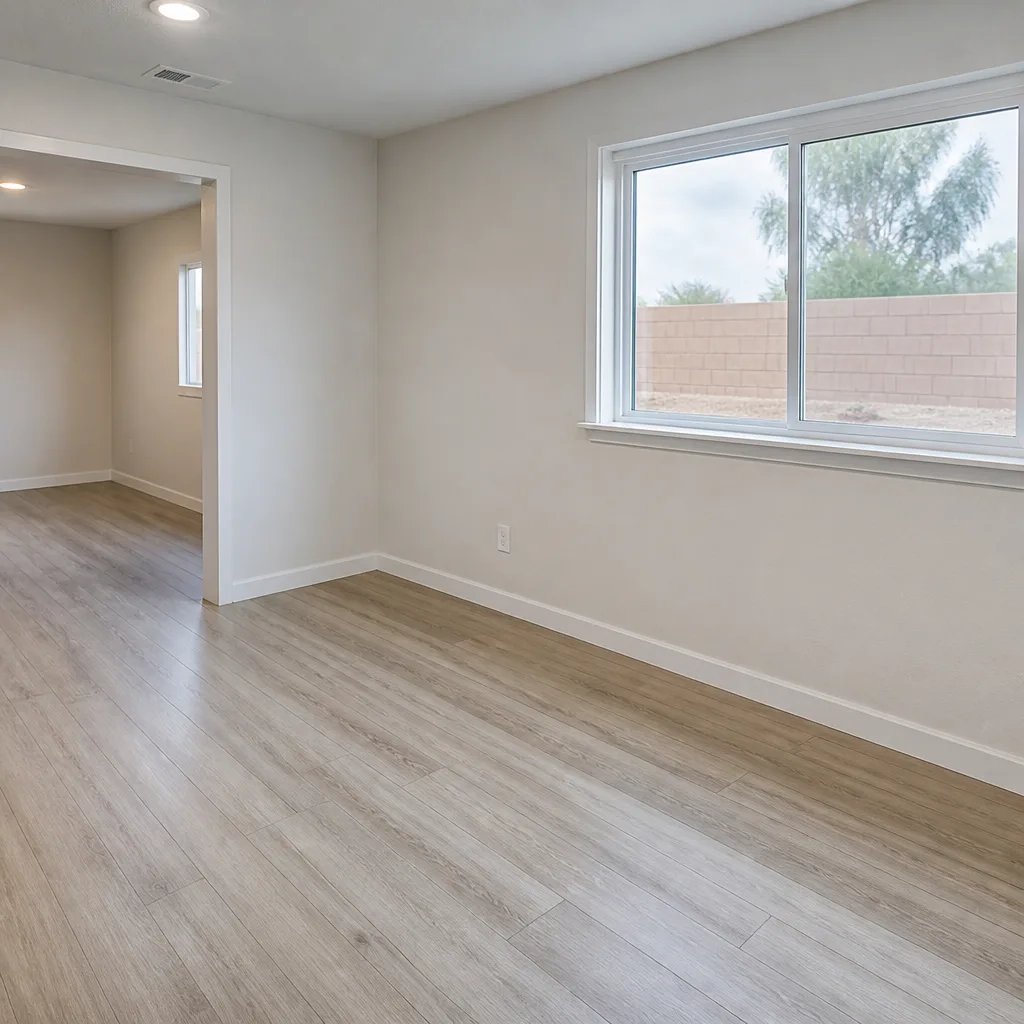
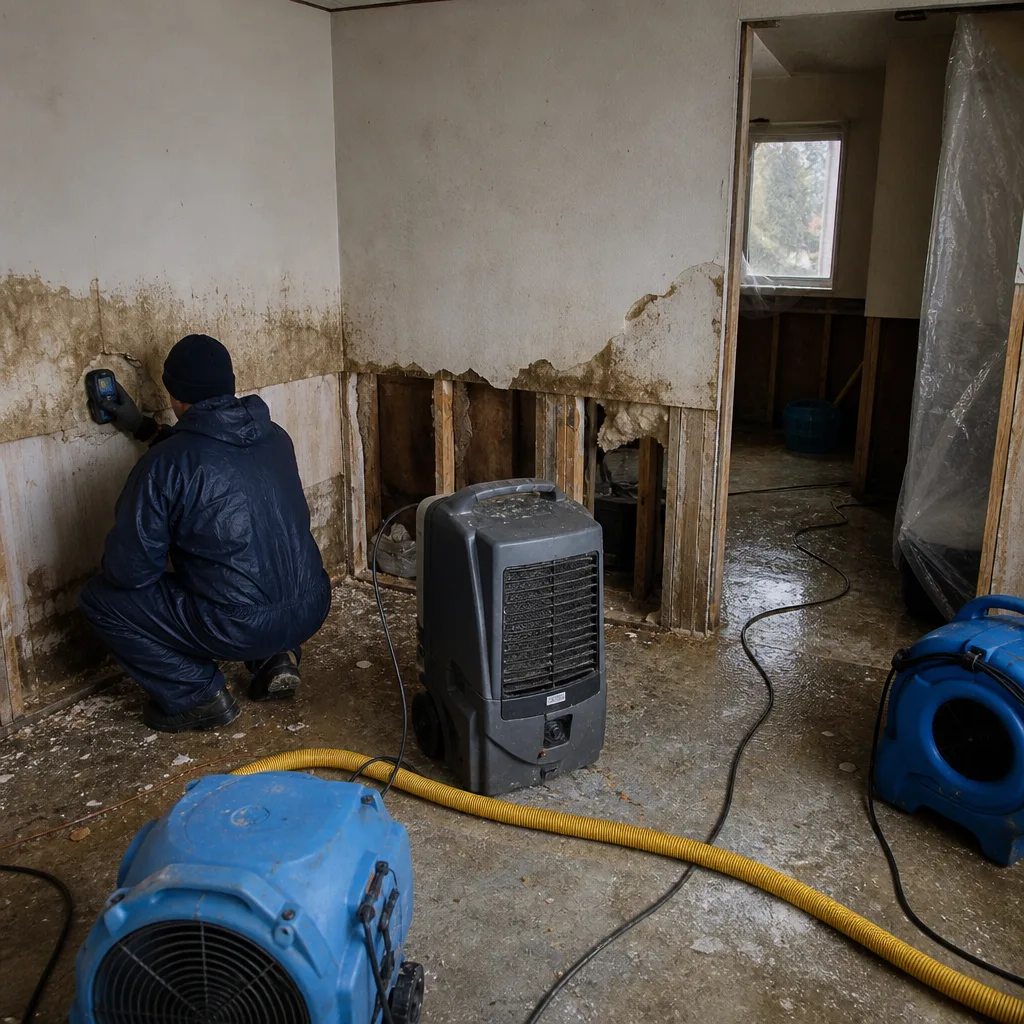
See the difference
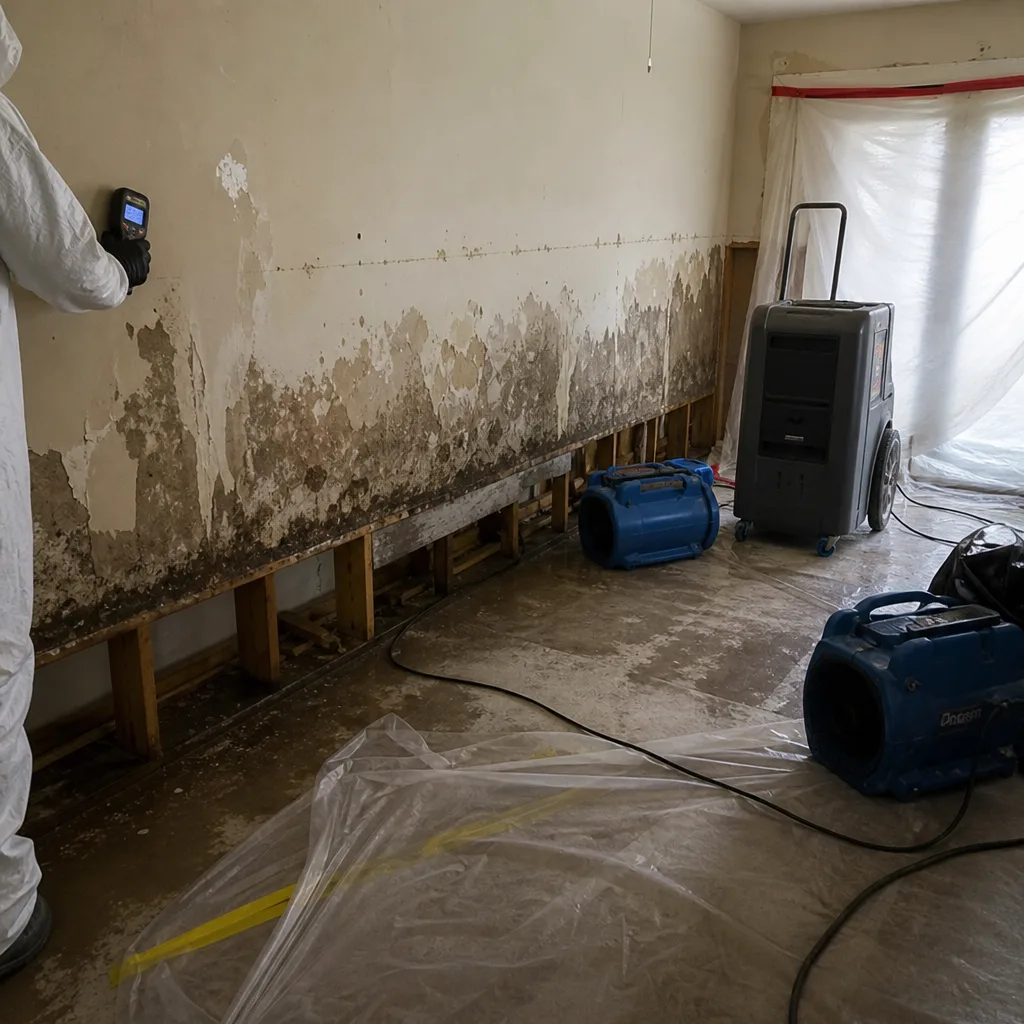 Before
 After
 Before
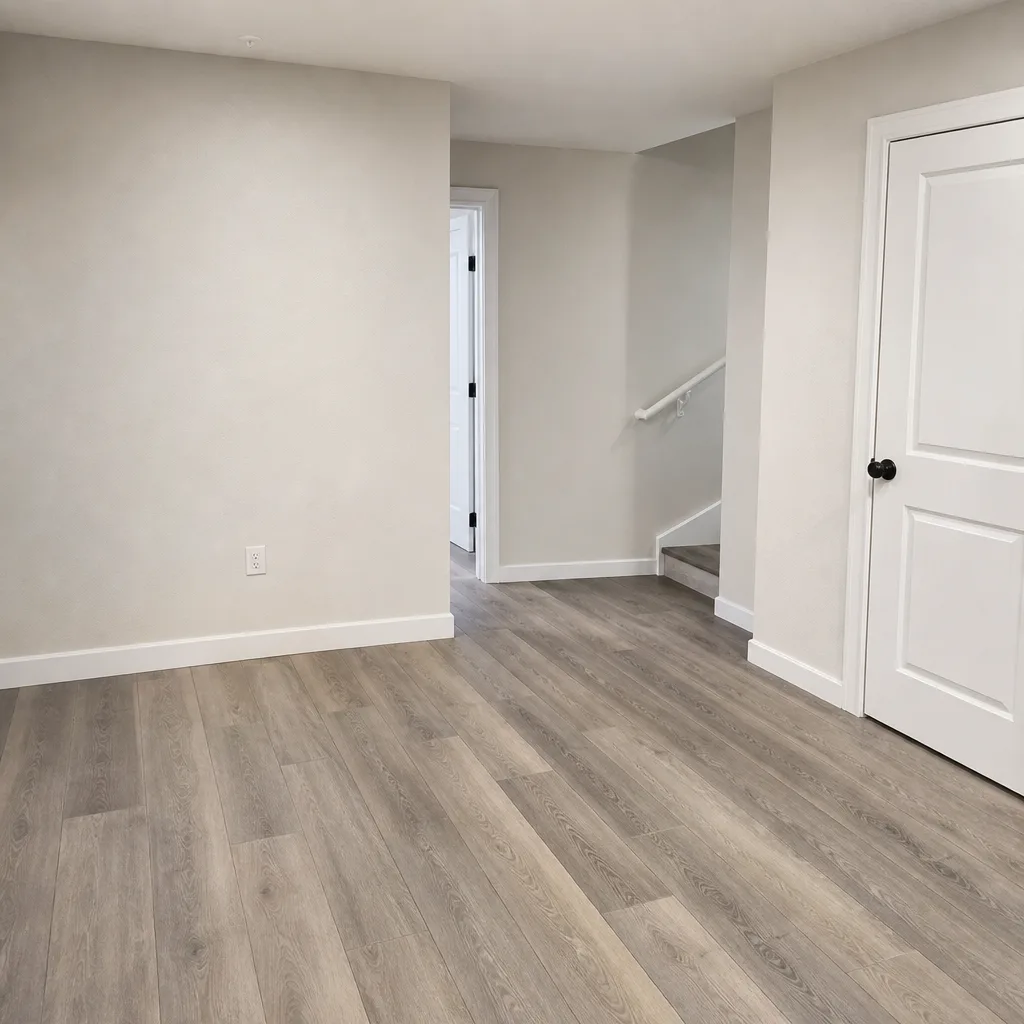 After
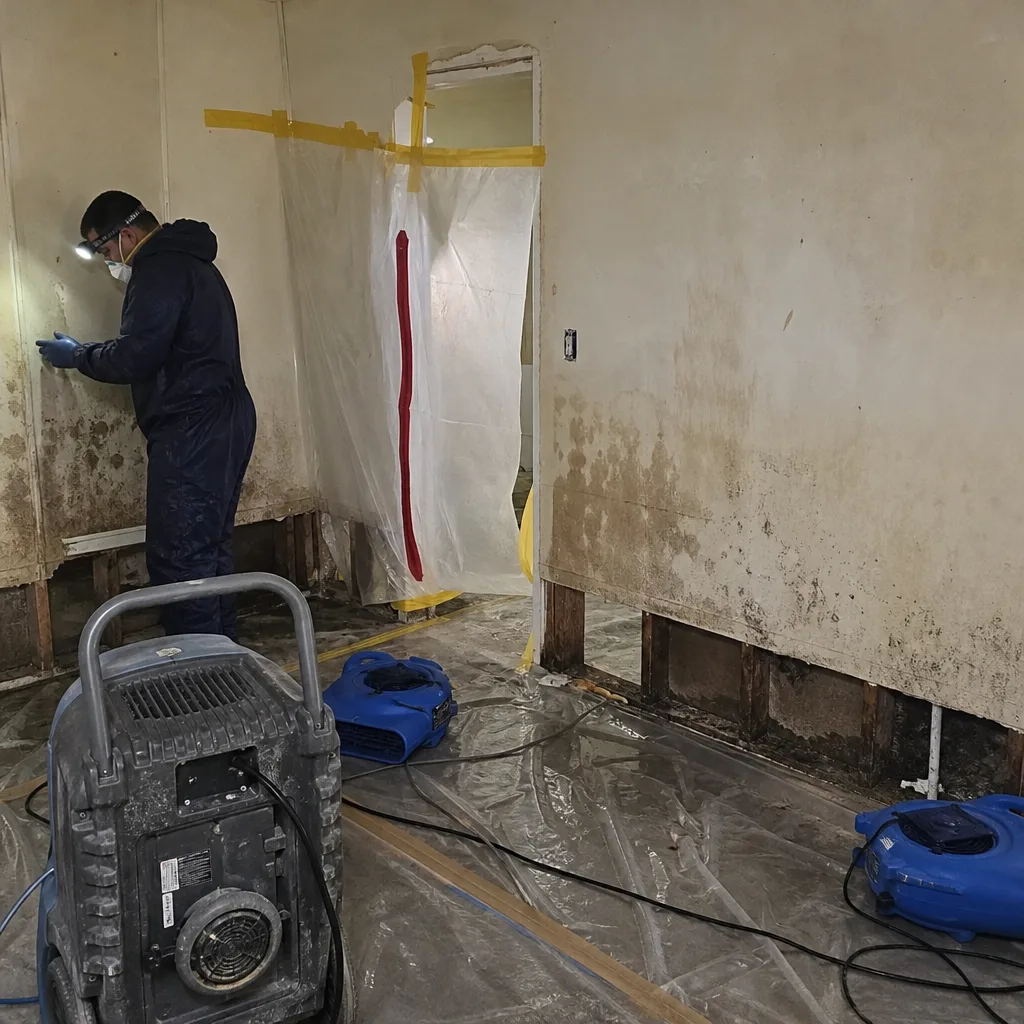 Before
 After