Last updated October 30, 2026
 Water damage drying
 Fire & smoke cleanup
 Mold remediation
 Storm response
 Sewage cleanup
 Reconstruction
Free visual inspection and a written scope of work before any mitigation begins - photos, moisture readings, and drying logs go in your claim file
The scope we write is the scope we bill. Anything new gets shown to you, in writing, before we touch it.
Get your free estimateThe Complete Water Damage Restoration Guide for Victorville Homeowners
A home in Victorville’s Mojave climate can surface-dry in 24 hours while trapped moisture inside wall cavities reads 28% on a moisture meter, well above the 16% threshold where mold colonization begins. That gap between “feels dry” and “is dry” is where most restoration failures are born. This guide explains the science behind proper water damage restoration in Victorville, what the IICRC S500 standard actually requires, why the high desert creates unique drying challenges, and the specific checkpoints every homeowner should demand before a single wall is closed up.
Restoration work we handle
Quick Answer
Water damage restoration in Victorville requires more than extracting standing water and running fans. The high desert’s low humidity creates a false sense of dryness: surfaces feel dry within a day, but hidden structural moisture inside wall cavities and under slab foundations can sit at 20-30% moisture content for weeks. Proper restoration follows the IICRC S500 standard, requires psychrometric readings with calibrated moisture meters, and should only be declared complete when moisture levels in all affected materials return to their pre-loss baseline, typically below 16% for wood framing.
Table of Contents
- Why Victorville’s Climate Deceives Homeowners
- Category 1 vs. Category 3: What Kind of Water Are You Dealing With?
- The IICRC S500 Standard Explained for Homeowners
- Caliche Soil and Slab Leaks: A Victorville-Specific Problem
- The Restoration Timeline: Phase by Phase with Checkpoints
- How to Verify Drying Is Actually Complete
- What Professional Equipment Actually Does
- Common Mistakes to Avoid
- When to Call a Professional
- Frequently Asked Questions
- The Bottom Line
Why Victorville’s Climate Deceives Homeowners
Victorville sits at roughly 2,700 feet elevation in the High Desert, where relative humidity routinely hovers between 20% and 30% for most of the year. That arid air pulls moisture from surfaces aggressively. A soaked carpet in a Victorville living room can feel dry to the touch within 18 to 24 hours after a supply line bursts. Homeowners understandably conclude the worst is over.
The problem is that surface evaporation tells you almost nothing about what’s happening inside your walls, under your flooring, or beneath your slab. Drywall, wood framing, insulation, and subfloor materials are porous. They wick water deep into their structure. When the surface dries, the interior can remain saturated for weeks, and the dry surface actually slows further evaporation by creating a barrier. We’ve pulled baseboards in Victorville homes two weeks after a “minor” leak to find insulation still dripping and framing reading 32% on a moisture meter.
This is why professional water damage restoration in Victorville relies on psychrometry, the science of how air and moisture interact, rather than visual inspection. A trained technician measures two things in every affected area: the moisture content of materials using an invasive moisture meter, and the relative humidity and temperature of the air using a thermo-hygrometer. Those readings calculate the vapor pressure differential, which determines whether moisture is moving out of the material or staying trapped. If the vapor pressure inside the wall cavity equals the vapor pressure in the room, drying stalls no matter how many fans are running. Visual dryness is not a restoration endpoint. Measured dryness is.
What the Numbers Mean
- Below 16% moisture content in wood framing: normal for the High Desert, where dry air keeps baseline moisture levels low.
- 16-20%: elevated. Drying is incomplete, and mold colonization becomes possible within days to weeks depending on temperature and material type.
- Above 20%: actively wet. Microbial growth risk is high, and structural materials are actively degrading.
- Above 28%: saturated. This is the range we see in Victorville wall cavities two weeks after a slab leak when the surface drywall reads 8% and looks pristine.
Category 1 vs. Category 3: What Kind of Water Are You Dealing With?
The IICRC S500 standard classifies water damage by contamination level, and this classification determines the entire scope of work. Misclassifying water is one of the most common errors we see in Victorville homes, and it has real consequences: either materials that should be removed get dried and sealed back up, or materials that could have been saved get torn out unnecessarily.
Category 1: Clean Water
Category 1 water originates from a sanitary source: a supply line to a sink, a water heater overflow, a broken pipe carrying potable water. In a Victorville home, common Category 1 sources include swamp cooler supply lines that split, refrigerator ice-maker lines, and supply lines under kitchen sinks. If the water is addressed within 24 to 48 hours and the materials are dried properly, most porous materials like drywall and carpet can often be salvaged. After 48 hours, even clean-water losses begin to support bacterial growth, and the classification degrades.
Category 2: Gray Water
Category 2 water contains significant contamination that could cause illness if ingested: washing machine overflow, dishwasher discharge, toilet overflow with urine but no feces. In Victorville’s older housing stock, we frequently see Category 2 losses from laundry rooms in single-story ranch homes where the washer is in a closet near the hallway. The water spreads into drywall and under flooring quickly, and by the time a homeowner notices, the 48-hour window for easy recovery has often passed.
Category 3: Black Water
Category 3 is grossly contaminated water: sewage, floodwater from outside, standing water that has supported microbial growth. In Victorville, Category 3 losses commonly result from sewer backups in older neighborhoods with aging lateral lines, or from monsoon-season floodwater entering slab-on-grade homes through door thresholds. Category 3 water requires full removal of affected porous materials: carpet, pad, drywall, insulation, and often baseboards and door casings. Drying alone is never sufficient for Category 3.
Here’s the decision tree that applies to Victorville homes specifically: if the water came from a supply line, a water heater, or a clean appliance line and was discovered within 48 hours, Category 1 drying may be viable. If the source involves a drain, a sewer, a washing machine, or outdoor water, assume Category 2 or 3 until proven otherwise. If the water sat for more than 48 hours regardless of source, treat it as Category 2 minimum. When a slab leak is involved, the water has been traveling through soil and under the foundation before surfacing, which introduces soil-borne contaminants that rule out Category 1 treatment.
The IICRC S500 Standard Explained for Homeowners
The IICRC S500 is the restoration industry’s consensus standard for professional water damage restoration. It’s not a law or a regulation; it’s a science-based reference that defines how a competent restoration should be performed. When a contractor follows IICRC-certified drying protocol, they’re not guessing. They’re applying documented procedures for assessment, extraction, drying, and verification. Whitfield Water Damage performs all water damage restoration work using IICRC-certified methods, which means every job follows the same standard an insurance adjuster would look for in a defensible claim file.
Water Loss Classes Explained
The S500 defines four classes of water loss based on the amount of water, the types of materials affected, and the evaporation load. Understanding these classes helps you evaluate whether your contractor is applying the right level of effort.
- Class 1: Least amount of water. Only a small area is affected, and the materials are low-porosity, like concrete or tile. Little or no carpet or cushion is involved. Example: a slow drip under a Victorville kitchen sink that wet a small section of vinyl flooring.
- Class 2: Significant water affecting an entire room. Carpet and cushion are saturated, and water has wicked up wall surfaces less than 24 inches. Example: a washing machine supply line burst in a laundry closet that spread across the hallway carpet and into the baseboards.
- Class 3: Greatest amount of water. Water may have come from overhead, saturating ceilings, walls, insulation, carpet, and subfloor throughout the space. Example: a supply line break in a Victorville attic that rained water down through the ceiling into multiple rooms.
- Class 4: Specialty drying situations where water is trapped in low-permeability materials: hardwood floors, plaster walls, concrete slabs, or behind cabinets. These losses require longer dry times, lower humidity targets, and specialty drying systems. Example: water trapped under a floating floor in a Victorville living room, or moisture wicked deep into structural framing behind a tiled shower wall.
In our experience, the most common class in Victorville’s single-story ranch homes is Class 2 or Class 3. The slab-on-grade construction common in the Victor Valley means water that escapes a pipe in the center of the house spreads outward under flooring in all directions until it hits an exterior wall or a bathroom dam, which creates exactly the kind of saturation pattern S500 describes as Class 3. The biggest misdiagnosis we see from cut-rate crews is treating a Class 3 water loss as a Class 1: setting up a few air movers, calling it dry in three days, and leaving hidden moisture in the wall cavities that shows up as mold six weeks later.
Caliche Soil and Slab Leaks: A Victorville-Specific Problem
Victorville sits on a layer of caliche, a hardened calcium carbonate deposit that forms a dense, nearly impermeable layer beneath the surface soil. Caliche is so hard that excavation often requires jackhammering rather than shoveling. For homeowners, this creates two water-related problems that standard restoration crews often misdiagnose.
First, caliche prevents water from draining downward through the soil profile. When irrigation water, rain, or a plumbing leak saturates the soil around a slab foundation, the water has nowhere to go. It accumulates against the slab edge and the bottom of the foundation. That hydrostatic pressure pushes water up through any crack, cold joint, or penetration in the slab. The result is moisture intrusion that looks like a plumbing leak, smells like a plumbing leak, and gets treated like a plumbing leak, when the actual source is groundwater pressure against the foundation.
Second, caliche’s hardness concentrates slab movement stress. Victorville’s clay-rich surface soil expands and contracts with moisture changes, but the caliche below barely moves. That differential creates slab stresses during our dramatic High Desert temperature swings and our brief but intense winter rains. The result is hairline slab cracks that leak during heavy rain events or when sprinklers run for extended periods near the foundation.
What this means for water damage restoration in Victorville: if you have moisture appearing in a floor with no obvious plumbing source, or if water appears seasonally, or if it correlates with irrigation cycles, ask your restoration contractor to test for hydrostatic pressure before tearing out flooring. The test involves drilling small ports through the slab and measuring whether water rises under pressure. Misdiagnosing a hydrostatic pressure issue as a slab leak leads to the wrong repair, and the problem returns after the first heavy rain. The fix for hydrostatic pressure is typically exterior drainage correction and possibly a vapor barrier, not a re-pipe.
The Restoration Timeline: Phase by Phase with Checkpoints
A proper water damage restoration in Victorville follows a structured sequence. Here’s what you should expect, with the specific checkpoints you can use to verify work is being done correctly.
Phase 1: Emergency Response and Assessment (Day 1)
- The restoration team arrives, confirms the source is stopped, and performs a safety assessment of electrical systems, structural stability, and contamination level.
- The water category is classified (Category 1, 2, or 3) and the loss class is determined (Class 1-4). This establishes the entire scope.
- A moisture map is created: the technician probes affected materials with an invasive moisture meter and records baseline readings in every affected room.
- Checkpoint: Ask to see the baseline moisture map. If a contractor can’t show you measured moisture readings, they’re operating on guesswork, not IICRC-certified drying protocol.
Phase 2: Extraction (Day 1)
- Standing water is removed using truck-mounted or portable extraction equipment. In slab-on-grade Victorville homes, extraction focuses on the lowest point of each affected room, which is often the center of the slab.
- For Category 3 water, affected porous materials are removed at this stage: carpet, pad, drywall, insulation. This is called gross removal and it’s non-negotiable.
- Sub-surface extraction follows: for wood subfloors, a weighted extraction tool pulls water from below the surface. For slab floors, extraction mats or vacuums pull water from cracks and joints.
- Checkpoint: Confirm that extraction was completed before drying equipment was placed. Running fans on standing water is a red flag.
Phase 3: Drying and Dehumidification (Days 2-4)
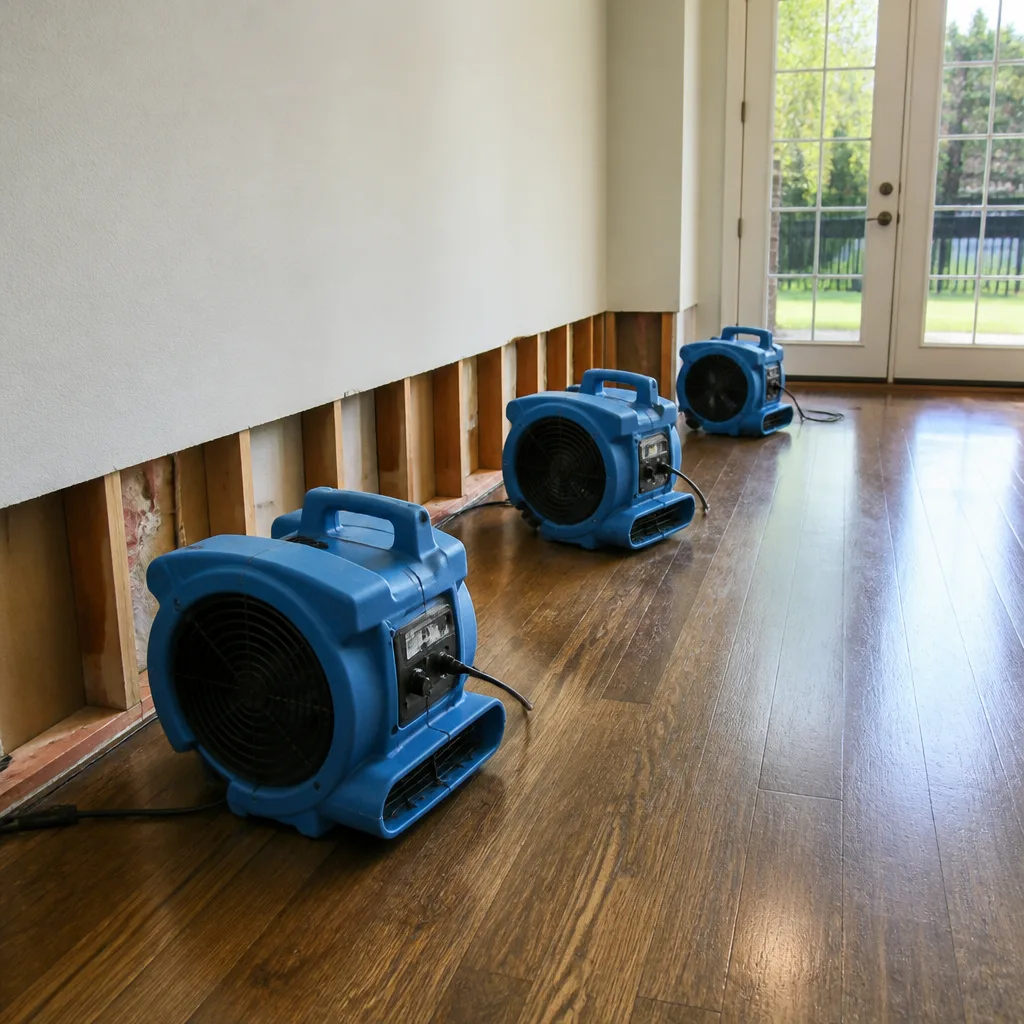
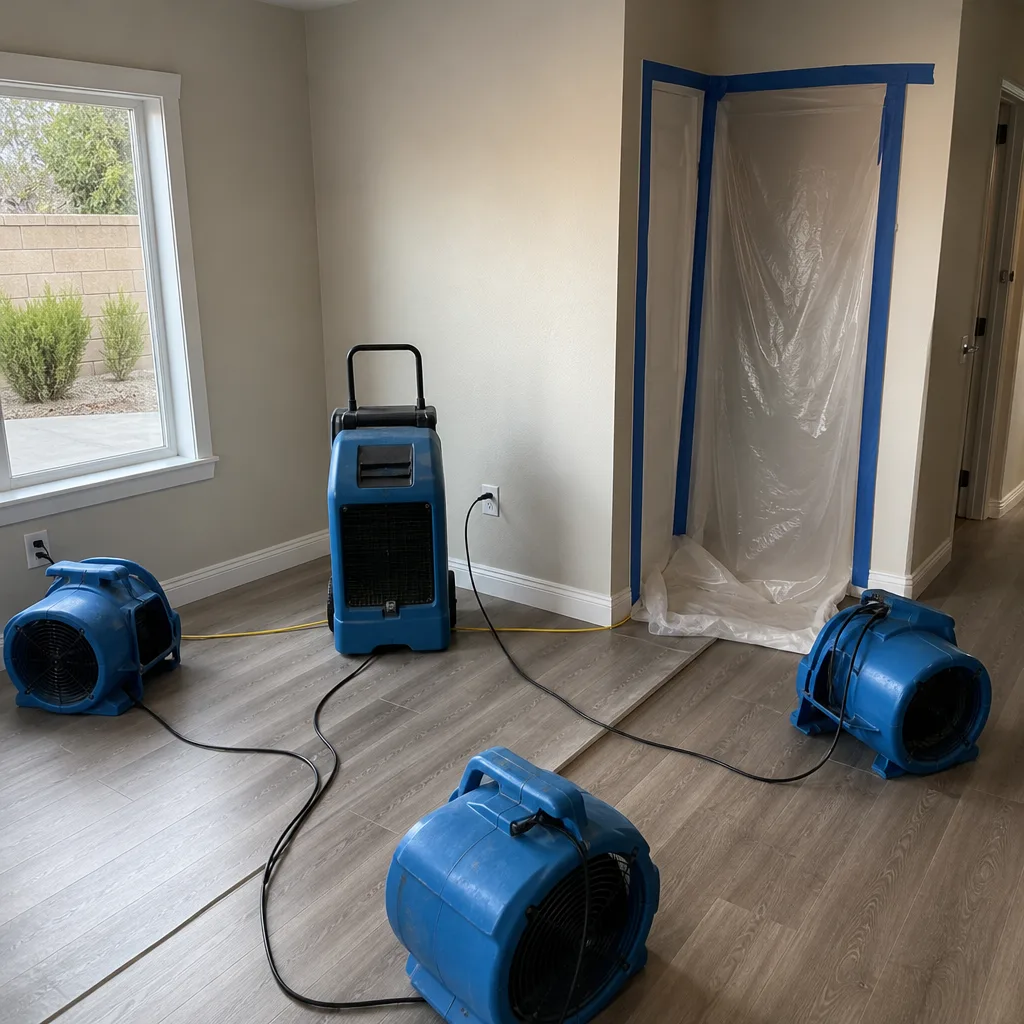
- Air movers are placed to create airflow across all wet surfaces. In a typical Victorville living room, this means 4-8 air movers strategically positioned to prevent dead-air zones.
- Dehumidifiers are sized to the cubic footage and the class of loss. In the High Desert, outdoor air is often dry enough to use for ventilation drying, but proper dehumidification is still required to pull trapped moisture from materials.
- Daily monitoring: a technician returns daily to take moisture readings, reposition equipment as needed, and track progress against the drying goal. This is where psychrometric science becomes measurable.
- Checkpoint: Ask for daily drying logs. IICRC-certified drying protocol requires progress documentation. If the contractor isn’t showing you readings that decline day over day, the drying plan is failing.
Phase 4: Verification (Days 3-7)
- Final moisture readings are taken in every material that was originally wet. The goal is a return to pre-loss moisture content, which in Victorville means typically 8-12% for drywall and 10-16% for wood framing.
- The technician compares final readings against the baseline from Day 1 and against the drying goal established at the start.
- Once all materials are verified dry, equipment is removed and the job transitions to repairs.
- Checkpoint: Require a written drying certificate or completion report with before-and-after moisture readings. This is the document that proves the work was done properly, and it’s what insurance adjusters expect.
Total timeline in Victorville: a Class 1 or 2 water loss with prompt response typically dries in 3 to 5 days. A Class 3 loss can take 5 to 7 days. A Class 4 loss with trapped moisture in hardwoods or behind tile can take 7 to 14 days. Anyone who promises full structural drying in 48 hours on a significant spill is cutting corners.
How to Verify Drying Is Actually Complete
You don’t need to be a restoration technician to hold your contractor accountable. Here are the three verification steps every Victorville homeowner should request before walls are closed, flooring is replaced, or the final check is written.
- Ask for moisture readings in writing. Before the job starts, the contractor should give you baseline readings for every affected room. During the job, they should give you daily or every-other-day updates. At the end, they should give you final readings showing every material below the drying threshold. If they can’t produce these numbers, they haven’t been measuring.
- Request the drying goal up front. A competent contractor will tell you what the target moisture content is for each affected material, based on the material type and the normal dry standard for the area. In Victorville’s arid climate, those numbers are lower than in coastal California, because baseline moisture content is naturally lower. A blanket “we dry everything to 15%” is not a proper drying goal.
- Look for visual confirmation of hidden-area access. If water got behind baseboards, under cabinets, or into wall cavities, the contractor should have created access to dry those areas: pulling baseboards, drilling small holes behind baseboard lines, or using cavity-drying systems. If the walls were never opened, never probed, and never dried from the inside, what makes them confident the cavity is dry? The answer is usually nothing.
For wall cavities and subfloor spaces, professional-grade equipment makes a measurable difference. We use Injectidry cavity-drying systems as part of our non-invasive structural drying approach. These systems pull air directly through wall cavities and under subfloors, creating airflow in spaces that standard air movers never reach. The advantage for Victorville homeowners is fewer demolition costs: instead of tearing out perfectly good drywall to expose wall cavities, Injectidry ports dry them in place. The same approach works under hardwood flooring and tile, where tear-out would be the only alternative. Non-invasive structural drying is not a gimmick; it’s the difference between paying for drying and paying for reconstruction.
What Professional Equipment Actually Does
Water damage restoration equipment falls into three categories, and each has a specific scientific job. Understanding what these tools do will help you evaluate whether a contractor is bringing real capability or theater.
Air Movers
Air movers, the high-velocity fans placed around a wet room, create airflow across wet surfaces. That airflow keeps the boundary layer of air in contact with the material from becoming saturated with moisture. In technical terms, air movers maintain a vapor pressure differential between the wet material and the surrounding air, which drives evaporation. Dri-Eaz and Phoenix air movers are common in professional fleets because they move high volumes of air at low amp draw, meaning you can run eight or ten of them on a single household circuit without tripping breakers. In Victorville homes with older electrical panels, that matters.
Dehumidifiers
Evaporation releases water vapor into the air. Without a dehumidifier, that vapor condenses on cooler surfaces, creates secondary damage, and eventually stalls drying entirely. Dehumidifiers pull water vapor out of the air and discharge warm, dry air back into the space. The S500 requires dehumidifier capacity to match the evaporation load, which is calculated from the class of loss and the cubic footage of the affected area. XPOWER dehumidifiers are a common choice for their balance of performance and portability in residential settings.
Specialty Drying Systems
Some water losses defeat standard air movers and dehumidifiers because the moisture is trapped in low-permeability materials or enclosed cavities. Injectidry systems address this by creating negative or positive air pressure through hoses connected directly to wall cavities, under cabinets, or beneath flooring. B-Air equipment serves a similar function for larger or more aggressive drying scenarios. These specialty systems are what allow restoration contractors to dry in place rather than tearing out materials, which is the single biggest cost driver in water damage restoration. The same certified team at Whitfield Water Damage uses Dri-Eaz, Phoenix, XPOWER, B-Air, and Injectidry equipment across water, mold, and fire restoration projects, because each tool serves a specific scientific purpose in the drying equation.
Common Mistakes to Avoid
- Trusting visual dryness. In Victorville’s 20-30% relative humidity, surfaces dry fast. The inside of your walls does not. Always insist on moisture meter readings, not visual inspection, before considering the job complete.
- Waiting to call because “it’s just a little water.” A slow leak under a Victorville kitchen sink can saturate the subfloor, wick into the toe-kick of cabinets, and reach the wall cavity within 72 hours. By the time you see staining, the damage is already significant.
- Using a general contractor or handyman for restoration. Proper restoration requires psychrometric measurement, IICRC-certified drying protocol, and specialized equipment. A handyman with a shop vac and a box fan cannot dry structural materials, and the mold that follows will cost far more than the drying would have.
- Running a standard household dehumidifier and calling it good. Household dehumidifiers remove a few pints per day. A professional restoration dehumidifier removes 20 to 40 gallons per day. They are not the same tool, and the job requirements are not the same scale.
- Failing to address the source before drying begins. If the leak is fixed but the slab is still hydrostatically saturated from Victorville’s caliche soil conditions, moisture will keep coming back. Confirm the source is truly addressed.
- Rushing to rebuild before verification. Closing walls over materials that read above the drying threshold is how mold problems are built into a home. A proper drying certificate with before-and-after moisture readings is your protection.
- Ignoring insurance documentation requirements. Insurance adjusters expect a documented scope of work, a moisture map, daily drying logs, and a final verification report. A contractor who can’t provide documentation makes your claim harder to process.
When to Call a Professional
You should call a water damage restoration professional immediately when: the water affects more than one room, the water came from a drain or sewer, the water sat for more than 24 hours, you can see water staining on baseboards or walls, you hear water running with all fixtures off, or you smell a musty odor that appeared after a leak. See our Damage Restoration Emergency Preparedness Guide for Victorville Homes for a full checklist. Also call if the water reached any wall cavity, regardless of how small the visible spill is. Victorville’s low humidity makes small leaks deceptively dangerous because the visible water disappears quickly while hidden moisture remains. Whitfield Water Damage offers free estimates in Victorville. Call (855) 382-0478 and we’ll assess the situation, classify the water, and give you a written scope before any work begins.
Frequently Asked Questions
Water damage restoration in Victorville typically costs between $1,800 and $6,500 for a Class 1 or Class 2 water loss that is caught promptly and dried properly. Class 3 losses involving multiple rooms or overhead water can run $8,000 to $15,000 or more. Category 3 sewage losses push costs higher because of full removal and antimicrobial treatment requirements. The biggest cost variable is whether materials can be dried in place or must be removed and replaced. Call (855) 382-0478 for an estimate based on your specific damage, and we’ll give you a written scope before we start.
Most Class 1 and Class 2 water losses in Victorville dry in 3 to 5 days with proper equipment. Class 3 losses take 5 to 7 days. Class 4 specialty drying situations, like water trapped under hardwood or in wall cavities, can take 7 to 14 days. The drying timeline depends on the class of loss, the materials affected, and how quickly restoration begins.
Insurance coverage depends on your policy and the cause of loss. Sudden and accidental damage from a burst pipe or supply line failure is typically covered by standard homeowner policies. Gradual leaks, flood damage from outside water, and sewer backups often require separate coverage or endorsements. Restoration contractors should document everything to insurance standards, including baseline moisture readings, daily drying logs, and a final verification report. Whitfield Water Damage documents every job to IICRC-certified drying protocol so your claim file is complete and defensible.
No. Household fans and consumer dehumidifiers don’t move enough air or remove enough water to dry structural materials. Water that has wicked into drywall, framing, insulation, or subfloor requires professional-grade air movers, commercial dehumidifiers, and daily moisture verification. A Victorville home’s dry air will make the surface feel dry while the inside stays wet, and by the time you realize the problem, mold has started.
Water damage restoration addresses the immediate water intrusion, extracts standing water, and dries affected materials before mold can establish. Mold remediation is the process of containing, removing, and treating microbial growth that has already colonized. In many Victorville homes, water damage and mold are connected: incomplete drying leads to mold, and mold requires its own remediation protocol. Whitfield Water Damage performs both services in-house, so the same certified team handles the entire problem from start to finish.
If you’ve fixed a plumbing leak and moisture keeps returning, the cause may be hydrostatic pressure from Victorville’s caliche soil. The hard caliche layer prevents water from draining downward, so irrigation water and rain accumulate against the slab and push moisture up through cracks. This condition is misdiagnosed as a plumbing leak all the time. A proper hydrostatic pressure test can identify the real source, and the fix is usually exterior drainage correction rather than another plumbing repair.
The Bottom Line
Water damage restoration in Victorville is a science with measurable checkpoints, not a sequence of tasks to rush through. The High Desert’s low humidity will convince you that your home is dry long before it actually is. Proper restoration follows the IICRC S500 standard, classifies the water correctly, applies the right class of drying strategy, and verifies completion with moisture meter readings before walls are closed. Insist on documentation, question visual inspection, and understand that Victorville’s caliche soil creates unique foundation moisture problems that require experience to diagnose. When water invades your Victorville home, the gap between “looks dry” and “is dry” is the difference between a $2,000 drying bill and a $15,000 mold and reconstruction project. Choose a certified restoration team that documents every step, and explore more guides & resources to protect your home. Whitfield Water Damage has served Victorville and the surrounding High Desert communities since 2011, and we offer free estimates. Call (855) 382-0478 to speak with a certified technician today.
If you found this guide helpful and are looking for water damage restoration in a neighboring area, see our guide on Water Damage Restoration in Jurupa Valley. For information on related services, read about Mold Remediation in Jurupa Valley or Fire Damage Restoration in Jurupa Valley. You can also learn more about our full-service approach at the Whitfield Water Damage home page.
Written by the team at Whitfield Water Damage, serving Victorville since 2011.
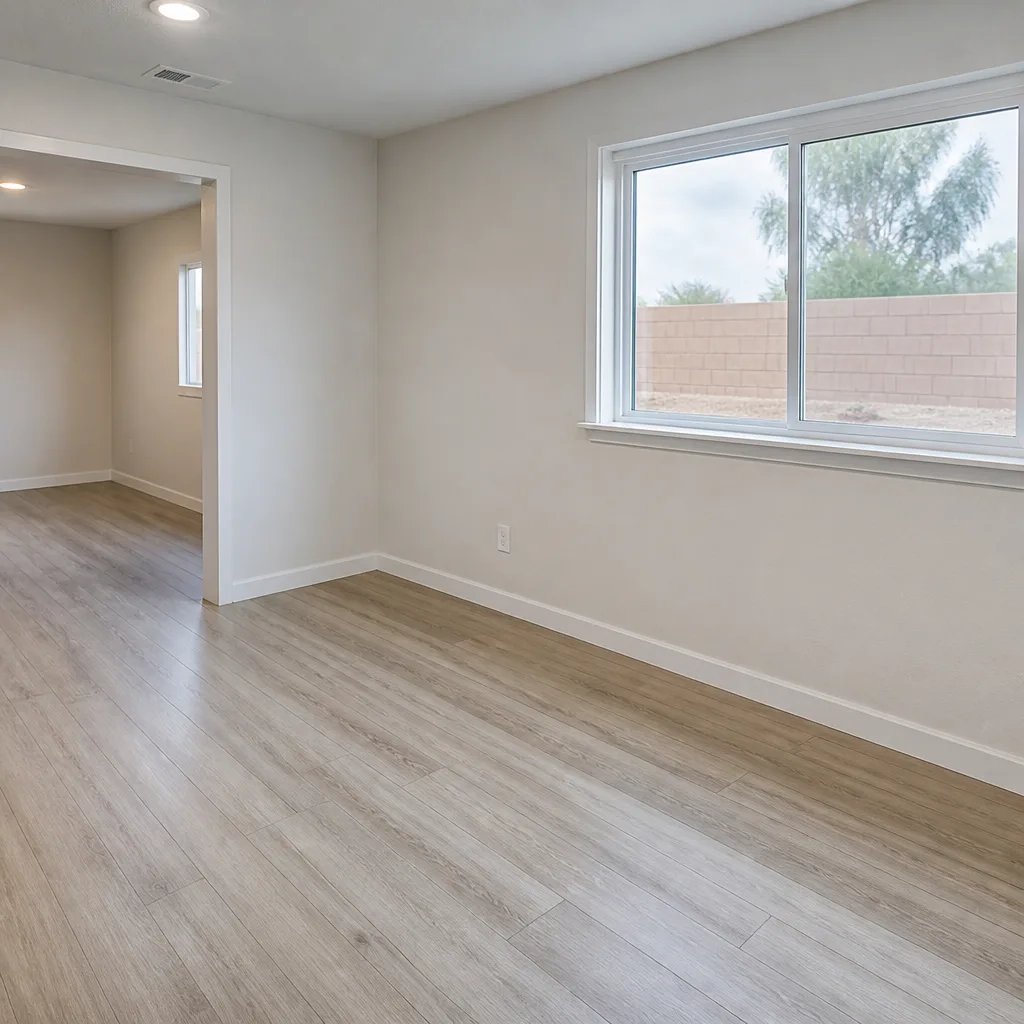
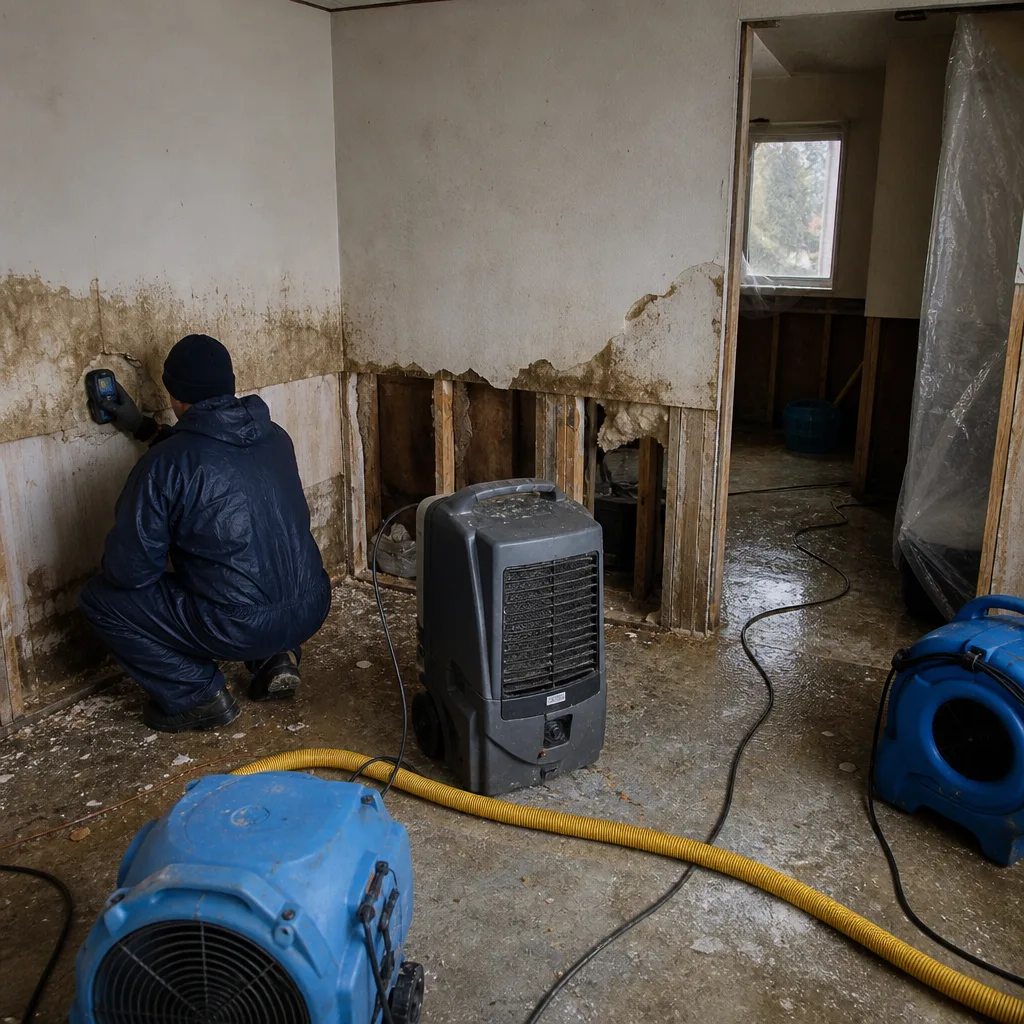
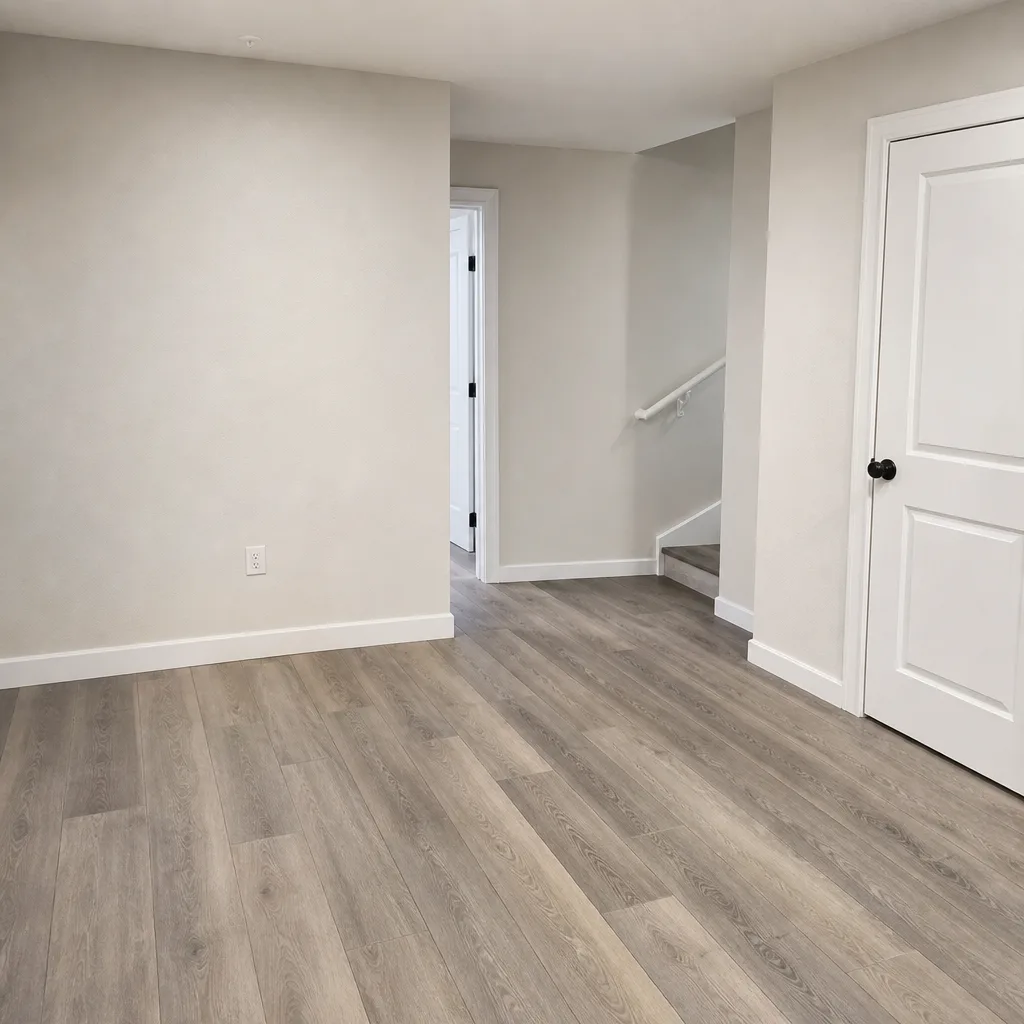
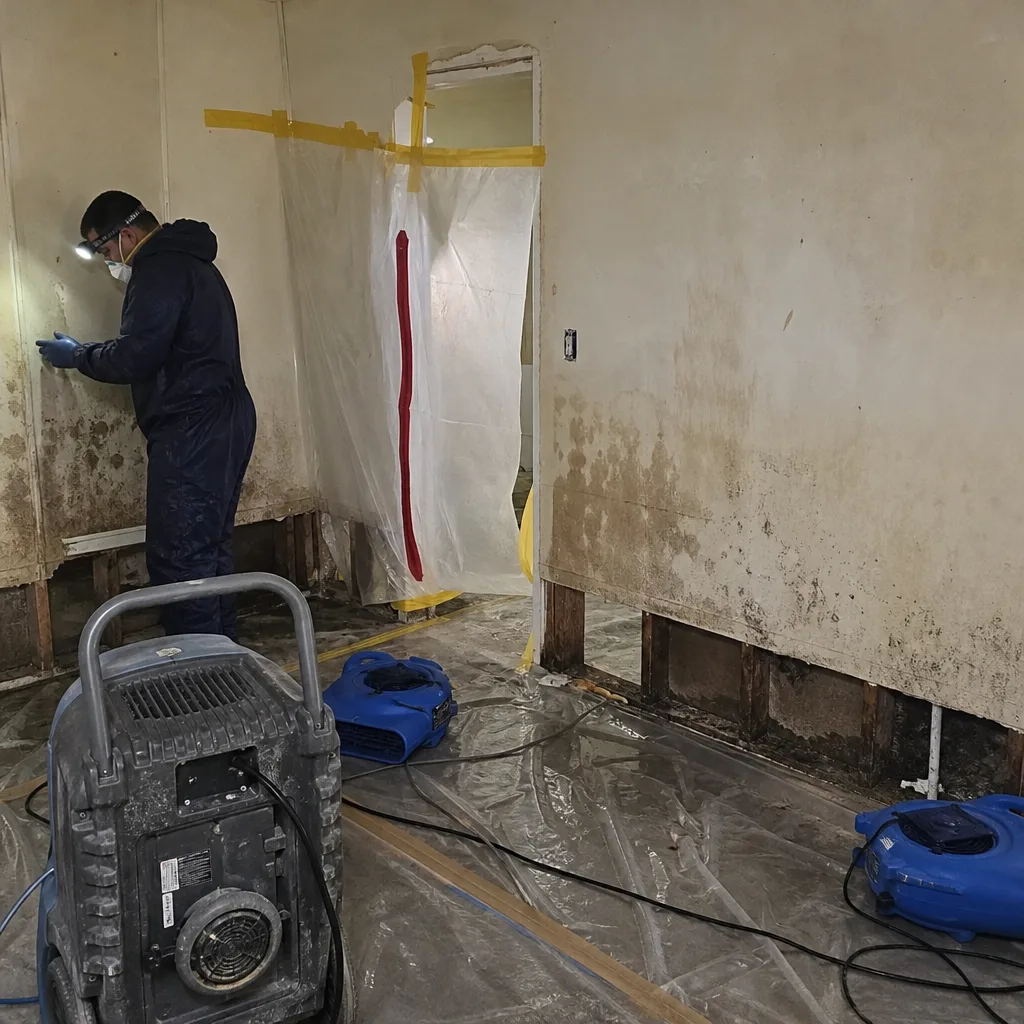
See the difference
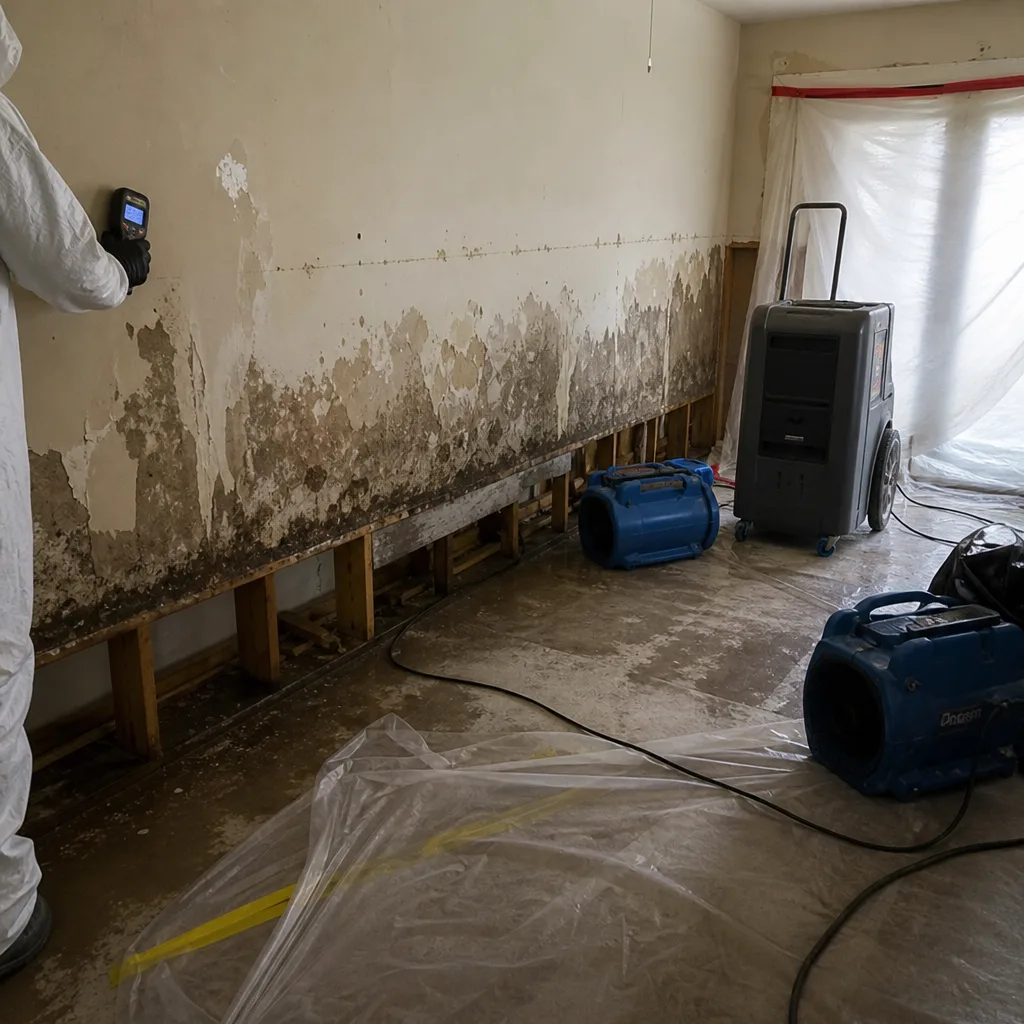 Before
 After
 Before
 After
 Before
 After