
Last updated October 30, 2026
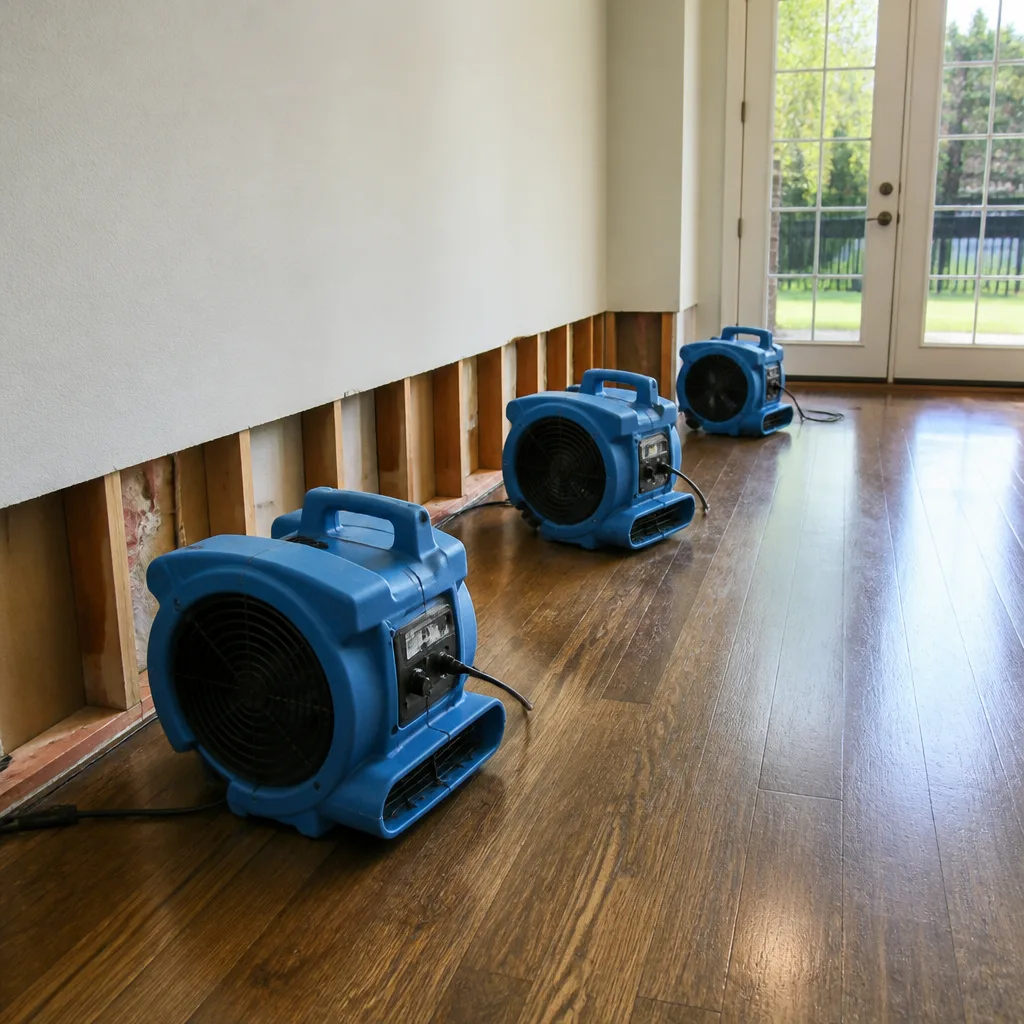 Water damage drying
 Fire & smoke cleanup
 Mold remediation
 Storm response
 Sewage cleanup
 Reconstruction
Free visual inspection and a written scope of work before any mitigation begins - photos, moisture readings, and drying logs go in your claim file
The scope we write is the scope we bill. Anything new gets shown to you, in writing, before we touch it.
Get your free estimateDamage Restoration Warning Signs: A Victorville Homeowner’s Reference Guide
A Victorville home can have active moisture damage inside a wall cavity for 10 to 14 days before any surface sign appears. The High Desert’s low ambient humidity accelerates surface drying, which sounds like good news until you realize the moisture trapped behind stucco and drywall keeps feeding mold at levels you cannot see. This guide teaches you the diagnostic language of early-stage damage in a Victorville home, from efflorescence patterns on stucco to moisture meter readings that tell you whether you need a restoration specialist or a general contractor; for more guides & resources, see our blog.
Restoration work we handle
Quick Answer
The earliest warning signs of water damage in a Victorville home are rarely what homeowners expect: white chalky residue on stucco, paint bubbling at the baseboards, a faint musty odor with no visible water, and baseboard separation. Because the High Desert’s dry air hides moisture inside wall cavities, homeowners should learn to read moisture meter readings and HVAC condensate patterns rather than waiting for the visible staining common in humid climates.
Table of Contents
- Stucco-Specific Warning Signs Victorville Homeowners Miss
- How to Use a Moisture Meter to Map a Wet Zone
- Odor Signatures of Hidden Microbial Growth in the Desert
- Ceiling and Drywall Texture Changes: Moisture vs. Settlement
- HVAC and Swamp Cooler Condensate: The Phantom Leak
- Floor Warning Signs That Appear Late in the High Desert
- When Mold Is Present Without Any Visible Evidence
- Documenting Warning Signs for Insurance Claims
- Common Mistakes to Avoid
- When to Call a Professional
- Frequently Asked Questions
- The Bottom Line
Stucco-Specific Warning Signs Victorville Homeowners Miss
Most Victorville homes built after 1980 use a three-coat stucco system over wood framing. That construction matters when water gets inside a wall. In a humid climate, water in a wall cavity eventually wets the drywall from the inside, producing a visible stain. In Victorville’s dry air, the exterior stucco often wicks moisture outward and dries quickly, while the interior drywall stays dry enough to hide what is happening behind it. What you get instead are stucco-specific indicators that most restoration guides never mention.
Efflorescence is the first one. That white, chalky, crystalline residue on the exterior stucco surface is mineral salts left behind when water moves through the cementitious coating and evaporates. It is not cosmetic. Efflorescence means water is traveling through your wall assembly from somewhere it should not be. A small patch near the base of a wall might trace to a leaking irrigation line or a downspout discharging against the foundation. A vertical band of efflorescence running down from a window lintel suggests a failed window flashing or a gap in the weep screed.
Look for paint bubbling at base plates. In a High Desert home, paint that bubbles or peels in a line about 4 to 6 inches above the floor is not a bad paint job. That is moisture wicking up from the sill plate, the wooden member that sits on the concrete slab and anchors the wall framing. When water gets under the plate from a slab leak, a plumbing failure inside the wall, or exterior drainage issues, capillary action pulls it upward, and the paint is often the first thing to fail. This pattern, consistently at the base of the wall rather than scattered, is a structural moisture indicator, not a cosmetic issue.
Baseboard separation is the third signal. When a baseboard pulls away from the drywall, leaving a visible gap, or when the drywall itself begins to crumble where it meets the floor, that indicates moisture expansion and contraction in the wall assembly. Wood swells when wet, pushing the baseboard outward. In 20 to 30 percent relative humidity, that wood will shrink back, leaving the baseboard warped or separated even after the wall appears dry. Any baseboard that no longer sits flush against the wall deserves a moisture meter check before it gets reattached.
These are the signs that precede visible staining. Water damage restoration follows a similar diagnostic pattern in nearby Jurupa Valley, but the stucco-specific indicators are particularly important for Victorville homeowners because the climate masks them so effectively.
How to Use a Moisture Meter to Map a Wet Zone
A non-invasive moisture meter is the single most useful diagnostic tool a Victorville homeowner can own. It costs between $30 and $60, reads through drywall and stucco without making a hole, and gives you hard numbers instead of guesswork. The trick is knowing what the numbers mean in this climate.
- Establish a baseline. Pick several areas of the same wall or floor that you know are dry. On a typical Victorville summer day with relative humidity around 15 to 25 percent, drywall in a healthy High Desert home typically reads 4 to 8 percent moisture content on a non-invasive pinless meter. Write down your baseline. It will be lower than what coastal California homeowners expect.
- Scan in a grid pattern. Starting from the floor or the suspected source, sweep the meter in 12-inch increments across the wall, floor, or ceiling. Do not skip areas or jump around. A systematic grid catches the edge of a wet zone that irregular sampling will miss.
- Note any readings above 15 percent. On a drywall surface, a reading of 16 to 20 percent is an amber flag in Victorville. It means the material is holding more moisture than ambient conditions can explain. You need to investigate further.
- Readings above 20 percent indicate active moisture. When a non-invasive pinless meter shows 25 percent or higher on drywall, there is enough moisture present to support mold growth if it persists for more than 48 to 72 hours. In a desert climate, that number might be lower than what guides from humid states cite, because the ambient dryness pulls surface moisture down faster than the cavity moisture can replenish it. The reading still matters.
- At 30 percent or higher, call a restoration contractor. That is not a wait-and-see scenario. Structural drying requires professional equipment, and every day of delay increases the chance that what is wet today becomes a mold bloom next week.
We use pin-style meters as a confirmation tool because they penetrate the material and measure internal moisture, not just surface conditions. That distinction matters in Victorville, where surface readings can look fine while the cavity behind the drywall is wet enough to grow mold. If your non-invasive meter gives you an elevated reading, or if you see any of the stucco signals above, a professional with a penetrating meter and a thermal imaging camera can map the full extent of the wet zone before any demolition happens; learn what to ask in our How to Hire a Damage Restoration Contractor in Victorville: A Step-by-Step Guide.
Odor Signatures of Hidden Microbial Growth in the Desert
Mold in a Victorville home does not smell the way most people expect. The heavy, earthy, damp-basement odor that characterizes mold in humid climates is less common in the High Desert, because the ambient air dries out the surface colonies that produce the most recognizable scent. What Victorville homeowners report instead is more subtle and more easily dismissed.
The most common odor signature is a faint, musty, slightly sweet smell that appears and disappears depending on temperature and HVAC cycles. It is often strongest in the morning before the air conditioning kicks on, or in a closet or bathroom that has been closed up overnight. The smell gets attributed to pets, old carpet, or “the house settling.” It is not. Volatile organic compounds from active mold growth inside a wall cavity or under flooring escape through outlet covers, baseboards, and trim gaps, and they concentrate in enclosed spaces with limited air exchange.
The second signature is a stale, almost dusty smell that kicks up when forced-air heating or cooling runs. If your HVAC system smells fine at the return but musty at the supply registers, that points to microbial growth in the ductwork or in the wall cavities adjacent to the duct runs. Condensation on ductwork in an attic or crawlspace, combined with Victorville’s hot summers, creates exactly the kind of warm, intermittently damp environment that supports hidden growth.
The third is the most specific: a acrid or ammonia-like note, which indicates older, established microbial activity. By the time an odor has an ammonia component, the colony has likely been active for weeks or months, not days. Do not mask this with air fresheners or assume that running a dehumidifier will solve it. The source is inside the building assembly, and it will continue to grow until the moisture source is eliminated and the affected materials are either dried to IICRC standards or removed.
Ceiling and Drywall Texture Changes: Moisture vs. Settlement
Victorville homes experience three types of ceiling and wall movement: thermal expansion, settling, and moisture cycling. Knowing how to read the difference determines whether you call a general contractor for a drywall repair or a restoration specialist for a moisture investigation, as explored in our DIY vs Professional Damage Restoration: The Victorville Homeowner’s Decision Guide.
Settlement cracks are typically hairline, straight, and follow framing lines or drywall seams. They run vertically from door corners or in clean lines across ceilings where truss movement occurs. They do not change with the weather, and they remain constant in width. These are a general contractor’s domain, not a restoration issue.
Moisture-related texture changes look different. When drywall absorbs water vapor moving through a ceiling cavity, the surface texture changes before any stain appears. The joint compound and paint may develop a slightly glossy, almost waxy sheen in patches. The texture may look subtly puffy or swollen, as though someone sanded unevenly. In a ceiling below a bathroom, a water heater closet, or a swamp cooler, these changes indicate moisture vapor movement, not structural movement.
Watch for what we call “ghost stains”: faint irregular rings or cloud-like shapes on ceilings and upper walls that appear, disappear, then reappear with weather changes. When moisture moves through drywall, it transports dissolved minerals from the gypsum core and the framing. As the surface dries in Victorville’s low humidity, those minerals remain, leaving a faint outline that darkens with each moisture cycle. A ghost stain that keeps returning is a persistent moisture problem, even if the ceiling feels dry to the touch every time you check it.
Here is an additional tell: bubbling or peeling paint on a ceiling, not the wall. Ceiling paint fails from moisture vapor pressure from above. Wall paint fails from liquid moisture wicking up from below. The location of the failure tells you which way the moisture is moving and helps narrow the source before you open anything up.
HVAC and Swamp Cooler Condensate: The Phantom Leak
Many Victorville homes still rely on evaporative coolers, also called swamp coolers, for summer cooling. Swamp coolers introduce humidity into the home by design, which creates a diagnostic challenge: is that moisture on the wall a leak, or is it condensate from the cooler operating exactly as it should?
The distinguishing factors are location and timing. A swamp cooler that is functioning properly will produce some condensation on supply registers and on windows when the outdoor dew point is high, typically during monsoon season in July and August. That condensation is uniformly distributed, appears while the cooler is running, and evaporates shortly after it shuts off. That is normal.
What is not normal is condensation or moisture staining localized to one wall, one ceiling bay, or one floor area. A swamp cooler plumbed with a water supply line that has a slow leak will produce moisture patterns that persist even when the cooler is off. The leak may be tiny, a drip per minute, but over a Victorville summer, that drip adds up inside a wall cavity or under flooring. If you see moisture in a closet adjacent to the cooler pad, staining on a ceiling that is not directly below a register, or a musty odor near the cooler itself, that points to a plumbing or pan leak, not normal operation.
Condensate drainage from a central air conditioning evaporator coil is another phantom leak source. In a typical attic installation, the primary condensate line drains to the outside or into a plumbing stack. The secondary, or emergency, drain pan should remain dry. When a Victorville attic hits 130 degrees in July, the coil works hard, and the condensate volume is significant. A cracked drain pan, a clogged primary line, or a disconnected secondary line sends water into insulation and drywall below. The warning signs are a ceiling stain directly below the air handler, water dripping from an unexpected roof penetration, or a swelling of the plywood decking around the unit.
One way to distinguish condensate from a roof leak: roof leaks in Victorville’s summer monsoon season occur during and immediately after rainfall. Condensate leaks occur on clear, hot days when the AC is running hardest. If the ceiling stain appears on a 105-degree cloudless afternoon, the roof is not your problem.
Floor Warning Signs That Appear Late in the High Desert
Flooring signals are the slowest to appear in a Victorville home, which makes them the most dangerous. By the time a High Desert homeowner sees a visible floor problem, the moisture has typically been present beneath the surface for weeks.
For tile floors, watch for grout cracking in a localized pattern that does not match normal settling. Moisture in a subfloor causes the underlayment to swell, which puts upward pressure on the tile. The result is grout lines that crack in a radiating pattern from a single area, or tiles that sound hollow when tapped. Loose tiles over a concrete slab in Victorville often indicate a slab leak beneath, not a bad tile installation. Tap around the loose area. A hollow sound over a broad area, with no visible water, is worth investigation.
Laminate and engineered wood flooring behave differently. The edges of planks begin to curl upward, a condition called cupping, or the seams develop a raised, swollen ridge. In a dry climate, cupping indicates the underside of the plank is wetter than the surface, which points to moisture below the flooring, not on top of it. That is the profile of a slab leak, a ruptured supply line under the slab, or water migrating from an exterior drainage issue through the concrete.
Vinyl and linoleum flooring presents the most subtle sign: raised or bubbling areas where the adhesive has failed due to moisture vapor pressure from below. The floor feels soft or spongy underfoot, with a slight give. In a home built before 1980, this can also indicate a failed vapor barrier below the slab, allowing ground moisture to migrate upward through the concrete. The moisture content of the slab itself may be elevated even though the floor surface reads dry.
All of these flooring indicators share a common trait: they appear late. By the time you see a laminate seam swelling in a Victorville home, the moisture event that caused it likely began 10 to 20 days earlier. That is why the earlier indicators on this list, the stucco signals, the moisture meter readings, and the odor signatures, matter so much. Mold remediation work in Jurupa Valley addresses similar hidden moisture problems that flooring reveals too late.
When Mold Is Present Without Any Visible Evidence
The most dangerous mold in a Victorville home is the mold you cannot see. Surface mold, the black spots on a bathroom ceiling or behind a leaky sink, announces itself. Hidden mold inside wall cavities, under flooring, and in ductwork grows silently for weeks or months. By the time it becomes visible, the colony is established, and the remediation scope has expanded.
Here is what invisible mold growth looks like from a diagnostic perspective. You have a moisture source, even a small one, that has persisted for more than 72 hours. That source could be a pinhole leak in a copper supply line, a loose toilet wax ring, a failed shower pan gasket, or condensation on a cold water pipe inside a wall. You have food for the mold: paper-faced drywall, wood framing, carpet padding, or accumulated dust inside ductwork. And you have temperatures that fluctuate through the range mold prefers: 60 to 90 degrees. Victorville provides all three conditions, even though the ambient dryness discourages visible surface growth.
The indicators of hidden mold are indirect. Persistent respiratory symptoms that improve when family members leave the house. A musty odor that returns after cleaning. Elevated moisture meter readings on walls adjacent to known plumbing fixtures. Discoloration that appears as a faint shadow rather than a defined stain. Any one of these is worth a professional assessment. Any three together make a strong case for immediate investigation.
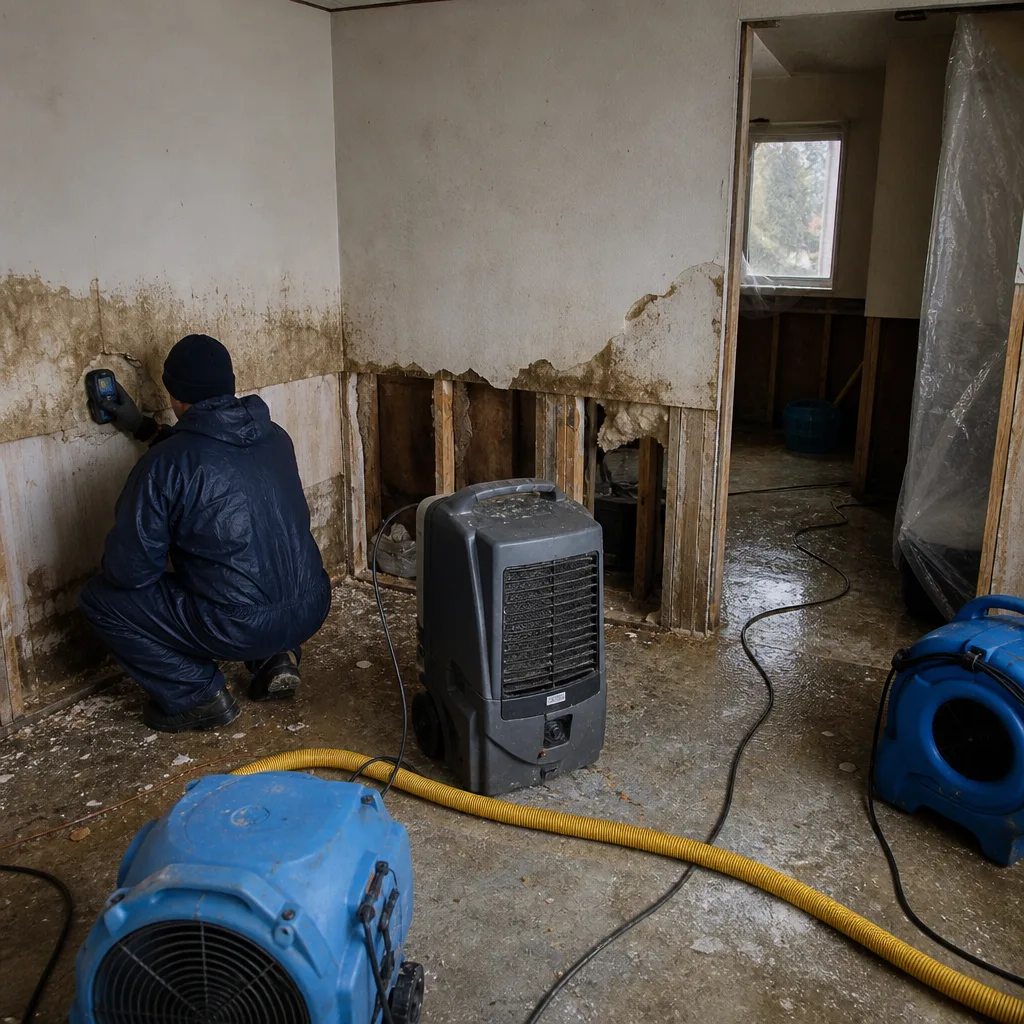
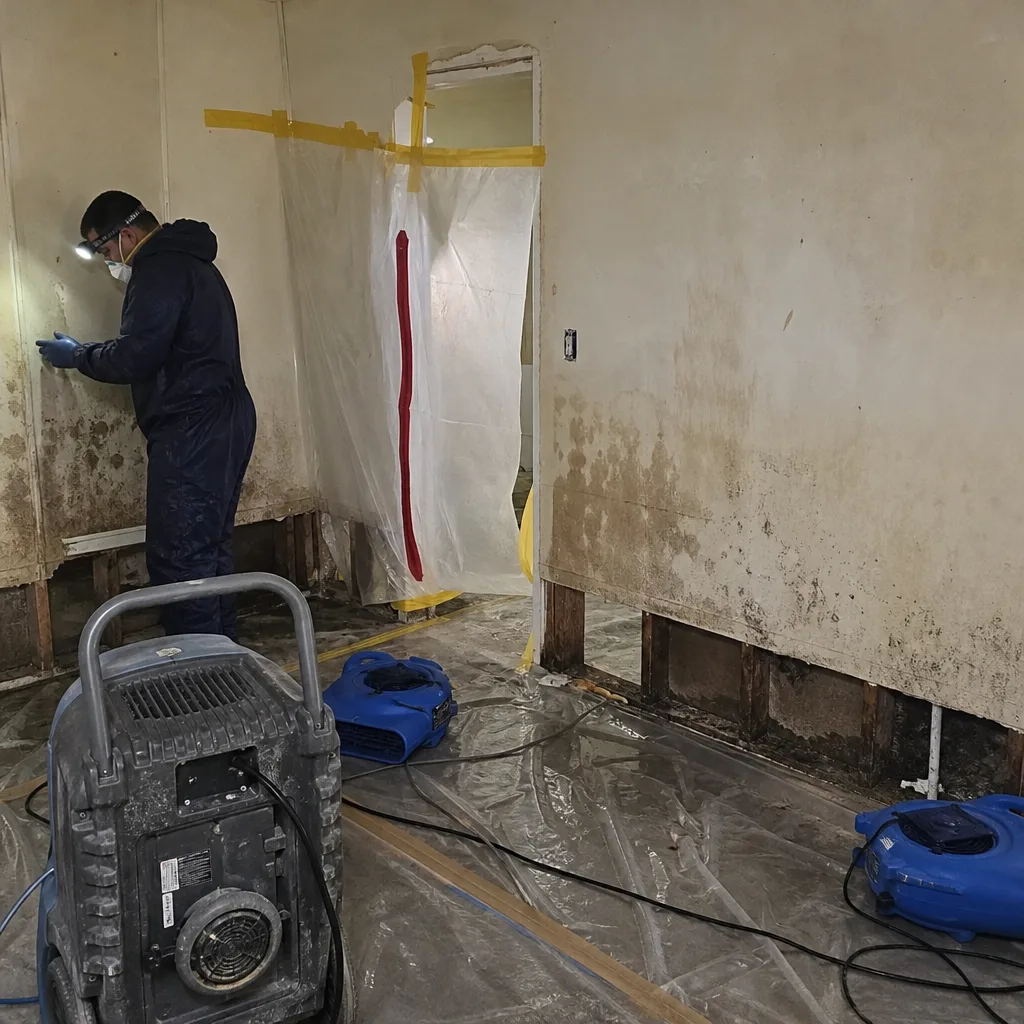
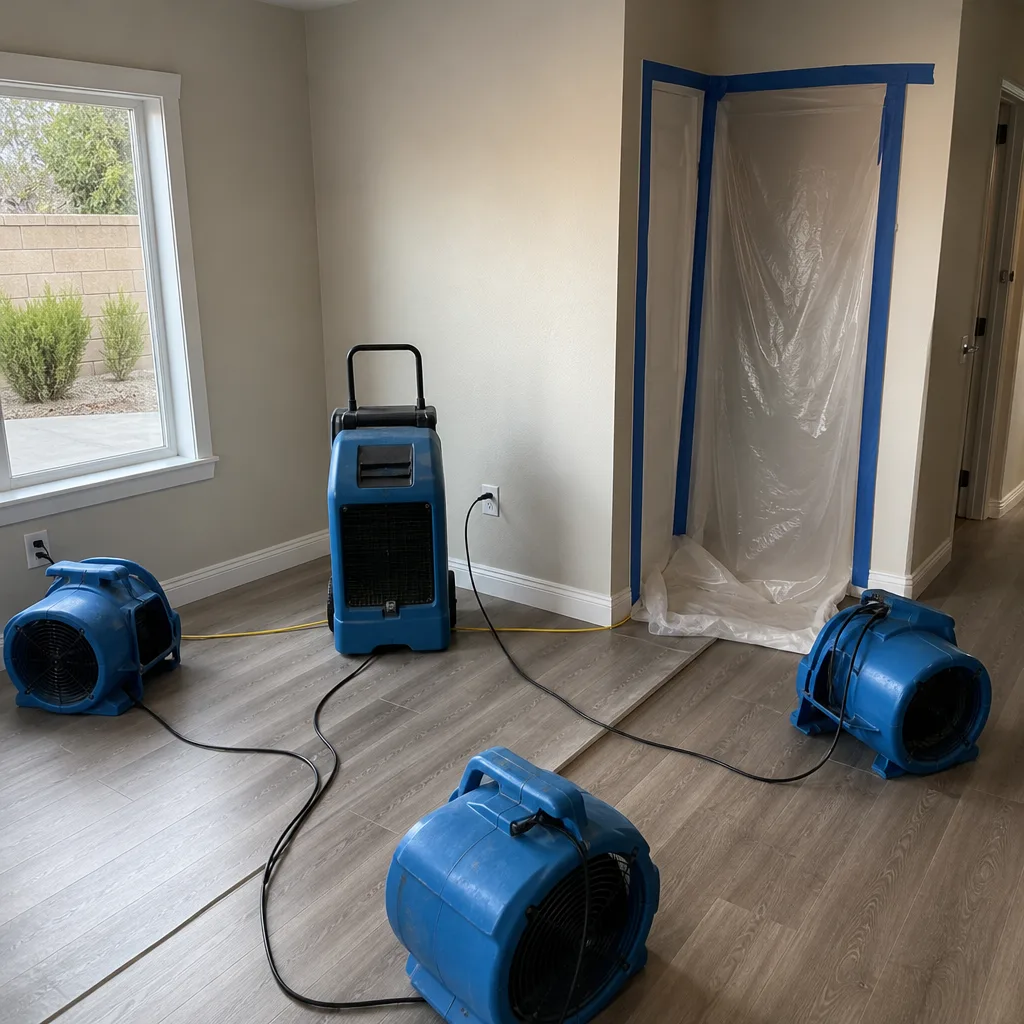
We use professional-grade equipment including Dri-Eaz and Phoenix drying systems to address hidden moisture. A non-invasive Inspectidry reading identifies wet cavities without demolition, and the drying protocol follows IICRC-certified standards. Removing the moisture is what stops the growth. If mold has already established, Whitfield Water Damage home provides the full scope of evaluation, containment, remediation, and moisture resolution.
Documenting Warning Signs for Insurance Claims
Insurance companies operate on documentation. The earlier you document a warning sign, the stronger your claim will be, especially in Victorville where the visible evidence appears late and insurers sometimes challenge the timeline. Here is how to build a documentation trail that protects your claim.
- Date your observations. Write down the date you first noticed each warning sign: the efflorescence patch, the musty odor, the moisture meter reading, the baseboard separation. A timeline establishes that you acted with reasonable promptness, which matters when policy language requires mitigation of ongoing damage.
- Photograph everything. Use your phone. Wide shots that establish the room, close shots that show the specific indicator, and context shots showing the relationship to plumbing fixtures, windows, or HVAC equipment. Date and location stamp if your phone supports it.
- Record moisture meter readings in writing. A photograph of the meter display, with the date and time, is stronger than a memory of a number. Run baseline readings on dry areas and record those too. The contrast matters.
- Keep a utility usage log. A sudden unexplained spike in your water bill can indicate a slab leak or a hidden supply line leak. Victorville Water District billing data gives you the comparison. Flag any billing period with usage 20 percent or more above your normal pattern.
- Do not attempt repairs before documenting. The temptation to scrub the efflorescence, paint over the bubbling, or caulk the baseboard gap is strong. But every repair before documentation removes evidence the adjuster needs to see. Document first, mitigate second.
- Call a restoration contractor who documents to insurance standards. A professional assessment includes moisture mapping, thermal imaging, photographic documentation, and a written scope of work. Insurance adjusters recognize the format. It makes the claim process smoother than a homeowner’s verbal description ever could.
Victorville homeowners filing water or mold claims face a specific challenge: proving that damage occurred before the visible signs appeared. That is why the early-warning diagnostic language in this guide matters. The moisture meter reading you record today is evidence of a problem that a visible stain might not confirm for two more weeks. Fire damage restoration in Jurupa Valley involves different documentation requirements, but the principle is the same: contemporaneous records carry weight with adjusters.
Common Mistakes to Avoid
- Waiting for visible water before acting. In Victorville’s dry climate, visible water on a floor or wall means the moisture event has been active long enough to saturate the material completely. By that point, hidden damage is already established. Act on the subtle signals: efflorescence, odor, elevated moisture readings, baseboard movement.
- Using a household dehumidifier to solve a structural moisture problem. A consumer-grade dehumidifier removes moisture from room air. It does nothing for water trapped inside a wall cavity, under flooring, or beneath a slab. Structural drying requires professional equipment like the Dri-Eaz and Phoenix systems we run, with air movement and extraction calculated for the specific material and cavity configuration.
- Sealing up a musty room with caulk and paint. Painting over a moisture indicator does not remove the moisture. It traps it, which accelerates the deterioration of the material behind the paint and gives mold a perfectly enclosed environment in which to grow. The paint job fails within months, and the underlying problem has grown worse in the meantime.
- Assuming a swamp cooler’s moisture is always normal. Victorville’s swamp coolers are condensation machines. Most of the time, the moisture they produce is harmless. When it concentrates in a single wall or ceiling bay and persists after the cooler shuts off, that is a leak, not normal operation. Investigate localized moisture from any evaporative cooler before writing it off as “just how these things work.”
- Treating efflorescence as a cosmetic issue. That white chalk on your stucco is not a minor aesthetic problem. It is a mineral trace of water movement through your wall assembly. Wire-brushing it off and repainting removes the evidence without addressing the water source. The efflorescence returns, and the hidden damage continues.
- Skipping the moisture meter because the wall feels dry to the touch. Human touch cannot detect moisture inside a wall cavity in a High Desert climate. The surface dries too quickly. A $40 pinless moisture meter gives you data your fingertips cannot. Every Victorville homeowner should own one and know how to read it.
- Calling a general contractor for a moisture problem. General contractors build and repair structures. They do not map moisture migration, run professional drying equipment, or follow IICRC-certified drying protocols. A general contractor will patch the visible symptom. A restoration specialist resolves the moisture source and the hidden damage. Different skill sets, different outcomes.
When to Call a Professional
Call a restoration professional when you have any moisture meter reading above 20 percent on drywall, any recurring musty odor you cannot source, any baseboard separation combined with paint bubbling near the floor, or any efflorescence pattern that returns after cleaning. These indicators mean moisture is present where you cannot see it, and every day of delay increases the remediation scope.
Call immediately when you have a confirmed leak, a slab moisture issue, or water intrusion from a storm or plumbing failure. The first 48 hours are the window for preventing mold establishment. Professional drying equipment, including the Dri-Eaz and XPOWER systems we run, removes moisture at a rate consumer equipment cannot match, and the IICRC-certified drying protocol we follow ensures the job is done to a verifiable standard.
Whitfield Water Damage offers free estimates in Victorville. Call (855) 382-0478 for a professional assessment, including moisture mapping and a documented scope of work.
Frequently Asked Questions
You look for the subtle indicators that appear before visible staining: white efflorescence on stucco, paint bubbling at baseboard level, baseboard separation from the wall, a recurring musty odor, and moisture meter readings above 15 percent on drywall. In Victorville’s low-humidity climate, these signals appear weeks before any visible stain, so homeowners need to read them carefully. Call (855) 382-0478 if you see any combination of these indicators.
Efflorescence is a white crystalline mineral deposit that forms when water moves through the stucco and evaporates, leaving dissolved salts behind. In a Victorville home, it indicates water traveling through your wall assembly from a leak, drainage problem, or plumbing failure. It is not a cosmetic issue, and it will return if you clean it off without addressing the moisture source.
Yes. While Victorville’s ambient humidity is low, moisture trapped inside wall cavities, under flooring, and behind stucco creates the warm, damp environment mold needs to grow. The surface of the wall may feel dry while the cavity behind it maintains 20 to 30 percent moisture content, which is enough to sustain mold growth when temperatures are conducive.
On drywall in a typical Victorville home, a baseline reading of 4 to 8 percent moisture content is normal. Readings above 15 percent indicate elevated moisture worth investigating. Readings above 20 percent indicate active moisture that can support mold growth if it persists. Readings of 30 percent or higher require professional structural drying. Call (855) 382-0478 for a professional moisture assessment.
A recurring musty or slightly sweet odor that appears and disappears with temperature changes or HVAC cycles is a common indicator of hidden mold growth in a Victorville home. The odor concentrates in enclosed spaces like closets and bathrooms when the air is still, then dissipates when air movement resumes. If the smell keeps returning after cleaning, the source is likely inside a wall cavity, under flooring, or in ductwork.
Most homeowner’s insurance policies cover sudden and accidental water damage, including hidden leaks, provided there is no evidence of long-term neglect. In Victorville, where visible signs appear late, documenting early warning signals like moisture meter readings, efflorescence photographs, and utility bill anomalies strengthens your claim. A restoration contractor who documents to insurance standards, including moisture mapping and written scopes of work, makes the claims process more straightforward.
Emergency water damage calls receive prompt attention, typically within a few hours, because the first 48 hours are critical for preventing mold establishment. Whitfield Water Damage serves all of Victorville and offers free estimates. Call (855) 382-0478 for an assessment.
The Bottom Line
In a High Desert home, the warning signs of hidden water damage are not the dramatic ones. They are white mineral traces on stucco, paint failing at the baseboards, a musty odor that comes and goes, moisture meter readings that spike on otherwise dry-feeling walls, and grout lines cracking in localized patterns. Victorville’s dry air works against you by hiding the evidence. But it also gives you an advantage if you know what to look for: the early signals are visible, subtle but readable. Learn the diagnostic language, document what you find, and call a credentialed restoration team before the hidden moisture becomes an established mold problem. That is the difference between a drying job measured in days and a remediation measured in weeks.
Written by the team at Whitfield Water Damage, serving Victorville since 2011.
See the difference
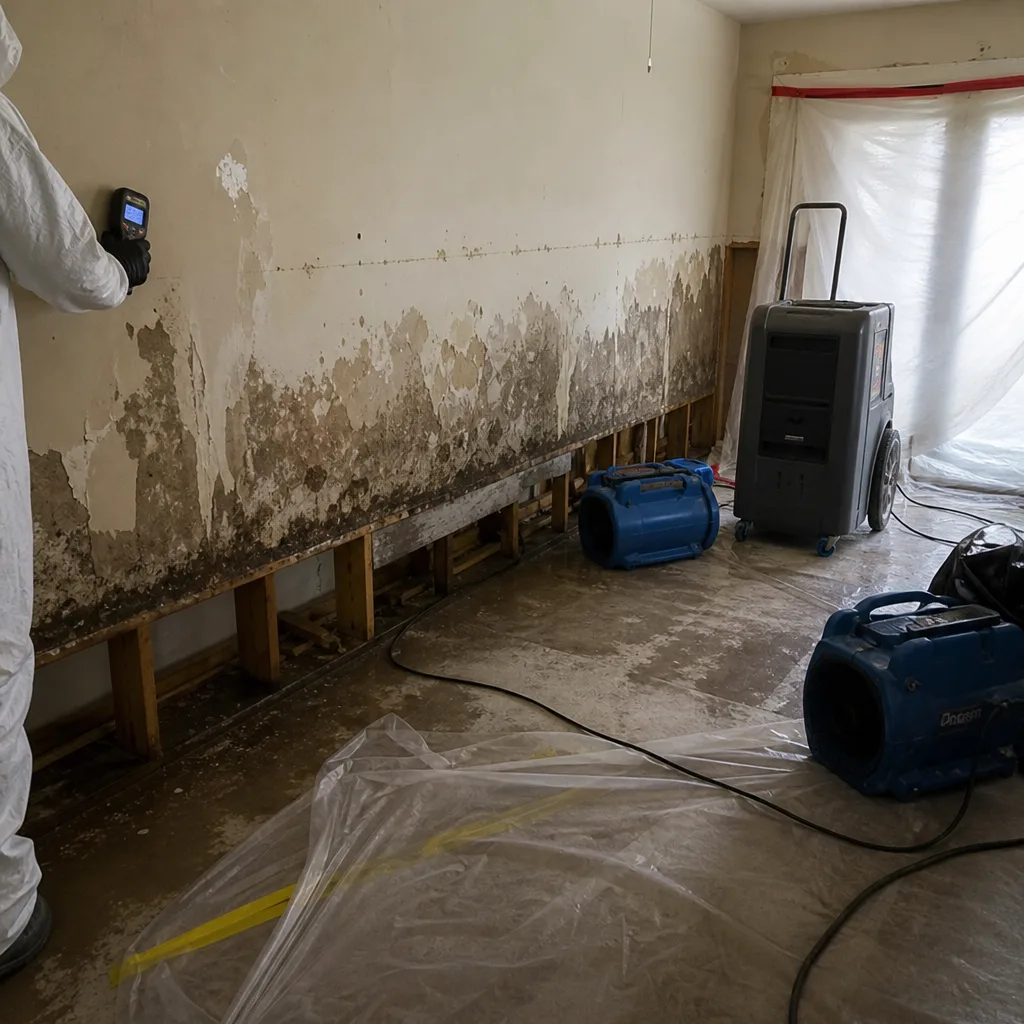 Before
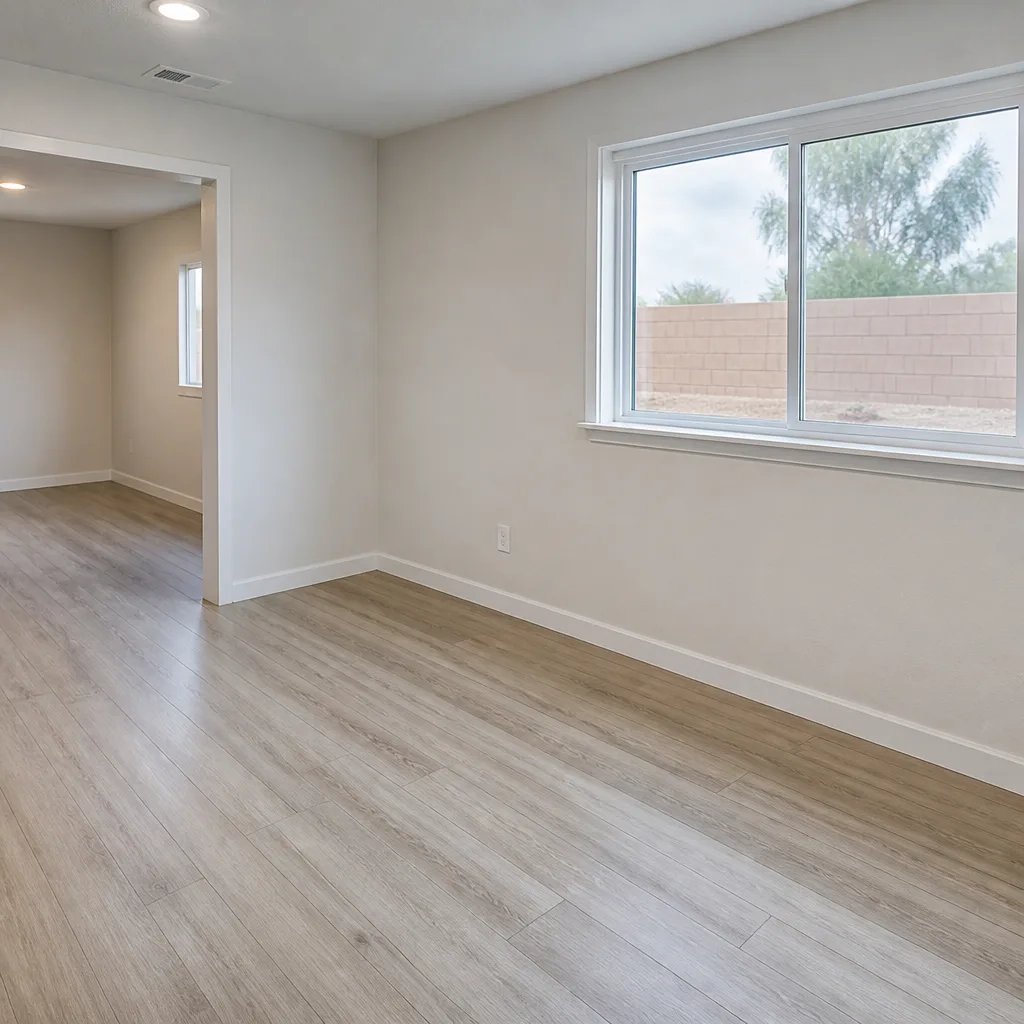 After
 Before
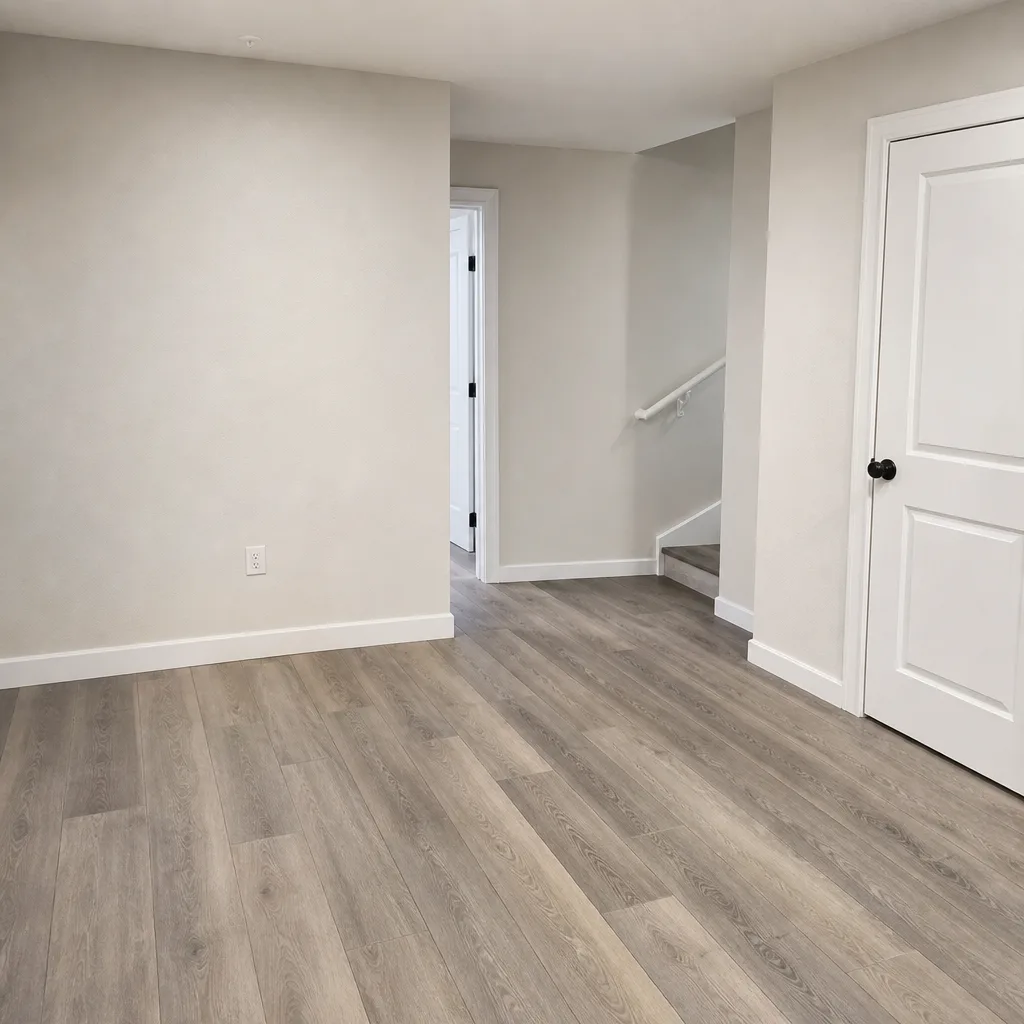 After
 Before
 After