
Last updated October 30, 2026
 Water damage drying
 Fire & smoke cleanup
 Mold remediation
 Storm response
 Sewage cleanup
 Reconstruction
Free visual inspection and a written scope of work before any mitigation begins - photos, moisture readings, and drying logs go in your claim file
The scope we write is the scope we bill. Anything new gets shown to you, in writing, before we touch it.
Get your free estimateSeasonal Damage Restoration Care for Victorville: Year-Round Homeowner’s Guide
Victorville averages fewer than 5 inches of annual rainfall, yet water damage claims here spike predictably in August and again in January. That statistic confuses people until they understand what actually drives restoration calls in the High Desert. It isn’t sustained wet weather. It’s a set of four distinct climate cycles (thermal stress, monsoon intrusion, overnight freeze, and Santa Ana wind) that each attack homes in a different way. This guide maps restoration care to those four actual Victorville cycles, so you’re inspecting the right components at the right time instead of running a generic coastal maintenance checklist that doesn’t apply to slab foundations, stucco exteriors, and 100-degree temperature swings.
Quick Answer
Seasonal damage prevention in Victorville means following four inspection and maintenance windows that mirror the High Desert’s actual weather patterns: monsoon prep (July through September), freeze protection (November through February), thermal expansion checks (March through June), and Santa Ana wind assessments (October and April). Each window has a specific checklist targeting the components most likely to fail during that cycle. The goal is to catch small failures before they become restoration projects, and to document a moisture baseline so any deviation gets addressed within days, not weeks.
Restoration work we handle
Table of Contents
- Monsoon Vulnerability Window: July Through September
- Freeze-Thaw Microseason: November Through February
- Thermal Stress Season: March Through June
- Santa Ana Wind Periods: October and April
- Building a Year-Round Moisture Baseline Log
- What Insurance Adjusters Look for in Victorville Claims
- Common Mistakes to Avoid
- When to Call a Professional
Monsoon Vulnerability Window: July Through September
Victorville sits at the western edge of the North American monsoon’s reach. When moisture pushes up from the Gulf of California and collides with High Desert heat, the result is short, intense downpours that overwhelm drainage and expose every small breach in a home’s exterior. The rain itself isn’t the primary threat. The threat is that months of dry heat have already shrunk caulking, cracked stucco, and loosened roof penetrations long before the first storm arrives.
Here’s what we’ve seen in Victorville homes repeatedly during August storms: water enters through a pipe boot that cracked over two years of 105-degree sun exposure. It travels along a roof truss, wets insulation, and drips into a ceiling cavity. By the time a homeowner notices a stain, mold has had a week to establish. The fix could have been a $12 pipe boot replacement in June. The restoration is a multi-day dry-out with possible drywall removal.
Monsoon prep checklist for Victorville:
- Roof penetrations: Walk the roof (or have it inspected) and check every vent boot, pipe collar, and flashing point. Look for cracked rubber, lifted sealant, or exposed nails. Monsoon rain in Victorville is wind-driven. A small gap that sheds water fine during a gentle rain will leak when rain hits at a 40-degree angle.
- Window seals and weep holes: Check window frames for deteriorated caulk at the top and sides, and clear weep holes at the bottom. A window that seals on the sides but has clogged weep holes will trap water inside the frame, and that water will find its way into the wall cavity.
- Stucco cracks: Walk the exterior after sunset with a flashlight held flat against the wall. Any crack wider than a hairline is a monsoon entry point. Hairline cracks under 1/16 inch are normal thermal movement. Wider cracks, especially diagonal cracks from corners of windows or doors, need sealant before July.
- Grading and drainage: Confirm that soil slopes away from the foundation at least 6 inches over the first 10 feet. After a monsoon downpour, standing water against a slab edge will wick under the bottom plate and into wall cavities.
- AC condensate lines: Victorville summers run the AC hard. A clogged condensate line will overflow inside the mechanical closet or drip through the ceiling. Flush the line with vinegar or have an HVAC tech blow it out before the season peaks.
Monsoon Damage That’s Already Happened
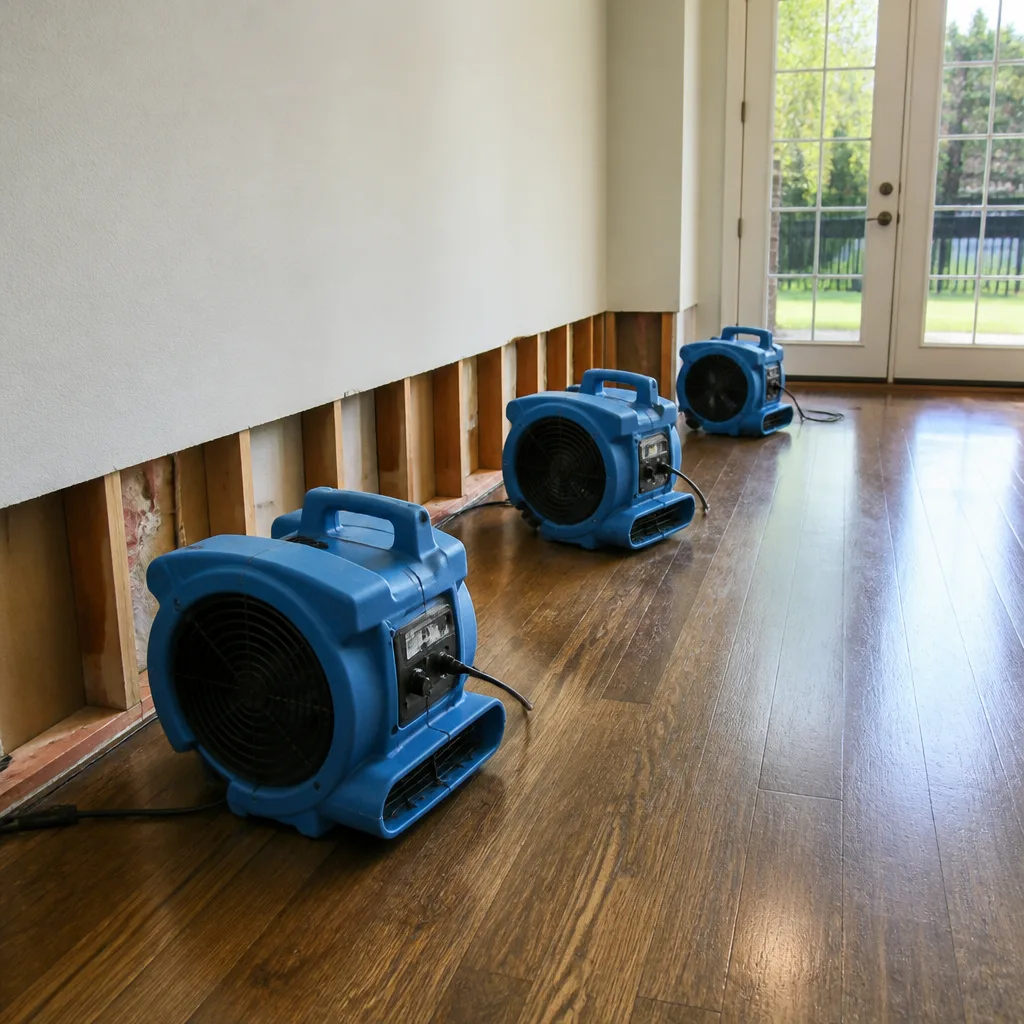
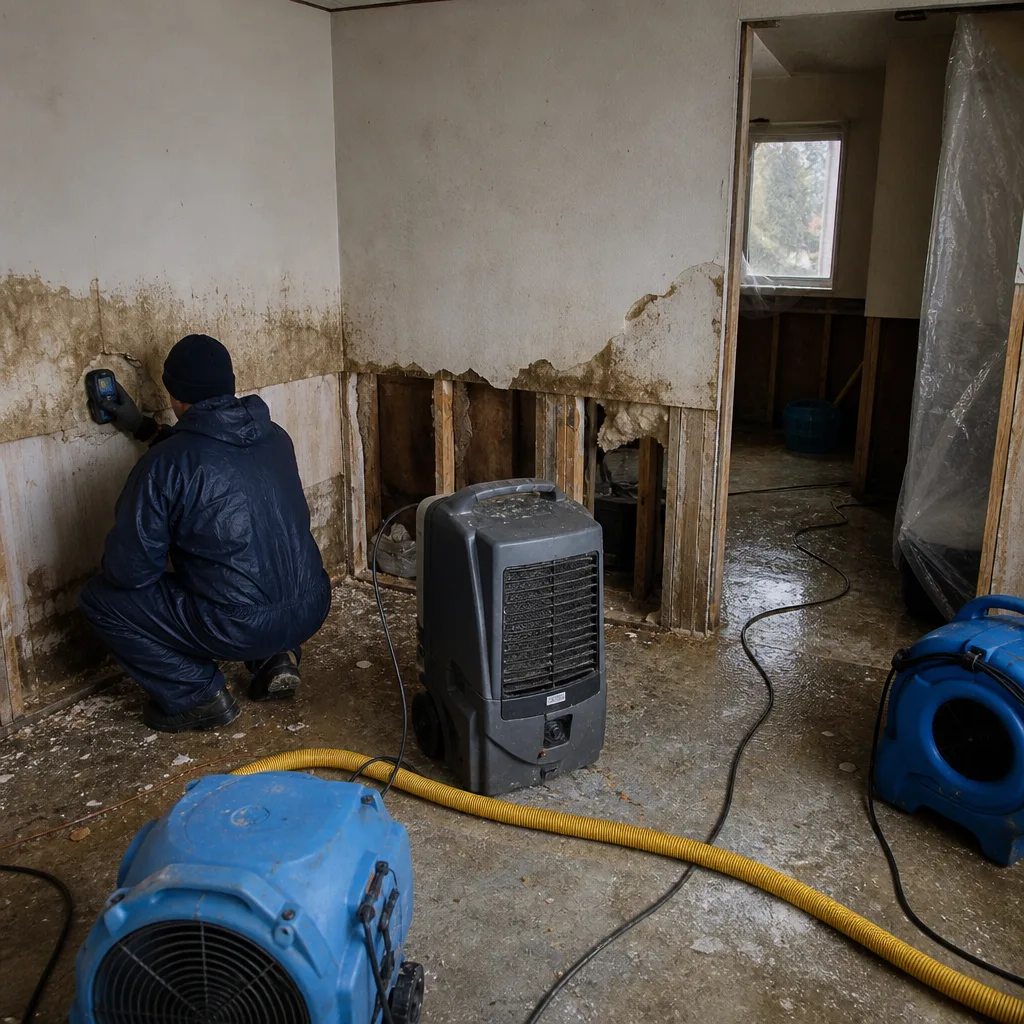
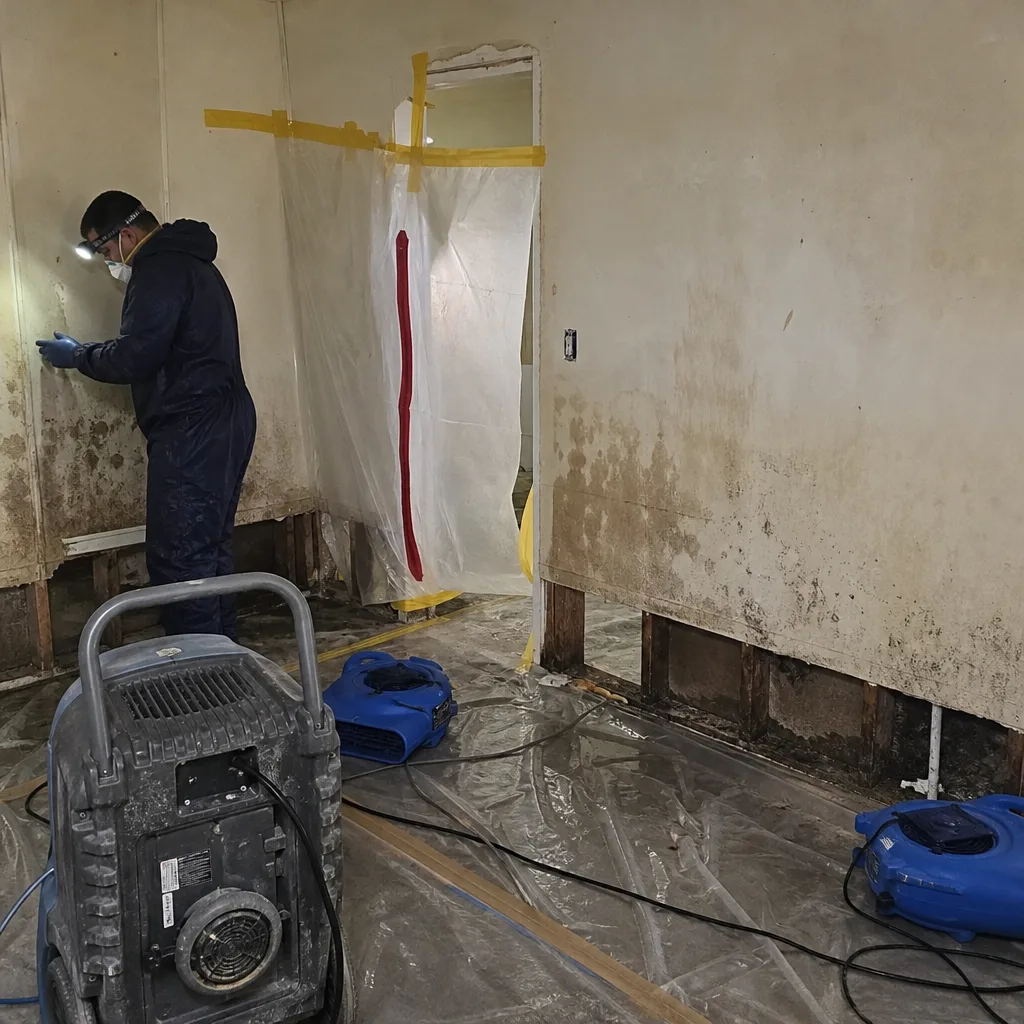
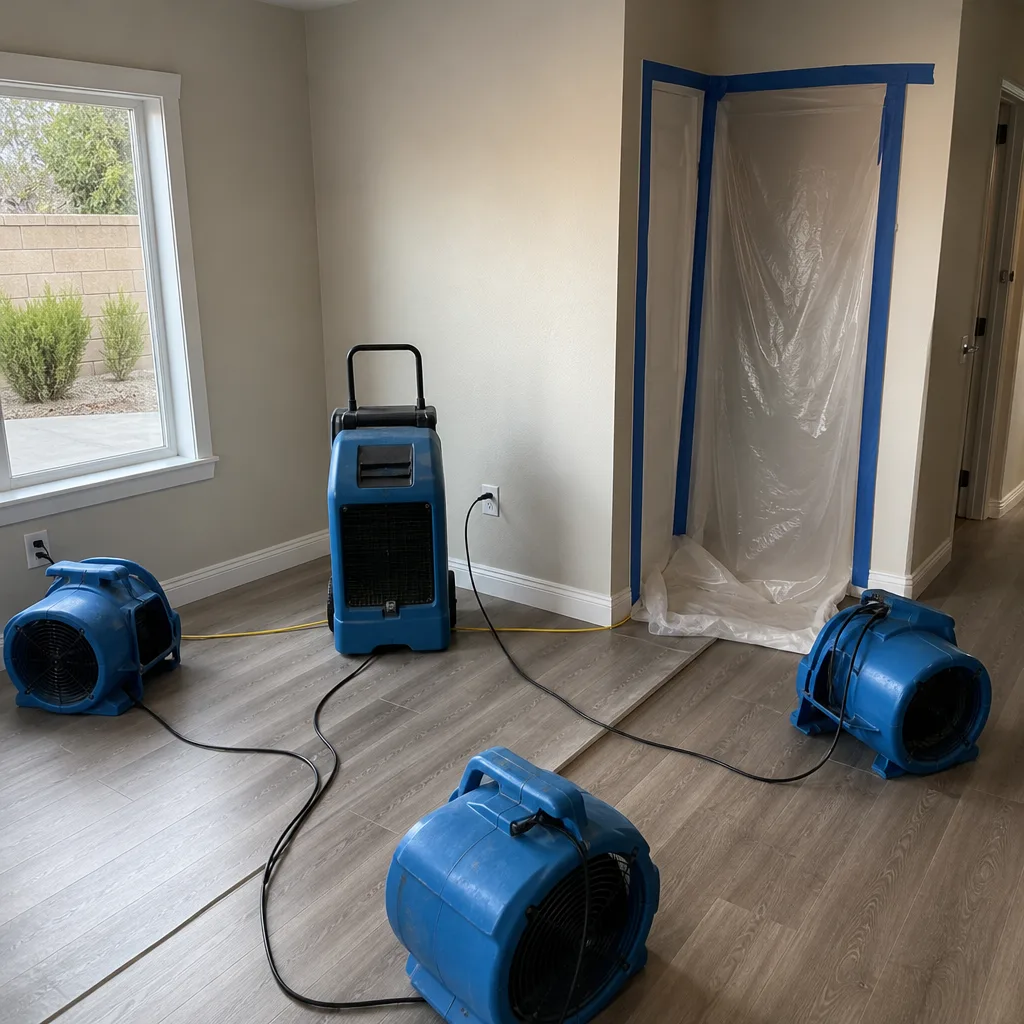
If a monsoon storm has already pushed water into your Victorville home, the mitigation window is tight. Drywall and insulation begin supporting mold growth within 48 to 72 hours under warm conditions, and Victorville’s August indoor temperatures accelerate that timeline. The IICRC-certified drying protocol calls for mapping the affected area, extracting standing water, placing professional-grade air movers and dehumidifiers, and documenting moisture content daily until materials return to their dry standard. Brands like Dri-Eaz, Phoenix, and B-Air are designed to move the volume of air needed for a structural dry-out, which matters because consumer fans simply don’t move enough air to dry wall cavities, and a wall that feels dry on the surface is often still wet inside.
For homeowners who want to take a proactive step before monsoon season, check our Water Damage Restoration in Jurupa Valley page to see the full restoration scope we handle in the High Desert region.
Freeze-Thaw Microseason: November Through February
A Victorville freeze is not a mountain freeze. Nights drop into the low 20s or high teens for a few hours, then days climb back into the 50s or 60s. That short freeze window, repeated across dozens of nights between November and February, creates a specific failure pattern: shallow-buried supply lines, exterior wall plumbing, and hose bibs freeze and thaw repeatedly, and each cycle weakens the pipe wall.
The homes most at risk in Victorville are slab foundation homes where copper supply lines run through the attic or through exterior walls. When water freezes inside a copper line, it expands. When it thaws, the pipe contracts. A single freeze usually doesn’t burst a line. It’s the tenth or twentieth cycle that fractures the pipe at a fitting, and the break often happens days after the last hard freeze, when the homeowner isn’t thinking about freeze risk at all.
Freeze-season action plan:
- Insulate all exposed attic supply lines. Victorville attics get cold fast on clear winter nights. Pipe insulation on every horizontal copper run costs under $100 and prevents the most common freeze rupture we see.
- Disconnect and drain all hose bibs by November 1. A connected hose traps water in the bib and the first 6 inches of supply line. That is the single most common freeze-damage call we get in Victorville, and the repair usually requires cutting into the wall.
- Locate your main shutoff and test it. If a line bursts at 2 a.m., the difference between a contained event and a full-house flood is whether you can shut water off in under a minute. Test the valve once a year. If it’s stiff or corroded, replace it now, not during an emergency.
- Check exterior wall plumbing on the coldest nights. Sinks on exterior walls, especially on the north side, are freeze candidates. On nights forecast below 25 degrees, open the cabinet doors and drip the faucet.
- Know what a slab leak looks like. Warm spots on the floor, unexplained spikes in the water bill, or the sound of running water when everything is off are slab leak indicators. Slab leaks in Victorville are often caused by freeze-thaw stress on shallow-buried copper under the slab edge.
After a Freeze Event
If you suspect a freeze has damaged a pipe, shut off the main and call a restoration team before the plumber finishes the repair. Here’s why: a ruptured pipe may have been spraying water into a wall or under the slab for hours. The plumber fixes the pipe. The restoration team finds the water. Hidden water in insulation, wall cavities, and under flooring keeps causing damage long after the leak stops. Our team follows IICRC-certified drying protocol on every job, and we use Injectidry cavity-drying systems to dry wall and floor cavities without tearing out drywall that could be saved.
Thermal Stress Season: March Through June
Victorville’s spring is a season of dramatic temperature swings. March days can hit 75 degrees while nights still dip into the 30s. By June, daytime highs pass 100. That 60-plus-degree daily swing creates thermal expansion and contraction in every material in the home: copper supply lines, PVC drain lines, stucco, roofing materials, caulk, and window frames. The damage from thermal stress is gradual and often invisible until it isn’t.
The inspection protocol below catches what winter contraction has loosened and what spring expansion is starting to pull apart:
Post-Winter Thermal Inspection
- Supply line fittings: Check every accessible fitting under sinks, behind toilets, and at water heater connections for corrosion, white mineral deposits, or moisture. Copper expands when heated and contracts when cold. Fittings that were tight in October can weep by April.
- Angle stops and supply valves: Turn each shutoff valve a quarter turn and back. A valve that hasn’t been moved in years may seize or begin leaking at the stem. Better to find a bad valve in April than during a repair in August.
- Exterior caulk and sealant lines: Walk every window, door, and utility penetration. Thermal cycling breaks caulk adhesion. Look for gaps, shrinkage, or areas where the caulk has pulled away from one surface.
- Water heater inspection: Drain a few gallons from the tank to flush sediment, and check the TPR valve and the supply lines. Thermal expansion increases tank pressure, and the TPR valve is the safety release. If it weeps after a test, it needs replacement.
- Roof edge check: High Desert sun degrades asphalt shingle edges faster than coastal areas. Look for curling, granule loss, or lifted shingles along the eaves and around penetrations. These become monsoon leaks in July.
What We See in Victorville During Spring
In our experience, the most common springtime restoration call in Victorville is a supply line failure at a compression fitting that survived the winter but gave way as temperatures climbed. The second most common is an ice maker line or washing machine hose that cracks from repeated heating and cooling cycles. Both are preventable with a visual inspection and a $15 hose replacement.
If you discover water damage during a spring inspection, the fastest way to assess the scope is to call Whitfield Water Damage home team for a documented, photo-backed assessment. We find the source, map the affected area, and provide a written scope before any equipment goes in.
Santa Ana Wind Periods: October and April
Santa Ana winds in Victorville are a different animal than what Los Angeles experiences. Here, the winds are dry, gusty, and dust-laden, and they arrive when humidity can drop into single digits. The wind itself doesn’t cause water damage, but it creates the conditions for damage that the next rain event exploits.
Think of Santa Ana periods as pre-damage assessments: the wind lifts shingles, cracks tile, loosens flashing, and blows dust and debris into drains and gutters. Two weeks later, a storm arrives and water follows the path the wind already opened.
Santa Ana Damage Assessment Protocol
- Roof inspection after any wind event over 40 mph: Look for lifted or missing shingles, shifted tiles, and damaged flashing at valleys, chimneys, and roof-to-wall transitions. If you’re not comfortable on a ladder, hire a roofer for a post-wind inspection. In Victorville, a post-Santa-Ana roof check can catch a small repair before the next monsoon turns it into a ceiling stain.
- Gutter and downspout clearing: Dust and debris accumulate during wind events. Clogged gutters overflow during the next rain and dump water against the foundation. If you have mesh gutter guards, check that wind hasn’t dislodged them.
- Fence and gate attachment points: High winds stress the connections between surfaces and the structure. A loose fence board isn’t a water issue, but a fence that shifts and pulls a gate out of alignment can damage stucco at the attachment point, creating a moisture entry path.
- Window and door frame check: Wind-driven dust abrades caulk and weatherstripping. Run a finger along each window seal and exterior door. Any visible gap or crumbling caulk is a water entry point waiting for the next rain.
- HVAC intake area: Dust from Santa Ana events clogs exterior AC intakes. A clogged intake forces the system to work harder, increasing condensation in the air handler, which can leak into the home.
The hidden pattern here is that Santa Ana periods set up the conditions for the water damage that follows. If you ignore the wind, you’re paying for it later. Documenting the exterior before and after each wind period builds a record that helps your insurance claim if damage occurs. We document every assessment with photos, measurements, and moisture readings so the claims process is grounded in evidence, not debate. For fire-prone Victorville neighborhoods, the same dry wind that strips moisture from stucco and roofing also elevates fire risk. Our Fire Damage Restoration in Jurupa Valley service handles the full fire and smoke recovery scope if you ever need it.
Building a Year-Round Moisture Baseline Log
The most underused tool in Victorville damage prevention is a simple moisture log. A baseline log gives you a reference point for what is normal in your home across the seasons, so when something changes, you notice it before it becomes visible damage. Most homeowners only discover moisture when a stain appears or a smell develops. By then, the problem has been active for days or weeks.
A practical baseline log is easy to build and takes about 10 minutes per month. Here’s the step-by-step:
- Buy a pinless moisture meter. A basic model costs $30 to $50 online or at hardware stores. Pinless meters read through materials, so you can check drywall, stucco, and flooring without poking holes in them.
- Pick 6 to 8 reference points in your home. Choose areas that are vulnerable: the wall under each bathroom sink, the ceiling below the attic access, the baseboard near the water heater, the wall behind the washing machine, the floor near each exterior door. Mark each spot with a small pencil dot or piece of painter’s tape.
- Take a reading at each spot once a month. Record the number in a notebook or a spreadsheet. Note the date, the indoor temperature, and whether the AC or heater was running.
- Take an extra reading after any weather event: a monsoon storm, a hard freeze, a Santa Ana wind event over 40 mph, or a 100-degree heat wave.
- Watch for deviations, not absolute numbers. A wall that reads 8% moisture in January and 9% in April is fine. A wall that reads 8% every month and suddenly reads 14% is telling you something. Don’t wait for the stain. Investigate the deviation.
- Log your water heater, AC, and plumbing work. Every repair, replacement, or service call gets a line in the log. Patterns emerge over time: a water heater that needs service every 18 months, a supply line that’s been replaced twice, a wall that reads high every August.
Why a Baseline Matters for Insurance
When a claim happens, adjusters look for evidence of ongoing maintenance and documented conditions. A moisture log demonstrates that you monitored the property and caught the issue early. It also helps the restoration team know exactly when the deviation started, which tightens the damage timeline and supports a cleaner claim. This is the same reason we document every water damage restoration with daily moisture readings and photo logs: evidence beats argument, in insurance and in restoration. See more guides & resources for additional documentation tips.
What Insurance Adjusters Look for in Victorville Claims
If you’re filing a water damage claim in Victorville, the adjuster will evaluate three things: whether the damage was sudden and accidental (covered) versus gradual and ongoing (often not covered), whether you took reasonable steps to prevent the loss, and whether the restoration work is documented to professional standards. Most Victorville claims go sideways on the third point: restoration work that wasn’t documented properly, so the adjuster can’t verify what was done and whether the price was justified.
What we recommend to homeowners and property managers:
- Photograph everything before any work begins. Wide shots showing the full affected area, close-ups of visible damage, and photos of the source if it’s accessible.
- Do not begin demolition until the adjuster or restoration team documents the damage. Tearing out wet drywall before photos are taken destroys evidence the claim depends on.
- Demand a written scope of work before any restoration begins. A legitimate restoration company provides a line-item scope, equipment list, and drying plan. If the contractor won’t put it in writing, walk away.
- Ask about IICRC certification. The IICRC S500 water damage restoration standard is the reference point most adjusters use when evaluating a claim. Work performed to IICRC-certified drying protocol is more likely to be accepted at face value.
- Confirm equipment placement and daily readings are logged. Adjusters expect to see documentation that professional-grade equipment (dehumidifiers, air movers, and moisture meters) was placed according to a plan and that readings were taken daily until dry standard was reached.
Whitfield Water Damage documents every step of the process to insurance standards. We coordinate directly with adjusters and provide the photo evidence and daily logs that support clean claims. If you’re working with an agent who needs a restoration partner that follows IICRC-certified methods, send them our way.
Common Mistakes to Avoid
- Treating Victorville’s low rainfall as a reason to skip maintenance. The city gets under 5 inches of rain annually, but each monsoon event can deliver an inch in an hour. Low rainfall doesn’t mean low risk. It means the risk arrives in short, intense bursts that find every breach.
- Ignoring a small water stain because it’s “just a stain.” A water stain is evidence that water already entered the building envelope. The stain may be small, but the wet area behind it can extend several feet in every direction. A stain that appears after a monsoon is a signal to investigate the cavity behind that drywall now, not next season.
- Relying on consumer fans to dry a wet area. A box fan moves air over surfaces. It doesn’t pull moisture out of wall cavities or subfloor spaces. Homeowners sometimes run fans for a week, see a dry surface, and assume the problem is solved. The moisture hidden behind the drywall then supports mold growth for months. Professional drying requires the volume of air moved by equipment like B-Air or XPOWER air movers, paired with industrial dehumidifiers.
- Waiting to address a roof issue until after it rains. Victorville’s dry season is long, which lets small roof failures go unnoticed. The right time to fix a loose shingle is March, not during the July monsoon when the roofing contractor is booked out for weeks.
- Not testing the main water shutoff until an emergency. A main valve that hasn’t been turned in five years may not turn at all when you need it. Test the valve once a year. If it’s stiff, have it replaced. Knowing you can stop water flow in under a minute is the single most effective damage-control tool a homeowner has.
- Assuming mold can be cleaned with bleach. Bleach kills surface mold on non-porous materials. It does not kill mold that has rooted into drywall, insulation, or wood. In Victorville’s warm conditions, mold that is disturbed during an improper cleaning spreads spores throughout the house. A proper Mold Remediation in Jurupa Valley protocol includes containment, air filtration, and removal of colonized materials to IICRC standards.
- Using caulk to “fix” a stucco crack without addressing the underlying movement. Caulk seals the surface. If the crack is from thermal movement, sealant alone will fail again. Larger stucco cracks need evaluation to determine if they’re cosmetic or structural before sealing.
When to Call a Professional
Some situations require a restoration team, not a DIY fix. Call a professional if you see any of these signs: water staining that covers more than a few square feet, water that has entered wall or floor cavities, a musty odor that persists after cleaning, visible mold growth larger than a dinner plate, water that has been standing for more than 24 hours, or any water event involving sewage or contaminated water. For fire or smoke damage of any scale, professional cleaning and deodorization are needed because smoke particles embed in porous surfaces and continue off-gassing for months.
Whitfield Water Damage offers free estimates in Victorville. Call (855) 382-0478 and we’ll send a certified technician to assess the damage, document the scope, and give you a written plan before any work begins.
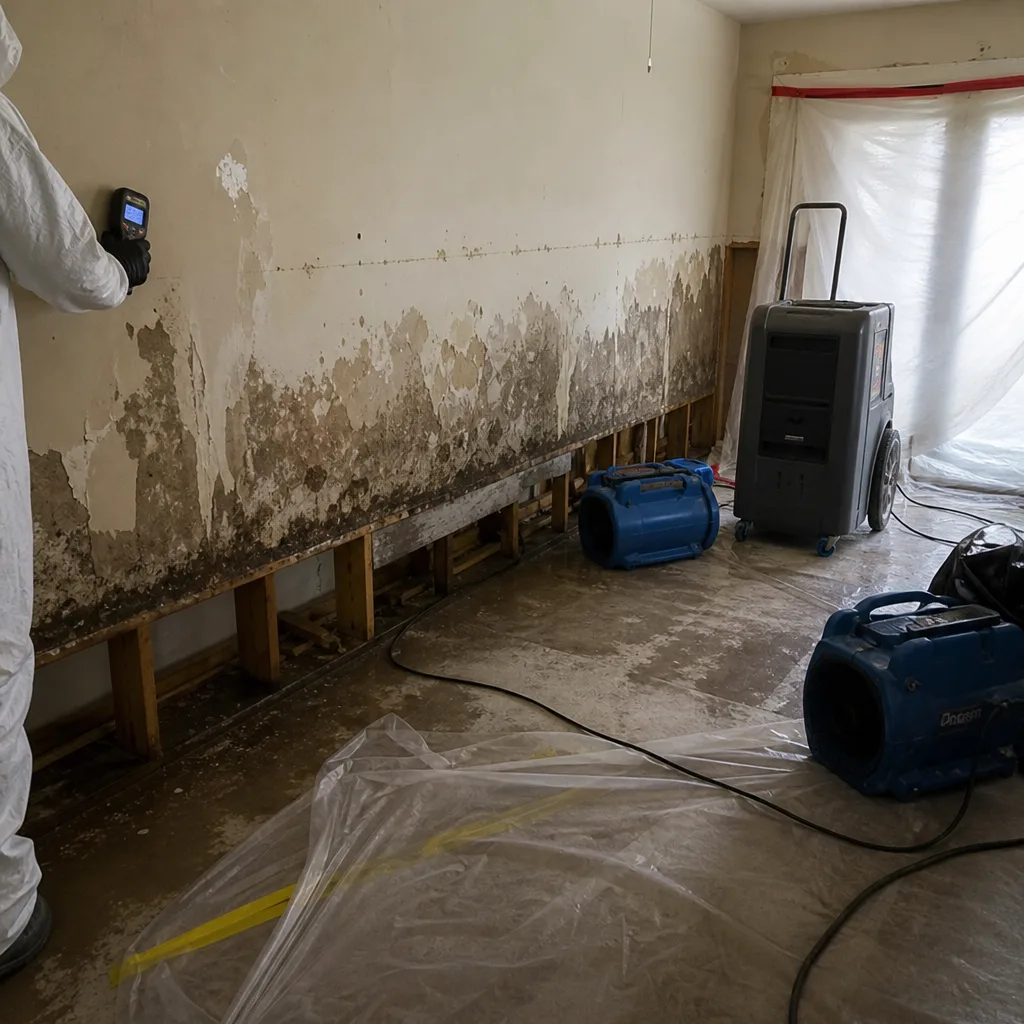
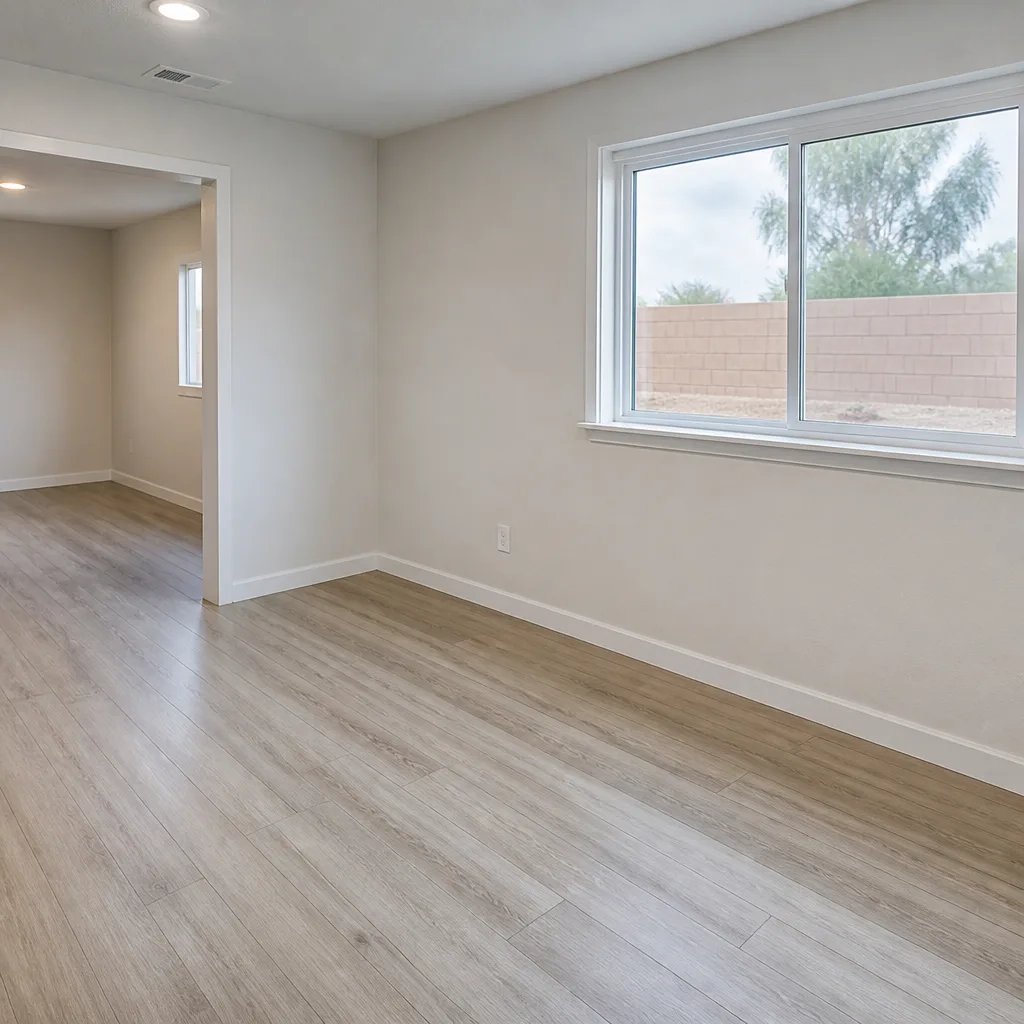
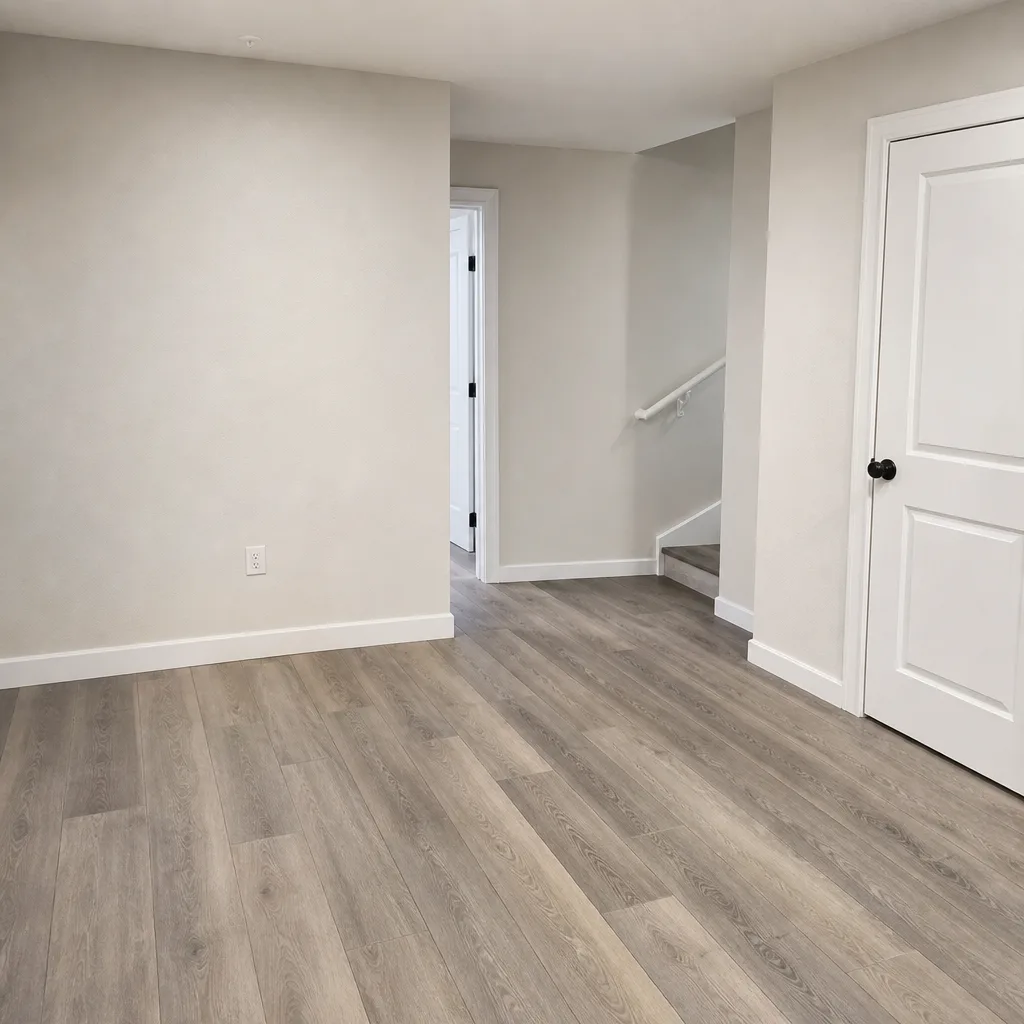
See the difference
 Before
 After
 Before
 After
 Before
 After
Frequently Asked Questions
The most common water damage problem in Victorville is a supply line failure at a compression fitting, often triggered by repeated freeze-thaw cycles in winter followed by thermal expansion in spring. These failures typically occur in slab foundation homes where copper lines run through the attic or exterior walls. Call (855) 382-0478 if you suspect a supply line leak, and we’ll locate and dry the affected area to IICRC-certified standards.
No, mold is a significant concern in Victorville because the same low rainfall that keeps the air dry also creates concentrated moisture events. When a monsoon storm or a plumbing leak introduces water into a wall cavity or under flooring, Victorville’s warm indoor temperatures accelerate mold growth. The initial water event may last hours, but the damp materials provide a growth environment for weeks. Mold remediation in the High Desert requires containment and removal to IICRC standards, not surface cleaning.
Water damage spreads fastest through the path of least resistance: down wall cavities, under baseboards, and along the underside of flooring. In a typical Victorville slab foundation home, water from a supply line leak in an exterior wall can reach the slab and begin wicking into adjacent rooms within 4 to 8 hours. Each hour of delay extends the drying time and increases the likelihood that drywall and insulation need replacement rather than drying.
Injectidry is a cavity-drying system that forces dry air directly into wall cavities and under flooring without removing drywall or tearing out floors. Traditional drying requires opening walls to access the cavity. Injectidry uses small holes and flexible tubing to dry the cavity in place, which reduces demolition, shortens rebuild time, and preserves more of the home’s original materials. Whitfield Water Damage operates Injectidry systems for structural drying in Victorville.
Insurance coverage for seasonal water damage depends on the cause and the policy terms. Sudden and accidental events, such as a burst pipe from a freeze or a monsoon-driven roof leak, are typically covered. Gradual damage from ongoing neglect, such as a slow leak that ran for months, is typically not covered. Document everything with photos and moisture readings, and coordinate with your adjuster early. Call (855) 382-0478 if you need a documented restoration assessment for a claim.
Inspect your Victorville home four times per year, aligned with the four seasonal windows: July (before monsoon peak), November (before freeze season), March (post-winter thermal inspection), and October (after the first Santa Ana event). Each inspection takes 60 to 90 minutes and follows a specific checklist tailored to that season. Supplement the quarterly inspection with a monthly moisture baseline reading and an extra check after any significant weather event.
The Bottom Line
Victorville’s damage risk doesn’t follow a conventional four-season calendar. The real risk windows are monsoon intrusion (July through September), freeze-thaw cycling (November through February), thermal expansion (March through June), and Santa Ana wind setup (October and April). Each requires a different inspection and maintenance focus. Run the checklists in this guide across the year, build a moisture baseline log, and address small failures as they appear. When a damage event exceeds the DIY scope, document the scene, call your insurance agent, and bring in a restoration team that works to IICRC-certified standards. Most Victorville damage is preventable when the right maintenance happens in the right window. The homes that stay dry are the ones that run the seasonal playbook.
Written by the team at Whitfield Water Damage, serving Victorville since 2011.