Last updated October 30, 2026
 Water damage drying
 Fire & smoke cleanup
 Mold remediation
 Storm response
 Sewage cleanup
 Reconstruction
Free visual inspection and a written scope of work before any mitigation begins - photos, moisture readings, and drying logs go in your claim file
The scope we write is the scope we bill. Anything new gets shown to you, in writing, before we touch it.
Get your free estimateChoosing the Right Damage Restoration Brand: A Buyer’s Guide for Victorville
Here’s a fact most homeowners in Victorville don’t learn until it’s too late: three of the most-advertised national restoration brands in the Inland Empire operate through franchise subcontractors who are not required to employ a single IICRC-certified technician on residential jobs. The brand name on the truck and the credentials of the person holding the moisture meter are two entirely different things. This guide will show you how to evaluate restoration companies the way an insurance adjuster does: by verifying operational standards, equipment capabilities, and documentation practices that actually predict whether your home gets dried correctly the first time. For more context, see our The Complete Guide to Damage Restoration in Victorville.
Quick Answer
The right damage restoration brand in Victorville is the one that can prove three things before work begins: current IICRC certification for technicians, professional-grade drying equipment that includes LGR dehumidifiers and moisture mapping tools, and a documented drying protocol with final moisture readings at completion. A recognizable franchise logo proves none of these. Verification takes under five minutes and is the single strongest predictor of whether hidden damage gets found and dried or left to rot inside your walls.
Restoration work we handle
Table of Contents
- The Franchise Model: What a Brand Name Actually Buys You
- IICRC Certification: The Only Brand Signal That Predicts Technical Competency
- The Equipment Audit: Questions That Reveal Operational Reality
- Why Victorville’s Climate Changes the Drying Math
- National Franchise vs. Local Independent: An Honest Comparison
- Post-Job Documentation: The Disqualifying Red Flag Nobody Mentions
- A 15-Minute Due Diligence Checklist
The Franchise Model: What a Brand Name Actually Buys You
When you call a national restoration franchise in Victorville, you’re not calling a nationwide team of employees. You’re calling a local franchisee who purchased territory rights from a parent corporation. That franchisee is independently responsible for hiring technicians, purchasing equipment, maintaining certifications, and covering insurance. The parent brand provides marketing, a recognizable logo, and sometimes standardized paperwork templates. That’s largely it.
In our experience working alongside other restoration contractors in the Victorville market, we’ve seen franchise operations with excellent local owners who invest heavily in training and equipment. We’ve also seen franchise operations that dispatch uncertified general laborers with homeowner-grade fans from a big-box hardware store, gambling on the brand name to mask the operational gaps. Both models exist under the same logo.
What this means for you: when evaluating any restoration brand, national or local, the franchise affiliation tells you nothing about the crew that will actually arrive at your door. You must evaluate the local operation on its own merits.
The critical questions to ask any franchise operation:
- Does the local owner hold IICRC firm certification, or only the parent brand’s marketing claims?
- Will the technicians dispatched to your home carry individual IICRC certifications they can show you on arrival?
- Does the local franchise own the drying equipment it uses, or does it rent equipment after a job begins, adding days to the timeline?
- Who actually supervises the drying process: a certified technician on-site daily or a remote manager who sees photos on a phone?
Local independent operators must answer these same questions, but they have nowhere to hide behind a corporate logo. Their reputation in Victorville depends entirely on the quality of the last job they completed. That’s a meaningful accountability structure.
IICRC Certification: The Only Brand Signal That Predicts Technical Competency
The Institute of Inspection, Cleaning and Restoration Certification is the restoration industry’s credentialing body. When a technician holds IICRC certification, specifically WRT (Water Restoration Technician) or ASD (Applied Structural Drying) credentials, that individual has passed standardized training and testing on the science of drying structures: psychrometrics, moisture measurement, dehumidification, and contamination control.
Why does this matter more than a brand name? Because water damage restoration is not a cleaning job. It’s a building-science discipline. Uncertified crews routinely miss hidden moisture pockets inside wall cavities, under subflooring, and behind baseboards because they don’t know how to measure for them or interpret the readings they do take. The result is mold growth that appears weeks or months after the visible damage was “fixed.”
An IICRC-certified drying protocol means the technician follows a science-based process, not guesswork. That process includes:
- Initial moisture assessment using penetrating and non-penetrating moisture meters across the entire affected area
- Psychrometric readings of temperature, relative humidity, and specific humidity to establish drying conditions
- Calculation of the dehumidification load required to dry the structure within an acceptable timeframe
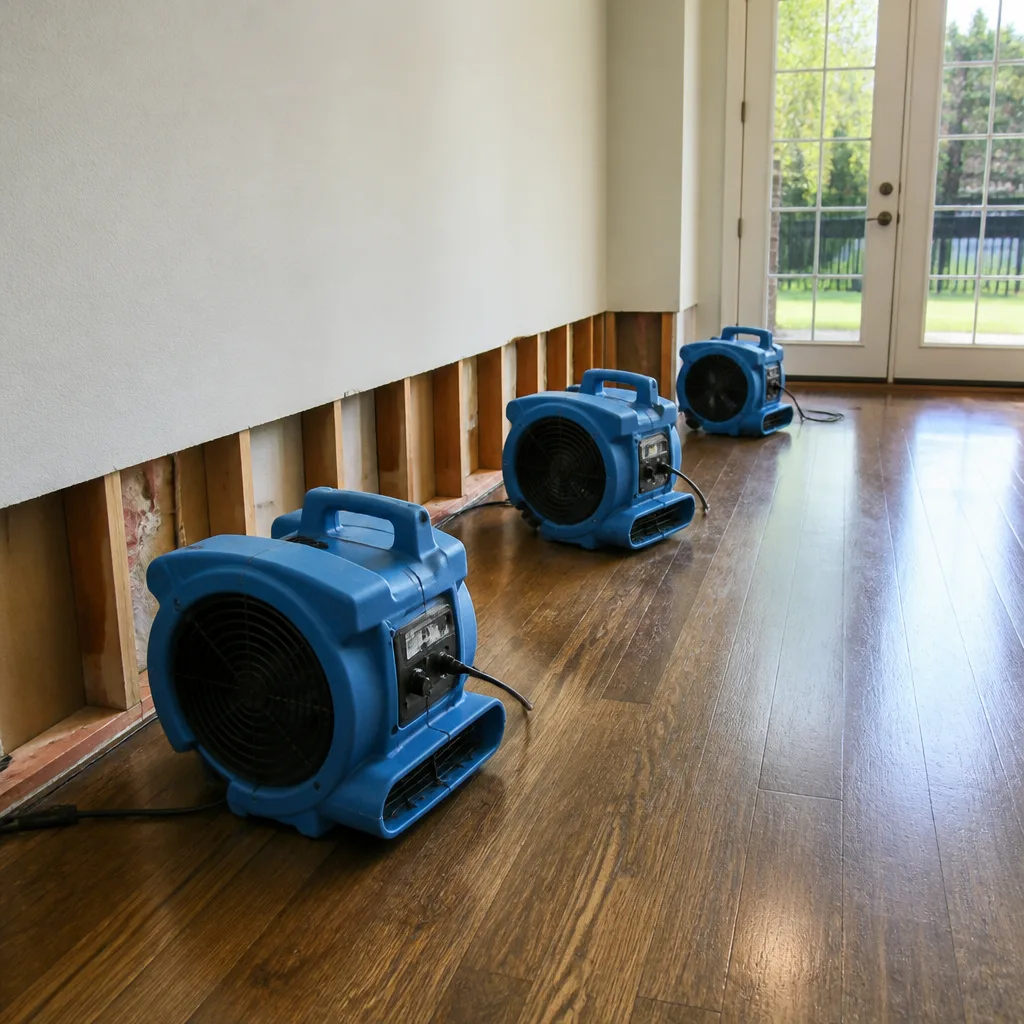
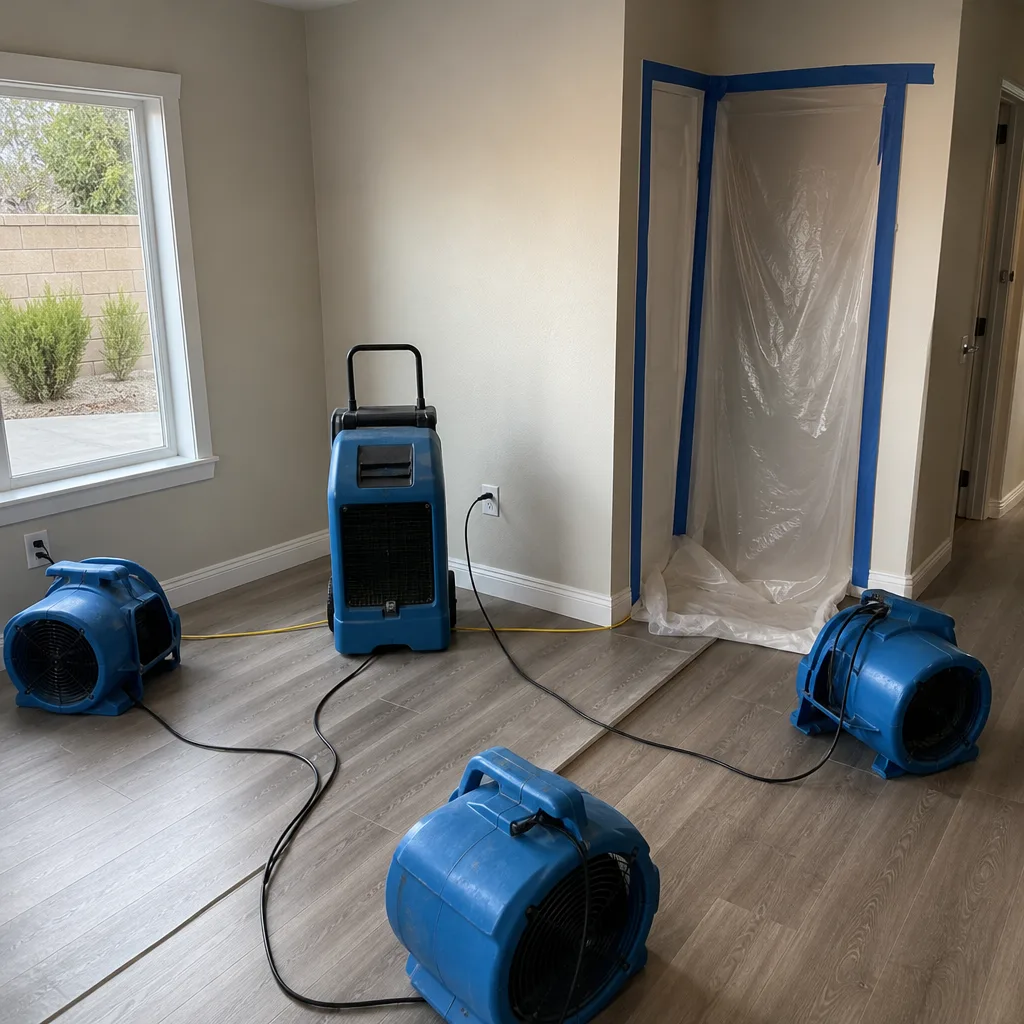
- Placement of air movers and dehumidifiers based on airflow patterns, not just scattered around the wet area
- Daily monitoring with logged moisture readings until the structure reaches its dry standard
Here’s how to verify IICRC certification in under five minutes, right now, before any damage happens:
- Visit the IICRC’s public directory at iicrc.org and search for the company by name. Firm certification will appear there.
- Ask the company directly: “Will the technicians on my job hold current WRT or ASD certifications? Can I see the cards when they arrive?”
- Check the certification card’s expiration date. IICRC credentials require continuing education to renew; an expired card is as good as no card.
- Ask how many certified technicians will actually be on-site during the drying phase, not just the initial inspection.
This five-minute verification tells you more about the quality of restoration you’ll receive than any brand recognition, online review count, or franchise affiliation ever could.
The Equipment Audit: Questions That Reveal Operational Reality
Equipment is where restoration quality lives or dies in a home. The difference between a professional restoration and an incomplete drying job often comes down to whether the right dehumidifier type was deployed in sufficient capacity and whether technicians used moisture mapping tools to find hidden water. Here is a straightforward audit you can run over the phone with any restoration company in Victorville before scheduling service.
Question 1: “Do you use LGR or desiccant dehumidifiers?”
LGR (low grain refrigerant) dehumidifiers are the current professional standard for structural drying. They remove significantly more water vapor per kilowatt-hour than conventional refrigerant dehumidifiers and perform consistently at lower humidity levels. Desiccant dehumidifiers, while more expensive to operate, can achieve even lower humidity levels and work effectively in cooler conditions. If a company answers with “we have dehumidifiers” without specifying LGR or desiccant, that’s a red flag. Homeowner-grade refrigerant dehumidifiers, the kind sold at hardware stores, cannot achieve the vapor pressure differentials needed to pull moisture from building materials.
Question 2: “Do you document psychrometric data during drying?”
Psychrometry is the measurement of air’s physical properties: temperature, relative humidity, and dew point. Professional restoration contractors take psychrometric readings at the start of the job and daily throughout the drying process. This data tells them whether the drying environment is working as calculated and allows them to adjust equipment placement or capacity when readings plateau. If a contractor cannot provide psychrometric data logs at the end of the job, they were drying by feel, not by measurement.
Question 3: “Do you use thermal imaging or another method to find hidden moisture?”
Water travels downward and sideways through building materials, so the visible wet area is rarely the full extent of the damage. Thermal imaging cameras detect temperature differentials that indicate moisture behind drywall, under flooring, and inside ceiling cavities. Professional-grade moisture meters then confirm those readings. Without both tools, a restoration crew is working blind in the areas where damage hides longest.
Question 4: “What brands of drying equipment do you run?”
The brands trusted by insurance-preferred restoration contractors are Dri-Eaz, Phoenix, XPOWER, and B-Air. These manufacturers build equipment specifically for structural drying applications: high-velocity air movers, LGR dehumidifiers, and specialty drying systems. Equipment brand is not a guarantee of quality by itself, but it is a reliable signal that the operator made a capital investment in professional tools rather than improvising with consumer equipment.
Whitfield Water Damage runs a curated stack of professional-grade equipment including Dri-Eaz, Phoenix, and B-Air air movers; XPOWER blowers; and Injectidry cavity-drying systems. The Injectidry component matters because it enables non-invasive structural drying inside wall cavities and under floors without unnecessary demolition, reducing rebuild costs and time compared to tear-out-first approaches.
Why Victorville’s Climate Changes the Drying Math
Victorville sits in the High Desert at roughly 2,700 feet of elevation. That geography creates drying conditions fundamentally different from coastal California or the Los Angeles basin. Interior relative humidity in Victorville typically runs between 15% and 30% during most of the year, with summer temperatures regularly exceeding 100°F. Low ambient humidity accelerates evaporation, which sounds helpful, but it also creates specific challenges that restoration contractors working in this market must understand.
The first challenge is that plaster and drywall in Victorville homes, many built during the high-desert housing expansion of the 1980s through the 2000s, dry rapidly on the surface while remaining saturated deeper inside. Surface moisture readings can look acceptable within 24 to 48 hours while interior cavity moisture remains high enough to support mold growth. A technician who does not understand this surface-drying phenomenon will pull equipment too early and declare the job complete when it is not.
The second challenge involves slab foundations, which are common throughout Victorville neighborhoods including Spring Valley Lake, Eagle Ranch, and the older downtown grid near Seventh Street. Water that penetrates vinyl plank or tile flooring over concrete slab can pool beneath the flooring material, creating a micro-environment where relative humidity approaches 100% even while the air above the floor measures bone dry. Detection and drying in these conditions requires penetrating moisture meters inserted through the flooring material or remote sensing equipment capable of reading through the surface.
The third challenge is the wind. Victorville experiences sustained afternoon winds, particularly in the spring months through the Victor Valley corridor. Wind accelerates evaporation at surfaces, further widening the gap between visible dryness and actual structural dryness. Uncertified crews often mistake wind-driven surface drying for completed restoration, pack up equipment, and leave the hidden moisture to do its slow damage.
An IICRC-certified drying protocol accounts for these variables through daily psychrometric monitoring and moisture-content readings that track the actual equilibrium moisture content of building materials, not the relative humidity of the air in the room. That distinction is the difference between a house that is actually dry and a house that only looks dry.
National Franchise vs. Local Independent: An Honest Comparison
Here is a comparison of how a national franchise operation and a local independent operator typically function in the Victorville market, evaluated on the metrics that actually determine restoration quality. This is not an argument that one model is always superior; it’s a framework for evaluating the specific company you’re considering.
Technician Certification
National franchises: The parent brand may advertise IICRC certification as a corporate standard, but enforcement falls to the local franchisee. Some franchisees maintain fully certified crews. Others do not. The brand name provides no verification either way, so you must check credentials at the local level.
Local independents: Certification is entirely within the control of the business owner. Companies that invest in IICRC certification for their technicians typically make that credential central to their marketing because it differentiates them from the uncertified majority. Whitfield Water Damage home page reflects this approach: IICRC-certified restoration technicians performing all work using certified methods, with professional affiliations through the Restoration Industry Association and IFA membership.
Equipment Inventory
National franchises: Equipment quality depends on what the franchisee purchased. Some franchise agreements require minimum equipment investments; others do not. The parent brand rarely audits equipment condition after the initial setup.
Local independents: You can ask directly and verify by what the technician unloads when they arrive. A company that runs Dri-Eaz, Phoenix, XPOWER, or B-Air equipment made a professional investment. A company that arrives with box fans and a single homeowner dehumidifier did not.
Service Scope
National franchises: Most handle water, fire, and mold restoration under one roof, but this often means different subcontracted crews for different disciplines. The project manager you dealt with on day one may hand you off to a different crew when the work shifts from extraction to drying to rebuild.
Local independents: Some specialize narrowly. Others, like Water Damage Restoration in Jurupa Valley, operate full-spectrum water damage restoration with the same certified team managing the entire process. The advantage of one certified team handling all three disciplines, water, mold, and fire, is continuity: the technician who measured the initial moisture levels is the same one confirming the structure reached its dry standard.
Insurance Relationships
National franchises: Often have direct billing arrangements with most major insurers, which can streamline claims processing. However, the restoration work itself is still performed by the local franchisee’s crew, so certification questions remain.
Local independents: Insurance billing capability varies. The operational quality of the work can be fully documented to insurance standards, including drying logs, final moisture readings, and photo documentation, making the adjuster’s job easier regardless of whether the company bills the insurer directly or the homeowner handles reimbursement.
Response to High-Desert Conditions
National franchises: Apply standardized protocols developed for national average conditions. These work adequately in most climates but may not account for Victorville’s specific surface-drying phenomenon and slab-foundation moisture retention.
Local independents: Companies operating year-round in the Victor Valley learn through experience how local homes dry. Projects in the Mold Remediation in Jurupa Valley service area, for example, frequently involve moisture that wicked up through slab foundations during rare heavy rain events, a condition that standardized drying protocols may not address adequately.
Post-Job Documentation: The Disqualifying Red Flag Nobody Mentions
Most homeowners evaluate a restoration company based on how the house looks when the crew packs up: dry floors, no standing water, fans gone. That’s the wrong evaluation point. The correct evaluation point is the documentation the company provides after the job is complete, because that documentation is the only proof the structure is actually dry below the surface.
A credible restoration firm provides, without being asked:
- Initial moisture readings showing the affected areas and their moisture content before drying began
- Daily drying logs recording psychrometric readings, equipment placement, and moisture-content progression throughout the drying period
- Final moisture readings demonstrating that all affected materials reached their dry standard, typically 8% to 12% moisture content for wood depending on the material and environment
- Equipment records listing the dehumidifiers and air movers deployed, their capacities, and the days they were in operation
- Clearance documentation for mold remediation projects, including post-remediation verification sampling where applicable
The absence of this documentation is a disqualifying red flag, regardless of how dry the house feels or how professional the crew seemed. Without logged readings, there is no evidence the job was completed to any standard at all. If the company cannot produce drying logs, assume the structure was not verified dry and be prepared for potential mold issues within the walls in the months following the job.
This documentation also matters for insurance claims. Adjusters need evidence that professional drying occurred before they approve rebuild costs. A restoration company that documents to insurance standards makes the entire claims process smoother. A company that cannot produce documentation forces the adjuster to assume the worst about hidden moisture, which can delay or reduce reconstruction approvals.
For Fire Damage Restoration in Jurupa Valley and adjacent high-desert communities, documentation standards also apply to smoke and soot remediation. A credible firm documents the cleaning methods used, the areas treated, and the post-remediation verification performed, providing the homeowner and insurer with a complete record of the restoration process.
A 15-Minute Due Diligence Checklist
Here is a practical sequence you can run through when evaluating any restoration company in Victorville, whether you’re pre-vetting before an emergency or calling during active damage. For a detailed look at expected costs, see our Damage Restoration Cost Breakdown: The Victorville Homeowner’s Reference for 2026. It takes about 15 minutes and will screen out most unqualified operators.
- Check the IICRC directory for the company name. Firm certification appears there. Note that individual technician certification is separate and should be confirmed independently.
- Ask about technician credentials. “Will the technician on my job hold current WRT or ASD certification? Can I see the card when they arrive?” A yes answer costs the company nothing extra. Hesitation or deflection is information.
- Ask about dehumidifier type. “Do you use LGR dehumidifiers?” If the answer is anything other than an immediate yes, keep looking. Professional restoration requires LGR or desiccant equipment.
- Ask about moisture documentation. “Will you provide daily drying logs and final moisture readings?” A credible company treats this as a standard deliverable.
- Ask about photo documentation. “Will you photograph the affected areas before, during, and after drying?” Photo documentation supports insurance claims and demonstrates a documented process.
- Verify equipment brands on arrival. When the truck shows up, glance at the equipment being unloaded. Dri-Eaz, Phoenix, XPOWER, and B-Air logos indicate professional gear. Unbranded consumer fans indicate the opposite.
This checklist works whether you’re facing a burst pipe in a Victorville home or evaluating restoration partners as a property manager or insurance adjuster covering the High Desert region. The principles are the same: verify credentials, confirm equipment, demand documentation.
Common Mistakes to Avoid
- Choosing based on brand recognition alone. A franchise logo tells you who owns the marketing rights in Victorville, not who will hold the moisture meter in your living room. Verify the local operation’s certifications independently.
- Assuming visible dryness means the structure is dry. High-desert wind and low humidity dry surfaces quickly in Victorville while hidden cavities remain saturated. Only moisture meters and daily readings prove structural dryness.
- Skipping the equipment question. Asking “do you have dehumidifiers?” isn’t specific enough. LGR or desiccant technology is the professional standard; conventional refrigerant units cannot complete structural drying to an acceptable standard.
- Accepting verbal reassurances instead of documentation. A credible restoration firm provides written drying logs and final moisture readings as standard practice. “Trust me, it’s dry” is not a deliverable.
- Waiting until an emergency to vet a restoration company. After a pipe burst at 2 a.m., you’ll likely call the first company that answers. Pre-vetting now means the company you call in that moment is one you’ve already verified.
- Choosing the lowest bid for non-emergency work. Restoration pricing in the High Desert varies with equipment quality and certification levels. A low bid often means consumer-grade fans, uncertified labor, and incomplete drying. The expensive part is fixing the mold problem a year later.
- Assuming insurance companies always send the best contractor. Insurers have preferred vendor lists, but those lists are built on billing convenience and geographic coverage, not solely on technical quality. You have the right to request a contractor who meets IICRC standards, even if they’re not on the insurer’s list.
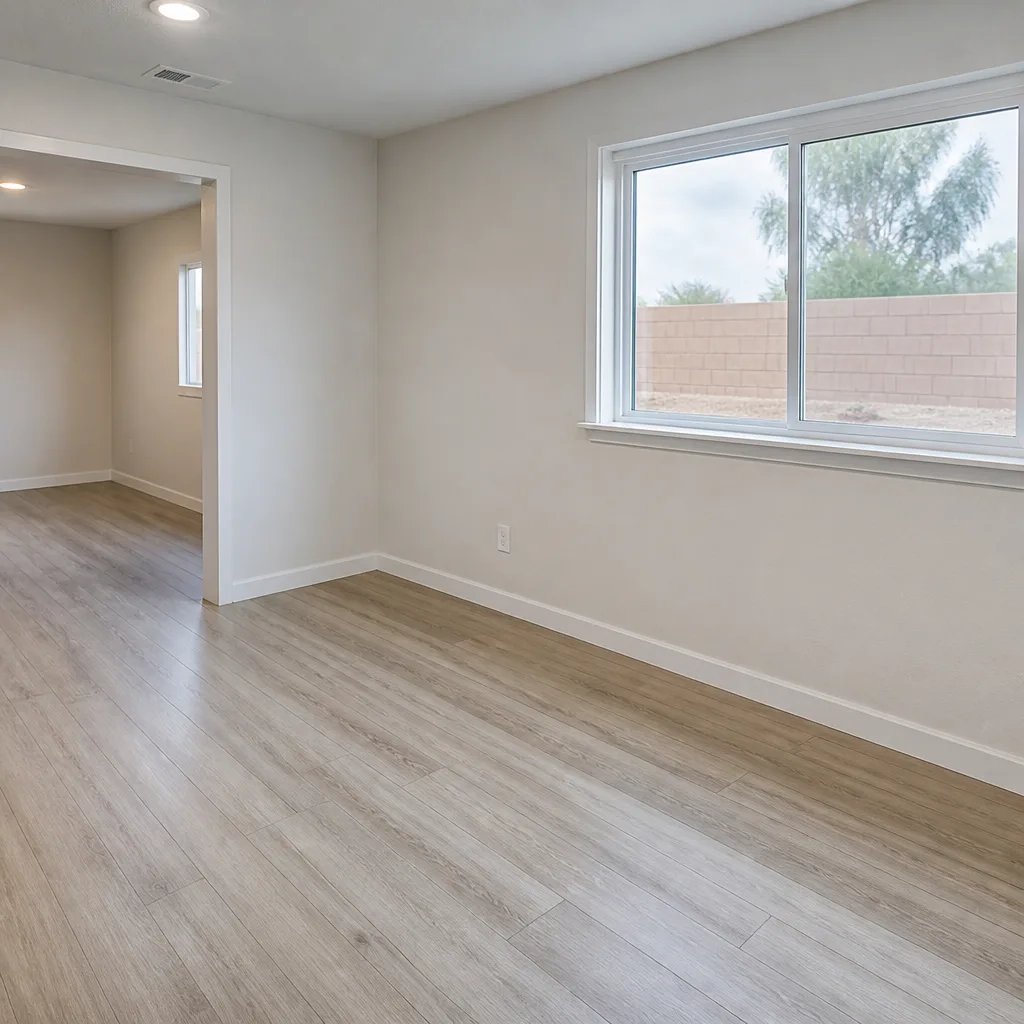
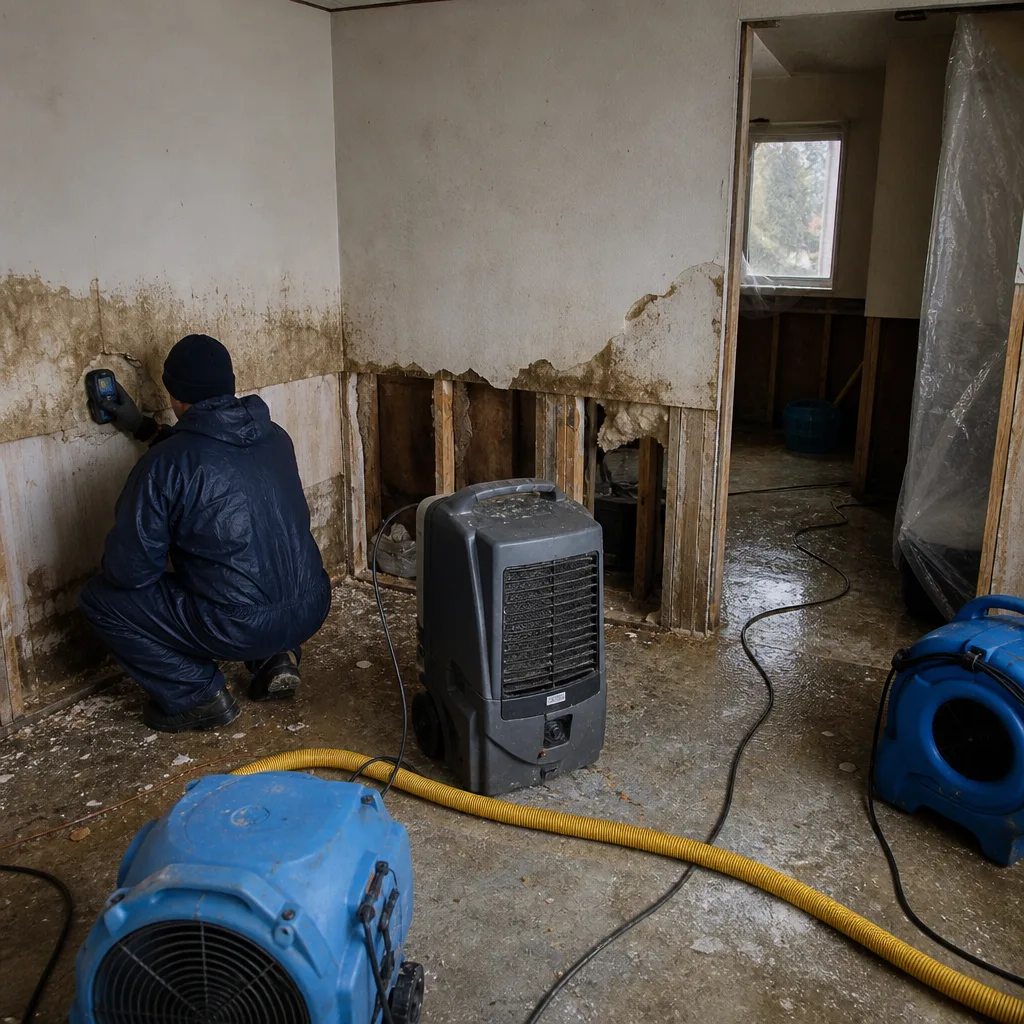
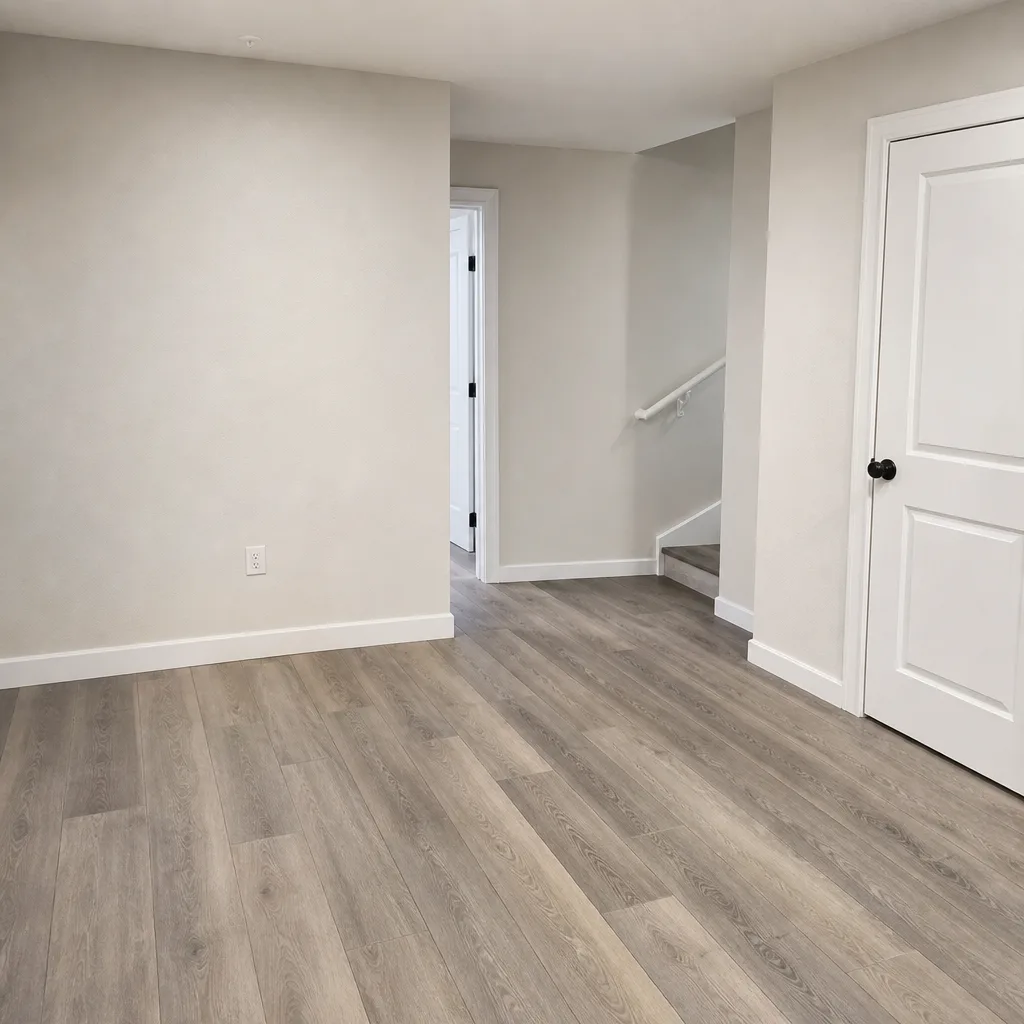
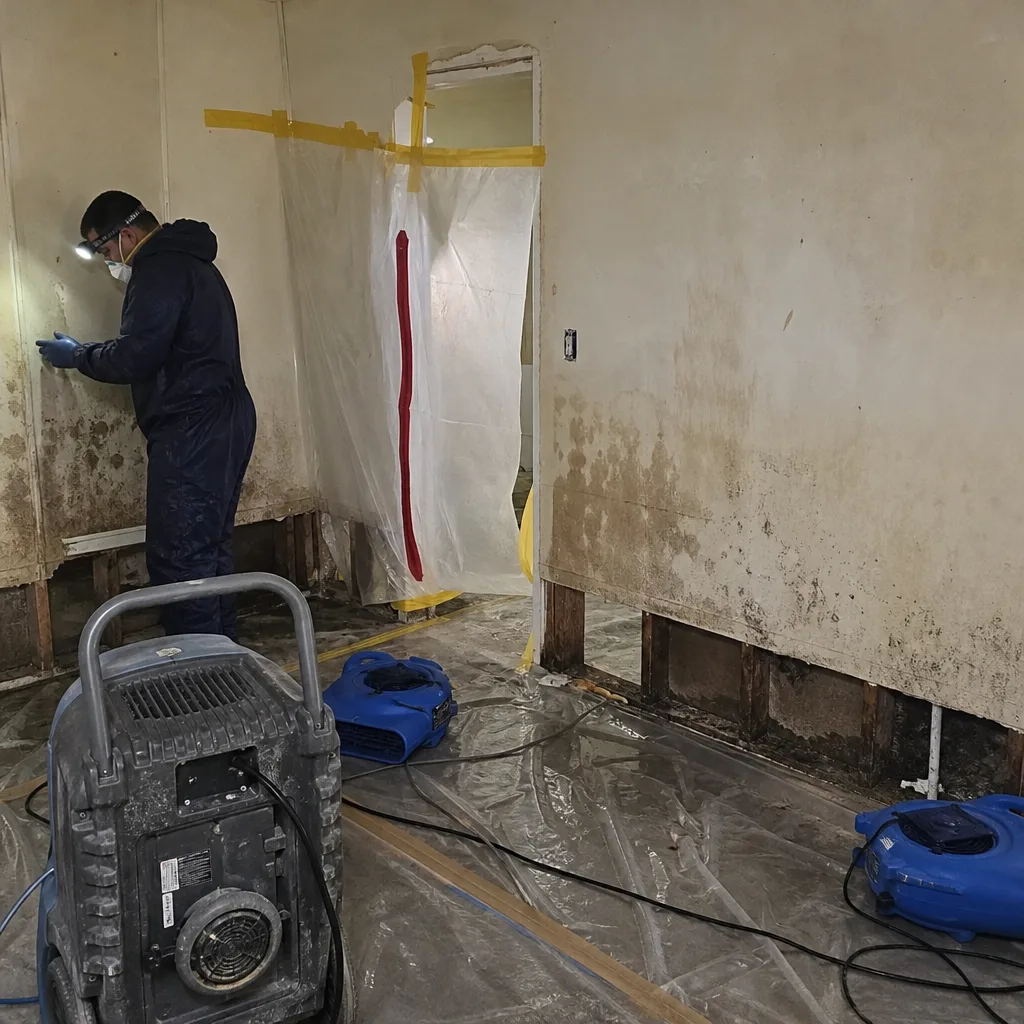
See the difference
 Before
 After
 Before
 After
 Before
 After
When to Call a Professional
Call a professional restoration company immediately if you have standing water from a plumbing failure, water intrusion through walls or flooring, visible mold growth larger than a few square inches, or smoke damage after a fire. Also call for professional evaluation if you smell musty odors with no visible source, if water-stained drywall feels soft or spongy, or if your water bill spiked without explanation, suggesting a hidden supply-line leak inside a wall. These are situations where hidden moisture is almost certainly present, and the longer it sits, the more extensive and expensive the eventual remediation becomes. You can find more guides & resources on our blog to help you prepare before an emergency strikes. Whitfield Water Damage offers free estimates in Victorville. Call (855) 382-0478 and a certified technician will assess the damage, document findings, and explain exactly what’s needed, with a written scope before any work begins.
Frequently Asked Questions
You can verify IICRC certification in under five minutes by searching the IICRC public directory for the company name, then asking the company directly whether the specific technicians assigned to your job hold current WRT or ASD certifications, with cards they can show on arrival. Firm certification and individual technician certification are separate checks; run both.
No. National restoration franchises are locally owned and operated, and the franchisee is independently responsible for hiring technicians, purchasing equipment, and maintaining certifications. The brand name provides no verification of any of those operational variables, so you must evaluate the local operation on its own merits regardless of what logo is on the truck.
A professional restoration company should use LGR or desiccant dehumidifiers for structural drying, professional-grade air movers from manufacturers like Dri-Eaz, Phoenix, XPOWER, or B-Air, moisture meters for both surface and penetrating readings, and ideally thermal imaging to locate hidden moisture behind walls and under flooring.
Structural drying in Victorville typically takes 3 to 5 days with professional equipment, but the surface will look and feel dry within 24 to 48 hours due to the high-desert climate’s low humidity and wind. That surface dryness can mask continued moisture inside wall cavities and under slab floors, which is why daily moisture readings matter more than how the floor feels to the touch.
A credible restoration company provides initial moisture readings, daily drying logs with psychrometric data, final moisture readings demonstrating the structure reached its dry standard, and photo documentation of the affected areas throughout the process. If a company cannot produce these documents, the structure was not verified dry to any standard.
Homeowner’s insurance typically covers sudden and accidental water damage, such as a burst pipe, but excludes gradual leaks and flood damage from external sources unless you carry separate flood insurance. Restoration documentation, including moisture logs and photo evidence, strengthens your claim by proving professional drying occurred. Call (855) 382-0478 for guidance on documenting your situation for insurance purposes.
The Bottom Line
Brand recognition in restoration is a marketing outcome, not a quality guarantee. In Victorville’s high-desert climate, where surface drying masks hidden moisture and slab foundations trap water beneath flooring, the only reliable predictors of restoration quality are verifiable credentials, documented equipment capabilities, and a demonstrated commitment to measurement-based drying protocols. IICRC certification combined with professional-grade equipment from established manufacturers and a rigorous documentation practice separates restoration companies that dry structures from companies that only dry surfaces. Verify before you need them, and when damage happens, choose the company that can prove its process works, not the one with the most recognizable logo.
Written by the team at Whitfield Water Damage, serving Victorville since 2011.